A fourth-gen Camaro or Firebird that will not move usually comes with one of three histories: an LS1 car launched once too often that now just revs, a high-mileage 3800 V6 that got lazier until it quit, or a fresh rebuilt or junkyard 4L60E that sits there in every range. Each points at different parts, and there are a couple of non-transmission traps to clear first.
The short version: Make sure the car is actually in gear and the rear axle is turning before you blame the 4L60E. Then check the fluid hot on the red dipstick and pull the bottom cooler line: no flow means no charge oil, which points at the pump, the converter drive, or a mismatched stator support. If flow and pressure are good, sort it by range. Drive and Overdrive gone but manual 1 and Reverse work is the forward sprag. No forward ranges with good Reverse is the forward clutch. No Reverse, 2nd, and 4th together is the reaction sun shell, which GM wrote a bulletin on for these exact cars.

Which Camaros Have a 4L60E
Every automatic fourth-gen F-body runs a 4L60E, RPO M30. GM's 2000 Camaro owner manual lists it behind both the 3800 Series II V6 and the 5.7L V8 (the LS1), and it gives the numbers you need on the bench: 5.0 quarts (4.7 L) for a pan drain and refill, and after an overhaul 8.8 quarts (8.3 L) behind the V6 or 10.8 quarts (10.2 L) behind the V8. The fluid called out is DEXRON-III, which GM has since superseded with DEXRON-VI. The Service Parts Identification label that confirms the M30 option is on the rear edge of the driver's door on these cars, not in the glovebox like the trucks.
Gear ratios are 3.06, 1.63, 1.00, and 0.70, with 2.29 in Reverse. Drive 1st runs through the forward clutch, the forward sprag, and the low roller clutch. Manual 1 adds the overrun clutch and the low/reverse clutch. Reverse uses the reverse input clutch and the low/reverse clutch, and the torque path runs through the reaction sun shell. That shell is the part the LS1 cars eat.
Step 1: Rule Out the Car
Shift lock, torque lock, and the shift cable
A car that will not come out of PARK is not a transmission failure. The F-body has a brake transmission shift lock, and GM's manual says you have to fully apply the brake before the lever will leave PARK with the key in RUN. If the brake switch or the solenoid fails, the manual's workaround is key off, hold the brake, shift to NEUTRAL, start it, then pick a gear.
The second trap is torque lock. Park on a hill without setting the parking brake first and the weight of the car loads the parking pawl. GM's manual says the lever can become hard to pull out of PARK, and in a bad case another vehicle may have to push the car slightly uphill to take the load off the pawl.
Then check the linkage. The shifter in the console moves a cable to the manual valve lever on the left side of the case. If the cable end has popped off or the bushing has crumbled, the selector moves and the transmission stays wherever it was. The starter should crank only in PARK and NEUTRAL; if it cranks in another position, the range switch or cable is out of adjustment and the manual valve may not be where the shifter says it is.
Driveline: watch the driveshaft
Put the car on a lift, start it, select Drive with the brake held lightly, and watch the driveshaft. If it turns and the wheels do not, the 4L60E is doing its job. The problem is behind it: a broken axle shaft, stripped ring and pinion, or a sheared driveshaft yoke. GM's manual warns not to try to drive if the rear wheels cannot rotate, because that loads the transmission against a stalled driveline. On a V6 car with a weak launch, check the Second-Gear Start button on the dash; with its light on, the transmission starts in 2nd by design.
Step 2: Fluid Level and Cooler Flow
A 4L60E that has pushed its fluid out through a cooler line or a front seal acts like it has no transmission at all. The F-body check is a little fussy, so follow GM's procedure exactly. Drive about 15 miles to reach 180-200°F, park level with the engine running and the parking brake set, move the lever through every range pausing about three seconds in each, return to PARK, and idle at least three minutes. The red dipstick sits near the back of the engine with a flip-up locking handle. Read the lower level on both sides; it should be in the HOT or cross-hatched area. If the car cannot be driven to temperature, add fluid until it shows on the stick and see whether it engages. One that moves after two quarts is a leak job, not a rebuild.
Next, the check that splits no-move complaints into two piles: cooler flow. GM bulletin 02-07-30-052J says insufficient flow through the cooler causes premature transmission failure, and its connector table puts the 4L60-E feed (exiting the transmission) at the bottom fitting and the return at the top. Disconnect the line at the bottom radiator fitting, run it into a container, and briefly start the engine in PARK. A strong stream is good; no flow or a dribble means no charge oil is reaching the converter. A gauge on the line pressure tap tells you which side of that circuit failed.
Step 3: Sort It by Range
Once the car, the fluid, and the cooler flow check out, the apply chart narrows it to one or two parts. On an F-body, the Overdrive, D, 2, and 1 positions are the ranges to test:
| What the Camaro does | Likely cause | Why |
|---|---|---|
| No Overdrive or Drive, but manual 1 and Reverse pull | Forward sprag (or low roller clutch) | Manual 1 applies the overrun and low/reverse clutches and drives around both one-way clutches |
| No forward ranges at all; Reverse is fine | Forward clutch | Every forward range needs the forward clutch; Reverse does not |
| No Reverse, no 2nd, no 4th; 1st and 3rd work | Reaction sun shell | Those three ranges all transmit or react torque through the shell |
| No Reverse only, forward is fine | Low/reverse clutch or reverse input clutch | Both apply only in Reverse (low/reverse also in manual 1) |
| Nothing in any range, no cooler flow | Pump, converter drive, stator support | No charge oil and no pressure to apply anything |
| Nothing in any range, normal pressure and flow | Input shaft, turbine spline, or gear train | Hydraulics work but nothing is transmitting torque |
Reaction sun shell: no Reverse, 2nd, or 4th
This is the F-body failure, and GM said so in writing. Bulletin 00-07-30-022 covers 1996-99 Camaros and Firebirds (along with Corvettes and trucks) with the 4L60-E, and it describes exactly this complaint: no Reverse, no 2nd, or no 4th, with every other gear working. The cause given is the reaction sun gear not holding inside the reaction sun shell, and the repair is a revised shell with an increased radius from the splines to the shell.
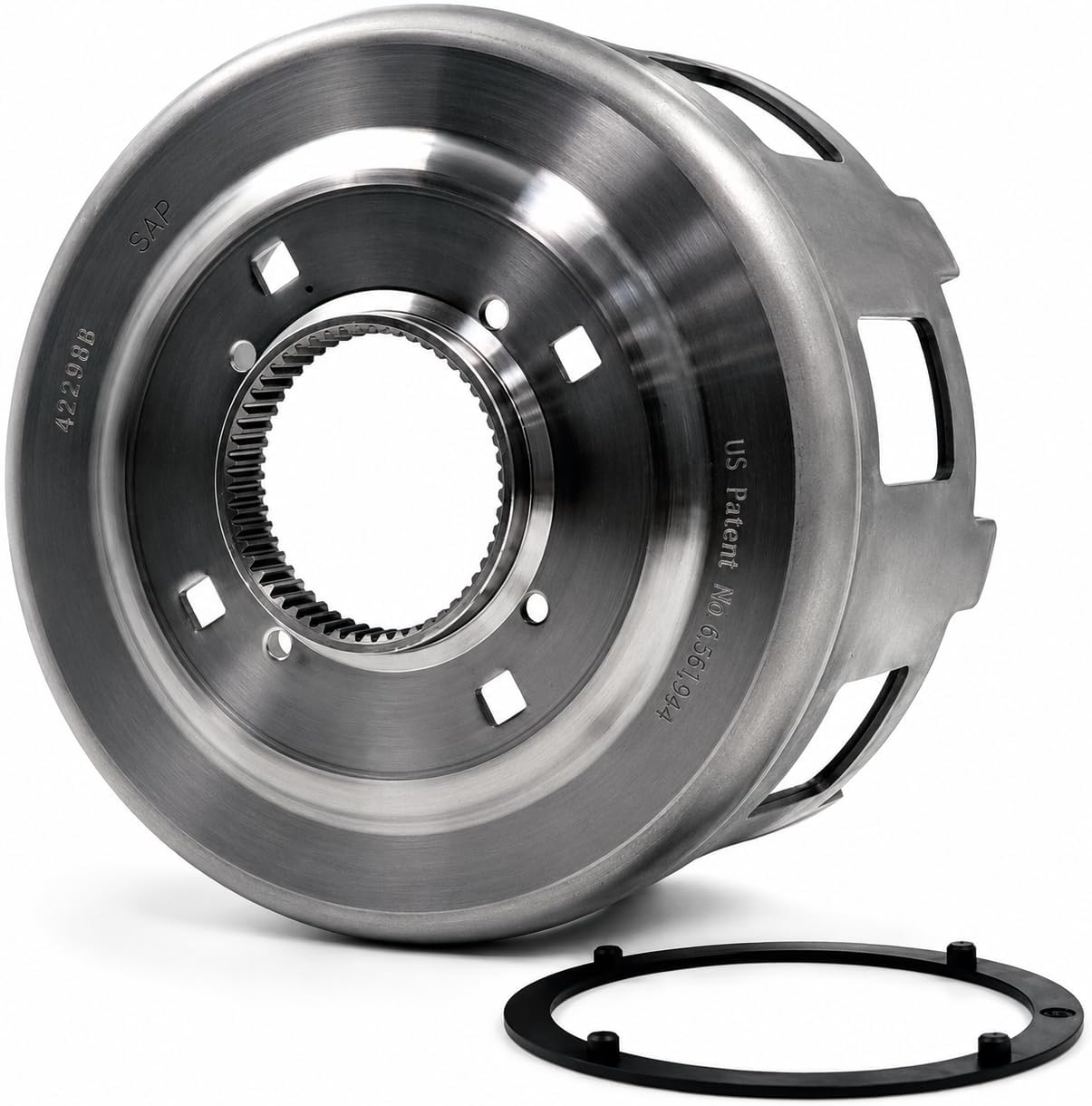
On an LS1 car that has been launched hard or carries a higher-stall converter, a stock-style replacement is a short-term fix. Sonnax built its SmartShell kit (77749-02K) for the 4L60, 4L60-E, 4L65-E, and 4L70-E specifically to stop spline stripping, prevent hub breakage, and eliminate the planetary bearing failure that goes with it. Whatever shell you use, check the rear planet, the sun gear bushing, and the output shaft bushings at the same time, because the shell and the rear planet usually fail together.
Forward sprag: drives in manual 1, not in Overdrive
This is the common one on a high-mileage V6 car. The forward sprag sits between the input housing and the input sun gear. When its elements roll over or the races wear, it freewheels both ways. In Drive 1st that means nothing, but in manual 1 the overrun clutch applies and carries torque around the sprag, so the car pulls. Drive it in manual 1 and move the lever to 2 and D: 2nd and 3rd usually work too, because in 3rd the 3-4 clutch locks the input to the sun gear. On the bench, hold the outer race and turn the input sun gear. It must lock one way and freewheel the other. If it spins both ways or will not turn at all, replace the sprag and both races as an assembly. We replace the low roller clutch at the same time.
Forward clutch: no forward ranges, good Reverse
If manual 1 will not pull either, look at the forward clutch. A burnt pack, a cut forward piston seal, or worn input housing sealing rings will all bleed forward apply oil. Air check the forward circuit during teardown before you condemn the input housing.
Won't Move After a Rebuild or Swap
A no-move right after the work is common enough that Sonnax wrote it up. Their case was a 2006 Suburban rebuilt with a replacement stator support and converter, then no engagement in any range and no cooler flow at normal line pressure. The replacement stator support was an early, non-ISS style on a pump cover that used the later converter feed hole, so its charge oil port never lined up and no oil reached the converter. GM moved that feed hole when it added the input speed sensor, in steps from about February 2005 to early 2006.
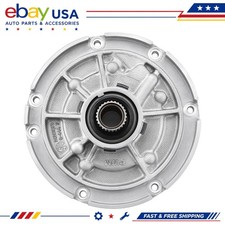
That matters on a Camaro because a used or reman unit from a later truck, or a pump borrowed from one, can bring the late-style parts into an early build. Sonnax's three-check method sorts it out at the bench. Check the input shaft for its sealing ring locations. Draw a line through the center of the pump bolt holes: on an early pump the converter feed hole sits to the right of that line, on a late pump to the left. Then look at the stator: early stators have the converter feed and lube holes directly in line, late stators have the feed to the right of the lube hole. Sonnax warns that a wrong or misaligned stator may cause no movement, converter charge concerns, input shaft failure, and even converter damage. While the pump is out, also make sure it matches the converter; replacement 4L60E pumps are sold in 298 mm and 300 mm converter versions, and an aftermarket converter has to suit the pump it goes on.
Then check endplay. Per Sonnax's Randall Schroeder, writing in Transmission Digest, the 4L60E has one total endplay measurement, set with the selective shim under the bearing on the input drum: 0.005-0.036 in., with 0.020-0.025 in. preferred, and 0.005 in. subtracted when a new pump gasket goes on. Before that, assemble the gear set and hubs and check for no more than 0.030 in. of movement between the output shaft and the rear hub, especially after replacing a shell or planetary.
The Fix, and Keeping It Moving
- Fix the cause, not just the casualty. An LS1 car that ate a stock shell will eat another one; use a heavy-duty shell and check the rear planet and bushings.
- Follow GM's severe-service interval if the car sees high-performance use: the 2000 Camaro manual calls for fluid and filter every 15,000 miles for high performance operation, heavy city traffic in 90°F heat, or towing, and every 50,000 miles otherwise.
- Match the pump, stator support, input shaft, and converter, and set endplay before the unit goes in.
- Seat the converter fully and check that it turns freely by hand before the flexplate bolts go in.
- Fill and check hot, 180-200°F, in the HOT area of the red dipstick.
Sonnax SmartShell 77749-02K Reaction Shell
The heavy-duty shell for the Camaro that lost Reverse, 2nd, and 4th, built to stop spline stripping and hub breakage. For sprags, pumps, and full rebuild kits, the whole 4L60E lineup is here.
See the SmartShell →FAQ
Why won't my Camaro move in Drive but it backs up fine?
Put the shifter in FIRST (1) and try again. If it pulls in 1 but not in Overdrive or Drive, the forward sprag is freewheeling, because manual 1 applies the overrun and low/reverse clutches and carries torque around it. If none of the forward ranges pull but Reverse is fine, the forward clutch or its apply circuit has failed.
My Camaro has no Reverse, no 2nd and no 4th. What failed?
That three-gear combination is the reaction sun shell. GM bulletin 00-07-30-022 covers 1996-99 Camaros and Firebirds with the 4L60-E where the reaction sun gear does not hold inside the shell, and the repair is a replacement shell. On LS1 cars a heavy-duty shell is the better fix.
How much fluid does a Camaro 4L60E take?
GM's 2000 Camaro owner manual lists 5.0 quarts (4.7 L) for a pan drain and refill. After an overhaul it takes 8.8 quarts (8.3 L) behind the 3800 V6 and 10.8 quarts (10.2 L) behind the 5.7L V8. Check it hot, at 180-200 degrees F, in the HOT area of the red dipstick at the back of the engine.
Keep the numbers at the bench. Our free transmission fluid spec chart lists the correct ATF type for the 4L60E and dozens of other units, so you never top off with the wrong fluid.
Sources
- General Motors — 2000 Chevrolet Camaro Owner Manual. Backs: the 3800 V6 and 5.7L V8 automatic applications; 5.0 qt (4.7 L) drain and refill and 8.8 qt / 10.8 qt overhaul capacities; DEXRON-III; the hot check procedure (180-200°F, 15 miles, three seconds per range, three-minute idle, red dipstick at the back of the engine, hot check); the shift lock and the key-off NEUTRAL workaround; torque lock on the parking pawl; the warning not to drive when the rear wheels cannot rotate; Second-Gear Start on V6 cars; the Service Parts Identification label location; and the 15,000/50,000-mile fluid intervals. GM: 2000 Camaro owner manual (PDF)
- General Motors Bulletin 02-07-30-052J (May 2015), Automatic Transmission Oil Cooler Flow Test, hosted by NHTSA. Backs: insufficient cooler flow causing premature transmission failure, and the 4L60-E cooler feed at the bottom connector and return at the top. static.nhtsa.gov: GM 02-07-30-052J (PDF)
- Sonnax — Solve Multiple 4L60-E Problems in All Performance Applications with the Sonnax SmartShell. Backs: the SmartShell 77749-02K kit for 4L60, 4L60-E, 4L65-E and 4L70-E and its purpose of stopping spline stripping, preventing hub breakage and eliminating planetary bearing failure. sonnax.com/tech_resources/537
- Sonnax — 4L60-E No Move After Rebuild. Backs: the 2006 Suburban case with no engagement in any range and no cooler flow at normal line pressure, the early non-ISS stator support on a late feed-hole pump cover, and the February 2005 to early 2006 transition. sonnax.com/tech_resources/50
- Sonnax — 4L60-E Series Input Shaft, Stator & Pump Cover Compatibility: Three Easy Checks. Backs: the shaft, early/late pump feed hole, and early/late stator hole checks, and the warning that a mismatched stator may cause no movement, converter charge concerns, input shaft failure, and converter damage. sonnax.com/tech_resources/1419
- Transmission Digest — All Work and No Play: Setting Endplay to Prevent 4L60/E Gear Train Failure (Randall Schroeder, Sonnax). Backs: the single total endplay setting, the 0.005-0.036 in. range with 0.020-0.025 in. preferred, the selective shim location, the 0.005 in. gasket allowance, and the 0.030 in. gear set movement check. transmissiondigest.com: 4L60/E endplay
GM bulletin 00-07-30-022 (No Reverse, Second Gear, or Fourth Gear; replace reaction sun shell) is cited from its published text covering 1996-99 Camaro and Firebird with the 4L60-E; GM bulletins are written for professional technicians and are available through GM service information.