Slipping is one complaint. Shift problems are another, and on a fourth-gen Camaro they come in a few flavors: a 1-2 that hits like a rear-end collision, a 2-3 that flares and then bangs, a car that pulls away in 2nd or 3rd, or a car that holds 2nd for twenty seconds after the scan tool says it commanded 3rd. The clutches and band are often fine. The trouble is in what tells them when and how hard to apply: line pressure, the shift solenoids, the PCM drivers, and the accumulator circuit.
The short version: Rule out the Second-Gear Start button on V6 cars and get a hot fluid check first. If every shift is harsh, suspect line pressure, and verify it with a gauge and a meter, not the scan tool PID. If only the 1-2 is harsh, look at the servo, the 1-2 accumulator, the #8 checkball, and the 4-3 sequence valve. If the 2-3 flares or 3rd shows up late, check how fast the "B" solenoid turns off before you buy a valve body.

Start With the Camaro Basics
Every automatic 1993-2002 Camaro and Firebird uses the 4L60E. The ratios are 3.06, 1.63, 1.00, and 0.70, and you will need them to read scan data. In each gear, input (turbine) speed should equal output speed times that ratio. GM's 2000 Camaro owner manual lists a 5.0-quart drain and refill. Before you go any further, check the fluid hot at 180-200°F after about 15 miles of driving, using the procedure laid out step by step in our Camaro slipping guide.
Two Camaro-specific checks before you blame anything inside the case:
- Second-Gear Start (V6 cars). GM's manual describes an SGS button on the instrument panel of many V6 automatics. When it is on, the light on the button is lit and the car moves off in SECOND, then upshifts normally. A soft 2nd-gear launch is easy to mistake for a fault.
- The shift lever position. GM's manual says FIRST will not engage until road speed is low enough, and warns against driving in SECOND for more than 25 miles or above 55 mph. A car that "won't upshift" with the lever one notch low is working as designed.
How the Computer Picks a Gear
Two on/off shift solenoids, "A" (1-2) and "B" (2-3), set the gear. Sonnax's Gregg Nader spells out the logic that matters most here: commanding 3rd turns both solenoids off, commanding 4th turns only "A" on, and commanding 2nd turns only "B" on. First gear has both on.
| Gear | Solenoid A (1-2) | Solenoid B (2-3) | Ratio |
|---|---|---|---|
| 1st | On | On | 3.06 |
| 2nd | Off | On | 1.63 |
| 3rd | Off | Off | 1.00 |
| 4th | On | Off | 0.70 |
If both solenoids lose power (a blown TRANS fuse, an open in the feed, an unplugged case connector), both are off, and the car runs in 3rd in Drive. It pulls away slowly and never shifts. Sonnax notes the solenoids share a fused positive feed, and in Transmission Digest's S-10 case both solenoids got power from the same fuse, with the PCM switching the ground side. Check the fuse and the 12 V at the case connector before anything else.
A second fact from Transmission Digest (Wayne Colonna) explains second-gear starts: with the engine off, the 4L60E valve body sits in 2nd by default. Once the engine runs, line and AFL pressure must reach 48 psi or more to push the 1-2 shift valve against its spring and into 1st. Anything that keeps pressure under 48 psi at a stop gives you a 2nd-gear start, even with both solenoids commanded on.
Match the Complaint to the Circuit
| What the Camaro does | Most likely area | First test |
|---|---|---|
| Every shift and the garage engagement are harsh | High line pressure: EPC command, EPC driver, TCC codes, engine data | Line pressure gauge plus DVOM on EPC current |
| Only the 1-2 is harsh or "slide-bangs" | Servo size, 1-2 accumulator, #8 checkball, 4-3 sequence valve | Pull the servo and pan; inspect the accumulator and separator plate |
| 2-3 flares, line pressure is normal, no codes | Slow "B" solenoid turn-off or a weak PCM driver | Amp-draw test at the TRANS fuse |
| 3rd shows up seconds late, P0758 stored | 2-3 solenoid circuit or PCM low-side driver | Resistance, amperage, then scope the driver |
| Starts in 2nd, SGS light off | Line/AFL under 48 psi, or 1-2 accumulator leak applying the band | Drive-range line pressure; inspect the 1-2 accumulator seal |
| Stuck in 3rd, no upshift or downshift | Lost solenoid power or both circuits open | TRANS fuse and feed voltage at the case connector |
Harsh Shifts: Line Pressure Comes First
Colonna calls line pressure boost control "the Achilles heel" of the 4L60E. A TCC slip code, P1870 or P0894, puts the transmission into high line pressure mode, and every shift gets firm. On 1998-2002 LS1 cars that ties directly to the valve body. Sonnax's Tory Royce explains that the 1998-and-later EC3 converter controls normally allow 20-40 RPM of TCC slip, and that the constant cycling wears the TCC regulator and isolator bores. Sonnax lists codes 894 and 1870, low TCC apply pressure, low line pressure, and a harsh 1-2 among the results.
With TCC codes cleared, Colonna's remaining causes are an ECM EPC solenoid driver failure, lean misfire, MAF sensor problems, and the EPC solenoid itself. On a modified Camaro, a bad MAF reading or a lean condition changes the torque the PCM calculates, and line pressure follows it. Fix engine codes before you condemn the transmission.
Do not trust the EPC PID
Colonna says diagnosing 4L60E line pressure needs a pressure gauge and a DVOM measuring the actual EPC solenoid current, and that the scan tool's commanded-amperage PID is not reliable. It can show the correct command when the real current is wrong. That happens when the ECM's EPC driver has failed, and he flags 1993-1997 as the years where this is especially common, which covers the LT1 Camaro. The EPC solenoid works backwards from what most people expect: more current means less line pressure. So a dead driver or an open EPC circuit gives you maximum pressure and a hard shift into every gear. Compare what the PCM claims with what the gauge and meter show.
Harsh 1-2 Only: The Hydraulic Suspects
When only the 1-2 hits, look at the band apply circuit. Colonna's list:
- Servo apply area. GM used four OE 2nd servo pistons. The "093" piston is used mainly in Corvettes and high-performance Camaros. Most other units use the 553 or 159, and the 554 is for four-cylinder and 2.8 V6 applications only. The wrong piston for the application gives you either a soft "slide-bang" 1-2 or a harsh one.
- 1-2 accumulator piston and springs. Early units put the piston in first with the spring on top, so a heavier spring meant a firmer shift. Later units reversed the stack, springs first, so a heavier spring meant a softer shift. Mixing old and new parts reverses the result you expected.
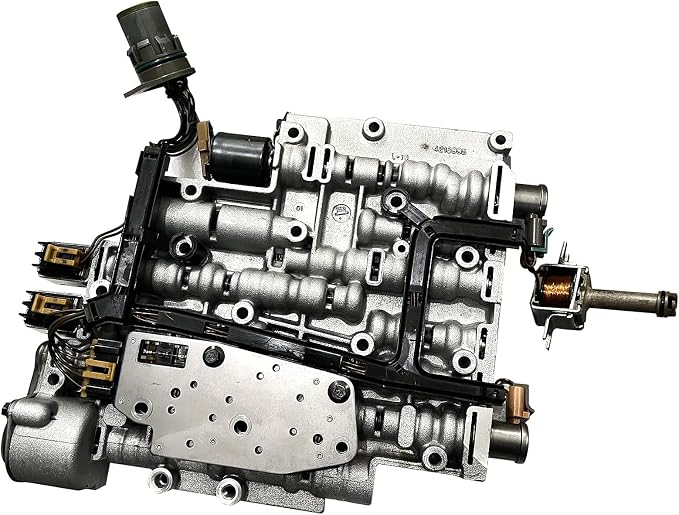
- The accumulator valve in the valve body. Make sure it is not sticking and its spring is not cocked in the bore.
- The #8 checkball. It forces band apply oil through the .067-.086 inch separator plate orifice on the 1-2. Leave it out, or drill that orifice open, and the 1-2 gets harsh.
- Servo cushion spring. If the band apply pin binds in the servo piston, the cushion spring cannot do its job. Pull the pin and check it.
- 4-3 sequence valve stuck inboard. This one is sneaky. It routes 2-4 band apply oil, unmetered, to the 4th gear servo piston. That piston's apply area is 6.108, close to the Corvette piston's 6.356, and it bypasses the cushion spring and the orifice. The result is a hard 1-2 that also shows up as 2-3 and 3-2 problems.
2-3 Flare and Late 3rd: Check the Driver Before the Valve Body
Low line pressure and 3rd-gear oil leaks cause most 4L60E 2-3 flares. But two documented cases put the fault in the computer.
In Sonnax's case, a 1998 GM truck flared on the 2-3 before and after an overhaul, with no codes, normal line pressure, and a second valve body already tried. A new computer fixed it. Nader found why by replacing the TRANS fuse with DVOM leads, commanding 3rd (both solenoids off) with a bi-directional scan tool, zeroing the meter, then commanding 4th and 2nd to cycle each solenoid. The "A" solenoid current dropped to zero in a fraction of a second. The "B" solenoid took about 2 seconds. With "B" exhausting slowly, the 2-3 shift valve crept over instead of snapping, the 2-4 band let go before the 3-4 clutch applied, and the engine flared.
Transmission Digest's Gordon Kehler, a former GM master tech, wrote up a worse version on a 2001 S-10 with P0758 (2-3 shift solenoid B circuit). The scanner showed 3rd commanded while the ratio stayed at 1.6:1, and the shift arrived 20 to 25 seconds late. Both solenoid circuits tested inside the 19-31 ohm spec. At the PCM connector the 1-2 circuit drew .49 amps (about 26.5 ohms) and the 2-3 circuit measured 27 ohms. A lab scope on the low-side driver showed the problem: the 2-3 driver took 15 to 27 seconds to turn off. A replacement PCM fixed it.
On a 25-year-old Camaro the PCM is as old as the transmission. Before buying a valve body for a 2-3 flare or a late 3rd, do the amp-draw test and watch how fast each solenoid turns off.
Second-Gear Starts With the SGS Light Off
In Colonna's 1993 Chevrolet 1500 case, the truck started in 2nd at stops even though the scanner commanded 1st and both solenoids checked on. New solenoids and a second valve body changed nothing. Drive-range line pressure was a correct 62 psi, which ruled out the line pressure, AFL valve, and forward accumulator. The clue: it bound up in manual low. The 1-2 accumulator piston was missing its rubber seal, so accumulator oil fed past the piston into the band apply circuit and applied the band. A new seal fixed it.
So on a Camaro that starts in 2nd with the SGS light off, confirm line pressure at a stop is well above 48 psi. If it is, inspect the 1-2 accumulator, especially if it binds in manual 1.
The Repair Order That Saves Money
- Fluid level and condition, hot. SGS button off. Lever in the right range.
- Read codes. Fix engine codes (MAF, lean, misfire) and TCC codes (P1870/P0894) first, because they change line pressure.
- Check the TRANS fuse and the solenoid feed at the case connector. Measure solenoid resistance against the 19-31 ohm spec.
- Put a gauge on the line tap and a meter on the EPC circuit. Compare the actual current with the PID.
- Do the amp-draw test at the fuse. A slow turn-off points at the PCM driver or a sticking solenoid.
- Only then go into the valve body, servo, and accumulators for the hydraulic causes above.
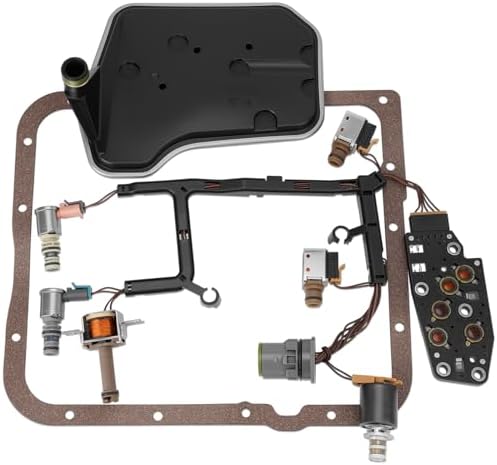
When the solenoids are the cause, replace the A and B solenoids as a pair, and replace the EPC solenoid at the same time if the pan shows debris. A shift kit will not fix a stuck 4-3 sequence valve or a failing driver. For prevention, GM's Camaro manual lists high-performance driving among the conditions that call for a fluid and filter change every 15,000 miles instead of 50,000. It also says to use DRIVE instead of AUTOMATIC OVERDRIVE when towing and on hilly roads.
4L60E Master Solenoid Kit, 1993-2002
A and B shift, EPC, TCC, and 3-2 solenoids for the 1993-2002 4L60E, the right years for every automatic fourth-gen Camaro. For single solenoids, valve bodies, and accumulator parts, the full 4L60E lineup is here.
See the solenoid kit →FAQ
Why does my Camaro transmission shift hard?
If every shift and the garage engagement are harsh, line pressure is too high. Common causes are a TCC slip code such as P1870 or P0894, which puts the 4L60E in high line pressure mode, engine faults like a bad MAF or lean condition, a failed EPC solenoid driver in the PCM, or the EPC solenoid itself. Check with a pressure gauge and a meter on the EPC circuit, because the scan tool PID can show the right value when the real current is wrong.
Why is my Camaro stuck in third gear?
On a 4L60E, both shift solenoids off means 3rd gear. If the solenoids lose power from a blown TRANS fuse, an open feed wire, or an unplugged case connector, the car runs in 3rd in Drive and never shifts. Check the fuse and the voltage at the case connector before replacing any parts.
Why does my Camaro start in second gear?
On a V6 car, check the Second-Gear Start button first; if its light is on, the car is supposed to start in 2nd. If it is off, the 4L60E valve body defaults to 2nd and needs about 48 psi of line and AFL pressure to shift the 1-2 valve into 1st. Low pressure at a stop, or a leaking 1-2 accumulator piston seal that applies the band, will cause 2nd-gear starts.
Can a bad computer cause 4L60E shift problems?
Yes. Sonnax documented a 2-3 flare caused by a PCM that turned the B solenoid off in about 2 seconds instead of a fraction of a second, and Transmission Digest documented an S-10 whose 2-3 solenoid driver took 15 to 27 seconds to turn off, delaying 3rd gear. In both cases a replacement computer fixed it. An amp-draw test at the TRANS fuse shows how fast each solenoid turns off.
Keep the numbers at the bench. Our free transmission fluid spec chart lists the correct ATF type for the 4L60E and dozens of other units, so you never top off with the wrong fluid.
Sources
- General Motors — 2000 Chevrolet Camaro Owner Manual. Backs: the 5.0 qt refill, the Second-Gear Start feature, FIRST engaging only at low speed, the 25-mile and 55 mph limits in SECOND, the 15,000-mile interval for high-performance use, and DRIVE versus AUTOMATIC OVERDRIVE use. GM: 2000 Camaro owner manual (PDF)
- Transmission Digest — 4L60E Harsh 1-2 Shift (Wayne Colonna, April 2021). Backs: P1870/P0894 high line pressure mode, the EPC driver failure on 1993-1997 models, the unreliable EPC PID and the gauge-plus-DVOM test, the four servo pistons (093, 553, 159, 554), 1-2 accumulator spring orientation, the #8 checkball and .067-.086 in. orifice, the servo cushion spring, and the stuck 4-3 sequence valve (6.108 vs 6.356 apply area). transmissiondigest.com: 4L60E harsh 1-2 shift
- Transmission Digest — Fixing 4L60-E 1-2 Shift Issues (Wayne Colonna, July 2022). Backs: the valve body defaulting to 2nd with the engine off, the 48 psi needed to stroke the 1-2 shift valve, the 62 psi drive-range reading, and the missing 1-2 accumulator piston seal that caused 2nd-gear starts. transmissiondigest.com: fixing 4L60-E 1-2 shift issues
- Transmission Digest — Diagnosing an Unusual Problem: A Slow-to-Respond Solenoid (Gordon Kehler, January 2023). Backs: the 2001 S-10 P0758 case, the 20-25 second 3rd-gear delay, the 19-31 ohm solenoid spec, the .49 A and 26.5/27 ohm measurements, the shared fuse feed with PCM low-side drivers, the 15-27 second driver turn-off on the scope, and the PCM replacement. transmissiondigest.com: slow-to-respond solenoid
- Sonnax — 4L60E Flares on 2-3 Shift? Could Be a Bad Computer (Gregg Nader, November 2006). Backs: the A/B solenoid states for 2nd, 3rd, and 4th, the amp-draw test through the TRANS fuse, the "B" solenoid taking about 2 seconds to turn off, and the mechanism of the flare. sonnax.com/tech_resources/106
- Sonnax — Understanding 4L60-E Series Isolator Bore Wear and How to Address It (Tory Royce, January 2025). Backs: EC3 controls on 1998-and-later units, the normal 20-40 RPM TCC slip, and isolator bore wear causing codes 894/1870, low line pressure, and a harsh 1-2. sonnax.com/tech_resources/1440