The S-10 is the truck people forget to service. Plenty of them are on their third or fourth owner with no paperwork, and old, cooked fluid is how most of their 4L60Es start to slip. A pan service on an S-10 is a one-hour job if you know what GM actually specified for it, and it is a good way to wreck a tired transmission if you do it blind.
The short version: A pan drop and filter on an S-10 4L60E takes 5.0 quarts (4.7 L), per GM's S-10 owner manuals. The manuals call for DEXRON-III, which is no longer made under license; a licensed DEXRON-VI is the correct fluid now, because GM's bulletin 04-07-30-037A allows DEXRON-VI in 2005-and-earlier models that used DEXRON-III. GM's interval is every 50,000 miles, or every 15,000 miles if the truck tows, works in hills, or lives in 90°F city traffic. The filter is GM kit 24200796. Set the final level hot, at 180-200°F, and nowhere else.
Which S-10s This Covers
From 1993 through 2004, every automatic S-10 pickup has the 4L60E four-speed, RPO M30 on the Service Parts Identification sticker in the glovebox. GM's 2000 S-10 owner manual lists the same transmission and the same refill for both engines that year, the Vortec 2200 four-cylinder and the Vortec 4300 V6. By the 2004 manual, the 4300 V6 (VIN code X) is the only engine listed, and the transmission numbers did not change. The S-10 Blazer, Sonoma, and Jimmy of the same years use the same unit, so the procedure below carries over.
Fluid Type: DEXRON-III on the Label, DEXRON-VI in the Bottle
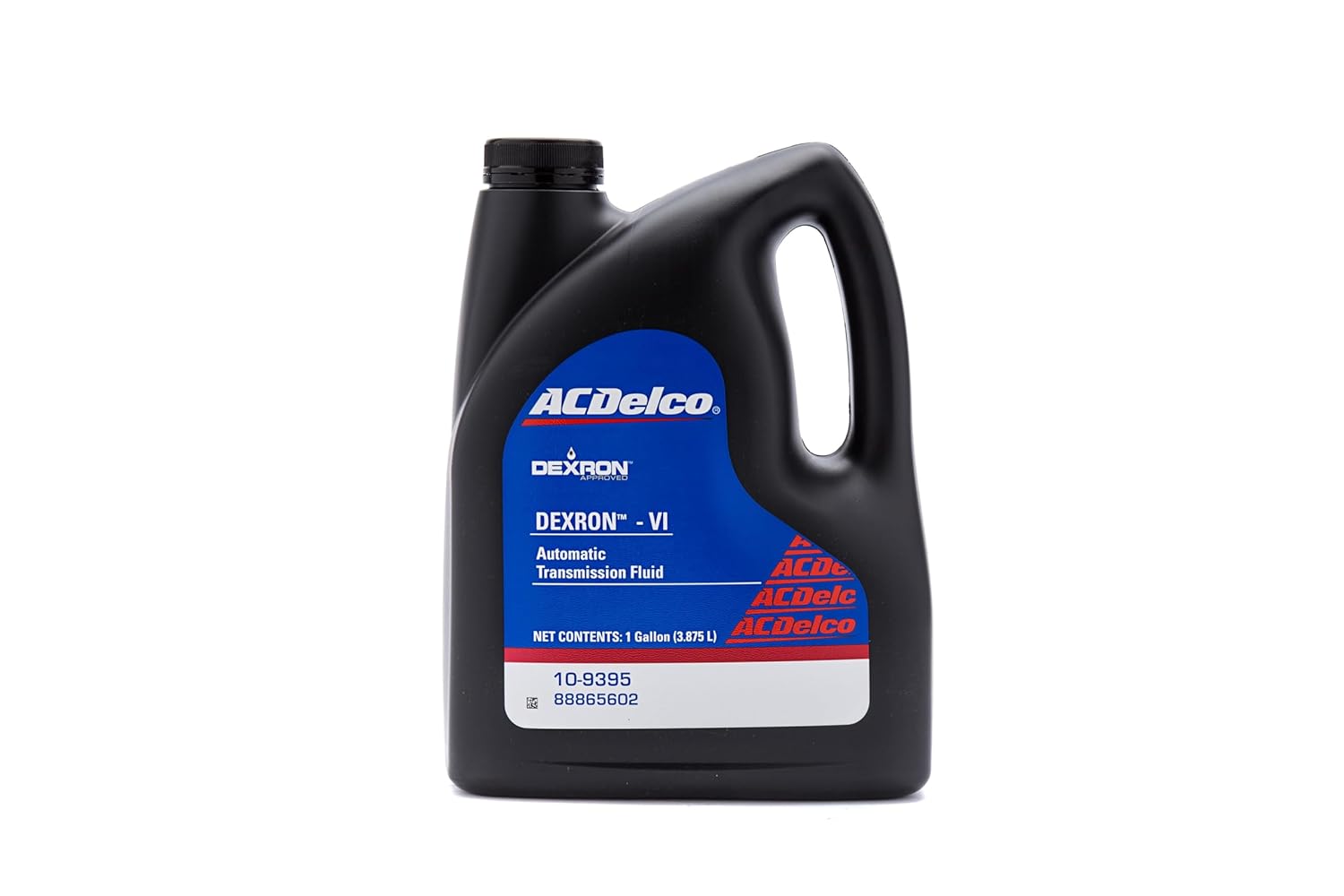
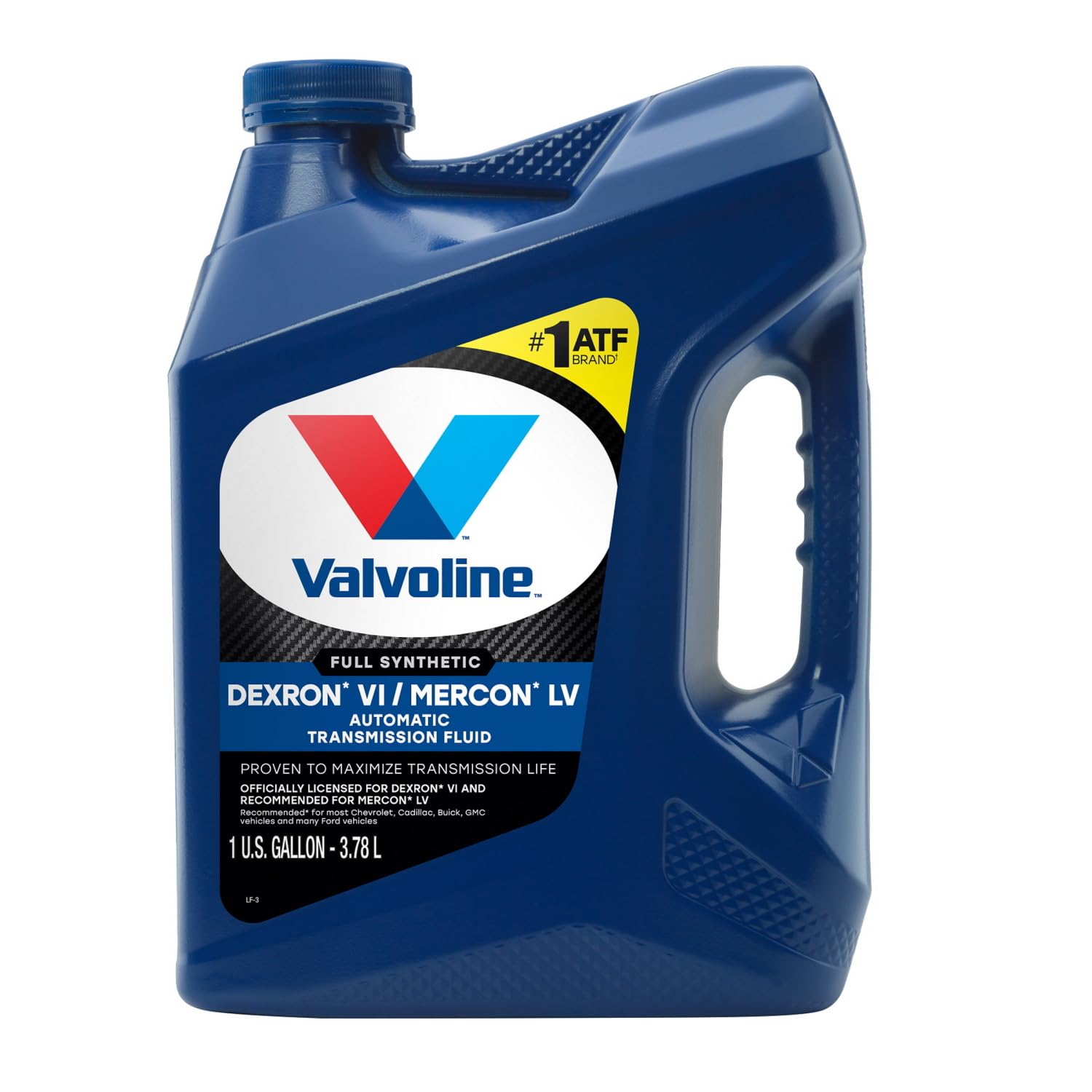
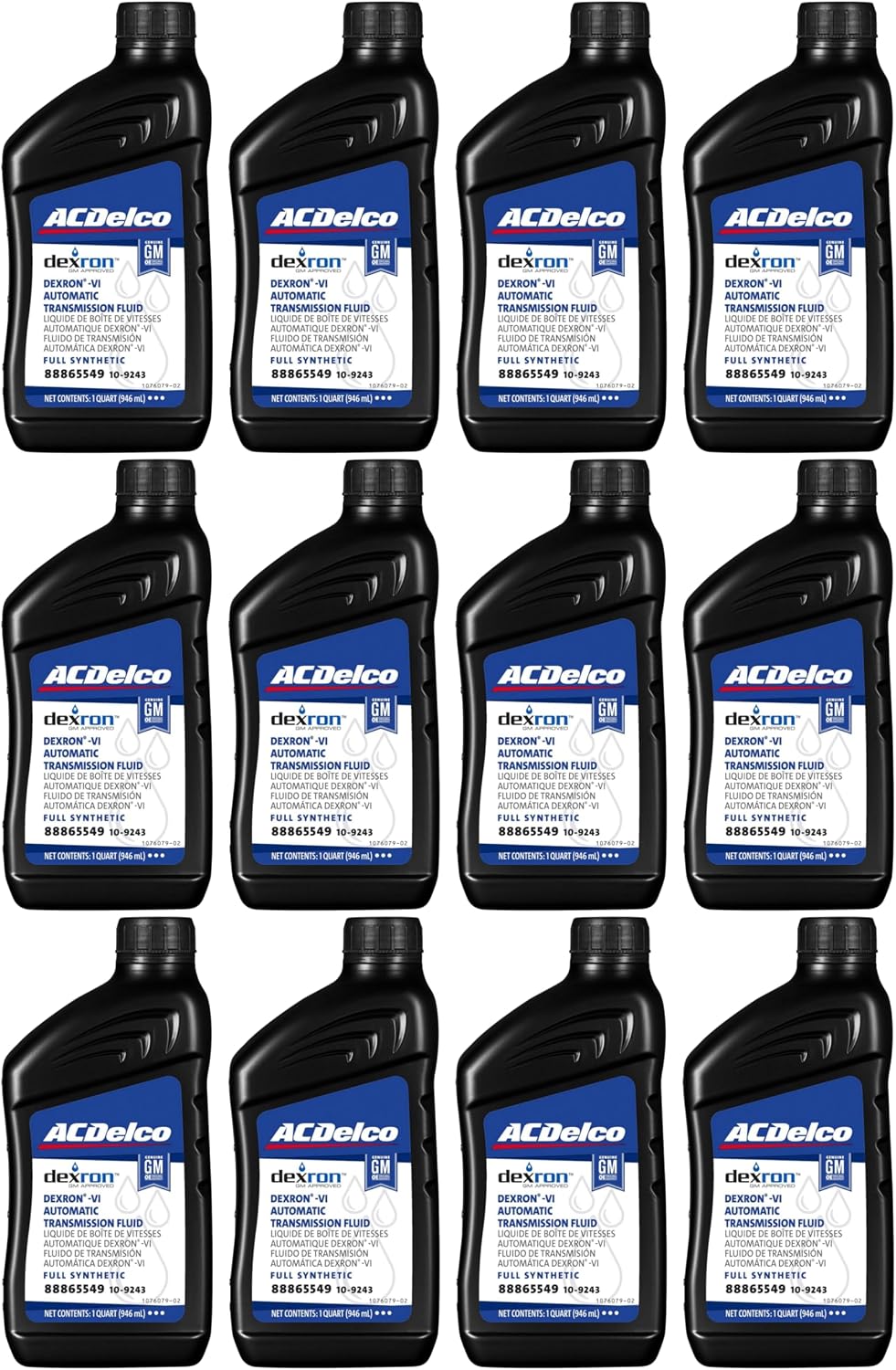
Every S-10 manual from this era says the same thing: use only fluid labeled DEXRON-III. That was correct when the truck was built. It is not what you should buy today. GM moved its factory fill to DEXRON-VI for the 2006 model year, and service bulletin 04-07-30-037A (August 19, 2005) states that 2005 and earlier models that use DEXRON-III may use DEXRON-VI as a replacement. It does not work the other way: 2006-and-later models that call for DEXRON-VI get DEXRON-VI only. GM engineers laid out the reason in SAE paper 2006-01-3242: DEXRON-VI was written as GM’s service-fill spec to supersede DEXRON-III, with better friction durability and viscosity stability, so a licensed DEXRON-VI is an upgrade for the S-10, not a compromise [6].
The fluid makers say the same. Valvoline's DEXRON-VI product sheet describes its licensed fluid as fully back-serviceable and usable wherever DEXRON-II or DEXRON-III is recommended. [3] The key word is licensed. A jug that says "suitable for use in DEXRON-III applications" or "multi-vehicle" is making its own claim. A bottle that carries the actual GM DEXRON-VI license has passed GM's testing. The 4L60E's shift quality depends on friction behavior, so buy the licensed product.
4x4 trucks: the transfer case is not the transmission
On a 4WD S-10, the transfer case has its own fluid, its own fill and drain plugs, and its own spec, and GM changed that spec over the years. The 2000 S-10 manual lists AUTO-TRAK II fluid (GM part 12378508) for the automatic transfer case. The 2004 manual lists DEXRON-III for the transfer case. Check the manual for your exact year before you touch it, and do not drain the transfer case thinking you are draining the transmission.
Capacity and Parts
| Item | S-10 4L60E spec | Where it comes from |
|---|---|---|
| Drain and refill (pan and filter) | 5.0 qt (4.7 L) | GM 2000 and 2004 S-10 owner manuals, Capacities |
| Top-off when low on a hot check | Generally less than 1 pint (0.5 L) | GM 2004 S-10 owner manual |
| Fluid | DEXRON-III originally; licensed DEXRON-VI now | Owner manual; GM bulletin 04-07-30-037A |
| Filter kit | GM 24200796 | Normal Maintenance Replacement Parts, 2000, 2003 and 2004 manuals |
| Normal temperature for the level check | 180-200°F (82-93°C) | GM 2004 S-10 owner manual |
Five quarts is what a pan drop takes, not what the transmission holds. A large share of the fluid stays in the torque converter, the cooler, and the lines, and a pan service does not touch it. Buy six quarts so you have enough to set the level.
GM listed one filter kit across the S-10 years we checked: 24200796, per the Normal Maintenance Replacement Parts tables in the 2000 and 2004 manuals [1][2]. That is the shallow-pan filter. If someone has put a deep pan on the truck, the filter has to match the pan, not the truck.
When to Change It: GM's Interval, and Which Column You Are In
GM printed two numbers in the S-10 owner manuals, and they are far apart:
- Every 15,000 miles (25,000 km) if the truck is mainly driven in heavy city traffic where it regularly reaches 90°F (32°C) or higher, in hilly or mountainous terrain, with frequent trailer towing, or in taxi, police, or delivery use.
- Every 50,000 miles (83,000 km) if none of those apply.
Be honest about which one you are. In GEARS magazine, Pat Burrow points out that most everyday driving actually meets the severe-service definitions in owner manuals. A 4.3 S-10 that tows anything is a 15,000-mile truck by GM's own book, and most of the burnt 3-4 clutches we see in these came out of trucks that went 100,000 miles or more without a pan drop.
Before You Drain It: Read the Old Fluid and Drive It
On a high-mileage S-10 with no history, a fluid change is a diagnosis first and a service second. Pull the dipstick and put a drop on a white shop towel.
- Red or pink, little smell: normal. Service it.
- Brown, faint burnt smell: overdue. Service it, and check the level and color again in a few thousand miles.
- Black, strong burnt smell, gritty: the clutches or the band are already damaged. New fluid will not put friction material back on the plates.
Then drive it, and back it up. Burrow's GEARS article makes the point that shops have serviced transmissions without checking Reverse first and then could not get the vehicle back out of the bay. He also explains where the "a fluid change killed my transmission" story comes from: fresh fluid has a full load of detergent, and in a neglected, high-mileage unit it can loosen deposits that then end up in solenoids and valves.
His recommendation for these units is a pan drop and filter, not a machine exchange. A pan drop replaces about half the fluid, the change is gentler, and the computer has an easier time adapting. That is the right call for an S-10 with unknown history. If the truck already slips or flares between gears, the fluid service is not the repair; start with our S-10 4L60E slipping guide instead.
The Pan and Filter Service, Step by Step
- Warm it, then let it cool enough to handle. Warm fluid drains faster and carries more debris out with it.
- Drain. Most S-10 pans have no drain plug. Loosen the rear and side bolts first, leave a couple at the front finger tight, and let the pan tip down and drain from one corner into a wide catch pan.
- Pull the pan and the filter. The filter pulls straight down. Check that the filter neck seal came out with it. If the seal stayed in the case bore, remove it carefully without scoring the bore. Two seals stacked in the bore, or a new filter pushed in on top of an old seal, is a common reason for a whine and slipping right after a service.
- Read the pan. Wipe the magnet and look at what was on it. Fine gray paste is normal wear. Brass or bronze flakes point to bushings or thrust washers. Black fiber or chunks of friction material mean a clutch or the band is coming apart.
- Clean and reinstall. Clean the pan and the case rail completely, including any old gasket material. Install the new filter and neck seal, then the pan with a new gasket. Tighten the bolts in a crisscross pattern to the inch-pound value in the GM service manual. Overtightening a 4L60E pan crushes the gasket and bends the pan rail, and that is where most leaks after a pan service start.
- Refill. Add 5 quarts of licensed DEXRON-VI through the dipstick tube with a long funnel, start the engine, and go straight to the hot check below. Do not top it off cold.
If the pan was full of friction material, the debris is also in the cooler and lines, and it will flow back into the new fluid. Flush the cooler before you refill, per our 4L60E cooler flush guide.
Setting the Level: GM's Hot Check
GM warns that a sloppy check gives a false reading. Too much fluid can foam and come out of the vent onto the exhaust; too little lets the transmission overheat. Do it this way:
- Get it to temperature. GM wants the fluid at 180-200°F. Drive about 15 miles (24 km) when it is above 50°F outside. Below 50°F, drive in THIRD (3) until the engine temperature gauge moves and then stays steady for 10 minutes.
- But not too hot. If you have just towed, run at high speed for a long time, sat in heavy traffic in hot weather, or it is over 90°F out, GM says wait at least 30 minutes before checking.
- Set up. Level ground, engine running, parking brake on, shifter in PARK.
- Cycle the ranges. Foot on the brake, move the shifter through every range, pausing about three seconds in each, then back to PARK. Let it idle at least three minutes.
- Read it. Flip the handle up, pull the dipstick, wipe it, push it all the way back in, wait three seconds, and pull it again. Keep the tip pointed down so fluid does not run up the blade. Check both sides and read the lower level. It must be in the HOT or cross-hatched area.
- Correct it a little at a time. GM says a low unit generally needs less than one pint to reach the HOT area. Add in small amounts and recheck. Do not overfill.
Make sure the dipstick is telling the truth
This is the S-10 trap. So many of these trucks have had a junkyard or rebuilt transmission put in that the pan, dipstick, tube, and filter stop bracket may not belong together anymore. Sonnax's write-up on 4L60-E dipstick errors explains the history: in 1998 GM gave C/K trucks and vans a deeper pan with a longer dipstick, a longer tube, and a taller stop bracket, revised the bracket for the standard pan, and added a small chamfer to 1998-and-later valve bodies so the new brackets would fit. Without the right bracket, a regular pan can be underfilled by up to 0.5 qt, a deep dipstick by up to 0.75 qt, and a deep dipstick and tube on a regular pan will read normal while the unit is well short of fluid.
If the S-10 has had its transmission replaced and the stick reads full right after you poured in exactly 5 quarts, or reads full while the truck slips on turns, do not trust it.
What It Costs
The parts for a DIY pan service are six quarts of licensed DEXRON-VI and a filter kit with a gasket. A shop bills labor on top of the same parts. When you call around, ask exactly what they are quoting. "Transmission service" can mean a pan drop with a new filter, a drain-and-fill through the cooler line with no filter at all, or a machine exchange. For an S-10 with unknown history, the pan drop with a filter is the one you want, for the reasons above.
GM 24200796 Filter Kit for the S-10 4L60E
The filter kit number GM lists in the S-10 owner manuals, for the factory shallow pan. For pans, gaskets, and the rest of the 4L60E lineup, see the full collection here.
See the 24200796 filter →FAQ
How much transmission fluid does an S-10 4L60E take?
GM's S-10 owner manuals list 5.0 quarts (4.7 L) for a drain and refill with a new filter. That is not the total capacity, because the converter, cooler, and lines keep a large share of the fluid. Buy six quarts and set the final level with GM's hot check at 180-200 degrees F.
What transmission fluid does a Chevy S-10 use?
The S-10 manuals call for DEXRON-III, which is no longer licensed. GM bulletin 04-07-30-037A allows DEXRON-VI as the replacement in 2005 and earlier models that used DEXRON-III, so a licensed DEXRON-VI is the correct fluid today. Look for the GM DEXRON-VI license on the bottle, not a generic suitable-for-use claim.
How often should I change the fluid in my S-10 4L60E?
GM's interval is every 50,000 miles under normal use and every 15,000 miles if the truck mainly tows, works in hilly terrain, drives in 90 degree F city traffic, or does delivery-type work. Most S-10s that tow or haul belong on the 15,000-mile schedule.
Will changing the fluid hurt a high-mileage S-10 transmission?
It can expose a transmission that was already worn. Fresh fluid can loosen deposits in a neglected unit, and a slipping transmission will not be fixed by new fluid. On an S-10 with unknown history, check the old fluid and test Reverse first, then do a pan drop with a new filter rather than a machine flush.
Keep the numbers at the bench. Our free transmission fluid spec chart lists the correct ATF type for the 4L60E and dozens of other units, so you never top off with the wrong fluid.
Sources
- General Motors — 2000 Chevrolet S-10 Owner Manual. Backs: 4L60E behind the Vortec 2200 and 4300, 5.0 qt (4.7 L) drain and refill, the 15,000-mile severe and 50,000-mile normal fluid and filter intervals and the severe-service conditions, AUTO-TRAK II fluid (GM 12378508) for the automatic transfer case, and filter kit 24200796. GM: 2000 S-10 owner manual (PDF)
- General Motors — 2004 Chevrolet S-10 Owner Manual. Backs: the hot check procedure (180-200°F, 15 miles, THIRD below 50°F, 30-minute wait after towing or hot driving, cycling the ranges, reading the lower level), the less-than-one-pint top-off, DEXRON-III as the original fluid, DEXRON-III for the transfer case, 5.0 qt drain and refill, and filter kit 24200796. GM: 2004 S-10 owner manual (PDF)
- Valvoline — DEXRON-VI ATF Product Information Sheet. Backs: licensed DEXRON-VI being fully back-serviceable and usable wherever DEXRON-II or DEXRON-III is recommended. Valvoline: DEXRON-VI ATF PI sheet (PDF)
- Sonnax — How to Avoid a Dipstick Move in 4L60-E Series Transmissions (Jason Larochelle). Backs: the 1998 deep pan, dipstick, tube, and bracket changes, the valve body chamfer, and the 0.5 qt and 0.75 qt underfill figures from mismatched parts. sonnax.com/tech_resources/941
- GEARS Magazine (ATRA) — Is It Safe to Change Transmission Fluid in High-Mileage Vehicles? (Pat Burrow, December 2024). Backs: most driving meeting severe-service definitions, why fresh fluid can upset a neglected unit, the pan drop replacing about half the fluid, and checking Reverse before service. gearsmagazine.com: high-mileage fluid changes
- SAE International — Technical Paper 2006-01-3242, General Motors DEXRON-VI Global Service-Fill Specification (Fewkes, Calcut and Willis, General Motors, October 2006). Backs: DEXRON-VI as GM’s service-fill ATF specification for its stepped-gear automatics, superseding DEXRON-III service-fill fluids, and its friction durability and viscosity stability gains over DEXRON-III. SAE Mobilus: paper 2006-01-3242