The S-10 is the truck people forget has a 4L60E in it. It's small, so owners assume the transmission is lightly worked. It isn't. GM put the same 4L60E behind a 120 hp 2.2L four and behind the 4.3L Vortec V6, then rated the V6 trucks to tow up to 6,400 lb. Lots of these trucks spent their lives pulling boats in Drive with a small factory cooler. Then it reaches you with a burnt 3-4 pack, a flashing check engine light, or no 2nd, 4th or reverse.
This is the S-10 list I work from, roughly in the order I see the failures. It covers the 1993-2004 S-10 pickup and, because GM wrote its bulletins that way, the S-10 Blazer and Sonoma share most of it. Every spec here has a source, listed at the bottom.
The short version: The S-10's top 4L60E killers are a burnt 3-4 clutch (low line pressure or a 3rd-gear oil leak, made worse by towing in Drive), TCC regulator bore wear that sets P1870/P0894 and harsh 1-2 shifts, and a stripped reaction sun shell (no 2nd, 4th or reverse). If a replacement unit or converter just went in and it shifts harsh 1-2 with P0894 or P1870, that's GM bulletin PIP5340A. Fluid is DEXRON-III (or a current licensed replacement), 5.0 qt drain and refill, checked hot at 180-200°F.


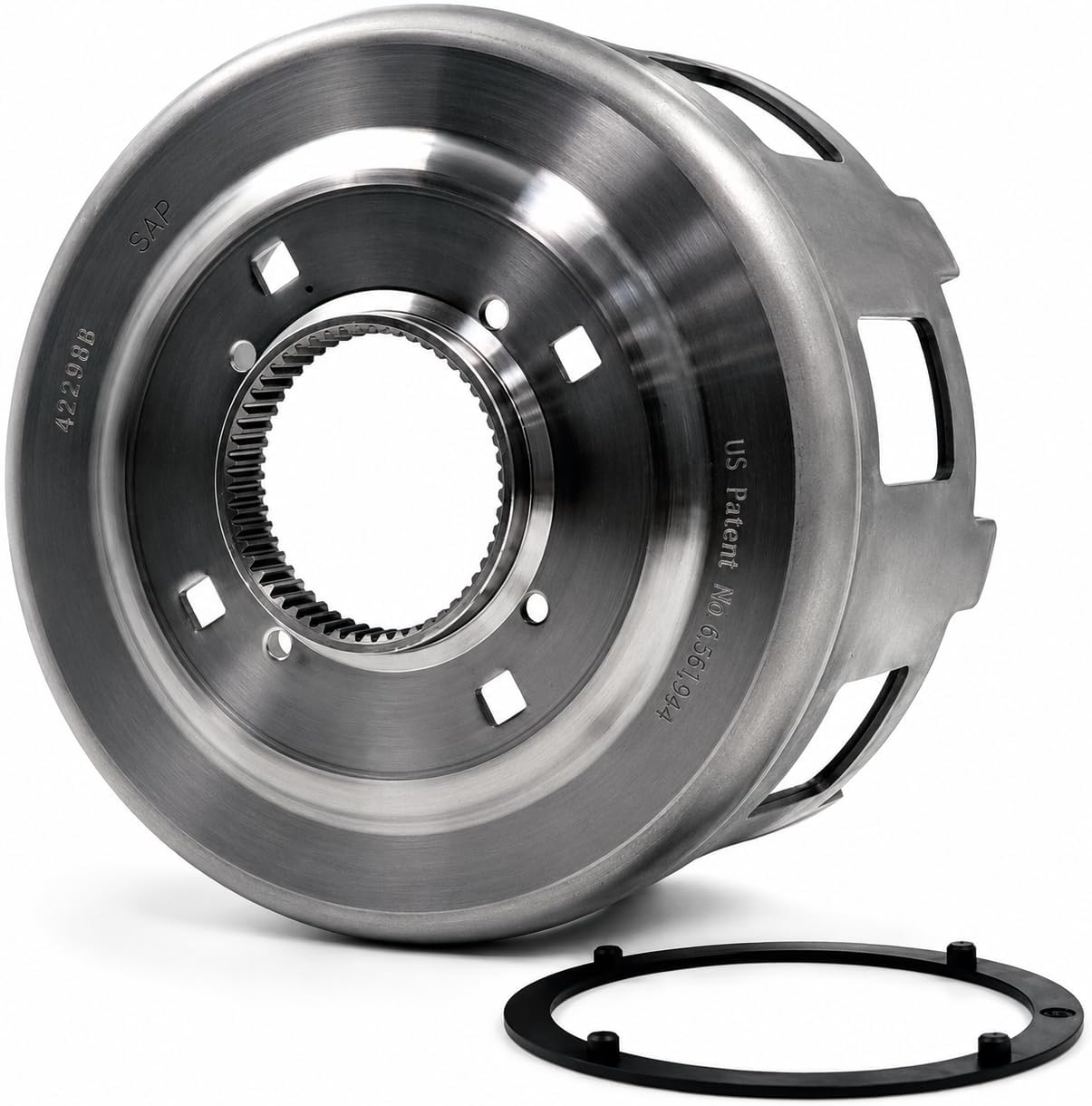
What Ships in an S-10 and Why It Matters
GM's 2000 S-10 owner manual lists two engines with the automatic: the Vortec 2200 L4 (120 hp) and the Vortec 4300 V6 (175-190 hp depending on series). Both run the 4L60E, and the manual gives one automatic transmission capacity for both: 4L60E, 5.0 quarts (4.7 L) drain and refill. That's a pan drop. A dry unit after a rebuild takes much more, so fill to the dipstick, not to a number.
The towing chart matters more than people expect. In the 2000 manual, a 2WD 4.3L automatic is rated at 5,400 lb with a 3.08 axle and 6,400 lb with a 3.42. A 4WD 4.3L automatic is rated 4,900 lb (3.08) and 5,900 lb (3.42 or 3.73). The 2.2L 2WD is good for only 2,000-2,300 lb. GM also says trucks with RPO V4A, the Xtreme package, were "neither intended nor designed to tow a trailer." Ask about towing at write-up. A 4.3L truck that pulled 5,000 lb for years has a different failure profile than a 2.2L commuter.
The same manual tells the owner that Drive should not be used when towing, carrying a heavy load, on steep hills or off-road, and to select THIRD instead. Almost nobody does. Towing heavy in 4th, the 3-4 clutch holds full engine torque through a 0.70 overdrive and the converter clutch is cycling under load. That one habit sets up the first two failures below.
1. Burnt 3-4 Clutch
This is the S-10's most common teardown. The symptom is a flare on the 3-4 shift that gets worse until 4th is gone, often with a 2-3 flare too. You'll usually find black frictions and a dished or blued backing plate.
The burnt pack is the result, not the cause. Sonnax's Brian Wing, in a 2018 tech article on 4L60-E 3-4 burnup, calls low line pressure and 3rd-gear oil leaks the root cause of most 3-4 slipping. His list of leak and pressure suspects is long, and these are the ones I check on every S-10:
- 3rd accumulator checkball capsule. The 2-4 servo acts as the 3rd accumulator. A leaking capsule bleeds 3rd oil. Sonnax says to test new capsules too, because they can leak out of the box. Don't replace it with a cup plug: that chokes off venting.
- Input housing checkball. Vacuum test it. Sonnax treats anything under 25 in-Hg as an unacceptable leak. A ball that clogs can also cause a partial apply.
- Input housing seal areas. A galled bore from a sharp shaft edge, or a missing or leaking O-ring between the input and forward clutch housings, bleeds apply oil.
- Pump. A leaking boost valve, worn boost sleeve bore, worn pressure regulator valve or sticking slide all pull line pressure down. Wet-air or vacuum test the 3-4 and forward passages with the stator installed.
- Clogged AFL screen feeding the pressure control solenoid. A plugged screen starves EPC and drops line pressure.
- Reverse abuse bore plug behind the 3-2 control valve, and a sticking 2-3 shift valve.
- Weak OE backing plate. It flexes during apply and loads the frictions unevenly, so you get hot spots.
On a 1996 S-10 or Blazer, one more check comes first. Sonnax points to GM bulletin 00-07-30-026, a VCM ground update for 1996 trucks. That bulletin covers poor grounding that can cause erratic line pressure. If the jumper isn't there, a fresh 3-4 pack will burn the same way.
Before teardown, put a gauge on the line pressure tap and compare it to spec across the EPC range. Our 4L60E line pressure guide has the procedure and the numbers. On the rebuild, use a heavier backing plate and a full 3-4 pack, not a reused one. The full checklist is in our 3-4 clutch pack diagnosis guide.
2. P1870 / P0894, Harsh 1-2, Hot Converter: The TCC Regulator Bore
This is the S-10 that comes in with a check engine light, a P1870 (TCC slip) or P0894 (component slipping), and a 1-2 shift that bangs. Plenty of shops throw a TCC solenoid or a converter at it and it comes right back.
Sonnax explains the mechanism in its TCC regulator kit documentation. The OE TCC regulator valve oscillates in its bore and wears it. Then TCC apply pressure exhausts past the worn bore. That lowers converter clutch apply, and Sonnax notes the same leak also lowers line pressure. Sonnax lists the symptoms as codes 894 and 1870, an overheated converter, low TCC apply pressure, a burned 3-4 clutch and harsh 1-2 shifts. That's a lot of an S-10's complaint list from one worn bore.
Year matters here. Sonnax's 77754-03K fits '97 and earlier non-EC3 4L60-Es. The 77754-04K covers all years including the '98-later EC3 units, which is most S-10s from 1998 to 2004. Sonnax says either kit raises apply pressure by about 10% and needs reamers to fit the sleeve. Vacuum-test the bore before deciding. On the scan tool, watch commanded TCC against actual slip RPM in 4th at steady cruise. Slip that climbs after lockup with the TCC commanded fully on points at apply pressure, not the solenoid. See our P1870 guide and P0894 guide for the full code logic.
Same codes right after a replacement unit: PIP5340A
If the harsh 1-2 and P0894 or P1870 show up right after a converter or replacement transmission went in, read GM bulletin PIP5340A (February 2016) before tearing anything down. It covers 1998-2004 Chevrolet S-10 and Blazer and GMC Sonoma and Jimmy, along with Astro, Safari, Express, Savana and 1998-2000 Silverado and Sierra, with the 4L60E (M30) or 4L65E (M32). The condition is MIL on, harsh 1-2 upshift and P0894 or P1870 setting after the installation. GM's instruction is to duplicate the concern, confirm the code is set in the TCM, and contact technical assistance. The original PIP5340 (October 2015) left the Blazer and Jimmy off. The A revision added them, so if you're working a Blazer, make sure you're reading the current version.
3. No 2nd, No 4th, No Reverse: The Reaction Sun Shell
The truck pulls in 1st and grabs 3rd, but 2nd, 4th and reverse are gone, and there's metal in the pan. The 2-4 band and reverse input clutch both work through the reaction sun shell, so when its splines strip or its hub cracks, all three ranges lose their reaction member at once. First and 3rd don't go through the shell, so they keep working.
Sonnax's Gregg Nader ranked the reaction shell and rear planet bearing as the 4L60-E's most common durability complaints. One cause he flagged that rebuilders rarely check is run-out. In a bench stack-up check, Sonnax found most shells ran about 0.010 in. of run-out, and some wobbled as much as 0.050 in. Use a heavy-duty shell, replace the rear planet bearing, and check the sun gear bushing on the same job. Our sun gear wear guide covers the gear side.
4. Cooler Flow After Any Internal Failure
An S-10 that burned a 3-4 pack or shredded a shell pushed that debris into its cooler. The cooler on these trucks isn't large, and it's the first thing a tow-hauler overwhelms. GM bulletin 02-07-30-052J, which covers all 2011 and earlier GM cars and light trucks, says insufficient flow through the ATF cooling system will cause premature transmission failure. GM's J-45096 TransFlow tool checks flow against a temperature-based minimum and won't run below 65°F supply oil. The same bulletin gives the 4L60-E line direction: feed exits the bottom fitting, return enters the top. No flow machine? Back-flush, then confirm a strong, steady stream from the return line with the engine running. If a tube-and-fin cooler ate a shell's worth of steel, replace it. The full process is in our cooler flush guide.
Quick Reference: S-10 Symptom to Cause
| Symptom | Most likely cause | First check |
|---|---|---|
| 3-4 flare, then no 4th; 2-3 flare | Burnt 3-4 clutch from low line pressure or a 3rd-oil leak | Line pressure test; 3rd accumulator capsule; input housing checkball (25 in-Hg) |
| P1870 or P0894, harsh 1-2, hot converter | Worn TCC regulator/isolator bore | Vacuum test the bore; TCC slip RPM in 4th |
| Harsh 1-2 and P0894/P1870 right after a unit or converter swap | GM PIP5340A condition (1998-2004) | Confirm code in the TCM; contact GM technical assistance |
| No 2nd, 4th or reverse; 1st and 3rd OK | Stripped or cracked reaction sun shell | Pan debris; shell splines, rear planet bearing |
| Erratic shifts, 1996 truck | VCM ground condition, GM 00-07-30-026 | Verify the ground update at the VCM |
Fluid, Level Check and Service Interval
GM's S-10 manuals call for fluid labeled DEXRON-III. That fluid has been superseded, so use a currently licensed GM fluid that's backward-compatible with DEXRON-III. The service interval surprises people. The 2000 S-10 manual calls for fluid and filter every 15,000 miles if the truck sees heavy city traffic in 90°F weather, hilly or mountainous terrain, frequent trailer towing, or taxi, police or delivery use. Otherwise it's every 50,000 miles. Any S-10 that tows is on the 15,000-mile schedule.
The level check is where S-10s get overfilled. GM wants the fluid at 180-200°F, which is about 15 miles of driving above 50°F. In colder weather, drive in THIRD until the engine temperature gauge has held steady for 10 minutes. Wait 30 minutes after hard hot-weather driving or towing. Park level, engine idling, brake set, cycle through every range for about three seconds each, back to PARK, idle three minutes, then read the lower level on the dipstick. On the S-10 the dipstick is near the center of the engine compartment. GM notes the range is generally less than one pint, and warns that too much fluid can be pushed out onto hot exhaust parts and start a fire.
4L60E TCC Regulator Valve & Isolator Sleeve Kit (1993-2008)
This is the fix for the worn TCC regulator bore behind S-10 P1870 and P0894 codes, harsh 1-2 shifts and repeat 3-4 burnups. It covers every S-10 year. For the rest of the job, browse the full 4L60E lineup here.
See the TCC regulator kit →FAQ
What transmission is in a Chevy S-10 automatic?
From 1993 to 2004, automatic S-10 pickups with the 2.2L four or the 4.3L Vortec V6 use the GM 4L60E four-speed (RPO M30). GM's 2000 S-10 owner manual lists a single automatic capacity for both engines: 4L60E, 5.0 quarts drain and refill.
Why does my S-10 shift hard 1-2 with a P1870 code?
The most common cause is wear in the TCC regulator valve bore. Sonnax says the worn bore lets converter apply pressure exhaust, which also lowers line pressure, and lists P1870, P0894, harsh 1-2 shifts and burned 3-4 clutches as the symptoms. If it started right after a transmission or converter replacement on a 1998-2004 truck, check GM bulletin PIP5340A.
How much transmission fluid does an S-10 4L60E take?
GM's S-10 manual lists 5.0 quarts (4.7 L) for a drain and refill. A dry unit after a rebuild takes much more, so always finish by checking the level hot, at 180-200 °F, and don't overfill.
How often should S-10 transmission fluid be changed?
The 2000 S-10 manual calls for fluid and filter every 15,000 miles if the truck tows often, runs in hilly terrain, sits in hot city traffic, or does delivery-type work. Otherwise the interval is 50,000 miles.
Can an S-10 with a 4L60E tow?
Yes, within its rating. The 2000 manual rates a 2WD 4.3L automatic at 5,400 to 6,400 lb depending on axle ratio, and a 4WD 4.3L at 4,900 to 5,900 lb. The Xtreme package (RPO V4A) was not designed to tow, and GM says to tow in THIRD, not DRIVE.
Keep the numbers at the bench. Our free transmission fluid spec chart lists the correct ATF type for the 4L60E and dozens of other units, so you never top off with the wrong fluid.
Sources
- General Motors — 2000 Chevrolet S-10 Owner Manual. Backs: the Vortec 2200 L4 and Vortec 4300 V6 ratings; 4L60E drain and refill capacity of 5.0 qt (4.7 L); the trailer weight ratings by drivetrain and axle and the RPO V4A (Xtreme) no-tow warning; the instruction not to use DRIVE when towing; the 15,000/50,000-mile fluid and filter intervals; the 180-200°F hot check procedure, dipstick location, less-than-one-pint range and overfill warning; and DEXRON-III. GM: 2000 Chevrolet S-10 owner manual (PDF)
- General Motors Bulletin PIP5340A (February 2016), MIL Illumination, Harsh 1-2 Shift and P0894 or P1870 Setting After Torque Converter or Transmission Replacement, hosted by NHTSA. Backs: coverage of 1998-2004 S-10, Blazer, Sonoma, Jimmy and other models with the 4L60E (M30) or 4L65E (M32); the condition; the instruction to contact technical assistance; and that it superseded PIP5340 to update models. NHTSA: GM PIP5340A (PDF)
- General Motors Bulletin 02-07-30-052J (May 2015), Automatic Transmission Oil Cooler Flow Test Essential Tool J-45096 TransFlow, hosted by NHTSA. Backs: insufficient cooler flow causing premature transmission failure; the temperature-based minimum flow and 65°F supply oil minimum; and 4L60-E cooler line direction (feed bottom, return top). NHTSA: GM 02-07-30-052J (PDF)
- Sonnax — All Over the Map: Attacking 4L60/E Burnt 3-4 Clutches with Confidence (Brian Wing, June 2018). Backs: low line pressure and 3rd-gear oil leaks as the root cause of most 3-4 slipping; the 3rd accumulator capsule, input housing checkball (25 in-Hg), input housing, pump, AFL screen, reverse abuse plug and backing plate checks; the cup plug warning; and the reference to GM bulletin 00-07-30-026 for 1996 trucks. sonnax.com/tech_resources/659
- Sonnax — TCC Regulator & Isolator Valve Kit 77754-03K / 77754-04K. Backs: TCC regulator bore wear from valve oscillation; apply pressure exhausting and lowering line pressure; the 894/1870 codes, overheated converter, burned 3-4 and harsh 1-2 symptoms; '97-earlier non-EC3 vs. all-years/EC3 fitment; and the roughly 10% higher apply pressure. sonnax.com/parts/2457
- Sonnax — Do Not Let Run-Out Make Problems for Your 4L60-E (Gregg Nader, May 2006). Backs: the reaction shell and rear planet bearing as the unit's most common durability complaints, and the 0.010 in. typical and up to 0.050 in. shell run-out figures. sonnax.com/tech_resources/107