The Suburban is the longest, heaviest truck GM ever bolted a 4L60E behind. A 1500 Suburban rides on the same driveline as a Tahoe, but it carries more body, more people, more cargo and, very often, a camper or boat on the hitch. That's why most of the 4L60E failures I see in Suburbans are the same ones you'd find in a Silverado 1500, just earlier and burnt harder.
Here's my checklist for a Suburban with a transmission complaint, starting with the question people skip: is it even a 4L60E? Sources are at the bottom.
The short version: Only the 1500 Suburban (and Yukon XL 1500) uses the 4L60E. The 2500 got the 4L80E, and by 2008 GM lists a 6L90 too, so confirm the unit before you buy a single part. On a 1500, the big failures are a burnt 3-4 clutch (lost 4th, flare on the 3-4 shift), a broken or stripped reaction sun shell (no reverse, no 2nd, no 4th), heat damage from towing (GM's message center goes into protection mode at about 265°F), and forward slip after an input housing swap (GM bulletin PIP5072 names 1999-2006 Suburbans). Fluid is DEXRON-III on the GMT800 trucks and DEXRON-VI on 2008. Check it hot, at 180-200°F.

Step Zero: 1500 or 2500? Know Which Transmission You Have
This one costs people real money. The half-ton Suburban 1500 runs the 4L60E (RPO M30). The three-quarter-ton Suburban 2500 runs the much larger 4L80E (RPO MT1) on the GMT400 and GMT800 trucks. The 2008 Suburban owner manual makes the split plain: its capacity table lists the 4L60-E and 4L70-E at 5.0 qt (4.7 L), the 4L80-E at 7.7 qt (7.3 L) and a 6L90 at 6.3 qt (6.0 L), all in the same Suburban book. The same manual covers both the Hydra-Matic 4-speed and a Hydra-Matic 6-speed, with separate shift-lever and fluid-check sections for each.
GM's own input housing bulletin, PIP5072, lists the 1999-2006 Suburban and Yukon XL as equipped with a 4L60E, 4L65E or 4L70E (RPO M30, M32 or M70). So even among 1500s, don't assume. Read the service parts label in the glovebox: M30 is a 4L60E, M32 is a 4L65E, MT1 is a 4L80E. Thirty seconds there saves a return shipment and a lost day on the lift.
1. Burnt 3-4 Clutch: The Number One Failure
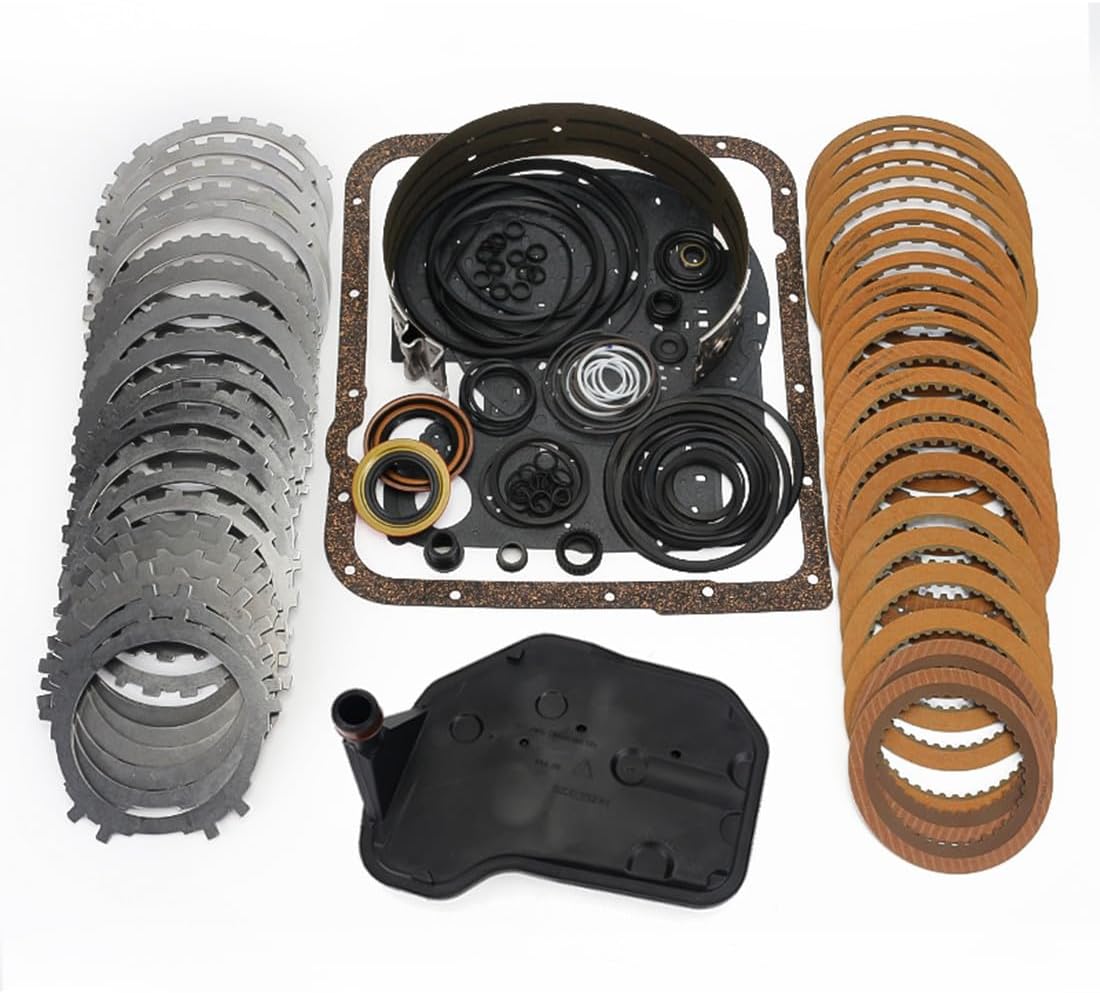
The classic story: it pulled a trailer up a long grade in summer, and now it flares on the 3-4 shift or won't take 4th at all. Pull the pan and you'll find black friction material. The 3-4 clutch is the weak pack in this unit, and a heavy truck finds it first.
Sonnax puts it bluntly: low line pressure and leaks of 3rd gear oil are the root cause of most 3-4 slipping. New frictions alone will burn up again if you don't find the leak. These are the places Sonnax tells you to look:
- Backing plate flex. The OE 3-4 backing plate flexes during apply, so heat builds unevenly across the pack. Sonnax's heavy-duty backing plate kit, 74140-01K, is designed to stop that. It requires an '87-later housing, snap ring and ring gear, and the '91-later 3-4 apply ring stamped "7".
- The 3rd accumulator checkball. The 2-4 servo doubles as the 3rd accumulator, and its checkball capsule is a leading cause of 3-4 failure. Vacuum or wet-air test it, including brand-new ones, which can leak right out of the box. Sonnax warns against swapping it for a cup plug, because the ball also serves as a vent. A plug can cause soft 2-3 shifts and 3-2 flares.
- The input housing checkball. If it won't hold 25 in. Hg on a vacuum test, Sonnax calls it an impermissible leak. A checkball that can't exhaust lets centrifugal force partially apply the clutch, and that cooks it.
- Line pressure. Worn boost valves and sleeves, a worn pump slide, dirty AFL and EPC screens and worn TCC regulator and isolator bores all pull it down. So can TP, MAP or MAF faults and a weak EPC solenoid.
If the truck tows, fix the leaks and upgrade the pack in the same teardown. Building it back to stock is how you see it again in a year.
2. Reaction Sun Shell: No Reverse, No 2nd, No 4th
This is the other big one in heavy trucks. The reaction sun shell is a stamped steel shell that ties the reverse input drum to the rear sun gear. When the 2-4 band holds the reverse input drum, the shell holds the sun gear, which gives you 2nd and 4th. When the reverse input clutch applies, the shell drives the sun gear for reverse. So when the shell's hub breaks or its splines strip, the truck typically loses reverse, 2nd and 4th, while 1st and 3rd still work. A Suburban that pulls away fine but "falls into neutral" on the 1-2 shift, and won't back up, is a strong suspect.
Sonnax names the reaction shell and rear planet bearing as two of the 4L60E's most common durability complaints. It blames poor stampings, soft metal, bad or poorly supported bearings, endplay and shaft thrust. Its bench check is worth doing on every Suburban rebuild. Stack the output shaft, front planet, bearings, reaction carrier shaft and rear planet in a vise with the shell and sun gear on top, then spin it. Sonnax says shell run-out is typically about .010 in., but it has measured some at as much as .050 in. of wobble. That much run-out breaks shells and wears splines. Watch the planet as you spin. If it rocks, the sun gear is wobbling, whether from a bushing out of position or a poorly made gear.
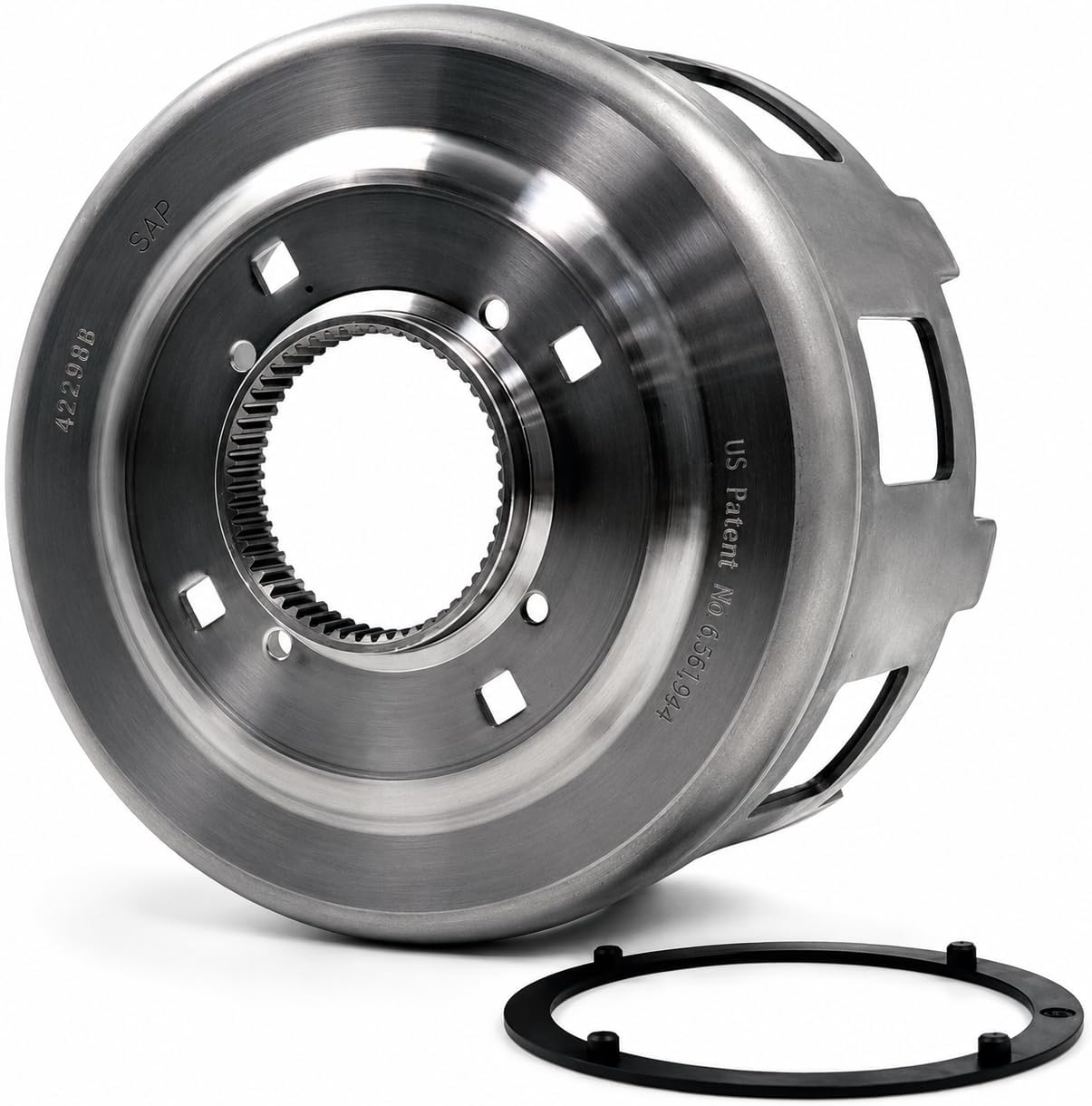
For a Suburban that tows, I don't reuse a stock shell. Sonnax's SmartShell heavy-duty reaction shell kit (77749-02K) is built to stop spline stripping, prevent hub breakage and eliminate planetary bearing failure. While you're in there, check the reaction carrier shaft. The late bearing-style shaft is GM 24222756.
3. Heat: What Towing Does to a Half-Ton Transmission
Every failure on this list gets worse with heat, and a loaded Suburban makes plenty. Per the 2004 Suburban owner manual, the transmission temperature gauge reads normal from about 100°F to about 265°F (38-130°C). At about 265°F the message center shows TRANSMISSION HOT and the transmission enters a protection mode, which changes the shift pattern. It returns to normal once the fluid falls below 260°F. At about 275°F or more, it shows TRANS HOT IDLE ENGINE with a chime. GM tells the driver to pull over and idle in PARK until it drops below 260°F.
If the owner has seen that message, it's part of the diagnosis. Check the level hot, inspect the cooler and lines, and confirm the converter locks at cruise, because a TCC that won't apply makes heat all day. GM's answer for loaded driving is Tow/Haul mode. Many owners never press the button.
4. Slip or No Forward Right After an Input Housing Replacement
You replace the input housing and the truck comes back with a slip, or no forward engagement at all. GM bulletin PIP5072 (October 2012) covers it, and it lists the 1999-2006 Chevrolet Suburban and GMC Yukon XL by name. The problem is a service input housing, part number 17803687, that may have an incorrectly drilled input shaft. It cross-feeds the forward clutch and 3-4 clutch circuits.
The test is an air check on the fully assembled housing. Apply regulated air to the forward clutch feed hole and air should not come out of the 3-4 feed hole, and vice versa. If air crosses between the two, GM says to replace the housing with part number 19125752. GM also notes that a small leak between the shaft and housing is normal, because that press fit isn't airtight.
Quick Reference: Suburban 4L60E Symptom to Cause
| Symptom | Most likely cause | First check |
|---|---|---|
| Flare on 3-4, no 4th, RPM climbs on highway | Burnt 3-4 clutch | Pan debris, line pressure, #7 checkball |
| No reverse, no 2nd, no 4th; 1st and 3rd work | Broken or stripped reaction sun shell | Teardown, shell hub and splines |
| TRANSMISSION HOT message, changed shift pattern | Fluid over about 265°F | Level hot, cooler flow, TCC apply |
| Slip or no forward right after input housing swap | Service housing 17803687 cross-leak (PIP5072) | Air check forward and 3-4 feed holes |
| Parts don't fit, kit "wrong" | 2500 with 4L80E, or a 4L65E | RPO code on the glovebox label |
Fluid, Capacity and the Level Check
The 2004 Suburban owner manual specifies DEXRON-III automatic transmission fluid. The 2008 manual specifies DEXRON-VI. GM lists 5.0 qt (4.7 L) for the 4L60-E in the 2008 capacity table. Treat it as a service refill guide, not a dry fill, and set the final level hot on the dipstick.
Don't mix up the transfer case. The 2004 manual calls for AUTO-TRAK II fluid (GM 12378508) in the automatic 4WD case; the 2008 manual calls for DEXRON-VI at 2.0 qt.
The interval depends on how the truck is used. The 2004 manual says to change the fluid and filter every 50,000 miles if GVWR is over 8,600 lb or if the truck is mainly driven in 90°F city traffic, in hilly or mountainous terrain, with frequent trailer towing, or in taxi, police or delivery service. Otherwise it's 100,000 miles. Most Suburbans I see belong on the 50,000-mile schedule because of how they're driven.
The level check, per GM:
- Get the fluid to 180-200°F (82-93°C). Driving about 15 miles does it above 50°F. Below 50°F, drive in THIRD until the engine temperature gauge has been steady for 10 minutes.
- If the truck has been towing, run at high speed or sat in hot traffic, wait at least 30 minutes before checking.
- Park on level ground with the engine running and the parking brake on. Move through each range, pausing about three seconds, then return to PARK and idle at least three minutes.
- The dipstick is at the rear of the engine compartment on the passenger side. Read the lower level on both sides of the stick. Hot, it belongs in the HOT or cross-hatched area.
- The range is generally less than one pint (0.5 L). Add slowly, and don't overfill. GM warns that overfilled fluid can come out onto hot engine or exhaust parts.
Sonnax SmartShell Heavy Duty Reaction Shell Kit 77749-02K
This is the Sonnax shell built to stop the spline stripping and hub breakage that take out reverse, 2nd and 4th in heavy, towing 4L60E trucks like the Suburban. For the rest of the job, see the full 4L60E lineup here.
See the SmartShell kit →Building a Suburban 4L60E That Lasts
- If it tows, upgrade the 3-4 pack and backing plate, and replace the reaction shell with a heavy-duty piece. Check shell run-out and sun gear wobble on the bench.
- Test the #7 checkball capsule and the input housing checkball. Vacuum test the valve body bores Sonnax lists, including the AFL, TCC regulator and isolator.
- If you installed a service input housing, air check it per PIP5072 before the case goes back together.
- Flush or replace the cooler after any burnt-clutch failure, and put the truck on the 50,000-mile schedule.
FAQ
Does a Chevy Suburban have a 4L60E or a 4L80E?
It depends on the series. The half-ton Suburban 1500 uses the 4L60E (RPO M30), while the three-quarter-ton 2500 uses the 4L80E (RPO MT1), and the 2008 owner manual also lists a 6L90. GM bulletin PIP5072 lists 1999-2006 Suburbans with the 4L60E, 4L65E or 4L70E, so read the RPO code on the glovebox label before buying parts.
What is the most common 4L60E failure in a Suburban?
A burnt 3-4 clutch, which shows up as a flare on the 3-4 shift or no 4th gear, usually after towing. Sonnax traces most 3-4 slipping to low line pressure and leaks of 3rd gear oil, including backing plate flex and a leaking 3rd accumulator checkball. Fix the leaks and upgrade the pack, or it will burn again.
Why did my Suburban lose reverse, 2nd and 4th but still has 1st and 3rd?
That pattern points to a broken or stripped reaction sun shell. The shell holds the rear sun gear for 2nd and 4th and drives it in reverse, so when its hub or splines fail, those three ranges go away. Sonnax recommends checking shell run-out on the bench, and offers the SmartShell kit 77749-02K to stop spline stripping and hub breakage.
How much transmission fluid does a Suburban 4L60E take?
The 2008 Suburban owner manual lists 5.0 qt (4.7 L) for the 4L60-E and 7.7 qt (7.3 L) for the 4L80-E. Use DEXRON-III on the 2004-era trucks and DEXRON-VI on 2008, and always set the final level hot at 180-200°F, because the dipstick range is generally less than one pint.
Keep the numbers at the bench. Our free transmission fluid spec chart lists the correct ATF type for the 4L60E, 4L80E and dozens of other units, so you never top off with the wrong fluid.
Sources
- General Motors — 2004 Chevrolet Suburban Owner Manual. Backs: the 50,000/100,000-mile fluid and filter intervals, the 8,600 lb GVWR threshold and the severe-service conditions; the 180-200°F check temperature, the warm-up, the 30-minute wait and the dipstick procedure; the less-than-one-pint range; DEXRON-III; AUTO-TRAK II fluid for the automatic transfer case; and the TRANSMISSION HOT (about 265°F, normal below 260°F) and TRANS HOT IDLE ENGINE (about 275°F) messages. GM: 2004 Chevrolet Suburban owner manual (PDF)
- General Motors — 2008 Chevrolet Suburban Owner Manual. Backs: the Hydra-Matic 4-speed and 6-speed coverage; the capacity table (4L60-E/4L70-E 5.0 qt, 4L80-E 7.7 qt, 6L90 6.3 qt, transfer case 2.0 qt); DEXRON-VI for the transmission and transfer case; and Tow/Haul mode. GM: 2008 Chevrolet Suburban owner manual (PDF)
- General Motors Bulletin PIP5072 (October 2012), Slip in Forward Ranges Immediately After Replacing the Input Housing, hosted by NHTSA. Backs: coverage of the 1999-2006 Suburban and Yukon XL with the 4L60E/4L65E/4L70E (RPO M30, M32, M70); the mis-drilled service housing 17803687; the feed hole air test; replacement housing 19125752; and the note on normal shaft-to-housing air leakage. NHTSA: GM PIP5072 (PDF)
- Sonnax — All Over the Map: Attacking 4L60-E Burnt 3-4 Clutches With Confidence. Backs: low line pressure and 3rd gear oil leaks as the root cause of most 3-4 slipping; backing plate flex and kit 74140-01K requirements; the 3rd accumulator checkball and cup-plug warning; the 25 in. Hg input housing checkball test; and the line pressure and electrical causes. sonnax.com/tech_resources/659
- Sonnax — Don't Let Run-Out Make Problems for Your 4L60-E. Backs: the reaction shell and rear planet bearing as common durability complaints and their causes; the bench stack-up check; typical .010 in. shell run-out versus up to .050 in.; sun gear wobble; and reaction carrier shaft GM 24222756. sonnax.com/tech_resources/107
- Sonnax — Solve Multiple 4L60-E Problems in All Performance Applications with the Sonnax SmartShell. Backs: SmartShell kit 77749-02K for 4L60/4L60-E/4L65-E/4L70-E, built to stop spline stripping, hub breakage and planetary bearing failure. sonnax.com/tech_resources/537