A Tahoe is a half-ton truck that people load like a three-quarter-ton. It carries seven or eight people, a full cargo area and very often a trailer, and for most of its first fifteen years it did all of that through a 4L60E. That is why the Tahoe's 4L60E fails in the same ways as the one in a Silverado 1500, only sooner and with more heat behind it. On top of the usual 4L60E problems, the Tahoe adds two of its own: a speed signal that comes from the transfer case on 4WD trucks, and a weight and towing load that runs fluid temperatures well past where a pickup's usually sit.
This is the list I work through on any Tahoe that comes in with a 4L60E complaint. Each item is backed by a GM document, a Sonnax tech article or a published shop case, and I've listed those sources at the bottom.
The short version: The big ones on a Tahoe 4L60E are a burnt 3-4 clutch (lost 4th, flare on the 3-4 shift), heat damage from towing and city use (GM's own message center puts the transmission into protection mode at about 265°F), erratic shifting caused by a bad speed signal from the transfer case on 4WD trucks, forward slip after an input housing replacement (GM bulletin PIP5072 names 1999-2006 Tahoes), and a worn valve body that bleeds off TCC and line pressure. The fluid is DEXRON-III (H-spec) on the 2000s GMT800 trucks and DEXRON-VI on the 2007-2008 4-speed trucks. Always check the level hot at 180-200°F.
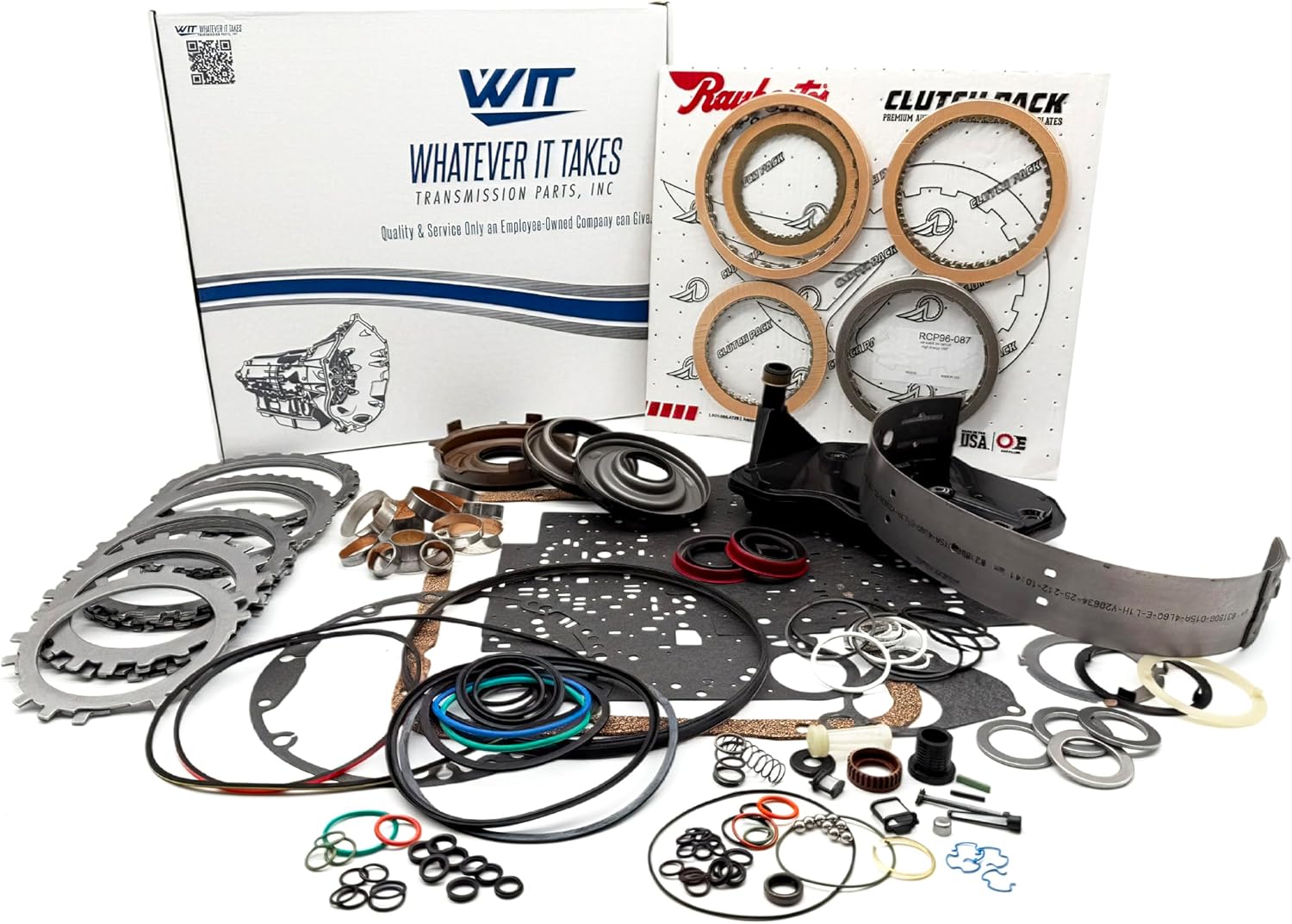

Which Tahoes Have the 4L60E
The 4L60E (RPO M30) is the four-speed behind the gas V8 in the 1990s GMT400 Tahoe, the 2000-2006 GMT800 Tahoe and the early GMT900 trucks. The 2008 Tahoe owner manual still lists a Hydra-Matic 4-speed alongside the 6-speed for that model year. GM's input housing bulletin PIP5072 lists the 1999-2006 Tahoe under 4L60E, 4L65E or 4L70E (RPO M30, M32 or M70), so do not assume the unit. Before you order parts, read the RPO code off the service parts label in the glovebox. An M32 is a 4L65E, and its hard parts are not all interchangeable with a 4L60E. A kit bought for the wrong unit wastes a day.
1. Burnt 3-4 Clutch: Still the Number One Failure
The complaint is a slip or flare on the 3-4 upshift, or no 4th gear at all, and usually the customer has been towing. A Tahoe sits in 4th on the highway with the converter locked, and the 3-4 clutch is holding a heavy truck's full cruise load the whole time. Any pressure leak in that circuit shows up here first.
Sonnax's 4L60-E 3-4 clutch article makes the key point plainly: the root cause of most 3-4 slipping is low line pressure and/or leaks of 3rd gear oil. The 3-4 circuit ties into the D4, forward, 2nd clutch and 3rd accumulator circuits, so several small leaks add up. A new set of frictions won't stop that. Here is what has to be checked on the bench:
- Backing plate flex. The OE 3-4 backing plate flexes under apply. Sonnax's heavy-duty plate kit 74140-01K needs an '87-later housing, snap ring and ring gear, and a '91-later 3-4 apply ring stamped "7" measuring 3.671-3.682 in. tall.
- Input housing checkball. Vacuum test it. Sonnax says anything under 25 in. Hg is an impermissible leak.
- 3rd accumulator checkball. On the 4L60E the 2-4 servo doubles as the 3rd accumulator, and a hidden #7 checkball capsule lives in the case. Sonnax calls a leak there "a direct cause" of burnt 3-4 clutches, and it also keeps the band from releasing fully, so the 2-4 band drags and burns. Test it with a vacuum tester, or with solvent with the case pan-side up, watching the exhaust hole. Don't mistake the small bleed orifice beside it for the exhaust hole. If it leaks, tap the ball to reseat it and retest. If it still leaks, replace the capsule. Never cup-plug it, because the ball also vents the circuit.
- Load release springs and sealing rings. Use new load release springs every time, and size the Teflon rings with the correct tool, not by cutting them.
2. Heat: The Tahoe-Specific Killer
The Tahoe's own owner manual spells out how much heat it takes. Per the 2005 Tahoe and Suburban manual, at approximately 265°F (130°C) the message center shows TRANSMISSION HOT and the transmission enters a protection mode that changes the shift pattern. It goes back to normal below 260°F (127°C). At about 275°F (135°C) it shows TRANS HOT IDLE ENGINE and sounds a chime. Normal operating temperature, per the same manual, is 180-200°F.
A Tahoe that pulls a camper over a mountain pass in July can reach those numbers, and fluid at those temperatures oxidizes and stops protecting the clutches and seals. If an owner tells you the TRANSMISSION HOT message comes on regularly, you need to fix the cooling side before the rebuild, or the rebuild is borrowed time. Check that the cooler isn't plugged with bugs or debris, that the cooler lines aren't kinked, and that the fluid level is right. Then flush the cooler after any internal failure.
The manual's service intervals follow the same logic. GM calls for a fluid and filter change every 50,000 miles if the vehicle is driven in heavy city traffic in 90°F weather, in hilly or mountainous terrain, with frequent trailer towing, or in delivery-type service (or if GVWR is over 8,600 lb). Otherwise it calls for one every 100,000 miles. Most Tahoes that tow belong on the 50,000-mile schedule, whatever the owner thinks.
3. Erratic Shifts and a Surging Cruise: Check the Speed Signal First
This one catches people who go straight to the valve body. On a 4WD Tahoe the vehicle speed sensor sits in the transfer case. When that signal drops out, the PCM sees the truck slow down that instant and commands shifts to match. Underhood Service published a case on a 1996 Tahoe (5.7L, 4L60E, NV243 electric-shift transfer case) that would drop from 4th to 2nd at a steady 35 mph for about three seconds. The same truck's cruise surged from 55 to 65 mph and then cut out, and its speedometer drifted. No codes were stored.
On a Tech 2 snapshot the tech found the output speed jumping between 0 and 8 mph while the truck was rolling at a steady 5 mph. On a lab scope the AC VSS signal was hanging above zero volts for about 15 milliseconds at a time, and the PCM's converted signal to the ABS module was cutting out. The power and ground voltage drops at the PCM were only 0.03-0.04 V, so the PCM and its feeds were fine. A new VSS on the transfer case fixed every symptom.
Why no P0500? The same article lists the enable criteria for that code: vehicle speed below 1 mph, throttle under 3%, engine speed 1,400-4,400 rpm, MAP under 20 kPa, no MAP codes, coolant over 60°C, all for 5 seconds. A sensor that drops out for a few milliseconds while cruising never meets them. Here is the practical rule: if shifts, cruise and the speedometer all misbehave together, graph vehicle speed against GPS speed or put a scope on the sensor before you condemn anything inside the transmission. A scan tool reading on its own can miss it.
4. Slip or No Forward After an Input Housing Was Replaced
If a Tahoe has had its input housing replaced and now slips in forward or won't engage any forward gear, read GM bulletin PIP5072 (October 2012). It covers 1999-2006 Tahoes, Suburbans, Silverados and related trucks with the 4L60E, 4L65E or 4L70E that received service input housing 17803687. Some of those housings came with an incorrectly drilled input shaft that cross-leaks between the forward clutch and 3-4 clutch feeds.
GM's test is simple. With the housing fully assembled, apply regulated air to the forward clutch feed hole and check that none comes out of the 3-4 feed hole. Then reverse it. Any leakage between the two feed holes means replacing the housing with part 19125752. The bulletin also warns against overcorrecting: a small amount of air leaking between the shaft and the housing is normal, because that press fit holds fluid under pressure but isn't airtight. Don't throw away a good housing for that alone.
5. Valve Body Wear: TCC, Line Pressure and Harsh Shifts
High-mileage Tahoes cycle the converter clutch constantly, and the TCC regulator and isolator valve bores in the valve body wear oval. Once that happens, converter apply pressure bleeds to exhaust and line pressure drops with it, which leads to TCC slip codes, an overheated converter and, again, burnt clutches. Sonnax's guidance is clear: don't block the TCC regulator or isolator valve open. Recondition the bore, replace the valve and add an isolator sleeve (77754-ISO).
While the valve body is off, Sonnax also says to vacuum test the AFL valve, 2-3 shift and shuttle valves, the 3-4 shift and relay valves and the accumulator valve. Replace the AFL supply screen ahead of the EPC solenoid and the two AFL screens on the separator plate, because clogged screens cause low line pressure. Replace the reverse abuse bore plug behind the 3-2 control valve too, since it leaks 3rd gear oil. On a high-mileage Tahoe that has already been opened up, a remanufactured valve body with corrected bores is often cheaper than the labor to ream and test every bore by hand.
Quick Reference: Tahoe 4L60E Symptom to Cause
| Symptom | Most likely cause | First check |
|---|---|---|
| Flare on 3-4, no 4th, worse when towing | Burnt 3-4 clutch from a pressure leak | Line pressure test; then backing plate, #7 checkball, input housing |
| TRANSMISSION HOT message, shifts change when hot | Fluid at or above ~265°F, protection mode | Fluid level hot, cooler airflow, cooler flow |
| Random 4-2 downshift, cruise surge, drifting speedo, no codes | VSS signal dropout (transfer case sensor on 4WD) | Graph vehicle speed vs GPS; scope the VSS |
| No forward or slip right after an input housing job | Mis-drilled service housing 17803687 (PIP5072) | Air check between forward and 3-4 feed holes |
| TCC slip code, shudder, harsh 1-2 | TCC regulator and isolator bore wear | Vacuum test valve body bores |
Fluid and Level Check on a Tahoe
Use the fluid the manual for that model year calls for. The 2005 Tahoe manual requires DEXRON-III labeled "Approved for the H-Specification." The 2008 Tahoe manual lists DEXRON-VI. The 2005 manual doesn't publish a refill quantity, so fill by the dipstick, not by a number you remember. The procedure that matters:
- Bring the fluid to 180-200°F. GM says to drive about 15 miles above 50°F outside, or drive in THIRD until the temperature gauge settles for 10 minutes when it's colder.
- If the truck has been towing, in 90°F heat, at sustained high speed or in heavy traffic, wait at least 30 minutes before checking.
- Check on level ground with the engine running in PARK, after cycling through each range for about three seconds.
- Read the lower level on both sides of the stick and check it at least twice. If readings keep changing, check that the transmission breather hose isn't clogged.
- The dipstick range is generally less than one pint, so add a little at a time and don't overfill. Overfilled fluid can be pushed out onto the exhaust.
Sonnax Heavy Duty 3-4 Clutch Backing Plate Kit 74140-01K
This is the plate Sonnax builds to stop the flex behind most burnt 3-4 clutches, and it's the part a towing Tahoe needs on the rebuild. For other parts for this job, see the full 4L60E lineup here.
See the backing plate kit →Keeping a Tahoe 4L60E Alive
- If it tows, change the fluid and filter on the 50,000-mile severe-service schedule.
- Use Tow/Haul mode when pulling a trailer. GM provides it to assist when towing or hauling a heavy load.
- Treat any TRANSMISSION HOT message as a cooling problem to fix, not a warning to ignore.
- On a rebuild, cover the backing plate, #7 checkball, input housing checkball, load release springs, TCC regulator bore and pump valves while it's apart.
FAQ
What is the most common 4L60E problem in a Chevy Tahoe?
A burnt 3-4 clutch, which shows up as a slip or flare on the 3-4 shift or no 4th gear, usually after towing. Sonnax traces most 3-4 slipping to low line pressure or leaks of 3rd gear oil, including backing plate flex and a leaking #7 checkball in the 3rd accumulator. A lasting repair fixes those leaks, not just the frictions.
Why does my Tahoe say TRANSMISSION HOT?
Per the 2005 Tahoe owner manual, the message appears at about 265°F (130°C), and the transmission enters a protection mode that changes shift patterns until the fluid drops below 260°F. At about 275°F it shows TRANS HOT IDLE ENGINE. Check the fluid level hot, the cooler and the cooler lines, and use Tow/Haul when pulling a trailer.
Why does my Tahoe downshift randomly with the cruise surging and the speedometer jumping?
That combination points to a bad vehicle speed signal, not the transmission. In a published Underhood Service case on a 1996 Tahoe, a failing VSS on the NV243 transfer case caused a 4-2 downshift at 35 mph, cruise surge and a drifting speedometer without setting P0500. A new sensor fixed all three.
What transmission fluid does a Tahoe 4L60E take?
The 2005 Tahoe owner manual specifies DEXRON-III labeled Approved for the H-Specification, and the 2008 manual specifies DEXRON-VI. Check the level hot at 180-200°F and add a little at a time, since the dipstick range is generally under one pint.
Keep the numbers at the bench. Our free transmission fluid spec chart lists the correct ATF type for the 4L60E and dozens of other units, so you never top off with the wrong fluid.
Sources
- General Motors — 2005 Chevrolet Tahoe and Suburban Owner Manual. Backs: the 50,000/100,000-mile fluid and filter intervals and severe-service conditions; the 180-200°F check temperature, the warm-up and 30-minute wait instructions, the dipstick procedure, the breather hose note and the less-than-one-pint range; DEXRON-III Approved for the H-Specification; the TRANSMISSION HOT protection mode at about 265°F (normal below 260°F) and TRANS HOT IDLE ENGINE at about 275°F; and Tow/Haul mode. GM: 2005 Chevrolet Tahoe owner manual (PDF)
- General Motors — 2008 Chevrolet Tahoe Owner Manual. Backs: the Hydra-Matic 4-speed still offered in the 2008 Tahoe and DEXRON-VI as the specified automatic transmission fluid. GM: 2008 Chevrolet Tahoe owner manual (PDF)
- General Motors Bulletin PIP5072 (October 2012), Slip in Forward Ranges Immediately After Replacing the Input Housing, hosted by NHTSA. Backs: coverage of 1999-2006 Tahoe with the 4L60E/4L65E/4L70E (RPO M30, M32, M70); the service housing 17803687 mis-drilled shaft; the forward-to-3-4 feed hole air test; replacement housing 19125752; and the note that a small shaft-to-housing air leak is normal. NHTSA: GM PIP5072 (PDF)
- Sonnax — All Over the Map: Attacking 4L60-E Burnt 3-4 Clutches With Confidence. Backs: low line pressure and 3rd gear oil leaks as the root cause of most 3-4 slipping; backing plate kit 74140-01K requirements; the 25 in. Hg input housing checkball test; the TCC regulator, isolator sleeve 77754-ISO and AFL screen guidance; and the reverse abuse bore plug. sonnax.com/tech_resources/659
- Sonnax — Guard Against 4L60-E Band and 3-4 Clutch Failure: Test the 3rd Accumulator Checkball Assembly for Leakage. Backs: the hidden #7 checkball, its effect on 3-4 apply and band release, the vacuum and solvent tests, the bleed orifice warning and the reseat-then-replace procedure. sonnax.com/tech_resources/323
- Underhood Service — TechTalk: A Chevy Tahoe with Shifting Issues (Chris Hamann, March 2006). Backs: the 1996 Tahoe 5.7L/4L60E/NV243 case; the 4-2 downshift, cruise surge and speedometer drift; the Tech 2 OSS reading, the 15 ms scope dropout and the 0.03-0.04 V drop tests; the transfer case VSS fix; and the P0500 enable criteria. underhoodservice.com: TechTalk, Chevy Tahoe with shifting issues