The 4L60E is the most popular light-duty automatic GM ever built, and it will tow — a boat, a small enclosed trailer, a couple of quads — right up until it won't. It was never designed to be a heavy hauler. Put a loaded trailer behind one and you stack up the exact conditions this transmission hates: higher line pressure demand, more clutch energy on every shift, and a torque converter that spends real time slipping and making heat. Do that repeatedly and the failures are predictable.
The problem with most "towing build" advice is that it's a shopping list, not a plan. People throw parts at a 4L60E — a shift kit here, an extra clutch there — and some of those parts actively make a towing unit less durable. This is a rebuilder's take on which upgrades genuinely help a 4L60E survive real trailer weight, in the order they matter, and which popular ones to skip.
The short version: Towing kills a 4L60E through heat and clutch energy, not raw torque. The upgrades that actually help, in order: (1) stable, correct line pressure from a good boost valve and pressure regulator valve, (2) real 3-4 clutch capacity done the smart way (not just cramming in thinner plates), (3) reliable torque converter lockup so the converter stops making heat, and (4) the known-weak hard parts — sun shell, 2-4 band/servo, and the sprag. Cooling and driving it right (don't tow in overdrive) are the free part everyone skips.
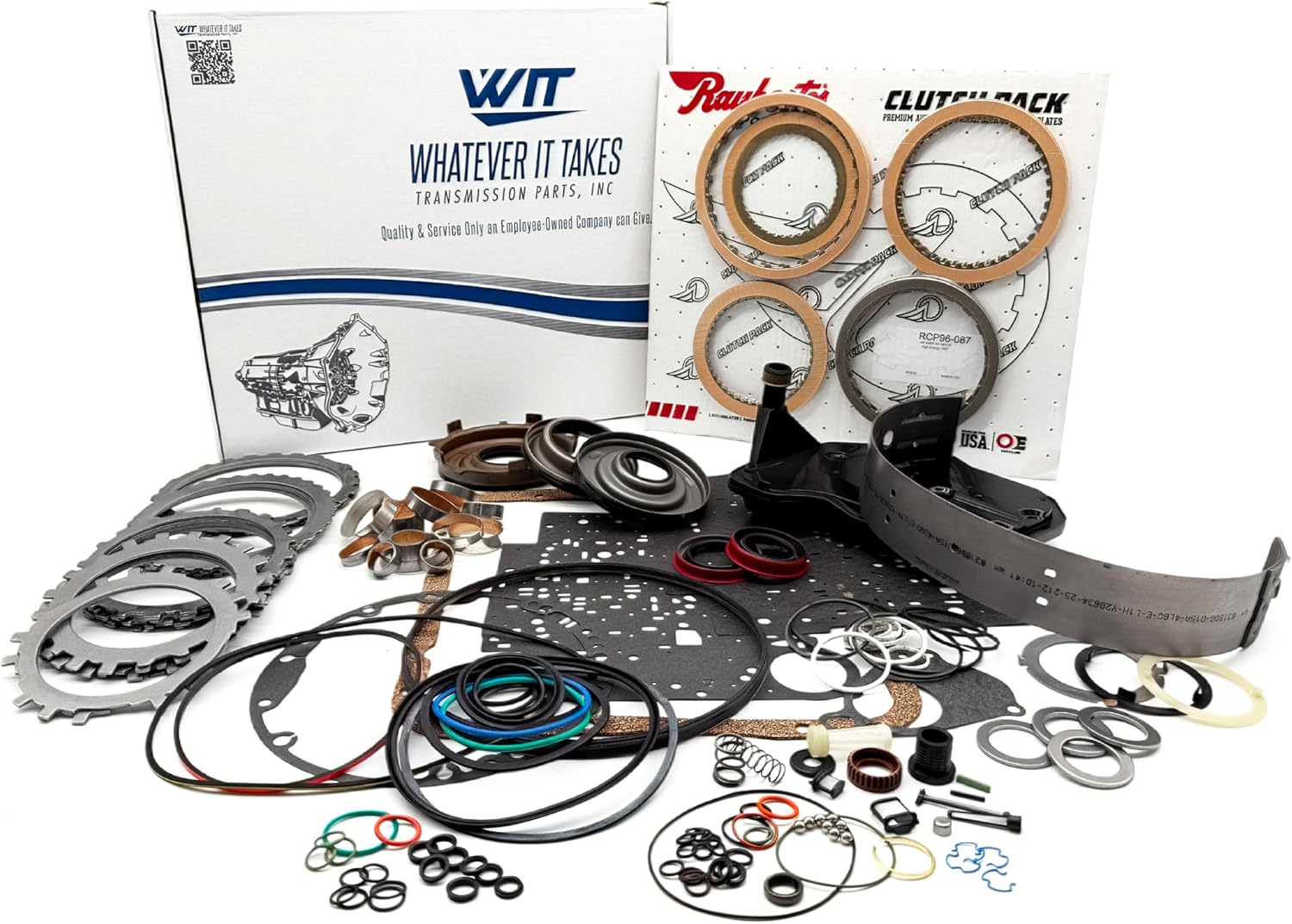
Understand the Load Before You Buy Anything
A trailer changes how the transmission behaves, not just how hard it works. Under load the converter stays unlocked longer and slips more, and a slipping converter is a heat generator sitting directly upstream of your fluid. Meanwhile every 1-2 and 2-3 shift now has to arrest far more inertia, so more energy goes into the clutches and the 2-4 band during each apply. Heat and clutch energy are the whole story.
Two of the most effective things you can do cost nothing. First, don't tow in overdrive. Fourth gear (overdrive) is the 4L60E's weakest range, it keeps the converter unlocked or hunting, and at low pump speed it moves less fluid through the cooler. Lock it out and tow in third on grades. Second, if your truck has a Tow/Haul mode, use it. GM's own description is that Tow/Haul “adjusts the transmission shift pattern to reduce shift cycling,” providing increased performance, vehicle control, and enhanced transmission and engine cooling when towing or hauling heavy loads. [7] Fewer shift cycles means fewer clutch applies, and every clutch apply is heat. Tow/Haul also brings the converter clutch on earlier, which matters because any time the torque converter clutch is open it is generating heat. [5] Third, watch the number. Speaking to Transmission Digest, driveline consultant Bob Warnke puts the threshold plainly: on a towing vehicle, transmission temperature “anything in the 200 degree Fahrenheit range is getting critical.” [5] He also notes the A/C condenser sits in front of the transmission cooler, so shutting the air conditioning off on a long climb measurably helps. [5] No hard part fixes a transmission that is being towed in OD up a grade.
Upgrade 1: Stable, Correct Line Pressure
This is the foundation, and it's the one most people get backwards. They assume "more pressure" is the goal. The real goal is stable pressure that rises correctly with load. Sonnax is blunt about this in its 4L60E performance guide: when a unit runs at higher average pressures, the whole hydraulic system has to be in top shape, because pressure pulsation from poor pressure regulator (PR) valve control is the real pump killer — and a bouncing needle on a line pressure gauge is the tell-tale sign. [1]
PR valve bore wear is common on the 4L60/4L60E, and a worn bore or a leaking boost valve lets pressure oscillate instead of holding steady. That pulsation is what beats up the pump vane rings over time. [1] The fix is not a heavier spring by itself; it's restoring proper valve-to-bore control with an oversized PR valve and a quality, leak-free boost valve, fed by a clean EPC solenoid. [1]
A boost valve kit is where the load response lives. Sonnax's line pressure booster kits pair a larger-ratio boost valve with a pressure regulator spring that's roughly 10% stronger than stock — deliberately more conservative than some aftermarket kits — so you get only a small pressure bump at light throttle but a meaningful increase when you're into it with a trailer. [2] That progressive curve is exactly what a tow rig wants: quiet and easy around town, firm and protective under load. Just match the kit to your pump — there are separate early- and late-style versions for the different boost valve sleeves. [2][4]
Bench note: Chasing high line pressure on a worn valve body is how pumps die. Get the PR and boost valves sealing and stable first; the pressure number takes care of itself once the hydraulics are healthy. [1]
Upgrade 2: Real 3-4 Clutch Capacity (Done Right)
The 3-4 clutch pack is the single most notorious 4L60E failure, and towing accelerates it. Before you blame the pack itself, know where it actually comes from: writing in Transmission Digest, Sonnax product development manager Brian Wing states that “low line pressure and/or leaks of 3rd gear oil are the root cause of most 3-4 slipping,” and that the 3-4 hydraulic circuit is long and interconnected to the D4, forward clutch, 2nd, 2nd clutch and 3rd accumulator circuits, so small leaks at several junctions add up. [6] It carries 3rd and 4th, so it's working on every highway grade, and when it burns you get slip and RPM flare on the 2-3 shift and eventually no 3rd or 4th at all. Naturally, everyone's answer is "add more clutches." Here's the trap.
The OE input housing has limited space. To squeeze in more friction plates you install thinner clutches, thinner steels, and a thinner backing plate — but Sonnax points out the hidden cost: adding friction surfaces reduces the amount of steel, and the steel in a clutch pack is what dissipates heat. Take out steel mass and heat builds up and the clutches burn. Extra thin plates raise static holding capacity while sacrificing engaging capacity, and durability gets worse in exactly the high-load situations — like towing — where more energy goes into the pack during the shift. [1]
So the "6-clutch" upgrade that sounds tougher can be less durable behind a trailer. There are two honest ways to genuinely add capacity:
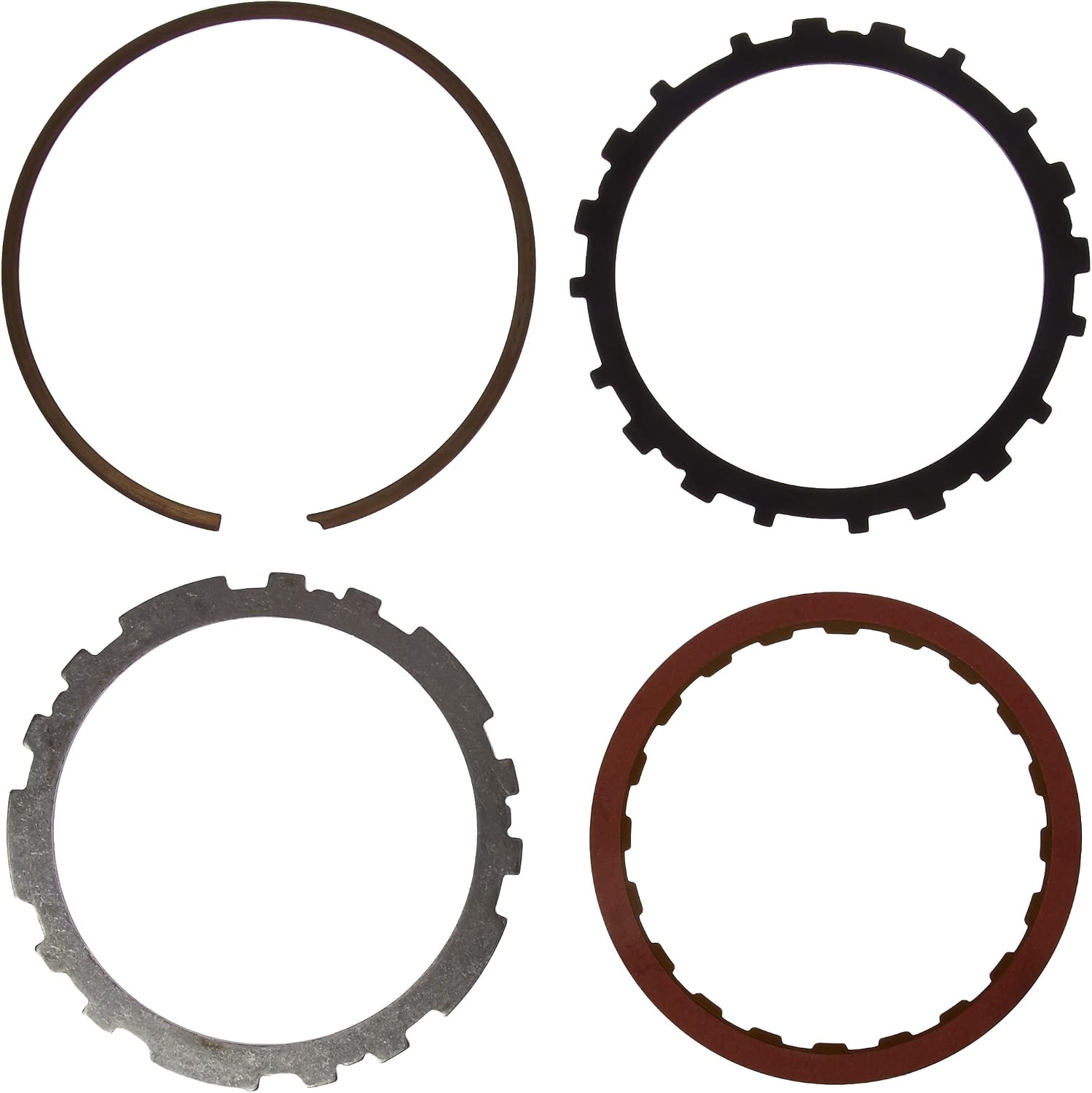
- High-quality friction material in the stock pack count. A high-energy friction kit holds more and tolerates more heat without giving up steel mass — the best value move for most towing 4L60Es.
- A larger clutch pack via a redesigned input housing. The only way to add clutches without sacrificing steel is a housing that physically holds a bigger pack. Sonnax's Smart-Tech housing does this and also stiffens the backing plate, because the weak OE backing plate flexes on apply and lets heat build unevenly — another driver of 3-4 burnup. [1]
For a normal tow rig, quality frictions in the correct pack count, applied by stable pressure (Upgrade 1), solve the 3-4 problem for far less than a full billet-housing build.
Upgrade 3: Keep the Converter Locked
An unlocked or slipping torque converter is the biggest heat source in the whole system, and towing is where it slips the most. The 4L60E family is well known for converter-overheat lockup complaints — no lockup, or lockup that drops out once the fluid warms up — and the usual root cause is a worn TCC (torque converter clutch) apply valve bore letting fluid leak past the valve so the converter can't stay applied when it's hot. [3]
The Sonnax TCC apply valve kit addresses that directly: a re-engineered valve with a durable seal that restores lockup even in a moderately worn bore, so the converter locks and stays locked as the transmission heats up. [3] That matters double when towing, because in "hot mode" the controller will apply the TCC in additional gears specifically to stop the converter from making more heat — and it can only do that if the apply circuit holds pressure. [3] A converter that won't lock is a transmission cooking itself; fixing lockup is one of the highest-value repairs on a tow unit. [3]
Pair that with real cooling. The factory in-radiator cooler is marginal for sustained towing — add a proper auxiliary cooler, mount it where it gets airflow even at idle, and if you tow often, service the fluid more frequently than the severe-service interval. Cooling doesn't add capacity, but it buys back the margin towing takes away.
Upgrade 4: The Hard Parts That Break Under Load
Once pressure, clutch capacity, and lockup are sorted, a few known-weak mechanical parts are worth addressing while the unit is apart:
Sun shell (reaction shell)
The sun shell is a classic 4L60E failure. It either cracks into two pieces or wears out the splines that drive the sun gear, and when it lets go you typically lose 2nd, 4th, and Reverse while keeping 1st and 3rd — the loss of reverse being the giveaway. A heavy-duty sun shell is cheap insurance on any towing rebuild and directly targets a failure that heavy load brings on sooner.
2-4 band and servo
The 2-4 band carries 2nd and 4th, both of which see load on grades. A wider band plus a larger-apply servo is a proven capacity and durability upgrade — but Sonnax gives two hard rules: never install a wider band on a used drum (the old band dishes the drum surface, which then causes 2nd-gear slip, glazing, and burning with the wider band), and never shim a servo to fake travel. Set servo travel with a dial indicator to spec instead; shimming pushes the piston too deep and invites band failure. [1] Also fix any 3rd accumulator checkball leakage — Sonnax ties even minor leaks there directly to band and 3-4 clutch failure. [1]
Sprag and shift cushioning
Harsh shifts damage the sprag, shafts, and band. Counterintuitively, a firmer shift is not automatically better for durability: Sonnax warns against eliminating the 1-2 cushion spring, shortening the 1-2 accumulator stroke, leaving out the 1-2 checkball, or over-drilling the feed hole — all of which spike the shock load on the 1-2 change. [1] Cushion the big ratio change, don't just slam it.
What Actually Helps vs. What Wastes Money
| Upgrade | Verdict for towing |
|---|---|
| Stable line pressure (PR + boost valve) | Do it first. Protects the pump and applies every clutch correctly. [1][2] |
| High-energy friction clutches | High value. More holding and heat tolerance without losing steel mass. |
| Reliable TCC lockup + aux cooler | High value. Kills the #1 heat source on a tow rig. [3] |
| HD sun shell, wider band/servo, sprag | Worth it while it's apart. Targets known break points. [1] |
| Extra thin clutches in OE housing | Be careful. Can reduce steel/heat capacity and hurt durability under load. [1] |
| Max line pressure on a worn valve body | Skip. Pressure pulsation is what kills pumps. [1] |
Notice the pattern: the parts that help are the ones that keep pressure stable, keep the converter locked, and add real thermal capacity. The parts that disappoint are the ones bought to chase a bigger pressure number or a clutch count on a spec sheet. If you're going to tow serious weight regularly, the honest answer is a 4L80E — but a properly built 4L60E handles light and moderate towing for years when it's done in this order.
4L60E High-Energy Friction Clutch Kit (1987-Up)
The direct fix for the 4L60E's #1 towing failure: high-energy friction plates that hold more and take more heat than stock, matched for a clean rebuild — without giving up the steel mass that keeps the pack cool. Ships fast from the USA.
View the High-Energy Friction Clutch Kit →Building the whole unit? Do the line pressure work, the 3-4 frictions, and the TCC circuit together — they reinforce each other. Our line pressure testing walkthrough shows how to spot the needle-bounce that signals PR valve trouble before it eats your pump.
Sources
- Sonnax — Building the Killer 4L60E: Top Tips for Optimizing Your Transmission Upgrades. On unstable pressure and PR valve wear as the real pump killer, boost/PR/AFL valve recommendations, the steel-mass tradeoff of adding thin clutches, backing-plate flex, band/servo rules, 3rd accumulator checkball leaks, and 1-2 shift cushioning. sonnax.com/tech_resources/293
- Sonnax — Line Pressure Booster Kit 4L60E-LB1. On the stronger-than-OE pressure regulator spring paired with a large-ratio boost valve to deliver a progressive pressure increase as load increases. sonnax.com/parts/2168-line-pressure-booster-kit
- Sonnax — TCC Apply Valve Kit 77805E-K. On worn TCC apply valve bores causing converter-overheat lockup complaints, and restoring lockup (including hot-mode TCC apply) to stop the converter from generating heat. sonnax.com/parts/2478-tcc-apply-valve-kit
- Sonnax — Line Pressure Booster Kit 4L60E-LB2. Late-style pump version of the booster kit, confirming early vs. late boost valve sleeve fitment for matching the kit to your pump. sonnax.com/parts/2169-line-pressure-booster-kit
- Transmission Digest — "Educating Customers About Towing-Related Transmission Issues" (August 12, 2026), with driveline consultant Bob Warnke. Backs the 200°F transmission-temperature warning threshold on a towing vehicle, the point that an open torque converter clutch is generating heat while Tow/Haul applies it earlier, the A/C condenser sitting ahead of the transmission cooler, the 10–15% tongue-weight guidance, and the recommendation to stay roughly 20% under the vehicle's rated towing capacity. transmissiondigest.com — Educating Customers About Towing-Related Transmission Issues
- Transmission Digest — "All Over the Map" (TASC Force Tips, June 1, 2018) by Brian Wing, Sonnax product development manager. Backs the root cause of 4L60/E 3-4 burnup: low line pressure and/or leaks of 3rd gear oil, and the long 3-4 hydraulic circuit interconnected to the D4, forward clutch, 2nd, 2nd clutch and 3rd accumulator circuits, where small leaks accumulate. transmissiondigest.com — All Over the Map
- GM — Chevrolet Silverado Owner Manual, Tow/Haul Mode. Backs GM's own definition of Tow/Haul: it adjusts the transmission shift pattern to reduce shift cycling, providing increased performance, vehicle control, and enhanced transmission and engine cooling when driving down steep grades, when towing, or when hauling heavy loads, and the guidance to select a lower gear with Manual Mode if the transmission downshifts too often. chevrolet.com — Silverado Owner Manual (PDF)