The 4L65E is GM's heavy-duty cousin of the 4L60E -- same basic case, same shift logic, but built with a stronger input shaft and PWM-controlled line pressure for the trucks and SUVs that needed to carry more torque than a standard 4L60E was rated for. What it did not get was a redesigned 3-4 clutch pack, and that pack has been the single most common failure point in this entire family since the mid-1990s. The frustrating part for anyone diagnosing one is that "3-4 clutch failure" is not one problem. It is at least two separate, documented mechanisms that happen to produce the same complaint, and they call for two different repairs.
Root cause #1: the input housing lets the turbine shaft move
GM's own Preliminary Information Bulletin PIP5031 (June 2012) documents a 4L60-family failure where the automatic transmission develops slipping and late or missed shifts in 3rd and 4th gear. On teardown, the bulletin says the 3-4 clutch shows distress, and further investigation can reveal the turbine shaft moving inside the input housing, which allows a loss of fluid pressure in the 3-4 clutch. If the 3-4 clutch feed hole is visible with the shaft seated, GM's instruction is direct: the turbine shaft is moving in the housing, and the input housing needs to be replaced. The same shaft movement can shift the input speed sensor's reluctor teeth far enough out of position to drop the signal and set DTC P0716 and P0717 -- codes that point at the speed sensor circuit, not the clutch, which is exactly why this failure gets misdiagnosed.
PIP5031 is written against the 4L60E specifically, built on 2012 Colorado, Canyon, Silverado, Sierra, Savana and Express applications. It is not a 4L65E-specific document, so do not cite it as a 4L65E bulletin. But the input housing it describes is not unique hardware -- Sonnax's own compatibility listing for its Smart-Tech replacement input housings covers the 4L60, 4L60-E, 4L65-E and 4L70-E as one group, because GM used the same housing design across the family. Sonnax states plainly that "limitations of the OE input housing are the root cause of 3-4 burnup in performance applications" across all four of those transmissions: the stock backing plate flexes during clutch apply, which builds heat unevenly in the pack, and the stock 3-4 clutch retaining snap ring carries a documented blow-out risk under load. Sonnax's fix is a reinforced housing (part no. 5189 for housing alone) paired with a shaft kit matched to converter size and reluctor style -- 5737 for 300mm non-reluctor units, 5745 for 300mm reluctor units, and 5731 for 298mm converter units -- plus an anchor plate secured by fifteen bolts in place of the snap ring.
Root cause #2: a long, leaky hydraulic circuit
The second mechanism has nothing to do with the input housing. In a technical piece written for the 4L60-E family by Sonnax product development manager Brian Wing, the stated root cause is blunt: "low line pressure and/or leaks of 3rd Gear oil are the root cause of most 3-4 slipping." The reason it is hard to chase down is that the 3-4 hydraulic circuit is unusually long and interconnected -- it shares pressure paths with the D4, forward clutch, 2nd, 2nd clutch and 3rd accumulator circuits, so several small leaks scattered across different junctions can add up to enough combined pressure loss to slip the pack, even when no single leak looks severe on its own.
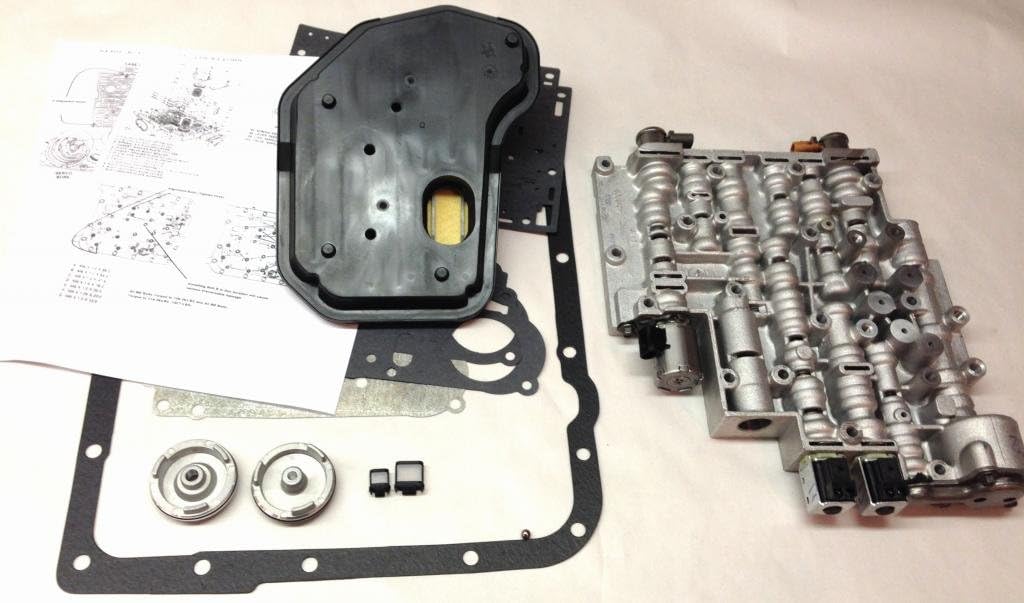
Wing's diagnostic sequence works through the circuit in order: the input drum and shaft press-fit area (check for galling), the stator support shaft and bushings, the pump's boost valve, pressure regulator and slide, the servo and 3rd accumulator checkball capsule, and finally the valve body bores themselves. Two numbers are worth writing down. The input housing checkball should pull 25 in-Hg on a vacuum test -- anything less is treated as an impermissible leak. And the 3rd accumulator checkball capsule is called out specifically as "a leading cause of 3-4 clutch failure" when it leaks. The wrong fix for that leaking capsule is a cup plug -- Wing's piece is explicit that blocking it that way can cause soft 2-3 shifts and 3-2 flares, trading one problem for two more. The correct fix is repairing or replacing the capsule itself. Sonnax's separate write-up on the #7 checkball explains why it matters so much: the capsule sits in the servo area and, when it leaks, it drops both 3-4 clutch apply pressure and 2-4 band release pressure, so a single bad capsule can burn the 3-4 pack and the band at the same time. Test it with vacuum or by filling the pocket with solvent and watching for seepage. For the other check valve orifices on the valve body, Sonnax treats 23-25 in-Hg as the ideal vacuum reading.
| Root cause | Source | Signature clue | Fix |
|---|---|---|---|
| Turbine shaft moving in input housing | GM PIP5031 | 3-4 feed hole visible; P0716/P0717 may set | Replace input housing (e.g. Sonnax 5189 + matching shaft kit) |
| Long-circuit line pressure leak | Sonnax / Brian Wing | Checkball vacuum test below 25 in-Hg; debris at magnet | Repair leaking capsule, pump, or valve body bore -- not a cup plug |
| Simple clutch pack wear | Mileage / heat cycles | Burnt smell, friction material on magnet, no housing or pressure fault found | Clutch pack or master rebuild kit |
What it feels like from the driver's seat
- Flare or slip starting on the 2-3 shift, worsening over time. Both documented root causes tend to show up here first before the transmission loses 3rd and 4th outright.
- Delayed or soft engagement into 3rd or 4th, especially under load or once the fluid is hot -- consistent with a pressure leak that only shows once viscosity drops with heat.
- No 3rd or 4th at all, with the vehicle running only in 1st and 2nd once the pack has burnt through.
- A burnt smell and dark, debris-laden fluid with friction material visible on the pan magnet -- confirmation the pack itself has already cooked, whichever root cause started it.
Codes you'll actually see -- and why they don't name the clutch
Neither documented root cause sets a code that says "3-4 clutch" directly. If the turbine shaft has moved far enough per PIP5031, the input speed sensor signal can drop out and set P0716 and P0717, which are turbine/input speed sensor codes. Separately, if the TCM compares commanded gear to actual output ratio and finds more slip than expected, it can set the generic GM code P1870, Transmission Component Slipping -- a code that covers torque converter clutch slip or any internal clutch pack slip, not the 3-4 pack specifically. Either code is a reason to pull the pan and look, not a reason to replace a sensor or a solenoid first.
Fluid: cheap insurance either way
GM's current global service-fill specification for this fluid family is DEXRON-VI (GMW16444), which GM introduced for 2006-and-later factory fill and which is backward-compatible with any 4L65E originally specified for DEXRON-III. There is no capacity reason to avoid it on an older unit. The 4L65E does not use a sealed, quart-count fill -- it is checked with a dipstick at normal operating temperature, so getting the level right at the stick matters more than hitting a specific total quart figure. GM's owner manual for the GMT900 trucks spells out the hot check: cycle the lever through every range, idle in Park, and read the stick only when the TRANS TEMP display shows 71-93°C (160-200°F). GM notes it generally takes less than 0.5 L (1 pint) to bring a low unit up to the HOT band, so needing much more than that means fluid is going somewhere. If a 4L65E in front of you has old, dark, or unknown-spec fluid, a pan drop, filter change and refill with DEXRON-VI is the cheapest step on this entire list and should happen before any of the pressure testing below.
Working the diagnosis in order
- Pull every code, not just TCM codes. P0716/P0717 point at the input housing; P1870 points at a slipping component generically.
- Drop the pan and check the magnet. Friction material or a burnt smell confirms the pack has already cooked and narrows how much further testing is worth doing before ordering parts.
- Check for turbine shaft movement per PIP5031. With the shaft seated, see whether the 3-4 clutch feed hole is exposed. If it is, the input housing is the fault, independent of anything else on this list.
- Vacuum test the input housing checkball. Anything pulling under 25 in-Hg is a leak per Sonnax's published spec.
- Vacuum test the 3rd accumulator checkball capsule once the valve body is accessible -- including a brand-new capsule, since Wing's piece notes new ones can leak too.
- Work the rest of the circuit if the first two checks are clean: stator support bushings, pump boost valve and pressure regulator, servo, and valve body bores.
The fix
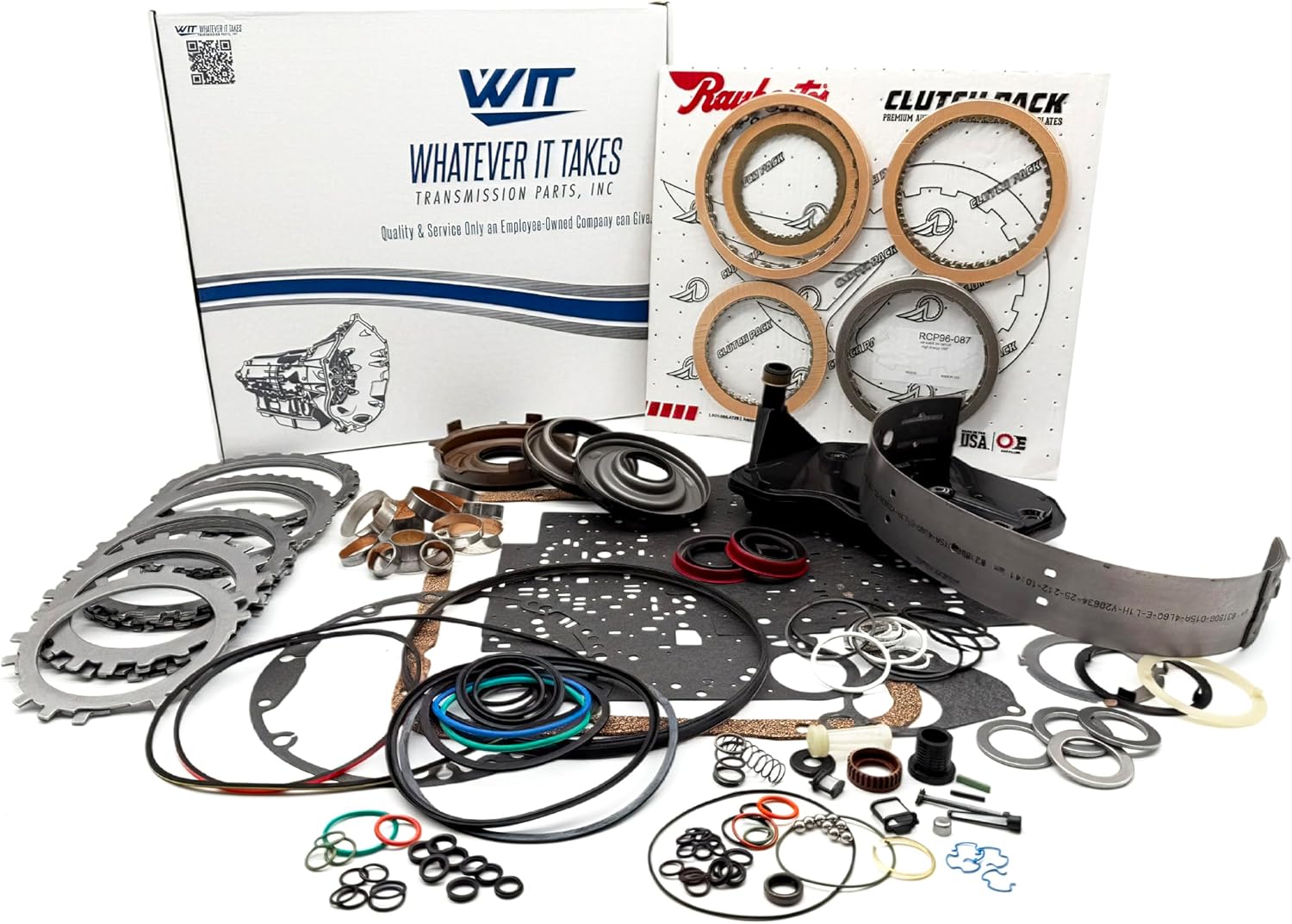
Which repair is correct depends entirely on which root cause testing confirms, not on which one is more common. If PIP5031's symptom is confirmed -- the turbine shaft is moving and the feed hole is exposed -- a reinforced input housing is the fix, and it does not require condemning the clutch pack itself if the friction material is otherwise intact. If the line-pressure diagnostic points at a leaking checkball capsule, worn pump components, or valve body bores, that is a hydraulic repair, not a clutch repair -- and per Wing's piece, plugging a leaking capsule with a cup plug is the wrong shortcut that trades one complaint for two more. Once friction material is actually burnt and debris has spread through the case, a full clutch pack or master rebuild kit with new steels, frictions and piston seals is the honest repair rather than chasing one worn component at a time.
A bonded 3-4 clutch piston built for the 4L65E
If testing points at the clutch pack itself and the piston's bonded rubber seal is the suspect component, a direct replacement piston is the targeted fix rather than a full rebuild.
4L65E 3-4 Clutch Piston (Bonded) at CoreTransmissionParts →Also there: the full 4L65E parts collection, including the steel clutch plate kit and master rebuild kit with pistons.
FAQ
What actually causes 4L65E 3-4 clutch failure?
Two separate, documented mechanisms, and they call for different repairs. GM Preliminary Information Bulletin PIP5031 describes the turbine shaft moving inside the input housing, exposing the 3-4 clutch feed hole and bleeding off apply pressure. Separately, Sonnax's published diagnostic work on the 4L60-E family (which shares its input housing, pump and valve body architecture with the 4L65E) attributes most 3-4 slipping to low or leaking line pressure in the 3-4 hydraulic circuit, most often at the 3rd accumulator checkball capsule, the input housing checkball, or worn valve body bores. A worn pack can also fail on its own once enough miles pass, independent of either root cause.
What codes does a 4L65E 3-4 clutch problem set?
If the turbine shaft has moved far enough in the input housing per PIP5031, the input speed sensor signal can drop out and set P0716 and P0717, which are input/turbine speed sensor codes, not clutch codes directly. A slipping pack detected by the TCM comparing commanded gear to actual ratio can also set the generic P1870, Transmission Component Slipping. Neither code names the 3-4 clutch by itself, which is why a pan drop and visual inspection for friction material still matters.
Can a bad input housing really cause this without the clutch pack being worn?
Yes. Per GM PIP5031, if the 3-4 clutch feed hole becomes visible with the turbine shaft seated, the shaft is moving inside the housing and the housing itself needs to be replaced, independent of clutch wear. Sonnax's Smart-Tech input housing kits (part numbers 5189, 5737, 5745 and 5731 depending on shaft and converter style) exist specifically because GM's own OE housing design is the root cause of recurring 3-4 burnup in these units, per Sonnax's published technical material.
Does fixing the 3-4 clutch always mean a full rebuild?
Not necessarily. If the input housing is confirmed loose per PIP5031 and the clutch pack itself is intact, an input housing replacement alone can resolve it. If Sonnax's line-pressure diagnostic points to a leaking 3rd accumulator checkball capsule or worn valve body bores, that repair does not require touching the clutch pack at all. A full pack or master rebuild only becomes necessary once the friction material itself is burnt or debris has spread through the case, which a dropped pan and a look at the magnet will confirm.
What transmission fluid does the 4L65E need?
DEXRON-VI, per GM's GMW16444 global service-fill specification covering 4L60E-family transmissions. DEXRON-VI is backward-compatible with units originally filled with DEXRON-III, so there is no downside to using it on an older 4L65E. The 4L65E is checked with a dipstick at operating temperature rather than filled to a fixed quart count, so level and condition at the stick matter more than a single capacity number.
Sources
- General Motors — Preliminary Information Bulletin PIP5031, "Slip Condition In 3rd Or 4th - Damaged 3-4 Clutch DTC's P0716 And P0717 May Be Set," June 2012 (NHTSA-hosted). Backs the turbine shaft moving inside the input housing, the 3-4 clutch feed hole becoming exposed, the recommendation to replace the input housing, and DTCs P0716/P0717 setting from input speed sensor signal loss. Written for the 4L60E specifically on 2012 Colorado, Canyon, Silverado, Sierra, Savana and Express. nhtsa.gov (PDF)
- Sonnax — "Smart-Tech® Input Housings" product/technical page. Backs compatibility across the 4L60, 4L60-E, 4L65-E and 4L70-E; the statement that OE input housing limitations are the root cause of 3-4 burnup; part numbers 5189 (housing), 5737/5745/5731 (shaft kits by converter/reluctor style); the flexing OE backing plate and 3-4 retaining snap ring blow-out risk; and the fifteen-bolt anchor plate design. sonnax.com
- Sonnax — Brian Wing, "All Over the Map: Attacking 4L60/E Burnt 3-4 Clutches with Confidence," June 6, 2018. Backs low line pressure and 3rd-gear oil leaks as the root cause of most 3-4 slipping; the interconnection between the 3-4, D4, forward clutch, 2nd, 2nd clutch and 3rd accumulator circuits; the 25 in-Hg vacuum spec for the input housing checkball; the 3rd accumulator checkball capsule as a leading cause of 3-4 failure; and the warning against using a cup plug as a fix. sonnax.com
- SAE International — "General Motors DEXRON®-VI Global Service-Fill Specification," Technical Paper 2006-01-3242. Backs the DEXRON-VI specification (GMW16444) as GM's current global service-fill fluid, developed for GM's stepped-gear automatic transmissions, and its backward compatibility with units originally specified for DEXRON-III. saemobilus.sae.org
- Sonnax — "Guard Against 4L60/E Band & 3-4 Clutch Failure: Test the 3rd Accumulator Checkball Assembly for Leakage." Backs the #7 checkball capsule's location in the servo area, its leakage lowering both 3-4 apply and band release pressure, and the vacuum and solvent leak tests. sonnax.com/tech_resources/323
- Sonnax — "Hydraulics Fundamentals Part VIII: Check Valves." Backs vacuum testing check valve orifices with 23-25 in-Hg as the ideal reading. sonnax.com/tech_resources/881
- General Motors — 2012 Chevrolet Silverado Owner Manual. Backs the DEXRON-VI hot level check procedure using the TRANS TEMP display at 71-93°C (160-200°F) and the less-than-a-pint top-off note. GM Owner Center (PDF)