A 4L65-E that will only move in one gear is not usually a broken transmission. It is a control module that gave up on the shift solenoids and let the valve body settle into whatever gear needs no electrical input at all. On this unit that is third, and reverse still works because reverse never depended on a solenoid in the first place. This article is the companion piece to the limp-mode causes article below: that one explains the five faults that trigger failsafe, this one is the actual repair order, in the sequence GM, Sonnax and ATRA's own technicians publish for getting it fixed and keeping it fixed.
The 4L65-E shares its control logic with the 4L60-E and ran from 2001 to 2013 behind 6.0-liter trucks, the Hummer H2, the SSR and the TrailBlazer SS. Everything below also applies to a 4L60-E stuck the same way, and most of it transfers to the 4L80-E and 4L85-E, which default to second gear instead of third using the same architecture.
Step one: check the circuit GM says to check first
Before anyone pulls a pan, GM's own diagnostic bulletin for this exact complaint starts at the fuse box, not the transmission. The bulletin covers 2006-and-prior GM passenger cars and light-duty trucks, the 2005-2006 Hummer H2 and Saab 9-7X, and the 2006 Hummer H3, all with a 4L60-E, 4L65-E, 4L80-E or 4L85-E (RPOs M30, M32, M33, MT1 and MN8). The listed symptoms match the complaint word for word: malfunction indicator lamp on, the transmission defaulted to third gear on a 4L60/65-E or second gear on a 4L80/85-E, and sometimes an inoperative instrument cluster. GM lists the possible codes as P0740, P0753, P0758, P0785, P0787, P0973, P0976, P1860, P2761, P2764 and P2769, and names the most likely cause as a loss of voltage to the transmission solenoid power supply circuit. The diagnostic steps are short:
- With the ignition in RUN, test for battery voltage at the fuse that feeds the transmission solenoid power supply circuit.
- If voltage is present at the fuse, inspect the ignition voltage circuit between the fuse and the transmission connector for an open.
- If voltage is not present at the fuse, test continuity between the fuse and the ignition switch, and repair the open if there is none.
- If continuity is good between the fuse and the ignition switch, the ignition switch itself is the likely cause and gets replaced.
GM adds one specific note that is worth checking before anything else: if the vehicle has an aftermarket remote starter or alarm installed, confirm that the device's own accessory fuse is holding battery voltage during operation. An incorrectly wired remote start system pulling voltage off this circuit produces the identical code list and the identical third-gear default as a factory wiring fault, and the fix is a call to whoever installed the box, not a transmission repair.
Step two: test the solenoid circuit itself, with real numbers
If the power supply checks out, the fault is downstream in the shift solenoid circuit, and guessing wastes money. ATRA's GEARS magazine publishes the numbers worth having on the bench: shift solenoid A and B should read 20 to 30 ohms, which works out to roughly 0.42 to 0.63 amps of current flow at a typical 12.6-volt system voltage. Ground-side voltage drop should be under 0.10 volts. Solenoid power on this unit comes through a 10-amp ING 0 fuse, so a dead or intermittent circuit upstream of that fuse takes out both solenoids identically.
| Check | Spec | What it tells you |
|---|---|---|
| Shift solenoid A or B resistance | 20 to 30 ohms | Open or shorted winding if outside this range |
| Solenoid current, key on engine off | about 0.42 to 0.63 amps | High resistance in the feed or ground if low |
| Ground-side voltage drop | less than 0.10 volts | Corroded pins or a bad case ground if higher |
| Solenoid power supply fuse | 10-amp, ING 0 | Total loss of solenoid power if blown or unfed |
The important part is where you measure. A solenoid that tests fine on the bench can still be feeding a circuit that opens under heat or vibration in the truck, so take these readings at the connector, with the fault present, not after a key cycle has already reset it.
Step three: rule out the pressure switch manifold and valve body
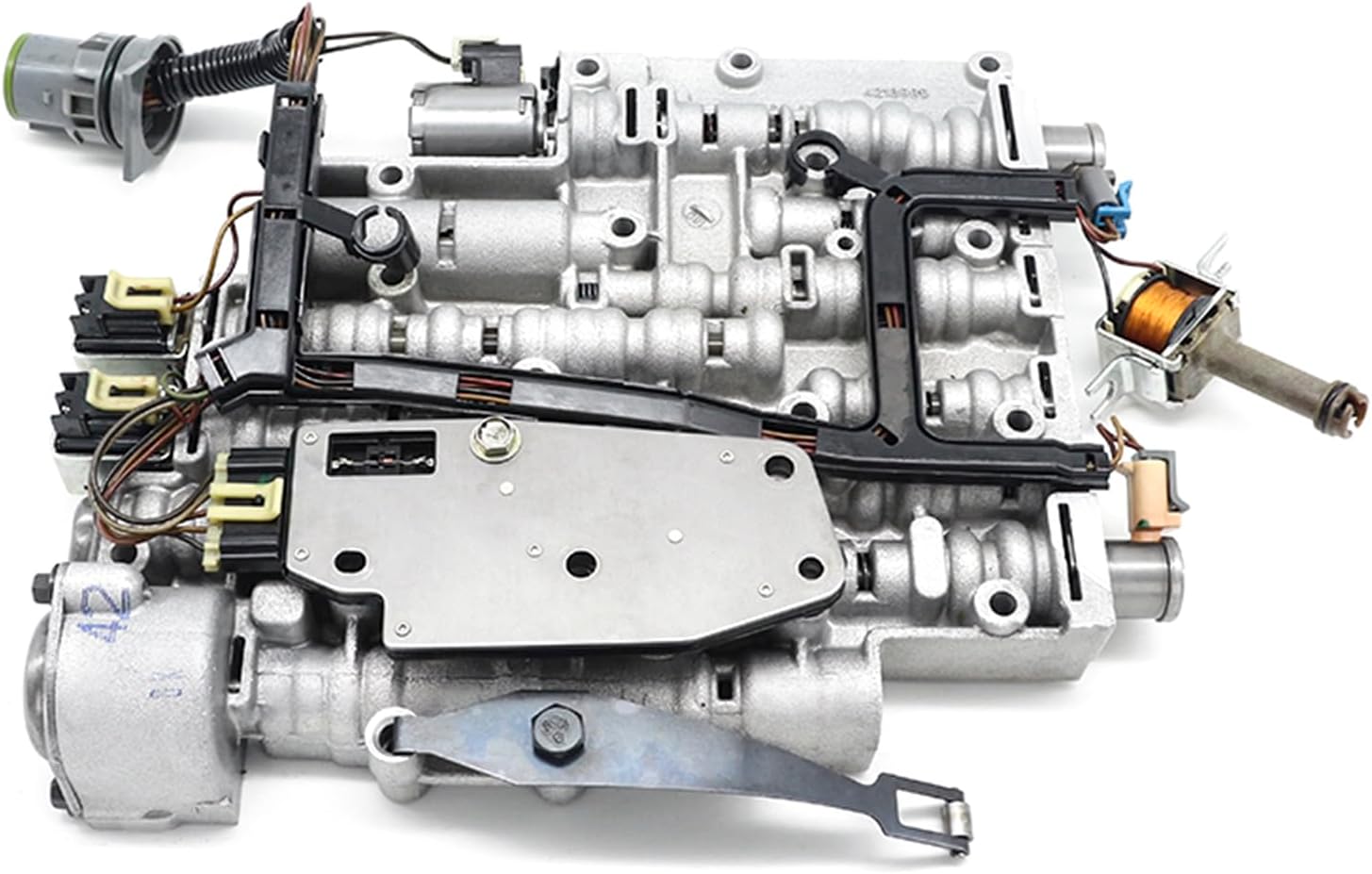
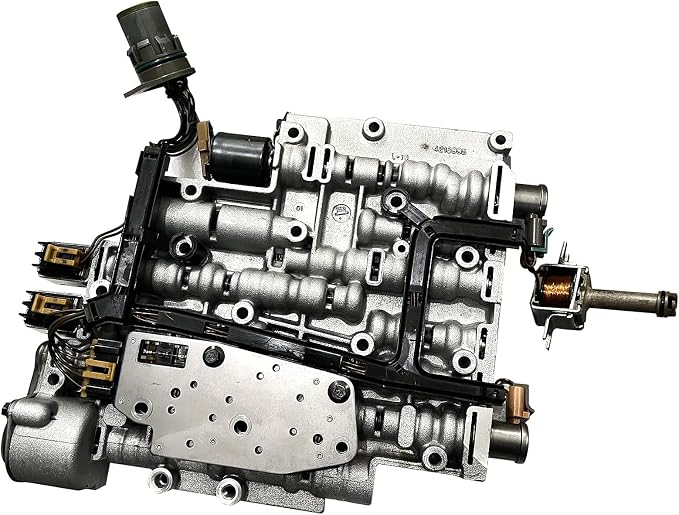
Not every failsafe event is a wiring problem. The 4L60-E and 4L65-E route every solenoid signal and pressure confirmation through a single molded plastic assembly on the valve body, and that assembly lives in hot fluid for the life of the transmission. When its internal switches crack or stick, the control module reads it exactly like a solenoid circuit fault, including the same DTC list and the same drop to third gear, even though the solenoid itself is good. Sonnax's own heavy-duty remanufactured valve body for the 4L60-E and 4L65-E, model years 1996 through 2008, ships with a new pressure switch manifold, a new EPC solenoid and a new TCC PWM solenoid as a set, which is the practical acknowledgment that these three parts fail together often enough that replacing the valve body as an assembly beats chasing the switch assembly piece by piece once a unit is already open.
If solenoid resistance and the power supply circuit both test good but the code keeps coming back, that is the signal to stop testing individual solenoids and pull the valve body for inspection instead.
A truck that is stuck in second from a stop, rather than third, is usually a pressure problem instead of an electrical one. The valve body rests in second with the engine off, and per ATSG's Wayne Colonna it takes about 48 psi of line and AFL pressure to stroke the 1-2 shift valve into first; anything that holds pressure below that leaves it in second. In his case both shift solenoids and a complete valve body had already been replaced with no change, line pressure read a correct 62 psi in Drive, and the real fault was a 1-2 accumulator piston with no seal feeding oil into the band apply circuit (Transmission Digest / ATSG). Put a gauge on the line tap before you buy solenoids for a second-gear start.
The failsafe trigger that has nothing to do with wiring
There is one cause worth knowing before you spend an afternoon on a scope, because it will not show up on any electrical test. GM's service bulletin PIP5031, issued June 2012 for 4L60E-equipped Colorado, Canyon, Express, Savana, Silverado and Sierra models (RPO M30), documents a 3-4 clutch slip condition where the turbine shaft moves inside the input housing. That movement uncovers the 3-4 clutch feed hole, which bleeds off the fluid pressure the 3-4 clutch needs to hold, and it moves the input speed sensor teeth far enough out of position that the ISS signal drops out. The result is DTC P0716 and/or P0717, exactly the codes that can push the module into failsafe on a ratio or speed-sensor fault. GM's fix is a new input housing, not a sensor and not a harness.
The 4L65-E uses the same pump and input housing architecture as the 4L60E covered in that bulletin. If the input speed sensor and its wiring both test within spec and the code will not stay cleared, check the input housing for this exact wear pattern before you order another sensor.
Don't skip the fluid check
Low or aerated fluid will not usually produce the exact third-gear default described above, but it produces a ratio-error code that the module treats the same way: it cannot confirm the gear it commanded, so it backs out to failsafe. Check the level hot, in park, against the dipstick markings, and confirm the fluid is the correct Dexron VI specification. General Motors released Dexron VI as the factory fill for its stepped-gear automatic transmissions starting in 2005, documented in SAE's published Dexron VI global service-fill specification, and it is backward compatible with Dexron III, so there is no reason a 4L65-E of any model year should be running anything else. This check costs a dipstick pull and rules out a real, common cause before you start disconnecting anything. Chevrolet Performance lists the 4L65E at roughly 10.6 L (11.2 qt) dry with a 300 mm converter and an 18 lb-ft pan bolt torque (Chevrolet Performance Supermatic spec sheet), so a pan drop that only replaces part of that fill still has to be topped to the hot mark, not to a fixed quart count.
Putting the repair order together
- Start at the fuse, not the pan. Confirm the solenoid power supply circuit per GM's own sequence above before any teardown.
- Check for aftermarket add-ons first. A remote starter or alarm pulling the wrong feed produces this exact symptom and code list.
- Test the solenoid circuit with the fault present. Use the resistance, current and voltage-drop numbers above, measured at the connector.
- Confirmed solenoid or circuit fault: replace shift solenoids A and B as a pair, or the full solenoid kit if the unit is already open.
- Repeat codes with good solenoids and good wiring: pull the valve body and inspect or replace the pressure switch manifold, or swap the whole valve body assembly if it is already off.
- P0716 or P0717 that will not clear: check the input housing for the turbine-shaft wear pattern in PIP5031 before buying another sensor.
- Always: verify fluid level and type before any of the above, since it is the cheapest check on the list.
Clearing the code and calling it done proves only that a key cycle resets failsafe, which it always does regardless of whether anything was actually repaired. Drive the truck until the module has run its ratio checks through all four gears with the converter locked, then pull codes again before you hand it back.
FAQ
What gear does a 4L65E get stuck in when it fails safe?
Third gear, with reverse still working. Both shift solenoids release at once when the control module stops commanding them, and third is where the hydraulics land with no solenoid input. If the truck is stuck in second instead, that points at the 4L80-E/4L85-E failsafe pattern or a mechanical problem, not the 4L65-E's normal default.
Can an aftermarket remote starter or alarm cause a 4L65E to go into failsafe?
Yes, and GM documents it directly. An incorrectly installed remote start or alarm system can pull voltage off the circuit that feeds the transmission solenoid power supply, which sets the same DTCs and the same third-gear default as a factory wiring fault. Check that the aftermarket device's own fuse holds battery voltage during operation before you touch the transmission.
Is it safe to drive a 4L65E stuck in third gear to a shop?
A short, slow drive is generally fine, but do not commute in it. Line pressure sits at the top of its range and converter lockup is disabled, so the converter slips constantly at low speed and builds heat fast. If the drive is more than a few miles, have it flatbedded instead.
Does a code pointing at the speed sensor always mean failsafe is electrical?
No. GM's own bulletin PIP5031 documents a 4L60E turbine shaft moving inside the input housing, which uncovers the 3-4 clutch feed hole and lets the input speed sensor teeth drift out of position, setting P0716 and P0717 with no wiring fault at all. If the sensor and its connector test good, the input housing itself needs to be checked before you order another sensor.
Will a fluid and filter change fix a 4L65E stuck in gear?
Sometimes, if the root cause is low or aerated fluid producing a ratio-error code. Confirm the level hot and in park on the correct Dexron VI spec fluid first, since it costs little and rules out a real cause. It will not fix a wiring fault, a worn pressure switch manifold, or the input-housing issue above, so do not stop there if the code comes back after a service.
Sources
- General Motors Service Bulletin (Mitchell 1), "Tech Tip: GM's A/T is Stuck in 2nd/3rd Gear" — the affected models (2006 and prior GM cars/light trucks, 2005-06 Hummer H2 and Saab 9-7X, 2006 Hummer H3, RPOs M30, M32, M33, MT1, MN8), the full DTC list, the loss-of-voltage root cause including aftermarket remote starters, and the four-step power supply circuit diagnostic. brakeandfrontend.com
- Sonnax, GM054-HD Heavy Duty Remanufactured Valve Body product page — confirms the 4L60-E/4L65-E pressure switch manifold, EPC solenoid and TCC PWM solenoid are replaced together as a set on 1996-2008 valve bodies. sonnax.com
- GEARS Magazine (ATRA), "A Logical Approach to Solenoid Circuit Testing" — shift solenoid resistance of 20 to 30 ohms, expected current of about 0.42 to 0.63 amps at 12.6 volts, ground-side voltage drop under 0.10 volts, and the 10-amp ING 0 solenoid feed fuse. gearsmagazine.com
- General Motors Bulletin PIP5031, June 2012 (hosted by NHTSA) — the 4L60E turbine shaft moving inside the input housing, uncovering the 3-4 clutch feed hole and causing ISS teeth misalignment that sets P0716/P0717, with a new input housing as the fix. static.nhtsa.gov
- SAE International 2006-01-3242, "General Motors DEXRON-VI Global Service-Fill Specification" — Dexron VI as GM's factory-fill specification released in 2005 for stepped-gear automatic transmissions, and its backward compatibility with Dexron III. saemobilus.sae.org
- Transmission Digest (ATSG, Wayne Colonna), "Fixing 4L60-E 1-2 shift issues" — the valve body defaulting to second with the engine off, the roughly 48 psi of line/AFL pressure needed to stroke the 1-2 shift valve, 62 psi Drive line pressure, and the missing 1-2 accumulator piston seal that applied the band. transmissiondigest.com
- Chevrolet Performance, Supermatic Transmission Specifications (4L65-E 19260380) — DEXRON-VI, 10.6 L (11.2 qt) dry fill with a 300 mm converter, and the 18 lb-ft oil pan to case torque. chevrolet.com (PDF)
Need parts for this job?
Shift solenoids, valve bodies with the pressure switch manifold included, EPC solenoids, input speed sensors and full solenoid kits for the 4L65E, all in one place with secure on-site checkout.
Shop 4L65E parts →