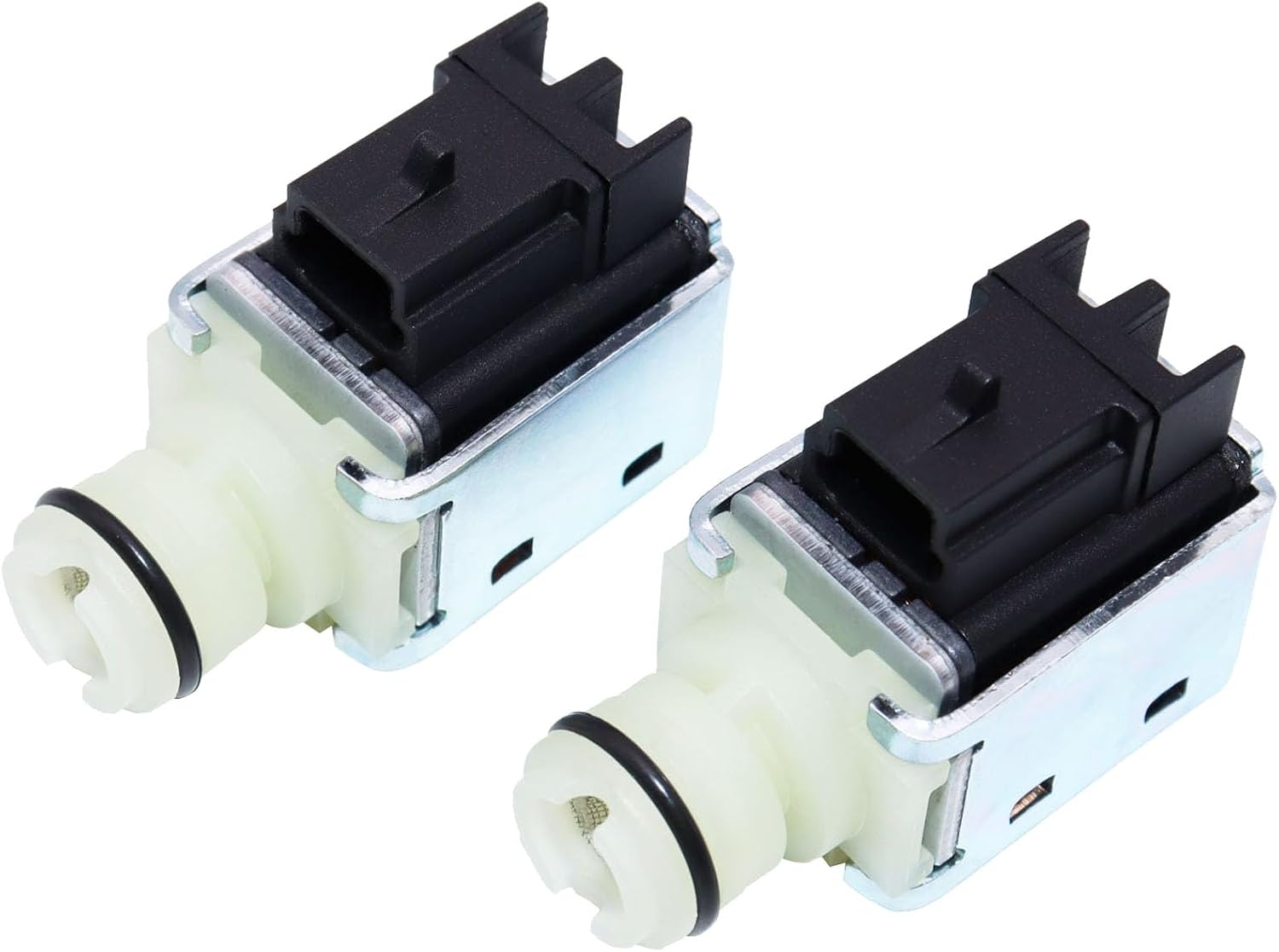
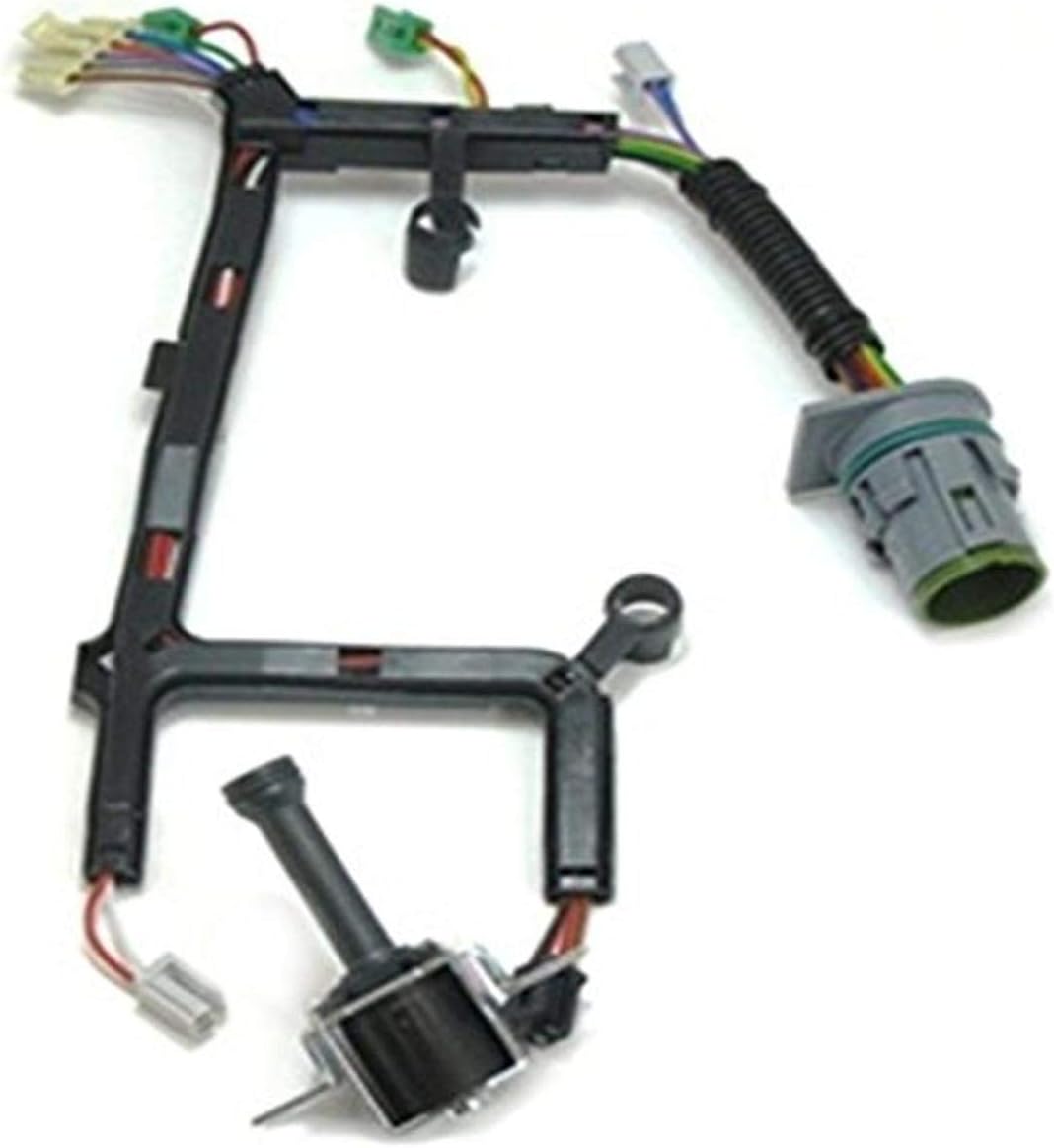
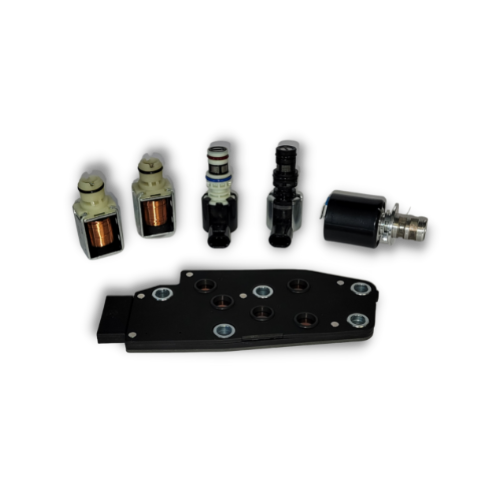
A 4L65-E in limp mode is usually not broken the way the driver thinks it is. The clutches are fine, the band is fine, and the unit would run all four gears if the computer would let it. What you have is a control module that lost confidence in something it can measure, stopped commanding the shift solenoids, and let the hydraulics land where they land. On this transmission that is third.
Third gear with a working reverse is not a mechanical failure pattern. It is the electrical default, and it points you at wiring, sensors and solenoids instead of at a teardown. The 4L65-E ran from 2001 to 2013 behind 6.0-liter trucks and SUVs, the Hummer H2, the SSR and the TrailBlazer SS. Its control system is identical to a 4L60-E, so every 4L60-E bulletin on this subject applies unchanged.
Why failsafe lands in third gear
The two shift solenoids on this unit are not powered by the computer. Per the ATRA technical manual chapter on the 4L60-E, the solenoids receive power whenever the key is on, and the computer supplies ground to energize them. That detail is the whole mechanism: if the module stops supplying ground, or if the ground path is broken by a wire, both solenoids go to their released state at the same time.
Here is the state chart, straight out of that manual:
| Gear | Shift solenoid A (1-2) | Shift solenoid B (2-3) |
|---|---|---|
| 1st | Grounded | Grounded |
| 2nd | Released | Grounded |
| 3rd | Released | Released |
| 4th | Grounded | Released |
Both solenoids released equals third. That is why pulling the transmission fuse leaves you with third gear only, and why genuine failsafe feels the same as a dead fuse. Reverse still works, because it is fed through the manual valve and never depended on a solenoid. Manual 2 and manual 1 usually still pull the unit down a gear for the same reason.
The other half of failsafe is pressure. The ATRA manual describes a pulsed EPC solenoid that controls mainline pressure electronically. GM biased it so pressure rises as current falls: when the module quits commanding it, line pressure goes to the top of its range instead of the bottom, so the unit still has apply pressure to move the truck. That is why a vehicle in limp mode bangs into gear. It is not damaged, it is running at maximum line pressure with no electronic shift control and no converter lockup.
Read the codes first, and read all of them
Failsafe is a symptom, not a code. The 4L65-E enters it for several unrelated families of faults, and the family narrows the job fast:
- Solenoid electrical: P0751, P0752, P0753 for shift solenoid A, and P0756, P0757, P0758 for shift solenoid B. These are circuit faults, not performance faults: the module saw voltage where it expected a ground path, or the reverse.
- Ratio faults: P0730 through P0734. The module compared input speed to output speed and the calculated ratio did not match the commanded gear. That can be a slipping clutch or a lying sensor, and you have to prove which.
- Speed sensors: P0716 and P0717 for input speed, P0722 and P0723 for output speed. Lose either one and the module cannot verify a ratio at all, so it stops guessing and drops out.
- Pressure control: P0748 for the EPC circuit, which forces the unit to maximum pressure by design.
- Range and lockup: P0705 and P0706 for the range switch, P0741 and P1870 for converter clutch slip.
Note the failure pattern before you clear anything. A flashing malfunction indicator lamp means the fault is live right now, not stored, so test the circuit while it is faulted instead of chasing a history code.
The five faults that actually cause it
1. The internal harness and the case connector
This is the first place to look and the most common repair. The internal harness carries every solenoid ground and both speed sensor circuits to a twenty-pin pass-through connector in the case. The original insulation goes brittle from heat and fluid, and the failures cluster at the connector and a few inches above it. A chafed ground lead is electrically identical to a module that quit commanding the solenoid, which is why replacing a solenoid so often fails to fix the truck.
2. The input speed sensor lead at the pump
Transmission Digest documented this one on the 4L70-E, and it is the same pump and the same routing on a 4L65-E. The complaint is P0716 or P0717 showing up after transmission repairs. The cause is that the input speed sensor wiring was not properly secured in its locating brackets on the back of the pump assembly, and the wires were then damaged by the spinning reverse input drum. If the unit came back in failsafe with an input speed code right after a rebuild, do not order a sensor. Look at the routing.
3. A lost ground inside the control module
Transmission Digest lists a second cause for the same two codes: loss of the input speed sensor ground circuit that the TCM provides, with the loss occurring inside the module itself. Their field repair is to splice into circuit 1984/1231 and ground it externally. That circuit runs from terminal 45 at the TCM to terminal V at the case connector, which is worth memorizing because GM's own bulletin uses the same two terminals.
4. The AFL valve, when it is not electrical at all
Sonnax makes the case that pressure complaints and solenoid performance codes frequently trace back to the actuator feed limit valve rather than to the solenoids. The AFL takes line pressure and regulates it down to a lower, steady feed for the solenoids, typically in the 80 to 115 psi range. When that bore wears, Sonnax lists the result as solenoid performance codes, wrong gear starts, harsh or soft shifts, slips and flares, missing gears, delayed engagements and no lockup. Several of those trip failsafe on their own. If you have replaced good solenoids twice and the codes keep coming back, vacuum test the AFL bore before you buy a third set. Sonnax kit 77754-09K is the repair.
5. External wiring, fuses and grounds
Solenoid power comes from an ignition feed, a 10-amp ING 0 fuse in the GEARS article on solenoid circuit testing. Lose it and every solenoid goes dead at once, which produces the same third-gear-only symptom as a module fault. Check the fuse and the case-side grounds before you put a scope on anything.
Testing it in the truck
The numbers below are the ones worth writing on the pan gasket. GEARS, ATRA's technical magazine, gives the shift solenoid resistance range as 20 to 30 ohms. With roughly 12.6 volts of system voltage at key on and engine off, that works out to expected current flow of about 0.63 to 0.42 amps. The same article sets the acceptable voltage drop on the ground side at less than 0.10 volts.
Sonnax's valve body identification guide adds the two solenoids people mix up. On 1996 and later valve bodies the 3-2 control solenoid is the on/off plastic type at 20 to 31 ohms, and the converter clutch solenoid is the gray plastic pulse-width-modulated unit at 10 to 15 ohms. Measure 12 ohms on what you think is a shift solenoid and you are on the converter clutch circuit.
| Check | Spec | What it rules out |
|---|---|---|
| Shift solenoid A or B resistance | 20 to 30 ohms | Open or shorted solenoid winding |
| 3-2 control solenoid, 1996 and later | 20 to 31 ohms | Wrong solenoid identified |
| TCC PWM solenoid, gray plastic | 10 to 15 ohms | Wrong solenoid identified |
| Solenoid current, key on engine off | about 0.42 to 0.63 amps | High resistance in the feed or ground |
| Ground-side voltage drop | less than 0.10 volts | Corroded pins, bad case ground |
| Solenoid feed fuse | 10 amp ING 0 | Total loss of solenoid power |
| AFL regulated solenoid feed | roughly 80 to 115 psi | Worn AFL bore mimicking solenoid faults |
Resistance across a solenoid on the bench proves almost nothing about a circuit fault in the vehicle, because a broken wire reads open only if you measure through the wire. Measure at the module connector, and measure with the fault present.
The GM bulletin path for P0716 and P0717
GM published a diagnostic sequence for exactly this complaint. Bulletin PIP5084A, January 2013, covers harsh shift and illuminated malfunction indicator lamp with DTC P0716 and/or P0717 current or in history in the TCM on 4L60E-equipped Express, Silverado, Savana and Sierra models. It transfers to the 4L65-E because the circuits are the same:
- Check circuit 1984 from the input speed sensor terminal V to the TCM terminal 45.
- Install the J 44152 harness, twenty pins, to the engine side of the transmission inline twenty-way connector.
- With a test light, go from terminal E to terminal V to check the TCM ground. If the test light does not light, the internal ground in the TCM is suspect.
- Unplug the TCM connector and check for continuity across pins 45 and 49. If there is no continuity, replace the TCM and the input speed sensor.
- If there is continuity across pins 45 and 49, replace the input speed sensor only.
GM lists the parts as 24244544 for the input speed sensor and 24252114 for the transmission control module. The branch at step four is the point: the same two codes can mean a bad sensor or a dead ground inside the module, and guessing cannot tell them apart.
The comeback that proves the point
GEARS documented a 2003 Hummer H2 with a 6.0 and a 4L60-E that came in with a flashing malfunction indicator lamp, failsafe operation and DTC P0758, the factory definition being a 2-3 shift solenoid circuit electrical fault. The technician did what the code said: replaced shift solenoid B, replaced the filter, put the pan back on. The code came back on the road test.
The actual fault was a wiring harness pinched between the bellhousing and the engine block during installation, breaking the wires and opening the circuit. The solenoid was never bad.
A solenoid electrical code names a circuit, and the circuit includes the internal harness, the case connector, the chassis harness and the module ground. Test the whole path before you buy a part.
Fixing it so it stays fixed
Once you have proven where the fault is, the repair is usually cheap next to the tow bill:
- Circuit fault inside the pan: replace the internal harness as an assembly rather than splicing brittle wire. On this unit the harness and the converter clutch solenoid come together.
- Confirmed solenoid fault: replace shift solenoids A and B as a pair. They age identically and share a part number, so replacing one and leaving the other is a second trip.
- Unit already open: do the full solenoid set, including the EPC and the 3-2, so you are not pulling the pan again in a year.
- Repeat codes after good parts: vacuum test the AFL and pressure regulator bores. Worn bores set electrical-sounding codes, and new solenoids will not quiet them.
- Routing on reassembly: secure the input speed sensor lead in its brackets on the back of the pump, and route the chassis harness so nothing is trapped when the transmission goes up to the block.
Do not clear codes and call it fixed. A normal-shifting truck proves only that a key cycle resets failsafe, which it always does. Drive it until the module has run its ratio checks in all four gears with lockup applied, then pull codes again.
Keeping a 4L65-E out of failsafe
Repeat failsafe events come from heat and from wiring disturbed during a previous repair. Keep the fluid level right and the cooler flowing, because heat is what turns harness insulation brittle. Repair chafe points instead of taping over them, and treat the pass-through connector and speed sensor leads as service items any time the transmission comes out.
FAQ
What gear does a 4L65E default to in limp mode?
Third. Both shift solenoids are in their released state in third gear, and the solenoids are powered by the ignition feed while the control module supplies the ground. When the module stops supplying ground, or a wire opens that ground path, both solenoids release at once and the hydraulics settle into third. Reverse still works because reverse is fed through the manual valve.
Can you drive a 4L65E in limp mode?
You can move it a short distance at low speed, but it is not something to commute in. Line pressure is pinned at the top of its range, converter lockup is off, and third-gear-only operation means the converter is slipping constantly at low speed. That combination builds fluid temperature quickly, and heat is what kills the clutches that were still good when the fault started.
Will clearing the codes get a 4L65E out of failsafe?
A key cycle usually restores normal shifting until the fault repeats, so clearing codes always looks like it worked. It is not a repair. If the malfunction indicator lamp is flashing, the fault is live at that moment and the circuit should be tested while it is faulted rather than after a reset. Clear codes only after the circuit has been proven good.
What is the most common cause of 4L65E limp mode?
Wiring, not solenoids. The internal harness and the twenty-pin case connector carry every solenoid ground and both speed sensor circuits, and their insulation goes brittle with heat and age. A chafed ground reads to the module exactly like a failed solenoid, which is why solenoid replacement so often produces a comeback with the same code.
Can low fluid put a 4L65E into limp mode?
Indirectly, yes. Low fluid lets the pump pick up air, aerated fluid will not hold clutch apply pressure, and the resulting slip shows up as a gear ratio error in the P0730 through P0734 range. The module sees a commanded gear that the transmission is not actually holding and drops to failsafe. Check the level hot and in gear before you condemn anything electrical.
Sources
- ATRA, Technicians' Easy To Do Video, Chapter 3: GM's 4L60E Transmission Overview — shift solenoid A and B state chart for all four gears, the fact that the solenoids are powered with the key on while the computer supplies ground, and the pulsed EPC solenoid controlling mainline pressure. atracom.blob.core.windows.net
- GEARS Magazine (ATRA), "A Logical Approach to Solenoid Circuit Testing" — 2003 Hummer H2 4L60-E in failsafe with DTC P0758 and a flashing MIL, shift solenoid resistance of 20 to 30 ohms, expected current of about 0.63 to 0.42 amps at 12.6 volts, ground-side drop under 0.10 volts, the 10-amp ING 0 feed fuse, and the harness pinched between the bellhousing and block as the root cause. gearsmagazine.com
- Sonnax, "Uncovering the Root Cause of Pressure Complaints: The Critical Role of Solenoid Modulator & AFL Valves" — the AFL valve regulating line pressure down to a solenoid feed typically in the 80 to 115 psi range, the symptom list for AFL bore wear including solenoid performance codes, wrong gear starts and missing gears, and kit 77754-09K for the 4L60-E, 4L65-E and 4L70-E. sonnax.com
- Sonnax, "GM 4L60-E Valve Body Identification Guide" — 3-2 control solenoid at 20 to 31 ohms on 1996 and later valve bodies, and the gray plastic PWM converter clutch solenoid at 10 to 15 ohms, plus the year-by-year casting and solenoid count differences. sonnax.com
- Transmission Digest, "GM 4L70-E ISS DTC P0716 or P0717" — input speed sensor wiring not secured in its locating brackets on the back of the pump and damaged by the spinning reverse input drum, plus the loss of the ISS ground inside the TCM and the external ground repair on circuit 1984/1231 running from TCM terminal 45 to case connector terminal V. transmissiondigest.com
- General Motors Bulletin PIP5084A, January 2013 (hosted by NHTSA) — the full diagnostic sequence for harsh shift with DTC P0716 and/or P0717, including circuit 1984 from ISS terminal V to TCM terminal 45, the J 44152 twenty-pin harness, the test light check from terminal E to terminal V, the continuity check across TCM pins 45 and 49, and parts 24244544 (input speed sensor) and 24252114 (transmission control module). static.nhtsa.gov
Need parts for this job?
Shift solenoids, internal case harnesses, EPC solenoids, range switches, valve bodies and full solenoid kits for the 4L65E, all in one place with secure on-site checkout.
Shop 4L65E parts →