If a 4L70E suddenly flares at the 3-4 shift like it dropped into neutral, then settles into driving on only 1st and 2nd, you are not chasing a sensor or a bad ground. You are looking at a burnt 3-4 clutch pack, and it is one of the most well-documented failures in the entire 4L60-E/4L65-E/4L70-E family. The pattern is common enough that Sonnax built a dedicated technical writeup around diagnosing it, and GM's own code logic for P1870 is written around exactly this failure mode.
The short version: A 4L70E that flares or loses 3rd and 4th, often with code P1870 or P0734, has a burnt or slipping 3-4 clutch pack. The 3-4 apply circuit is long and easy to bleed pressure from, so the usual suspects are a leaking checkball capsule at the 3rd accumulator/servo, wear at the input shaft-to-drum joint, a worn input housing bore, or a stock backing plate flexing under load. Fluid and codes first, pan inspection second, then a teardown that checks every point in that chain rather than replacing clutches and hoping.
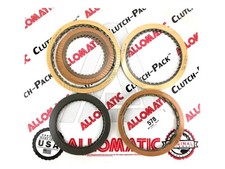
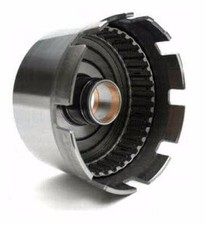
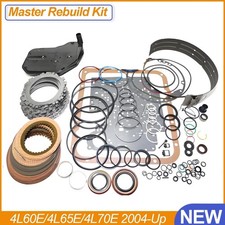
Symptoms of a 4L70E 3-4 Clutch Failure
The 4L70E shares its case, clutch pack, and valve body architecture with the 4L60E and 4L65E, and the 3-4 clutch fails the same way across all three. The most reported pattern is a sudden engine flare right at the 3-4 shift point, as if the transmission momentarily dropped into neutral, with the vehicle then settling into driving on 1st and 2nd only. Some owners get a warning first: a soft or flaring 2-3 shift that progresses over days or weeks before 3rd and 4th disappear completely. Others report no slipping at all beforehand, just a sudden loss of the top two gears on a drive that started normally.
On the bench, the confirmation is burnt clutch material in the pan. A 3-4 pack that has been slipping leaves dark, glazed friction debris at the bottom of the pan, often with a distinct burnt smell on the dipstick. That is different from metal glitter, which points to a hard-parts failure rather than a clutch problem.
Why P1870 and P0734 Point at This Exact Clutch
P1870 (Transmission Component Slippage) is the code most often tied to this failure, and the reason is baked into how GM wrote the logic. MOTOR Magazine's technical article on decoding P1870, written by longtime transmission technical editor Wayne Colonna, lays out exactly what the PCM is watching: in Overdrive, the 4L60-E family applies the forward clutch and the 3-4 clutch along with the 2-4 band, then adds the torque converter clutch on top at cruise. The PCM compares engine speed to vehicle speed through that stack, and if the ratio breaks away, P1870 sets, line pressure is raised, and converter clutch apply is cut to limit further damage. Colonna states it directly: "with the 4L60-E transmission, that means the forward clutch and the 3-4 clutches are applied as well as the 2-4 band, and if the 3-4 clutch or the band slips for any reason, DTC P1870 sets."
P1870 does not only mean a bad converter, even though converter clutch bore wear is the single most common cause of the code overall. It means something in that applied stack is slipping under load, and the 3-4 clutch is one of only three components in the chain. P0734 (Gear 4 Incorrect Ratio) is the more direct code when it does appear, because it fires specifically when the computer sees an actual gear ratio that does not match what 4th gear should produce, which is a near-literal description of a slipping 3-4 pack.
Do not assume the clutch is the only thing slipping. Transmission Digest's ATSG column notes that the 4L60-E family P1870 TCC slip and converter shudder complaint usually traces to wear in the torque converter regulator valve bore, which bleeds off converter apply pressure. Sonnax lists the same bore wear among the causes of codes 894 and 1870, an overheated converter, a burned 3-4 clutch, a harsh 1-2 shift and low line pressure, and offers kit 77754-04K for all years including 1998-later EC3 units. On any 4L70E coming apart for a burnt 3-4 pack, check that bore too, or the converter clutch keeps slipping and the new pack is working on low pressure from day one.
Either code is a reason to pull codes and freeze-frame data before doing anything else. A hard 1-2 upshift complaint riding along with P1870 is consistent with the PCM's own damage-limiting response of raising line pressure once it sees slip, so don't treat that as a second, unrelated problem.
What Actually Burns the 3-4 Clutch
The 3-4 apply circuit on this case is long, and Sonnax's technical team has published a specific diagnostic approach for exactly this failure after years of seeing the same unit come back with a freshly burnt pack even after a "normal" clutch replacement. Their guidance treats it as a chain of possible leak points rather than one part, because the cause is frequently a combination of small leaks that each look harmless on their own.
The checkball capsule at the 3rd accumulator / servo
Sonnax calls a leaking checkball capsule here a leading cause of 3-4 clutch failure. This capsule is the 3rd accumulator, and if it leaks, 3-4 apply pressure bleeds off before the piston can fully clamp the pack. Even new replacement capsules can leak out of the box, so this needs to be tested, not just assumed good because it is new.
The input shaft, drum, and housing
The input drum is pressed onto the input shaft, and wear at that joint is a frequent, often-overlooked leak path. Sonnax's procedure calls for air- and vacuum-checking the loaded drum and the input housing bore, with a minimum of 25 in-Hg on the housing checkball vacuum test. Galling in the housing bore is not something you can seal your way around; it calls for a new input housing. The Teflon seal rings on the input shaft also wear and let fluid bypass into other circuits instead of applying the 3-4 piston.
The stock backing plate
The factory 3-4 backing plate is a known weak point. It flexes under clutch apply load, which uneven-clamps the pack and concentrates heat on part of the friction surface instead of spreading it evenly. Sonnax's heavy-duty backing plate kit (74140-01K) pairs a thicker, stiffer backing plate with a thinner-but-stiffer apply plate, built around the GM high-energy pack of seven .067 in frictions and six .095 in steels. It fits the 4L60, 4L60-E, 4L65-E, and 4L70-E, and requires a 1991-or-later 3-4 apply ring stamped "7" measuring 3.671-3.682 in tall, so the apply ring needs to be checked before ordering.
Self-inflicted damage from a prior rebuild
If this is a repeat failure after a rebuild, Sonnax's writeup flags two common rebuilder mistakes that smoke a 3-4 pack almost immediately: cracking the pump cover while installing the stator shaft, and damaging the input shaft seal during reassembly. Either one creates a leak in exactly the circuit this clutch depends on, which is why a "new" transmission can arrive burnt again within a few hundred miles.
How to Diagnose It Before You Pull the Pan
- Scan for codes and freeze-frame data first. Confirm whether you have P1870, P0734, or both, and note the mileage and conditions (cruise speed, gear) when they set.
- Check fluid level and condition. Low fluid aerates the pump and can mimic or worsen a clutch slip complaint, and it is the first thing to rule out before condemning the pack.
- Drop the pan and look. Dark, glazed friction material confirms the 3-4 pack. Metal glitter instead points toward a hard-parts failure and changes the diagnosis.
- Test the checkball capsule and drum/housing before reassembly. If this unit is coming apart for a rebuild anyway, vacuum-test the input housing checkball (25 in-Hg minimum) and air-check the loaded drum rather than skipping straight to clutch replacement. A rebuild that replaces friction material without addressing a leaking capsule or worn drum will likely burn again.
- Inspect the backing plate for flex or heat discoloration. A warped or discolored stock backing plate is a sign of uneven clamping and is worth upgrading during the same repair rather than reusing.
4L70E 3-4 Clutch Piston, Bonded
Direct replacement for the piston that applies this exact clutch pack. Worth pairing with a fresh checkball capsule and a drum/housing inspection rather than installing it alone.
Shop the 4L70E 3-4 clutch piston →Need the full friction and steel pack or a complete rebuild kit? Browse the full 4L70E parts collection.
Mistakes We See on the Bench
- Replacing frictions without testing the checkball capsule. A new clutch pack installed over a leaking 3rd accumulator capsule burns again, often within a few hundred miles, because the apply pressure problem was never fixed.
- Reusing a worn stock backing plate. If the plate shows heat discoloration or measurable flex, it was part of the failure, not just a bystander.
- Chasing P1870 as a converter-only code. Converter clutch bore wear is the most common cause of P1870 overall, but on the 4L70E the code can just as easily mean the 3-4 clutch or the 2-4 band slipped. Pull the pan before assuming the converter.
- Skipping the input shaft and drum inspection. This is one of the most commonly overlooked leak paths in the whole chain, and it will burn a freshly built pack just as fast as a leaking capsule will.
- Treating a repeat burn as bad luck. A pack that burns again after a rebuild almost always means one of the leak points above was missed, not that the new clutch material was defective.
Keep the fluid right during the rebuild. Our free transmission fluid spec chart lists the correct ATF and capacities for the 4L70E and dozens of other units, so a clutch job doesn't end with the wrong fluid going back in.
FAQ
What are the symptoms of a 4L70E 3-4 clutch failure?
The classic symptom is an engine flare or RPM runaway right at the 3-4 shift, as if the transmission briefly drops into neutral, followed by the vehicle driving only in 1st and 2nd. Some units give warning first with a soft or slipping 2-3 shift before 3rd and 4th disappear entirely; others go from normal operation to no 3rd or 4th with no prior slipping at all. A burnt smell and dark or glazed clutch material in the pan on teardown confirm it.
What code sets when a 4L70E 3-4 clutch fails?
P1870 (Transmission Component Slippage) is the most common, because the 4L70E applies the forward clutch, the 3-4 clutch, and the 2-4 band together in Overdrive with the converter clutch, and MOTOR Magazine's technical writeup on this code states directly that if the 3-4 clutch or band slips for any reason, P1870 sets. P0734 (gear 4 incorrect ratio) can also appear when the computer sees the actual gear ratio fall outside what 4th gear should produce.
What actually causes the 3-4 clutch pack to burn up on a 4L70E?
Sonnax's technical writeup on this exact failure points to a chain of possible leak paths rather than one single part: a leaking checkball capsule at the servo/3rd accumulator, wear at the input shaft and drum where it is pressed together, a worn input housing bore, and a stock backing plate that flexes under load and applies the clutch unevenly. Any one of these bleeds apply pressure off the 3-4 piston, and the clutch slips and burns before it ever fully locks.
Can a 4L70E 3-4 clutch failure be fixed without a full rebuild?
If the failure is caught early and the pan shows only light discoloration rather than heavy burnt debris, some shops will attempt a targeted repair: new frictions, a fresh checkball capsule, and a drum/housing inspection without a full teardown. But because the common causes sit inside the drum and valve body, most confirmed burnt-pack cases end up needing the unit out and apart to actually test and fix the leak path rather than just replace friction material.
Is P1870 always a 3-4 clutch problem on a 4L70E?
No. Converter clutch bore wear is the single most common cause of P1870 across the GM 4L60-E family, including the 4L70E. The code only confirms that something in the forward clutch, 3-4 clutch, or 2-4 band stack slipped while the converter clutch was applied at cruise. Pulling the pan and checking for burnt friction material is what separates a converter-side cause from a 3-4 clutch cause.
Sources
- Sonnax — Brian Wing, "All Over the Map: Attacking 4L60-E Burnt 3-4 Clutches with Confidence." Backs: the checkball capsule at the 3rd accumulator as a leading cause of 3-4 clutch failure, the 25 in-Hg minimum vacuum spec for the input housing checkball, input shaft/drum and Teflon seal ring wear as a leak path, and cracked pump covers or damaged input shaft seals from a prior rebuild as self-inflicted causes. sonnax.com/tech_resources/659
- Sonnax — Heavy Duty 3-4 Clutch Backing Plate Kit, part 74140-01K, product and fitment page. Backs: the stock 3-4 backing plate flexing under load as a cause of uneven clamping, the kit's fitment across 4L60, 4L60-E, 4L65-E, and 4L70-E, the GM high-energy pack spec of seven .067 in frictions and six .095 in steels, and the 1991-later 3-4 apply ring requirement (stamped "7," 3.671-3.682 in). sonnax.com/parts/4544
- MOTOR Magazine — Wayne Colonna, "Slip-Sliding Away: Deciphering GM Transmission DTC P1870" (June 2006). Backs: the exact applied-component stack (forward clutch, 3-4 clutch, 2-4 band, converter clutch) the PCM monitors in Overdrive, the statement that the 3-4 clutch or band slipping sets P1870, the PCM's line-pressure-raise and converter-clutch-cutoff response, and converter clutch valve bore wear as the single most common root cause of the code. motor.com — Deciphering GM Transmission DTC P1870 (PDF)
- General Motors / Chevrolet Performance — Supermatic Transmission Specifications sheet, Part No. 19260445, which explicitly lists the 4L70-E (PN 19260961 / 19299055) alongside the 4L65-E (19260380) on the same case and clutch-pack platform referenced throughout this article. Chevrolet Performance Supermatic spec sheet (PDF)
- Sonnax — TCC Regulator & Isolator Valve Kit, 77754-03K / 77754-04K. Backs: TCC regulator and isolator bore wear as a cause of codes 894 and 1870, an overheated converter, a burned 3-4 clutch, a harsh 1-2 shift, and low line pressure, and the 77754-04K fitment for all years including 1998-later EC3 units. sonnax.com/parts/2457
- Transmission Digest (ATSG Shift Pointers) — P1870 Revisited. Backs: the 4L60-E family P1870 TCC slip and converter shudder problem usually tracing to torque converter regulator valve bore wear and lost apply pressure. transmissiondigest.com: P1870 Revisited