The 4L70E is not a badge-engineered 4L60E. GM's own owner manuals for the trucks it came in list it separately as the 4L70-E Super Duty Transmission, and the parts that make it "super duty" are mechanical: a stronger input drum, a five-pinion output carrier, a heavier band. What GM did not change is the part that decides how hard every one of those clutches gets clamped. That is the pressure control solenoid, and on this unit it is the late-style design.
That detail matters more than most of the parts catalog. Sonnax states plainly that the early-style '92-'02 EPC solenoid proved more reliable than the late '03-later version, and that different pin and connector configurations prevent using the early solenoid in a late unit without an adapter. The 4L70E is late-style, always. So when a 4L70E comes in with a pressure complaint, you are already working on the weaker of the two designs.
The problem is that everything upstream and downstream of that solenoid produces the exact same symptoms. This is how to tell them apart with a gauge, an amp clamp and about forty minutes, before you spend a dime.

What the EPC Solenoid Actually Controls
The pressure control solenoid is a variable-force solenoid, not an on-off switch. The PCM feeds it a commanded current, that current sets how much pressure the solenoid outputs, and that output pressure is routed to the end of the boost valve. There it adds to the pressure regulator spring's force, which drives line pressure up. Sonnax describes the arrangement in its 4L60E build guidance: oil pressure from the EPC solenoid is directed to the end of the boost valve, and it is essential to feed that boost valve with a properly working, clean EPC solenoid and steady actuator feed limit pressure.
The relationship between current and pressure is inverse, and that catches people every time. Per ATRA's Gears magazine, on a GM unit with electronic pressure control the solenoid command sits around 0.9 to 1.1 amps at idle, and at wide open throttle, just before the 1-2 shift, that command should drop to 0.2 to 0 amps. As engine load comes up, solenoid amperage drops and line pressure rises. High current equals low line. Zero current equals maximum line, which is also why a disconnected or open EPC circuit gives you a truck that bangs into every gear rather than one that slips.
The solenoid does not get raw line pressure to work with, either. The actuator feed limit valve regulates line pressure down first. In the GM 4L60E family, Sonnax puts that regulated feed at approximately 115 psi, and it supplies the shift solenoids, the pressure control solenoid, the TCC solenoid, the 3-2 control solenoid and the 2-3 shift valve lineup off the same circuit. Every electrical control in the transmission drinks from one cup.
Symptoms, Sorted by Which Direction It Failed
A pressure control fault is not one complaint. It is three, and which one you get tells you which way the circuit went.
| Failure direction | What line pressure does | What the driver reports |
|---|---|---|
| Stuck or biased toward high current | Low line, little or no rise with throttle | Soft sliding shifts, slipping under load, flare on the 1-2 and 2-3, burned 3-4 clutches, converter clutch slip codes |
| Stuck or biased toward low current (or open circuit) | Maximum line all the time | Harsh bang shifts in every range, harsh reverse engagement, no shift feel modulation at all |
| Erratic current or erratic supply | Pressure wanders | Shift feel that changes trip to trip, intermittent slip, pressure that will not hold still on the gauge during a stall test |
The Gears case vehicle is a useful benchmark for that third row: idle line pressure around 60 psi, then pressures bouncing between 90 and 150 psi during the stall test, with an amp clamp showing the amperage itself was erratic. Pressure that will not sit still is an electrical signature, not a mechanical one.
One caution before you go any further, because it accounts for a large share of misdiagnosed "bad EPC solenoid" jobs. Transmission Digest technical editor Wayne Colonna notes that on this family many harsh 1-2 complaints come from TCC slippage setting P1870 and P0894, which puts the transmission into high line pressure mode on purpose. The line pressure is high because the computer commanded it high, and the solenoid is doing exactly what it was told. Clear the converter clutch slip first. If you replace a pressure control solenoid on a unit that is in high line mode, you will replace it twice.
The Forty-Minute Test That Settles It
You need two things on the vehicle at once: a pressure gauge on the line tap and a low-amp clamp on the pressure control solenoid feed wire. Reading one without the other is what makes this diagnosis take three visits.
Step 1: Verify the fluid before you verify anything else
Level and condition change pressure readings enough to send you down the wrong road. Per GM, check the level hot — at the 180 F to 200 F (82 C to 93 C) normal operating range — parked level, engine running, with the selector moved through each range for about three seconds and then back in Park and idling three minutes before you pull the stick. GM specifies DEXRON-VI for this transmission, and lists the 4L70-E Super Duty fluid capacity at 5.0 quarts (4.7 L) for a pan-and-filter service.
Step 2: Command versus actual
Watch the scan tool's pressure control solenoid command while you clamp the actual current. At idle in Drive you want roughly 0.9 to 1.1 amps flowing. Snap the throttle or run a brief stall and the current should fall toward 0.2 amps while the gauge climbs. Colonna's warning is specific and worth repeating: it is not advisable to rely on the EPC solenoid commanded amperage PID, because the PID will often display the proper commanded amperage when the actual current is wrong — which is exactly what happens when the control module's solenoid driver has failed. The clamp is the arbiter, not the screen.
Step 3: Read the two results together
| Current at the wire | Pressure on the gauge | Where the fault is |
|---|---|---|
| Correct and stable | Correct and rises with load | Not a pressure control fault. Look at the shift circuits, clutch packs or converter. |
| Correct and stable | Low, erratic, or will not rise | Hydraulic. Solenoid screen, pressure regulator bore, boost valve, AFL bore or pump. |
| Wrong or erratic | Follows the bad current | Electrical. Solenoid, internal harness, case connector or the module driver. |
| Wrong, but command PID looks right | Anything | Suspect the solenoid driver or the harness between it and the case connector, not the solenoid. |
That second row is the one that saves money, and it is also the one that gets skipped.
Three Bores That Impersonate a Bad Solenoid
The 4L70E valve body is the same casting family that has been wearing bores since 1993, and three of those bores sit directly in the pressure control path.
The pressure regulator bore
Sonnax lists the symptoms for its oversized pressure regulator valve in the 4L60-E, 4L65-E and 4L70-E as erratic line pressure, low line rise, 3-4 clutch failure, excess pump noise and reverse chatter, and explains the mechanism: pressure regulator valve bore wear allows leakage and contributes to erratic pump slide movement. The published bench indicator is useful — on a dynamometer, look for 50 to 100 psi less than specified in Reverse during boost conditions. Reverse is where boost pressure is highest, so a leaking bore shows up there first and worst.
The actuator feed limit bore
The AFL valve has a large reaction area on its spring end, which side-loads the valve and makes that bore especially prone to wear. When it wears, actuator feed pressure drops, which starves the pressure control solenoid of the supply it needs to do its job. Sonnax notes that worn AFL bores in the 4L60E family result in low actuator feed and line pressures, and that the resulting loss of line pressure can overwork pumps and cause 1870 or TCC codes. A starved solenoid behaves identically to a failed one on a scan tool.
The boost valve
The boost valve is where EPC oil becomes line rise. A leaking boost valve or worn bore gives you a solenoid that is commanding correctly into a circuit that cannot act on it — low line rise and 3-4 clutch failure with perfectly normal amperage.
Sonnax's summary of this whole family of complaints is the sentence to keep on the wall: installing a new EPC solenoid may raise EPC pressure enough to get the unit out the door, but unless the worn circuits are addressed, longevity is severely compromised. The repair parts for these bores are published — the actuator feed limit valve kit 77754-09K, the oversized pressure regulator valve 77917-07, and the early- and late-style boost valve kits in the 77898E series — but which one you need is decided by a vacuum test on the bench, not by the code.
If It Really Is the Solenoid
Two things drive genuine pressure control solenoid failure on a 4L70E, and both are worth handling at the same time you replace the part.
Contamination. The pressure control solenoid is the finest-tolerance electrohydraulic device in the unit, and the fluid that reaches it passes through a screen first. Sonnax's guidance is direct: never leave magnets out of the pan, and adding extra magnets is a good idea, because they collect the hardest contaminates — the ones most likely to affect the critical EPC solenoid. If the pan came back full of steel, a new solenoid with the same debris supply is a short-term repair.
The late-style design itself. Since the 4L70E only ever used the late solenoid, and the early design is the more reliable of the two, the aftermarket answer is the harness adapter route — Sonnax's 34435-01K exists specifically because the pin and connector configurations otherwise prevent installing an early solenoid into a late unit. On a truck that lives under load, that is a conversation worth having with the customer rather than fitting the same late part for the third time.
Whatever you install, service the fluid on GM's severe schedule if the truck earns it. GM's severe-service list for the fluid and filter is heavy city traffic where the outside temperature regularly reaches 90 F (32 C) or higher, hilly or mountainous terrain, frequent trailer towing, and taxi, police or delivery use. Most 4L70E trucks qualify for at least one of those.
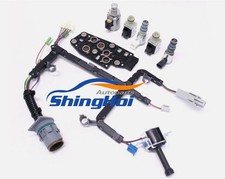
4L70E Solenoid Kit, 2006-08
If the amp clamp condemns the electrical side, replacing the pressure control solenoid alone while leaving eight-year-old shift and TCC solenoids in the same fluid is half a job. The kit covers the set for the 2006-2008 units.
See the solenoid kit →Need parts for this job?
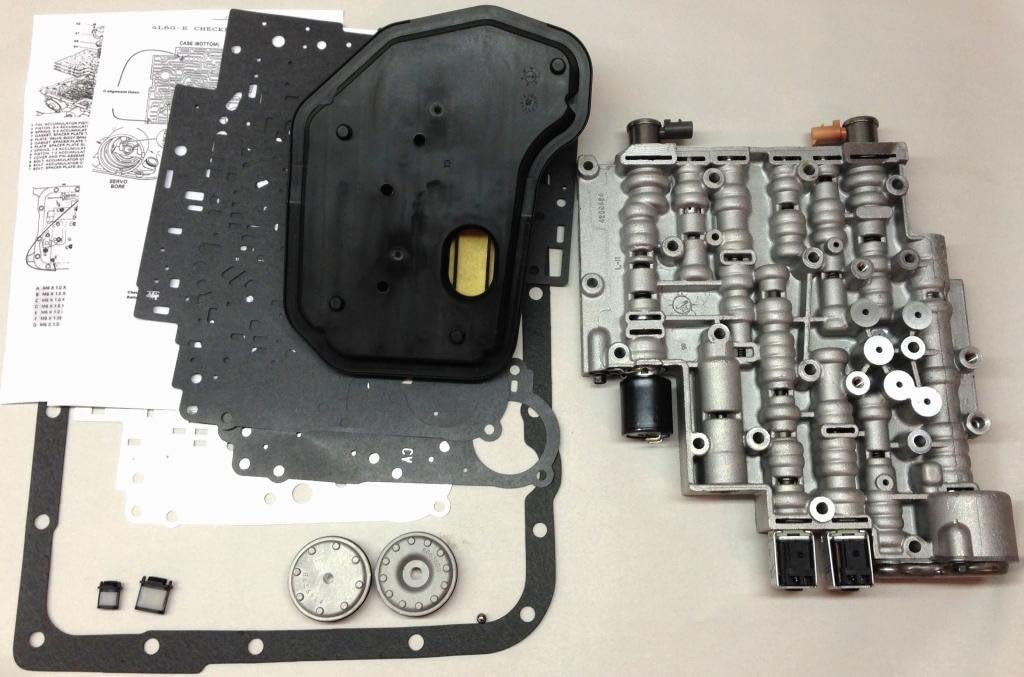
Our 4L70E collection has the EPC solenoid, full solenoid sets, valve bodies, filters and the master rebuild kits for when the pressure problem already took the clutches with it. Shop 4L70E transmission parts — shipped from the USA with secure checkout.
FAQ
What are the symptoms of a bad 4L70E pressure control solenoid?
The complaint depends on which way the solenoid fails. Stuck toward high current means low line pressure, which shows up as soft sliding shifts, slipping under throttle and burned 3-4 clutches. Stuck toward low current means maximum line pressure and harsh bang shifts in every range. An erratic solenoid gives erratic pressure and shift feel that changes from one stop light to the next. Because the pressure control solenoid also sets converter apply pressure indirectly, a failing one often drags TCC codes along with it.
How many amps should the 4L70E EPC solenoid draw?
Per ATRA's Gears magazine, on a GM unit with electronic pressure control the solenoid command should sit around 0.9 to 1.1 amps at idle and drop to roughly 0.2 to 0 amps at wide open throttle just before the 1-2 shift. Current and line pressure move in opposite directions: as engine load comes up, solenoid amperage drops and line pressure rises. Measure it with an amp clamp on the solenoid feed wire, not from the scan tool command PID alone.
Can I fix a 4L70E pressure problem by just replacing the EPC solenoid?
Sometimes, and that is the trap. Sonnax's position on this valve body family is that installing a new EPC solenoid may raise EPC pressure enough to get the unit out the door, but unless the worn circuits are addressed, longevity is severely compromised. The pressure regulator, boost and actuator feed limit bores all wear in this casting. Check them before you call a new solenoid a repair.
Does a harsh 1-2 shift mean the 4L70E EPC solenoid is bad?
Usually not. Transmission Digest technical editor Wayne Colonna points out that many harsh 1-2 complaints on this family come from TCC slippage setting P1870 and P0894, which puts the transmission into high line pressure mode. The pressure is high on purpose. Fix the converter clutch slip first, then re-evaluate shift feel before you touch the pressure control solenoid.
What fluid and how much does a 4L70E take?
DEXRON-VI, per GM's own owner manual for the trucks this unit came in. GM lists the refill capacity for the 4L70-E Super Duty transmission at 5.0 quarts (4.7 L), which is a pan-and-filter service, not a dry fill. Check the level hot, at the 180 F to 200 F (82 C to 93 C) normal operating range GM specifies, with the engine running and the selector cycled through every range first.
Sources
- Rob Faucett, ATRA / Gears Magazine — "Controlling Pressure: General Motors" (August 8, 2023) Backs the electrical specifications and the test method: the pressure control solenoid command of 0.9 to 1.1 amps at idle, the drop to 0.2 to 0 amps at wide open throttle before the 1-2 shift, the inverse relationship in which solenoid amperage drops as engine load rises and line pressure rises with it, the amp clamp on the pressure control solenoid wire paired with a pressure gauge on the tap, and the case-vehicle readings of roughly 60 psi at idle and erratic 90 to 150 psi during the stall test. gearsmagazine.com
- Sonnax, in Transmission Digest — "Hydraulic Fundamentals: AFL/Solenoid Modulator Valves" (April 28, 2020) Backs the actuator feed limit section: line pressure being regulated at approximately 115 psi and fed to the shift solenoids, pressure control solenoid, TCC solenoid, 3-2 control solenoid and 2-3 shift valve lineup in the GM 4L60-E family; the large reaction area on the spring end of the valve producing side loading that makes the bore especially susceptible to wear; worn AFL bores resulting in low actuator feed and line pressures; and loss of line pressure overworking pumps and causing 1870 or TCC codes. transmissiondigest.com
- Sonnax — EPC Solenoid Harness Adapter 34435-01K product information Backs the early-versus-late solenoid section: the early-style '92-'02 EPC solenoid proving more reliable than the late '03-later style, and the different pin and connector configurations preventing the use of early solenoids in late units without the adapter. sonnax.com
- Sonnax — Oversized Pressure Regulator Valve 77917-07 Backs the pressure regulator bore section: the 4L60-E, 4L65-E and 4L70-E application; pressure regulator valve bore wear allowing leakage and contributing to erratic pump slide movement; the published symptom list of erratic line pressure, low line rise, 3-4 clutch failure, excess pump noise and reverse chatter; and the dynamometer indicator of 50 to 100 psi less than specified in Reverse during boost conditions. sonnax.com
- Sonnax — "Building the Killer 4L60E: Top Tips for Optimizing Your Transmission Upgrades" Backs the contamination and boost valve notes: the requirement to feed the boost valve with a properly working (clean) EPC solenoid and steady AFL pressure to the EPC solenoid; and the instruction never to leave magnets out of the pan, with extra magnets recommended because they collect the hardest contaminates most likely to affect the critical EPC solenoid. sonnax.com
- Wayne Colonna, Transmission Digest — "4L60E Harsh 1-2 Shift" (April 30, 2021) Backs the harsh-shift caveat and the scan tool warning: line pressure boost control being the long-standing weak point of this family; many harsh 1-2 problems tracing to TCC slippage complaints setting P1870 and P0894 and putting the transmission into high line pressure mode; the remaining line pressure suspects of ECM EPC solenoid driver failure, lean misfire, MAF problems and the EPC solenoid itself; and the advice that it is not advisable to rely on the EPC solenoid commanded amperage PID because the PID can display the proper commanded amperage when it is in fact wrong. transmissiondigest.com
- General Motors — 2008 Chevrolet Tahoe Owner Manual Backs the OEM service data: GM's own designation of the unit as the "4L70-E Super Duty Transmission" with a 5.0 quart (4.7 L) transmission fluid capacity; DEXRON-VI Automatic Transmission Fluid as the specified automatic transmission fluid; the normal operating temperature range of 180 F to 200 F (82 C to 93 C) for an accurate hot fluid level check, with the engine idling and the selector moved through each range for about three seconds; and the severe-service fluid and filter change conditions of heavy city traffic at 90 F (32 C) or higher, hilly or mountainous terrain, frequent trailer towing, and taxi, police or delivery use. assets.gm.com
- Sonnax — GM 4L60-E, 4L65-E, 4L70-E Valve Body Layout Backs the repair-part references for the bores named in this article: the actuator feed limit valve kit 77754-09K for wrong gear starts, solenoid performance codes, erratic line pressure and clutch failure; the oversized pressure regulator valve 77917-07; and the early- and late-style boost valve kits (77898E series) covering 3-4 clutch failure, 2-4 band failure, low line rise and poor shift quality. sonnax.com