A worn front pump on a 4L70E rarely announces itself the way people expect. It is almost never "the truck won't move at all" as the first symptom. More often it starts as a converter that runs hotter than it used to, a torque converter clutch that hesitates to lock or won't release cleanly, or a slip under load in more than one gear that comes and goes before it gets consistent. By the time a 4L70E will not move in any gear, the pump has usually been losing ground for a while and whatever it was feeding downstream — clutches, bands, the converter — has already taken damage.
The 4L70E shares its front pump architecture with the 4L60E and 4L65E. It is the same basic pump body, stator support shaft, rotor set and valve bores across the family, which is why Sonnax catalogs pump-related parts for all three units together, and why everything in this article applies just as directly to a 4L60E or 4L65E showing the same symptoms.
What the pump actually does, and why partial failure looks different from total failure
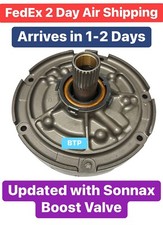
The front pump is the hydraulic heart of the transmission. It is a vane-style pump driven directly off the torque converter hub, and it is running the instant the engine is running, whether the truck is in Park or doing 70 down the highway. It pressurizes the fluid that fills every clutch, band, and valve bore in the unit, and it is what the torque converter clutch (TCC) regulator and isolator valves meter to control converter lockup.
Total pump failure — a seized rotor, a sheared drive tang, a pump body that has spun in its bore — does produce the classic no-movement symptom, because there is simply no pressure left to apply any clutch. But that is the rare, catastrophic end state. Most pumps that get pulled on a 4L70E are failing gradually at specific wear points inside and around the pump housing, and those wear points each produce their own, more specific symptom pattern long before the pump quits outright.
Wear point one: the TCC regulator and isolator valve bores
Sonnax's technical write-up on this exact issue, titled "Understanding 4L60-E Series Isolator Bore Wear," documents that in GM 4L60-E, 4L65-E and 4L70-E units, the TCC regulator valve bore wears severely because of constant oscillation of the OE valve during normal operation. That wear lets regulated converter apply pressure bleed off instead of holding steady, which directly undermines the pump's ability to control torque converter clutch behavior.
The practical symptoms line up with what shops actually see on these trucks: a torque converter clutch that is slow to apply or releases unevenly, a converter that runs hotter than normal because it is not locking cleanly at cruise, and harsh or inconsistent shift feel tied to TCC apply timing rather than the shift solenoids themselves. Sonnax addresses this specific wear with a direct TCC Regulator & Isolator Valve Kit, part number 77754-03K (and the 77754-04K variant for EC3-equipped units from 1998 and up), which replaces the worn valve and sleeve without requiring a full pump teardown.
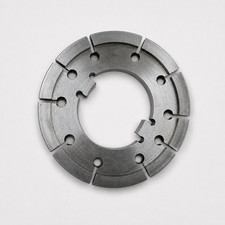
Sonnax Stator Support Shaft Assembly, 77918S-1K
Fixes the sleeve-rotation wear at the heart of the stator support shaft, one of the two most common pump-adjacent failures on this family. Sold through our Core Transmission Parts storefront.
Shop the Sonnax stator support shaft kit →Wear point two: the stator support shaft sleeve
The stator support shaft is the stationary shaft running through the center of the pump that the stator (inside the torque converter) rides on, and it carries internal oil feeds through to the converter. Sonnax's product page for its 4L60/4L60-E Stator Support Shaft Kit (77918S-K) states the failure plainly: "Overheating and manufacturing flaws cause sleeve rotation and block oil flow, which leads to transmission failure." Listed symptoms are an overheated converter, worn splines, and TCC apply and release concerns — the same converter-heat and lockup complaints caused by isolator bore wear, but coming from a different part of the same pump assembly.
Sonnax's fix is mechanical rather than just a bigger part: the kit fastens the sleeve in place with a set screw and Loctite so it physically cannot rotate again, rather than relying on a press fit that already failed once. It is a direct, no-machining repair for this specific wear point, which is worth knowing before anyone assumes a rotated sleeve means the whole pump has to be replaced.
Wear point three: general bushing, rotor, and bore wear
Beyond those two documented failure points, the pump body itself wears the way any high-cycle hydraulic pump does: the bushing that supports the input shaft through the pump wears oversize, the rotor and slide lose their tight tolerances, and metal and friction debris circulating from a failing clutch pack accelerates all of it. This is slower, mileage-driven wear rather than a single defined failure point, which is why Sonnax sells individual bushing and rotor components (not just the bore-wear kits above) specifically for this family, and why a bore gauge check is worth doing before buying parts on a guess.
The downstream effect of pump wear from any of these three causes is the same: line pressure and converter apply pressure both run low and unstable, and that same kind of pressure loss does not have to start at the pump to produce the symptom. GM's own Preliminary Information bulletin PIP5072 documents the mechanism one step downstream of the pump, inside the input housing right behind it: on 4L60E, 4L65E and 4L70E units built with a specific GM Service replacement input housing (part 17803687), an incorrectly drilled input shaft lets fluid cross-leak between the 3-4 clutch feed circuit and the forward clutch feed circuit, producing a slip or no-engagement condition in any forward gear right after that housing goes in. GM's specified check is to air-test the 3-4 clutch feed hole and the forward clutch feed hole independently with the housing fully assembled; cross-leakage between the two calls for a new input housing (GM part 19125752), not another round of clutches. Whether the leak path is at the pump, the input housing, or the feed circuits inside it, the result at the clutch packs looks the same: not enough clamping force to hold the gear under load.
The short version: a 4L70E pump rarely dies all at once. Isolator/TCC regulator bore wear shows up as converter heat and TCC apply/release problems. Stator support shaft sleeve rotation shows up the same way, from a different internal path. General bushing and rotor wear shows up as low, unstable line pressure and multi-gear slipping. All three get worse the longer they run, and all three eventually overlap into the same no-movement end state if ignored.
The rare exception: a pump problem that was never about wear
Not every pump-related complaint on this family is wear. Transmission Digest's technical write-up "Overall-Height Issues and Pump-Gear Problems" documents a manufacturing-tolerance issue on certain GM 4L60E-family builds — specifically 300mm-converter units in 2002-2003 Envoy, Bravada and TrailBlazer applications — where the torque converter did not fully engage the pump drive gear due to converter "stab depth" variance. The result is pump-related symptoms with no actual wear on the pump itself. It is a narrow case, but worth knowing before a technician assumes every pump complaint traces back to mileage, especially on a truck that is showing these symptoms shortly after a converter or transmission swap rather than gradually over years.
Diagnosing it before you order a pump
- Check fluid level and condition first. Low or badly contaminated fluid mimics pump wear and costs nothing but a dipstick pull to rule out.
- Note exactly when the converter runs hot and when TCC apply/release is rough. That pattern points first at the isolator/TCC regulator bore or the stator support shaft sleeve, not a dead pump.
- Pull the pan and check for metal and friction debris. Heavy contamination supports general bushing/rotor wear and means a full rebuild, not just a pump swap, is the realistic fix.
- If the truck recently had converter or transmission work done, consider a stab-depth or installation issue before assuming internal pump wear.
- Bore-gauge the pump body if it is already out, rather than reusing it on inspection alone. A bushing bore that looks fine to the eye can still be out of round.
Because the front pump sits directly behind the torque converter at the front of the case, there is no way to inspect or service any of this with the transmission still in the truck. The converter and transmission both have to come out before the pump assembly is accessible, which is the main reason a pump job on a 4L70E is never a quick in-and-out repair, regardless of which of the three wear points turns out to be the cause.
Putting the repair order together
- Converter runs hot, TCC apply/release is inconsistent, no hard code: isolator/TCC regulator bore wear or stator support shaft sleeve rotation. Sonnax sells a direct kit for each.
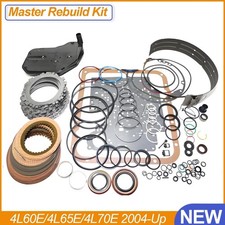
- Low, unstable line pressure with multi-gear slipping and debris in the pan: general pump wear plus likely clutch/band damage downstream. A full rebuild kit, not just a pump, is the honest fix.
- No movement in any gear, pump checked and confirmed seized or sheared: full pump replacement.
- Symptoms appeared right after converter or transmission service, not gradually: check converter stab depth and installation before condemning the pump as worn.
FAQ
Does a bad 4L70E pump always cause no movement?
No. A pump that has lost most of its output can cause no movement in any gear, but partial wear usually shows up first as a hot-running converter, torque converter clutch apply or release problems, and slipping under load in multiple gears, not a dead truck. Sonnax documents the TCC regulator and isolator valve bores wearing before the pump gets bad enough to leave the truck stranded.
What causes a 4L70E pump to fail in the first place?
Three separate wear points inside and around the pump assembly: the TCC regulator and isolator valve bores wearing from constant valve oscillation, the stator support shaft sleeve rotating loose from heat and manufacturing tolerance and blocking oil flow, and general bushing or rotor wear from mileage and fluid contamination. Any one of these drops the pump's ability to deliver stable pressure to the rest of the valve body.
Can a 4L70E pump problem be fixed without replacing the whole pump?
Often yes, if it is caught at the valve-bore-wear stage. Sonnax sells a direct stator support shaft kit and a TCC regulator and isolator valve kit specifically because those two wear points can be repaired without a full pump replacement, as long as the pump body and rotor are not also damaged. Once the bushing bore or rotor pocket is worn, a full pump assembly is the more reliable fix.
Is a 4L70E pump replacement a bolt-on job?
No. The front pump sits behind the torque converter at the front of the case, so the transmission has to come out of the vehicle and the converter has to be pulled before the pump is accessible. There is no way to service it with the transmission still in the truck.
Can a manufacturing defect cause pump problems on a 4L70E that has nothing to do with wear?
Yes, though it is rare and tends to show up close to the factory build date rather than at high mileage. Transmission Digest has documented a stab-depth issue on certain GM 4L60E-family builds where the torque converter did not fully engage the pump drive gear, which produces pump-related symptoms without the pump itself being worn.
Sources
- Sonnax, "Understanding 4L60-E Series Isolator Bore Wear" — the TCC regulator/isolator valve bore wear mechanism in 4L60-E, 4L65-E and 4L70-E units, caused by oscillation of the OE valve, and its effect on regulated converter apply pressure. sonnax.com
- Sonnax, TCC Regulator & Isolator Valve Kit product page (77754-03K / 77754-04K) — the direct repair kit for the isolator bore wear above, including the EC3-specific variant for 1998-and-up units. sonnax.com
- Sonnax, Stator Support Shaft Kit product page (77918S-K) — the stator shaft sleeve rotation failure ("overheating and manufacturing flaws cause sleeve rotation and block oil flow"), its symptoms (overheated converter, worn splines, TCC apply/release concerns), and the set-screw-and-Loctite fix. sonnax.com
- Transmission Digest, "Overall-Height Issues and Pump-Gear Problems" — the converter stab-depth manufacturing issue on certain 300mm-converter 4L60E-family builds (2002-2003 Envoy/Bravada/TrailBlazer) that produces pump-related symptoms without pump wear. transmissiondigest.com
- General Motors Preliminary Information Bulletin PIP5072 (October 2012, NHTSA-hosted PDF), "Slip In Forward Ranges Immediately After Replacing The Input Housing" — covers 4L60E, 4L65E and 4L70E units (RPO M30, M32, M70) built with GM Service input housing part 17803687 across 1999-2007 GM trucks and SUVs; backs the cross-leakage mechanism between the 3-4 clutch and forward clutch feed circuits causing slip or no engagement in forward gears, the air-check procedure for each feed hole, and the replacement input housing part number 19125752. static.nhtsa.gov/odi/tsbs/2012/MC-10112523-9999.pdf
Need parts for this job?
Pump assemblies, stator support shaft kits, TCC regulator/isolator valve kits, and full master rebuild kits for the 4L70E, all in one place with secure on-site checkout.
Shop 4L70E parts →