Half the arguments about this transmission come from somebody quoting a number they half remember. Somebody says a 4L80E has a 3.06 first gear, which is a 4L60E. Somebody else fills one with 12 quarts because that is what a pan-drop chart said, and now it is four quarts over. And the guy building an LS swap picks a 3.42 axle because that worked behind his 700R4, then wonders why the truck feels dead off idle.
So here is the 4L80E by the numbers, pulled from GM's own specification sheet where GM publishes one, with the gearing math worked out and the pressure ranges you need on a gauge. At the end is the one spec that explains why so many of these units die in fourth gear.
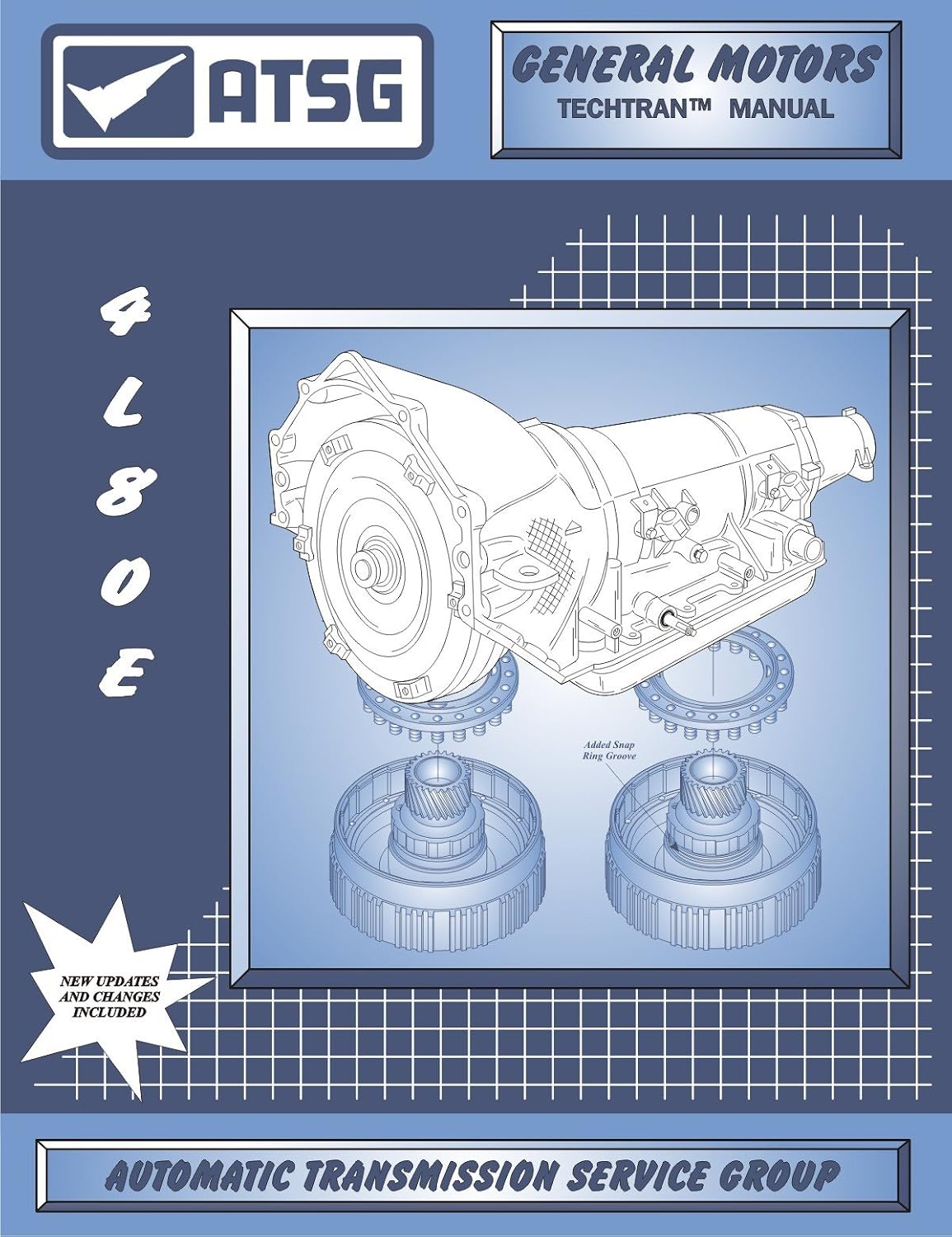
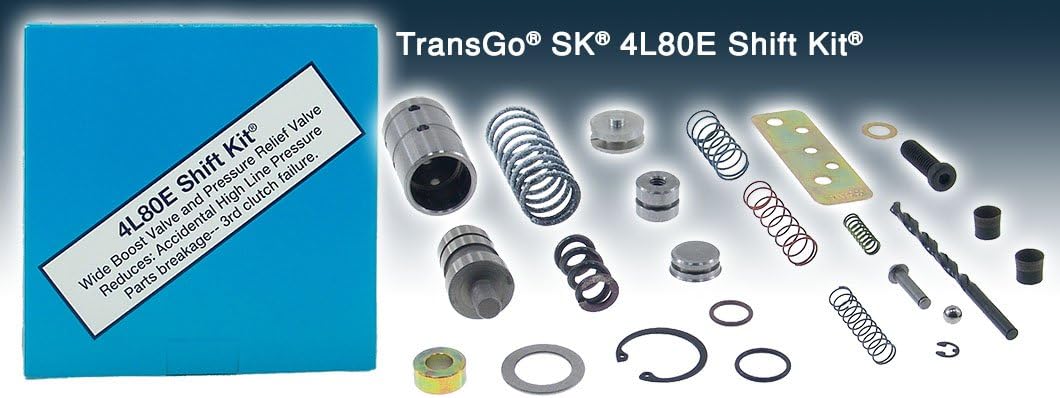
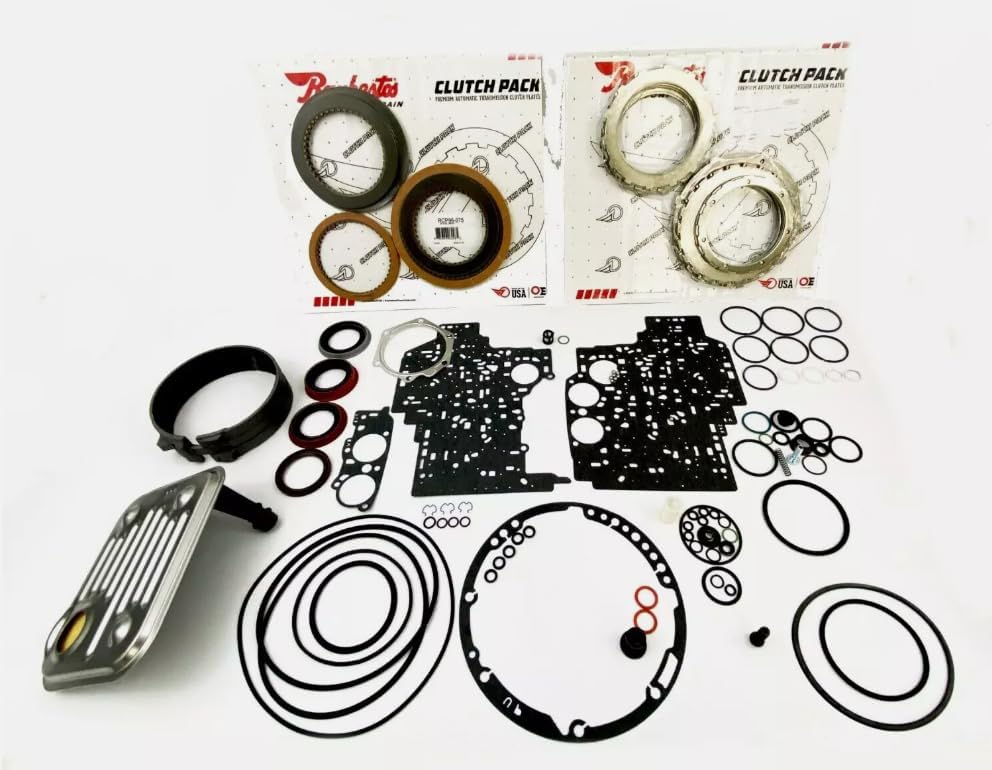
The gear ratios, to three decimals
Chevrolet Performance publishes the ratios for this case family in its Supermatic transmission specification sheet, publication 19211852, and it lists them to three places:
| Gear | Ratio | Step from previous gear |
|---|---|---|
| 1st | 2.482 | — |
| 2nd | 1.482 | 1.675 |
| 3rd | 1.000 | 1.482 |
| 4th | 0.750 | 1.333 |
| Reverse | 2.077 | — |
Shop literature rounds these to 2.48, 1.48, 1.00 and 0.75, and that is fine for conversation. For gearing math, use the real numbers.
Two derived figures matter more than the individual ratios. The first is overall spread: 2.482 divided by 0.750 is 3.31 to 1. The second is the step pattern, 1.675 then 1.482 then 1.333 — each step smaller than the one before it, so the engine falls a shorter distance down the tach as the truck gains speed. That progression is why a healthy 4L80E feels smooth under a load even with only four speeds.
Compare a 4L60E, which runs 3.06, 1.63, 1.00 and 0.70 for a spread of 4.37 to 1. The 4L60E has both a deeper first gear and a taller overdrive. That single fact drives most 4L80E swap disappointment: the 4L80E's first gear is about 19 percent taller than a 4L60E's, so a truck that kept its axle ratio through the swap gave up that much launch multiplication.
Working the numbers on your truck
Starting ratio is transmission first gear times axle ratio. Behind a 3.73 axle:
- 4L60E: 3.06 × 3.73 = 11.41 to 1
- 4L80E: 2.482 × 3.73 = 9.26 to 1
To get the 4L80E back to roughly 11.4 you need a 4.56 axle (2.482 × 4.56 = 11.32). That is the real answer to "what gear do I need with a 4L80E," and it is why the factory put 4.10s and 4.56s behind a lot of them.
Cruise RPM in fourth uses the standard formula: RPM = (MPH × trans ratio × axle ratio × 336) ÷ tire diameter in inches. A three-quarter ton on 3.73s and 31.6-inch tires at 70 mph:
(70 × 0.750 × 3.73 × 336) ÷ 31.6 = 2,083 RPM
Effective final drive in fourth is 0.750 × 3.73 = 2.80 to 1. Run the same math with 4.56s and you land at roughly 2,550 RPM at 70, which is livable in a work truck and miserable in a daily driver. Pick the axle for the job the truck actually does, then check the cruise number before you buy gears.
The GM spec sheet numbers
These come from the same Chevrolet Performance publication, which covers the 4L80/4L85 case family:
| Specification | Value |
|---|---|
| Type | Automatic four-speed overdrive, longitudinal, electronically controlled |
| Fluid type | Dexron VI |
| Fluid capacity, bottom pan removal | 7.3 L (7.7 quarts) |
| Fluid capacity, dry | 12.5 L (13.2 quarts) |
| Weight, dry | 104.5 kg (230 lb) |
| Weight, wet | 115.5 kg (255 lb) |
| Maximum engine torque, Chevrolet Performance 4L85E build | 650 lb-ft |
| Maximum engine torque, production 4L80E rating | 440 lb-ft |
| Maximum output torque, production 4L80E rating | 885 lb-ft |
| Overall packaging length | 817.23 mm |
| Converter attaching bolt | M10 x 1.5 (GM 11589040) |
| Filter / pan gasket | GM 24212452 / GM 08677743 |
| RPO code | MT1 |
A note on that length figure, because it trips people up. GM's 817.23 mm is an overall packaging dimension for a complete assembly. The commonly quoted 26-1/4 inch figure is the unit itself, roughly an inch and a half longer than the TH400 it descended from because of the added overdrive gearset. Those are measured from different reference points, so use GM's number when you are laying out a tunnel and measure your own crossmember either way.
Torque specs
| Fastener | Torque |
|---|---|
| Oil pan to case | 18 ft-lb / 24 N·m |
| Oil drain plug | 25 ft-lb / 34 N·m |
| Cooler pipe connector nut to case | 28 ft-lb / 38 N·m |
| Transmission to engine bolts | 37 ft-lb / 50 N·m |
| Flexplate to converter | 60 ft-lb / 44 N·m |
Two things in that table are worth saying out loud. The pan is 18 ft-lb, not "snug then a quarter turn" — these pans warp at the rail and then weep at the corners forever. And GM's own installation instruction is to put 6 to 8 ounces of Dexron VI into the converter before it goes into the pump, because a dry converter start-up damages the converter internals. That is a two-minute step people skip on a $500 part.
Fluid, and the Dexron question
Dexron VI is the answer for every 4L80E regardless of year. GM specified Dexron III through 2005 and replaced it with Dexron VI in 2006, and the VI fluid is back-serviceable into applications that originally called for Dexron, Dexron II or Dexron III. There is no argument left to have: all Dexron III-H licenses expired at the end of 2006, so a bottle labeled Dexron III today is not a currently licensed GM fluid.
On capacity, the 7.7 quart pan-drop and 13.2 quart dry numbers are the transmission by itself. A real truck adds a cooler and lines holding fluid the spec does not count, which is why field references land on 12 to 16 quarts for a full system fill depending on truck and cooler. Fill by dipstick with the fluid at operating temperature. A deep aftermarket pan invalidates the pan-drop number entirely — pour, drive, check, repeat.
Identification and application specs
The 4L80 name decodes as four speeds, longitudinal, 8,000 lb vehicle weight class. Its RPO code is MT1, it was built at GM's Ypsilanti and Willow Run plants, and it arrived in 1991 in GM C/K trucks as the overdrive replacement for the TH400, staying in production past 2009.
- Case: die-cast aluminum with an integrated bellhousing — Chevrolet 90-degree bolt pattern only, no removable bell like a 4L60E.
- Output shaft: large-diameter 32-spline in both 2WD and 4WD versions, carried over from the TH400.
- Converter: 310 mm with a lock-up clutch.
- Shifter: seven-position quadrant — P, R, N, OD, D, 2, 1. That extra position matters, and the last section of this article is why.
- 4L85E: same case, rated to 16,500 lb GVWR, 460 lb-ft engine torque and 22,000 lb towing.
Pressure and electrical specs
Mechanical specs get quoted constantly and these get ignored, which is backwards. This is where a bad unit announces itself before anything comes apart.
Line pressure, hydraulic side. With a 400 psi gauge on the tap on the driver's side of the case, fluid full and warm, parking brake and foot brake both on: roughly 40 to 70 psi at idle in Park, Neutral and Drive, rising to about 160 to 180 psi at wide open throttle. Reverse runs about 60 to 70 psi at idle and 300 to 330 psi at full throttle. Hold full throttle no more than two seconds at a time, and do not sit there brake-standing it — you will cook the unit on the lift faster than you will learn anything.
Line pressure, electrical side. This is the better first test because you can run it in the driveway with a scan tool. Per GEARS, ATRA's technical magazine, on GM units you should see about 10 percent engine load and 0.9 to 1.1 amps on the pressure control solenoid at idle. During a wide open throttle pull just before the 1-2 shift, engine load should reach 90 to 100 percent and solenoid command should drop to 0.2 to 0 amps. The relationship is inverse: as load rises, commanded amperage falls and line pressure rises. Put an amp clamp on the solenoid wire and you find out whether the computer is actually sending what the scan tool claims — GEARS documents a case where the scan tool showed steady amperage while the clamp showed it swinging all over, and the fix was a computer, not a valve body.
The pressure control solenoid is fed by the actuator feed limit valve, which regulates supply to every solenoid and holds it steady while line pressure swings. An AFL problem starves or floods all of them at once, which is why an AFL complaint reads like five unrelated shift faults. On this generation of GM four-speed, line rise itself comes from a boost valve and sleeve behind the pressure regulator valve; wear in that sleeve leaks boost away, so you lose line rise while base pressure still looks fine on the gauge at idle.
One diesel-specific trap. On 1994-and-later 6.5L trucks there is no throttle cable — the accelerator pedal position sensor is the input that determines both fueling and commanded line pressure. A worn electronic injection pump lets extra fuel past its controls, so the truck pulls away from a stop on 2 to 10 percent throttle instead of the normal 50 to 100 percent, the computer never commands line rise, and you get soft sliding shifts with burnt forward, intermediate and direct clutches. Sonnax's write-up puts normal fuel rate at 10 to 13 mm at idle; below 6 mm means the computer is cutting fuel to hold idle and the pump is suspect. GM extended injection pump coverage from 5 years/100,000 miles to 11 years/120,000 miles under special policy bulletin #00064A. Rebuild the transmission without addressing the pump and it comes back burnt.
Bench specs: what the valve body should pull
Vacuum testing turns a hunch into a number. A perfect, zero-leak circuit reads 29.9 in-Hg, though that shifts with elevation. No real circuit is perfect — an extremely good one approaches 22 to 23 in-Hg, and a severely worn bore can read as low as 8 in-Hg. Test valves in their rest position unless the guide says otherwise, and always check the boost valves, because EPC pressure changes keep them cycling in their sleeves and they wear first.
On a 4L80E, the circuits worth putting a nozzle on and what wear there causes:
- Pressure regulator and boost valve: low line rise, delayed engagement.
- 1-2, 2-3 and 3-4 shift valves: the matching shift complaint, gear ratio codes, third and fourth slip, burnt direct clutch.
- Actuator feed limit sleeve: second gear starts, broken AFL filters.
- TCC regulator valve: converter shudder, burnt converter, TCC codes.
- Manual valve: low line rise, delayed engagement.
If you are building one to hold real power, Sonnax is specific about where the limits sit: an extreme-duty Aermet steel input shaft (34670-02) and main shaft (34672-05) for builds over 1,000 hp, a heavy-duty forward clutch hub (34322-01), and a case saver retainer (34762-10 or 34762-20 depending on year).
The spec that kills these: 0.750 fourth gear
Fourth gear is where this transmission's design shows a soft spot, and it has nothing to do with the ratio being too tall.
The overdrive one-way roller clutch lives inside the overrun/coast clutch drum. It holds in first through third and freewheels in fourth. In the overdrive range that roller clutch is holding by itself — the overrun clutch only applies in the manual ranges, D, 2 and 1. So a truck left in OD pushing snow or dragging a trailer up a grade is reacting all of that load through one roller clutch with nothing behind it.
Two failure paths follow. Load alone can take out the roller clutch, and when it lets go it takes the overrun clutch drum inner race, the overdrive planetary, and sometimes the ring gear with it. Or heat gets it: during an overheat the plastic cage of the overdrive roller clutch melts, and the roller clutch fails immediately after. Transmission Digest's technical staff make the direct comparison to Ford's 4R100, which has the same layout but backs its roller clutch up with a PCM-controlled coast clutch solenoid that applies on hard throttle takeoffs in overdrive. The 4L80E has no such backup, which is why its roller clutch fails more often on the same duty cycle.
There are two fixes and they stack. The free one is driver behavior: tell plow and tow drivers to use the manual ranges, which applies the overrun clutch and shares the load. The parts fix, for 1997-and-later 4L80E and 4L85E, is the Sonnax Smart-Tech overrun clutch valve kit, part 34200-40K. It establishes a hydraulic connection to the overrun clutch as soon as the engine starts, so the overrun clutch applies in every manual valve position including Reverse and in overdrive ranges 1 through 3, giving the roller clutch a stronger connection to the forward drum through the overdrive planetary.
That one part is the highest-value change you can make to a 4L80E that works for a living, and it is the reason the seven-position quadrant on this transmission exists in the first place.
FAQ
What are the 4L80E gear ratios?
First is 2.482, second 1.482, third 1.000, fourth 0.750 and reverse 2.077, per the Chevrolet Performance specification sheet for the 4L80/4L85 family. Those are usually rounded to 2.48, 1.48, 1.00 and 0.75 in shop literature. The spread from first to fourth is 3.31 to 1, which is narrower than a 4L60E and is the reason a 4L80E swap almost always wants more axle gear than the truck came with.
How much fluid does a 4L80E take?
GM lists 7.3 liters, or 7.7 quarts, for a bottom pan removal and 12.5 liters, or 13.2 quarts, dry. The real number on a truck is usually higher than the dry figure because the cooler and lines hold fluid the spec does not count, which is why shop references quote 12 to 16 quarts for a full system. Fill by dipstick at operating temperature, not by the quart count, especially with a deep aftermarket pan.
What fluid does a 4L80E use, Dexron III or Dexron VI?
Dexron VI. GM specified Dexron III through 2005 and replaced it with Dexron VI in 2006, and Dexron VI is back-serviceable into every earlier unit that called for Dexron, Dexron II or Dexron III. Chevrolet Performance specifies Dexron VI for the 4L80/4L85 family outright, and also calls for 6 to 8 ounces of it poured into the converter before the converter goes into the pump so it does not dry-start.
How much torque can a 4L80E handle?
The production 4L80E was rated for 440 lb-ft of engine input torque and 885 lb-ft of output torque behind vehicles up to 8,000 lb GVWR. Chevrolet Performance rates its built 4L85E version of the same case at 650 lb-ft of engine torque. The gap between those two numbers is clutch capacity, pressure calibration and the overdrive section, not the case.
What is the 4L80E line pressure spec?
Roughly 40 to 70 psi at idle in Park, Neutral and Drive, rising to about 160 to 180 psi at wide open throttle, with reverse running 60 to 70 psi at idle and 300 to 330 psi at full throttle. Hold full throttle no more than two seconds at a time. On the electrical side the pressure control solenoid should command about 0.9 to 1.1 amps at idle and drop to 0.2 to 0 amps at wide open throttle just before the 1-2 shift.
Related guides
- 4L80E Identification Guide
- 4L60E vs 4L80E Differences
- 4L80E vs 4L85E Differences
- 4L80E Low Line Pressure Diagnosis
- 4L80E Towing Upgrades
Need parts for this job?
Filter and pan kits, valve bodies, solenoids, boost valves, converters and master rebuild kits for the 4L80E and 4L85E, on our own checkout and shipped from the USA.
Shop 4L80E parts →Sources
- Chevrolet Performance (General Motors), Supermatic Transmission (19300175) Specifications, publication 19211852. Backs the 2.482 / 1.482 / 1.000 / 0.750 gear ratios and 2.077 reverse, the Dexron VI fluid specification, the 7.3 L (7.7 quart) bottom pan removal and 12.5 L (13.2 quart) dry capacities, 104.5 kg (230 lb) dry and 115.5 kg (255 lb) wet weights, 650 lb-ft maximum engine torque for the Chevrolet Performance build, 817.23 mm overall packaging length, the M10 x 1.5 converter bolt (11589040), filter 24212452 and pan gasket 08677743, all five torque specifications, and the instruction to add 6 to 8 ounces of Dexron VI to the converter before installation. https://www.chevrolet.com/content/dam/chevrolet/na/us/english/index/performance/powertrain/performance-parts/installation-guides/01-images/supermatic-transmission-4l85e-19300175.pdf
- Rob Faucett, GEARS Magazine (ATRA), "Controlling Pressure: General Motors." Backs the pressure control solenoid specification of 0.9 to 1.1 amps at idle at about 10 percent engine load dropping to 0.2 to 0 amps at 90 to 100 percent load just before the 1-2 shift, the inverse relationship between commanded amperage and line pressure, the actuator feed limit valve feeding all solenoids at a consistent pressure, the boost valve and sleeve as the source of line rise on early GM four-speeds, and the amp-clamp case where the scan tool showed steady amperage while the meter showed it erratic. https://gearsmagazine.com/magazine/controlling-pressure-general-motors/
- Sonnax, "Outsmarting 4L80-E Overdrive Roller Clutch Failure." Backs the overrun clutch applying only in manual ranges on 1997-and-later 4L80E and 4L85E, the cascade failure of the overrun clutch drum inner race, overdrive planetary and ring gear, and the Smart-Tech overrun clutch valve kit 34200-40K establishing a hydraulic connection to the overrun clutch at engine start so it applies in all manual valve positions including Reverse and in overdrive ranges 1 through 3. https://www.sonnax.com/tech_resources/625-outsmarting-4l80-e-overdrive-roller-clutch-failure
- Transmission Digest, "Understanding 4L80-E Overdrive Clutch Failure." Backs the overdrive one-way roller clutch holding in first through third and freewheeling in fourth, the roller clutch holding alone in the overdrive range with the overrun clutch applied only in manual ranges, the plastic roller clutch cage melting during an overheat, and the comparison with the Ford 4R100's PCM-controlled coast clutch solenoid that backs up its roller clutch on hard throttle takeoffs. https://www.transmissiondigest.com/understanding-4l80-e-overdrive-clutch-failure/
- Sonnax, "Vacuum Testing for Leakage." Backs the vacuum test thresholds of 29.9 in-Hg for a perfect zero-leakage circuit, 22 to 23 in-Hg for an extremely good circuit and as low as 8 in-Hg for a severely worn bore, and the instruction to always check boost valves because EPC or throttle pressure changes keep them constantly moving in their sleeves. https://www.sonnax.com/tech_resources/121-vacuum-testing-for-leakage
- Sonnax, "GM 4L80-E, 4L85-E Vacuum Test Guide." Backs the 4L80E circuit-to-complaint list used here: 3-4 and 2-3 shift valve bores, the actuator feed limit sleeve with second gear starts and broken AFL filters, the TCC regulator valve with converter shudder, burnt converter and TCC codes, the manual valve with low line rise and delayed engagement, and the instruction to test OE valves in rest position. https://www.sonnax.com/tech_resources/434-gm-4l80-e-4l85-e-vacuum-test-guide
- Sonnax, "4L80-E Performance & Heavy Duty Transmission Build Guides." Backs the heavy-duty and high-performance part specifications cited: extreme-duty Aermet steel input shaft 34670-02 and main shaft 34672-05 for builds over 1,000 hp, heavy-duty forward clutch hub 34322-01, and case saver retainer 34762-10 or 34762-20 by year. https://www.sonnax.com/tech_resources/1307-4l80-e-performance-heavy-duty-transmission-build-guides
- Gregg Nader, Sonnax / Transmission Digest TASC Force Tips, "Low Line Pressure in 4L80-E in Diesel-Powered Trucks." Backs the accelerator pedal position sensor as the input determining both fueling and commanded line pressure on 1994-and-later electronically controlled 6.5L diesel injection pumps, the 2 to 10 percent throttle launch symptom producing soft sliding shifts and burnt forward, intermediate and direct clutches, the normal fuel rate of 10 to 13 mm at idle with below 6 mm indicating a suspect pump, and GM's special policy warranty extension to 11 years/120,000 miles under bulletin #00064A. https://www.transmissiondigest.com/low-line-pressure-in-4l80-e-in-diesel-powered-trucks/
- Novak Conversions, "The Novak Guide to the GM 4L80E Automatic Transmission" (supplemental, manufacturer engineering reference). Backs the RPO code MT1, Ypsilanti and Willow Run manufacturing, the 440 lb-ft maximum engine input torque and 885 lb-ft maximum output torque production ratings at 8,000 lb GVWR, the 4L85E ratings of 16,500 lb GVWR / 460 lb-ft / 22,000 lb towing, the 310 mm lock-up converter, the 32-spline output shaft in 2WD and 4WD, the die-cast aluminum case with integrated Chevrolet 90-degree bellhousing, the seven-position P-R-N-OD-D-2-1 quadrant, and the roughly 1-1/2 inch case length increase over the TH400 for the overdrive gearset. https://www.novak-adapt.com/knowledge/transmissions/automatic/4l80e.html