A 4R70W that sits for a second or two after you pull it into Drive or Reverse, then bangs in, is telling you something specific: the clutch or band that should have applied could not fill and stroke on time. Engagement is a hydraulic event. The manual valve opens a passage, line pressure fills the apply circuit, the piston strokes, and the accumulator cushions the last part of the apply. Anything that lowers pressure, leaks it away, or starves the pump of oil stretches that event out. The trick is working out which of those it is before you spend money.
The first question to answer is which direction is late. A delay into Drive only, a delay into Reverse only, and a delay into both point at three different parts of the transmission. Write down which one you have, whether it is worse cold or hot, and whether it is worst after the truck sits overnight. Those three answers cut the list in half before you touch a wrench.
What Has to Happen for It to Engage
On the AODE/4R70W family, Drive first gear uses the forward clutch with the low one-way roller clutch holding, while Reverse uses the reverse clutch and the low/reverse band. So a Drive engagement needs oil into the forward clutch, and a Reverse engagement needs oil into the reverse clutch and the low/reverse servo at the same time, at a higher pressure.
That higher pressure is not optional. The published spec for this family is 50-75 psi line pressure at closed throttle in Park, Drive and Neutral and 80-120 psi in Reverse, rising to 160-210 psi and 220-280 psi respectively at open throttle, per Teckpak's EPC solenoid instructions for the AODE/4R70W. In the forward ranges the forward clutch tap should read essentially the same as line; a big drop between the two points at a leak in the forward feed. Those numbers are your yardstick for everything below.
Forward clutch oil also has a long trip. It leaves the valve body, crosses into the pump, and goes through the stator support and the sealing rings on the input shaft before it reaches the drum. Every ring and bushing on that path is a place for pressure to bleed off. A leak does not have to be big to matter: at idle the pump is turning slowly, and a leak that is invisible at 2,000 rpm is enough to stretch a Drive engagement at 650 rpm.
Check These First: Level, Condition, and the Selector
Start cheap. Check the fluid level hot, on level ground, engine running, per the dipstick procedure for the vehicle. A low level lets the pump pull air as fluid sloshes away from the filter on a stop, and aerated oil compresses instead of stroking a piston. Smell it and look at it on a white towel. Burnt, dark fluid with friction material in the pan means the clutches have already been slipping, and the delay is a symptom of damage rather than the cause of it.
The fluid has to be right, too. Ford's fluid application chart specifies MERCON V for the 4R70W, 4R70E, 4R75W and 4R75E, and it carries an explicit caution against supplemental transmission additives, treatments and cleaning agents. A previous owner's bottle of stop-slip or a quick-lube universal fluid will not fix a delay, and it can make a marginal clutch worse.
Then look at the selector. The shift cable or linkage positions the manual valve in the valve body. If it is out of adjustment, the valve can sit partly across a port in Drive or Reverse and meter oil into the apply circuit instead of opening it fully. Put it in each range and confirm the detent and the range sensor agree with what the lever says. A bent bracket or a stretched cable on a high-mileage truck is a real finding here.
Cause 1: Low Line Pressure From a Worn Pressure Regulator Valve
If both Drive and Reverse are late, look at line pressure before anything else. The main pressure regulator valve is the part that sets it, and on this family the valve and its bore wear. Sonnax technical writer Brian Wing documents the pattern on the AODE, 4R70W, 4R70E, 4R75W and 4R75E: scoring on the EPC end of the valve causes reduced line pressure or low line rise, with soft shifts, uncontrolled Reverse pressure, low Reverse boost, and eventually premature clutch and band failure.
The key point in that article is that a scored valve means a damaged bore. Dropping in a new stock valve leaves the clearance that caused the leak. The bore has to be vacuum tested, and if it fails it gets reamed for an oversized valve. Sonnax lists 76948-01 for 1995-and-earlier and 76948-09 for 1996-later as replacement main regulator valves, and the 76948-16K and 76948-17K oversized pressure regulator and boost valve kits when the bore is worn.
On the gauge, a worn regulator typically shows up as idle line at or below the bottom of the 50-75 psi range that does not rise properly with throttle, and a Reverse reading well short of 80 psi.
Cause 2: The EPC Command, or the Computer Behind It
Line pressure on this transmission is electronically controlled by the EPC solenoid, and it is worth confirming that the problem is not upstream of the hydraulics. The PCM commands EPC as a voltage, and on this unit the relationship runs backward from what you might assume: more voltage, less pressure.
A GEARS Magazine case study by Rob Faucett shows exactly why you check the command before tearing into the valve body. A rebuilt 4R70W in a 2004 Econoline developed a Reverse engagement that got later and later as it warmed up, until it needed throttle to engage and then went in harshly. Cold, the PCM commanded 3.2 volts at idle for 130 psi. Hot, the command climbed to 4.3 volts and pressure fell to 30 psi. Under throttle it dropped to 1.8 volts, then jumped to 3.6 with a harsh engagement. The range sensor and a Reverse servo were replaced before the cause turned up: water in the reverse lights circuit had damaged the PCM, which was sending bad EPC commands. A new PCM fixed it.
So watch the EPC voltage or commanded pressure PID at the same time you watch the gauge. If the command is wrong, the hydraulics are just following orders. If the command is right and the gauge is low, the problem is inside the transmission. That single check separates a PCM, wiring or EPC solenoid problem from a regulator or leakage problem.
Cause 3: Delayed Drive Only — Forward Circuit Leaks
If Reverse is crisp and only Drive is late, line pressure is probably fine and forward clutch oil is getting lost on the way to the drum. There are three places to look.
Stator support sealing rings
ATRA's 4R70W/4R75E interchange notes flag an easy mistake in the stator support. The supports are hydraulically identical across years, but the forward sealing ring lands differ: the 4R70E/75E uses a plastic ring much thinner than the cast iron ring in the 4R70W. The outside diameters match, so the supports interchange only if the correct rings go with them. Put the wrong ring in the wrong groove and the forward clutch feed leaks from the first engagement. Worn ring lands and grooves on a high-mileage support do the same thing more slowly.
The forward accumulator (2-3 accumulator bore)
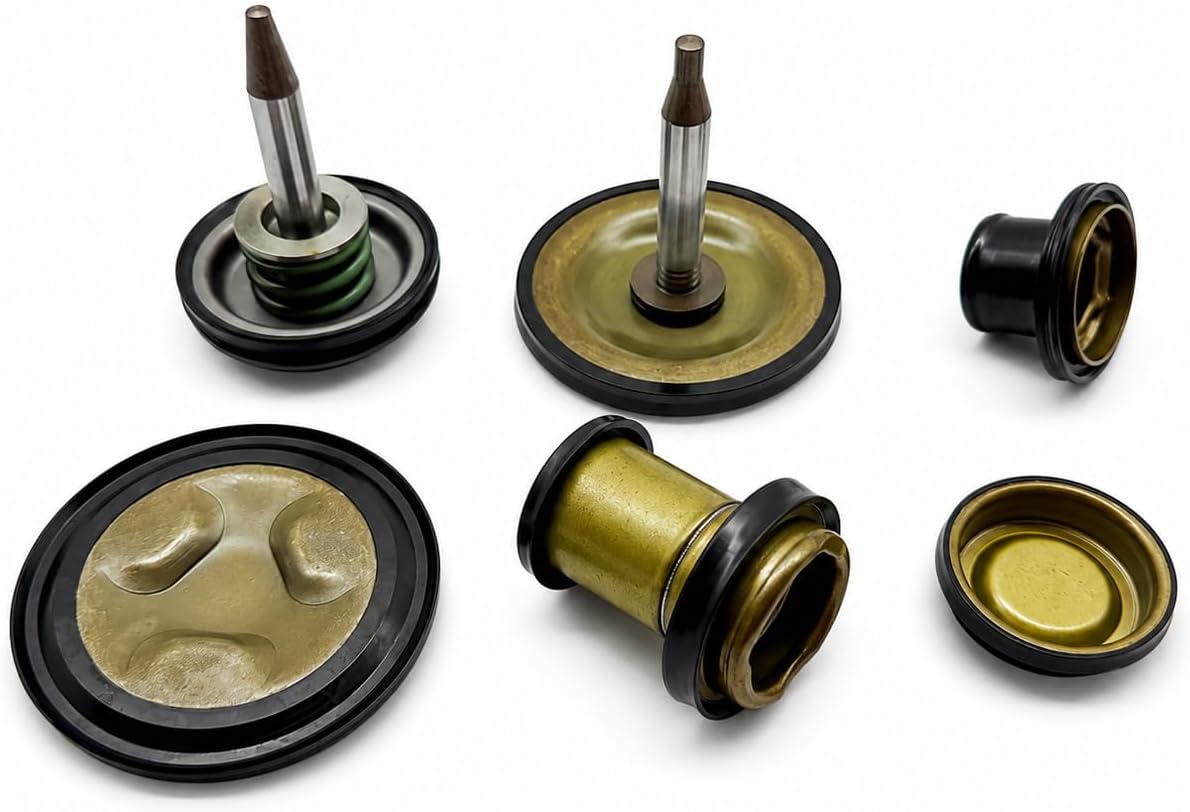
Sonnax's 4R70W problem list includes a telling symptom: no Forward unless rpm is increased, caused by delamination of the bonded piston seal. Low baseline pressure and accumulator wear show up as a delayed Forward complaint in the same list. Sonnax's 76890-21K 2-3 accumulator piston kit uses press-in sleeves and a matched piston to restore worn case bores and gets rid of the bonded-seal delamination issue. If you have the pan off, the accumulator bores are worth an inspection before you commit to pulling the unit.
The manual valve bore
The manual valve moves every time the selector moves, and its bore wears. Sonnax lists delayed engagement from low line pressure and manual valve wear together, with the 76948-46 oversized manual valve kit for 1992-later units as the repair. A worn manual valve can cause a delay in both directions, but it often shows up first in Drive.
Cause 4: Delayed Reverse Only — Boost Valve and Reverse Apply
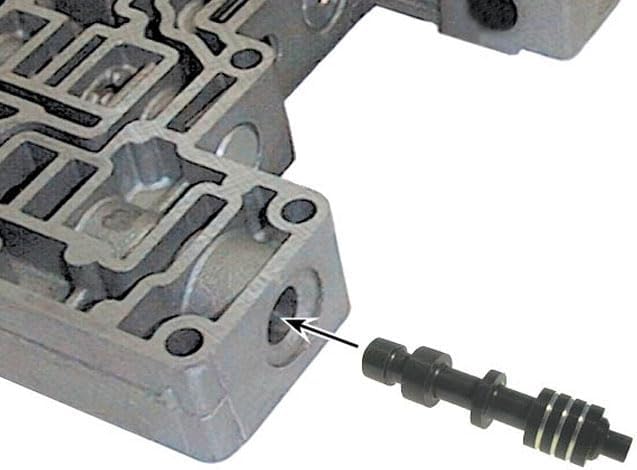
Reverse needs more pressure than anything else, and on this family it gets it from the reverse boost valve. Sonnax's 4R70W problem index pins delayed Reverse on low Reverse boost pressure, and No Reverse on a burnt reverse clutch or a failed boost valve, with the 76948-02K boost valve kit for 1991-later units as the repair. The boost valve rides in a sleeve, and when the pair wears the boost signal bleeds off, so Reverse never gets the extra pressure it needs to apply quickly. Remember that a worn pressure regulator produces low Reverse boost too, per the Sonnax article above, so check both.
On the gauge, the pattern is a Drive reading within spec and a Reverse reading that does not reach 80 psi at idle or will not rise with throttle. If Reverse pressure is fine and the engagement is still late, move to the apply side: the reverse clutch piston seals and the low/reverse servo, its seals and its bore. A servo that leaks takes longer to apply the band, and the engagement will get worse as the fluid thins out hot.
Sonnax Boost Valve Kit 76948-02K for the 4R70W
If your gauge shows low Reverse boost with good forward pressure, this is the drop-in valve and sleeve for 1991-later AODE and 4R70W-family units.
Get the Sonnax 76948-02K kit →Need something else for this job? Browse the full 4R70W parts collection.
Cause 5: Pump Volume and Drainback
The pump has to deliver volume at idle, not just pressure at cruise. Sonnax ties low pump volume, pump noise and a leaking front seal on this unit to excess converter hub-to-bushing clearance, fixed with the finish-in-place 36002-01 pump bushing. A worn bushing lets the gear run off-center, which costs volume at exactly the low speeds where engagement happens. If the front seal has been replaced more than once, measure the bushing before putting in another seal.
If the delay is worst after the truck sits overnight and fine for the rest of the day, think about the converter draining back into the pan. The pump has to refill the converter before the apply circuits get full pressure, so the first engagement of the day takes longer. It is a real pattern, but rule out the pressure and leak causes above before you blame it, because they get worse with time too.
A Test Order That Works
- Note which direction is late, cold versus hot, and whether it is worst after the truck sits.
- Check fluid level hot and condition. MERCON V only, no additives.
- Confirm selector and linkage adjustment and range sensor agreement.
- Scan for codes. Watch the EPC command and fluid temperature PIDs during engagement.
- Put a gauge on the line tap. Idle: 50-75 psi in Park, Neutral and forward ranges, 80-120 psi in Reverse, rising with throttle.
- Low in both directions with a correct EPC command: pressure regulator valve and bore, then pump.
- Low only in Reverse: boost valve and sleeve. Good pressure but late Reverse: reverse clutch and low/reverse servo.
- Good line pressure but late Drive: forward clutch tap, then stator support rings, 2-3 accumulator bore and manual valve bore.
Worked in that order, most delayed engagement complaints on a 4R70W get pinned down with a gauge and a scan tool before the transmission comes out. When it does come out, you know which bores and rings to measure instead of hoping the rebuild kit covers it.
FAQ
Why does my 4R70W take a few seconds to go into gear?
The forward clutch or the reverse clutch and band are taking too long to fill and apply. The usual causes are low line pressure from a worn pressure regulator valve, a bad EPC command, leaking sealing rings or accumulator bores in the forward circuit, a worn boost valve on the Reverse side, or low pump volume. Check fluid level and condition first, then put a pressure gauge on the line tap.
What should 4R70W line pressure be at idle?
The published spec for the AODE/4R70W family is 50-75 psi at closed throttle in Park, Drive and Neutral and 80-120 psi in Reverse, rising to 160-210 psi and 220-280 psi at open throttle.
Why is only Reverse delayed on my 4R70W?
Reverse needs more pressure than the forward ranges, and it gets it from the boost valve. A worn boost valve and sleeve, or a worn pressure regulator valve, leaves Reverse short of pressure. If Reverse pressure is in spec, look at the reverse clutch seals and the low/reverse servo.
Why does my 4R70W delay into Drive only after it warms up?
Hot fluid is thinner and leaks past worn clearances more easily, so a marginal forward circuit leak shows up hot first. The usual places are the stator support sealing rings, the 2-3 accumulator bore and piston seal, and the manual valve bore. Also watch the EPC command PID, because a bad command can mimic a hydraulic leak.
Will a transmission additive fix delayed engagement?
No. Ford's fluid chart specifies MERCON V for the 4R70W and cautions against supplemental additives, treatments and cleaning agents. A delay comes from low pressure or a leak, and a bottle cannot restore a worn bore or a leaking ring.
Working a 4R70W this week?
Boost valve kits, servo and accumulator pistons, pumps, valve bodies, filters and complete rebuild kits — shipped fast from the USA.
Shop 4R70W parts →Sources
- Teckpak — Installation Instructions, EPC Solenoid for AODE/4R70W (76923) (PDF). Backs the line pressure specs used as the test yardstick: 50-75 psi in Park, Drive and Neutral and 80-120 psi in Reverse at closed throttle, 160-210 psi in Park, Drive and Neutral and 220-280 psi in Reverse at open throttle, plus 2.48-5.66 ohms EPC solenoid resistance. teckpak-fitzall.com (76923 PDF)
- ATRA — "Ford 4R70W/4R75E" technical manual section, 2009 (PDF). Backs the stator support interchange note: identical hydraulic design, but the 4R70E/75E forward sealing ring is a plastic ring much thinner than the 4R70W cast iron ring, so supports interchange only with the correct rings. atracom.blob.core.windows.net
- Sonnax — Ford 4R70W unit problem and solution index. Backs delayed engagement from low line pressure and manual valve wear (76948-46 oversized manual valve, 1992-later), delayed Forward and "no Forward unless rpm increased" from accumulator wear and bonded piston seal delamination (76890-21K 2-3 accumulator piston kit), delayed Reverse from low Reverse boost and No Reverse from a burnt reverse clutch or boost valve failure (76948-02K boost valve kit, 1991-later), main regulator valves 76948-01 and 76948-09, oversized kits 76948-16K and 76948-17K, and low pump volume, pump noise and front seal leaks from converter hub-to-bushing clearance (36002-01 pump bushing). sonnax.com
- Sonnax — "Watch Out For 4R70W PR Valve & Casting Wear," Brian Wing, November 3, 2022. Backs scoring on the EPC end of the pressure regulator valve causing reduced line pressure and low line rise, low Reverse boost and uncontrolled Reverse pressure, and the need to vacuum test and repair the bore rather than replace only the valve. sonnax.com
- GEARS Magazine (ATRA) — "The Rear-View Mirror is Clear: A 4R70W With No Reverse," Rob Faucett, January 18, 2023. Backs the 2004 Econoline case: Reverse engagement delaying as it warmed, 3.2 V for 130 psi cold versus 4.3 V and 30 psi hot, a harsh engagement under throttle, and the root cause of a PCM damaged by water in the reverse lights circuit after the range sensor and servo had been replaced. gearsmagazine.com
- Ford Customer Service Division — "Automatic Transmission Fluid Chart" (PDF). Backs MERCON V as the specified fluid for the 4R70W, 4R70E, 4R75W and 4R75E, and the caution against supplemental additives, treatments and cleaning agents. fcsdchemicalsandlubricants.com