A Ford 4R70W that pulls fine in Drive but won't back out of the driveway is one of the most common complaints on this family. That covers F-150s, Expeditions, Crown Victorias, Grand Marquis, Town Cars, Mustangs, Econolines and more. Reverse is the only range that uses the reverse clutch. It is also the range that asks for the most line pressure. So any leak in the hydraulic system shows up in reverse first, sometimes long before forward gears complain.
That makes "no reverse" a misleading symptom. It can be a $40 valve body fix, a sealing ring job, a burnt clutch that means a full overhaul, or a PCM that is sending the wrong pressure command. This guide walks the diagnosis in the order I'd do it on the bench. The goal is to know which one you have before the unit comes out.
The short version: Reverse on a 4R70W applies the reverse clutch and the low/reverse band. Use manual low to find out which one is failing, because the band also applies in manual 1st. Then put a gauge on the line tap and compare reverse pressure cold and hot. Low reverse pressure with clean fluid points at the valve body: a worn reverse boost valve sleeve [1], a leaking 3-4 shift valve end plug on 2001-up units [2], or a worn pressure regulator bore. Good pressure with no reverse points at hard parts: the reverse clutch, drum, sealing rings, band or servo.
How the 4R70W Makes Reverse
The 4R70W is a four-speed built on a Ravigneaux-style compound planetary gearset, like the AOD it came from. In Reverse, two elements have to hold at the same time:
- The reverse clutch drives the reverse sun gear. It is fed through the pump stator support. Two metal sealing rings on the stator seal the apply oil against the inside of the reverse drum.
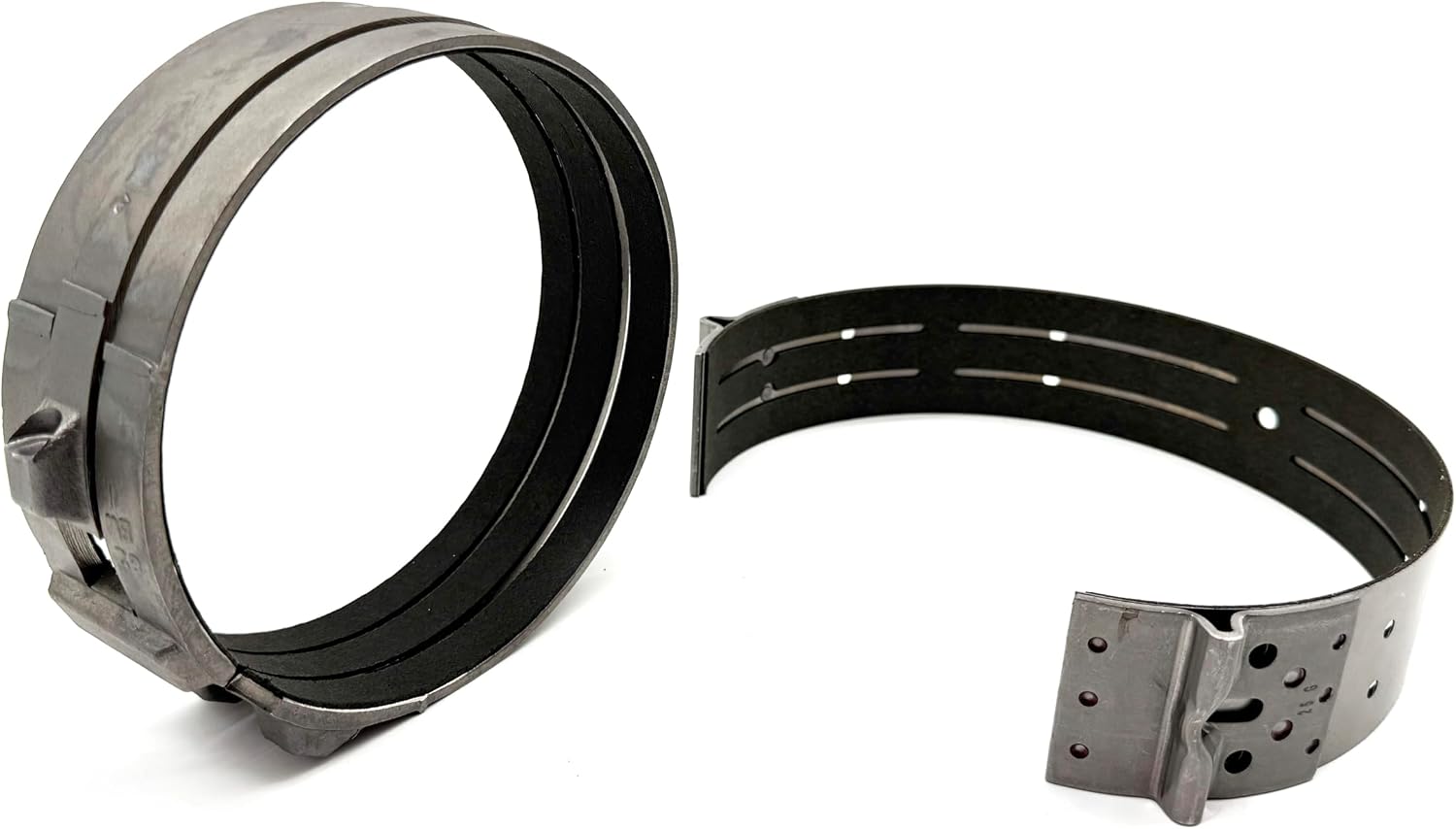
- The low/reverse band (the rear band) wraps the planetary carrier drum and holds it stationary. A servo in the case applies it. The same band also applies in manual 1st for engine braking.
On the hydraulic side, the manual valve sends oil to the reverse circuits when the selector is in R. The boost valve in the pressure regulator train raises line pressure so both elements get enough clamping force. The PCM controls the base pressure through the electronic pressure control (EPC) solenoid. Ford's EPC works backwards from what most people expect: more current means less line pressure. That matters when you're reading scan data.
Reverse needs the highest pressure in the unit. According to the Teckpak EPC solenoid service sheet for the AODE/4R70W, line pressure should read 80-120 psi in Reverse at closed throttle and 220-280 psi at open throttle, versus 50-75 psi in Park, Neutral and Drive at idle [5]. Any pressure leak therefore shows up in reverse first.
The Causes, Sorted by Where They Live
| Cause | Typical pattern | Fix |
|---|---|---|
| Linkage / range sensor out of adjustment | Reverse intermittent, gear indicator off, may start in gear or not start in Park | Adjust linkage, verify range sensor |
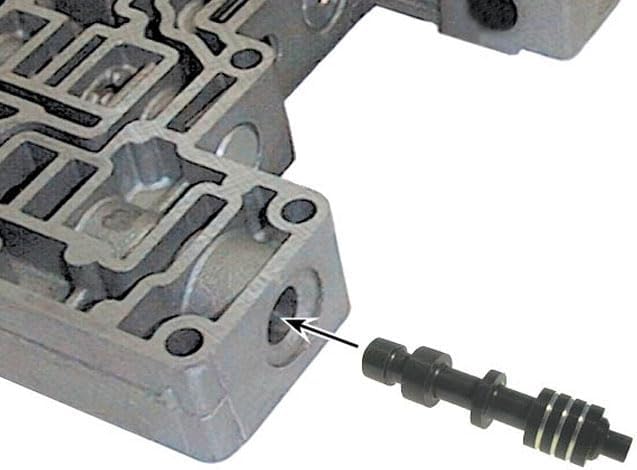
| Worn reverse boost valve sleeve | Delayed, slipping, or no reverse, worse hot; low reverse line rise | Boost valve kit [1] |
| 3-4 shift valve end plug leak ('01-up) | No reverse and/or no 4th; burnt bands over time | O-ringed end plug kit [2] |
| Worn pressure regulator bore | Everything soft when hot, reverse worst | Ream and oversized PR valve |
| Wrong EPC command (PCM, wiring) | Pressure changes with EPC voltage, not with temperature alone | Repair circuit / PCM [4] |
| Stator support rings / scored reverse drum | Reverse fades hot, air check leaks through the pump | Rings, drum, or stator support |
| Burnt reverse clutch or low/reverse band, broken strut | Dark fluid, debris, no reverse at any temperature | Overhaul |
Step-by-Step Diagnosis
1. Check fluid level and condition first
The 4R70W takes MERCON V. Motorcraft's MERCON V (XT-5-QMC quarts) is Ford's fluid for vehicles that call for MERCON V or the older MERCON [6]. Dry fill including the converter is about 13.9 quarts in the F-150 and Crown Victoria. A pan drop takes roughly 5-7 quarts. Check the level hot, in Park, on level ground. Low fluid hits reverse first because it needs the most pressure. Then smell and look. Clean red fluid with a reverse complaint points at a leak or control problem. Black, burnt fluid with friction material in the pan means something has already cooked, and valve body parts alone won't save it. Our 4R70W fluid type and capacity guide covers the fill procedure.
2. Rule out the linkage and range sensor
If the manual valve doesn't fully enter the Reverse position, the reverse circuit only partly fills. Put the selector in R and confirm the lever on the case is in its detent, not between detents. Check that the cluster shows R and the backup lamps come on. A stretched shift cable or a loose range sensor can leave the valve body half a detent off.
3. Pull codes and watch the EPC PID
Scan for stored codes, especially EPC circuit and range-sensor codes. Then, with the engine running, watch the commanded EPC value (EPC pressure or EPC duty, depending on your scan tool) and transmission fluid temperature (TFT). You'll compare them against the gauge in the next step. Keep in mind that Ford EPC is inverse: a rising EPC current or voltage command asks for lower pressure.
4. Put a gauge on the line tap: reverse cold vs. hot
This is the test that splits the problem in half. Tee a 300-psi gauge into the line pressure tap. Record Drive and Reverse pressure at idle and at a brief stall, cold and again at full operating temperature, and compare against the Teckpak figures of 80-120 psi Reverse idle and 220-280 psi Reverse at open throttle [5]. Confirm the specs for your year in the Ford manual.
- Reverse pressure normal, still no reverse: the oil is getting to the valve body outlet but not holding the element. Look at the reverse clutch feed (sealing rings, drum, piston) or the band and servo. Go to step 5.
- Reverse pressure low, Drive normal: a reverse-only pressure loss. The boost valve and the 3-4 end plug are the prime suspects.
- Pressure fine cold, falls off hot: a leak. Thin, hot oil gets past worn bores and rings that seal when cold.
- Pressure tracks the EPC command, not temperature: suspect the control side before the hard parts.
That last case isn't hypothetical. In a Gears Magazine case study, Rob Faucett chased a rebuilt 4R70W in a 2004 Econoline that lost reverse after about 15 minutes of driving. Cold reverse pressure was 130 psi with the EPC at 3.2 volts. Warm, pressure fell to 30 psi and the EPC voltage rose to 4.3 volts. The boost valve checked clean. The root cause turned out to be water in the reverse light circuit that had damaged the PCM, which was then commanding the wrong pressure. A new PCM fixed it [4]. The lesson: watch the command and the gauge together before you pull the transmission.
5. Use manual low to split band from clutch
Because the low/reverse band applies in both Reverse and manual 1st, manual low tells you which element is failing. Select manual 1 and coast down a slight grade at low speed.
- Strong engine braking in manual 1, no reverse: the band and servo are holding. The problem is the reverse clutch or its feed: stator support sealing rings, reverse drum sealing surface, piston seals, or a burnt clutch pack.
- No engine braking in manual 1 and no reverse: look at the low/reverse band, its servo piston seal, the servo cover, and the band strut. Also consider the 3-4 end plug leak described below, since it exhausts band apply oil.
6. Air-check the circuits
With the valve body off, air-check the reverse clutch through its case passage. You should hear a clean thump as the piston strokes and no steady hiss. Air escaping around the pump means the stator support rings or the reverse drum bore they ride in. Air-check the low/reverse servo apply passage and watch the band tighten. A soft, leaky apply there means a servo seal or cover leak. On the bench, look at the inside of the reverse drum where the stator rings ride. A groove worn into that surface loses reverse pressure even with new rings.
7. Vacuum-test the valve body
If the gauge showed low reverse pressure, the valve body is next. Sonnax's vacuum test guide for the AODE/4R70W/4R75W family shows the test points for each bore [3]. Pay particular attention to these three:
- Reverse boost valve and sleeve. Sonnax says a worn OE boost sleeve "allows critical pressure loss that prevents proper Reverse operation," and lists no reverse, delayed reverse, reverse slip, low line rise in reverse, and burnt reverse clutch among the results [1].
- 3-4 shift valve end plug (2001-up). Per Sonnax, wear at this end plug bore can let apply pressure for the low/reverse and overdrive bands exhaust, producing no reverse or no 4th gear and burning the bands over time [2]. If the truck has lost reverse and is flaring into 4th, look here first.
- Pressure regulator valve bore. A worn PR bore bleeds line pressure to exhaust when hot and drags every range down, with reverse hit hardest. Our 4R70W valve body testing guide covers that bore in detail.
The Fix for Each Cause
Valve body leaks
For a worn boost sleeve, a drop-in boost valve kit replaces the OE valve and sleeve with a hardcoat anodized valve and a wear-resistant sleeve. Sonnax lists fitment on 1991-later AODE, 4R70W, 4R70E, 4R75W and 4R75E [1]. For a leaking 3-4 end plug on 2001-up units, an O-ringed end plug kit (Sonnax 76948-49K) seals at the casting bore [2]. A worn PR bore gets reamed and fitted with an oversized valve. A new OE-size valve in a worn bore still leaks. While the valve body is apart, replace the separator plate gaskets.
Reverse clutch feed and hard parts
If the air check leaked at the pump, replace the stator support sealing rings, and inspect the reverse drum's inner sealing surface and front bushing. A grooved drum gets replaced, not polished. If the reverse clutch is burnt, the unit is coming apart anyway. Replace the frictions and steels, the piston seals, and check the drum for heat damage. Then fix whatever caused the burn: a clutch pack doesn't burn by itself when boost and line pressure are correct.
Low/reverse band and servo
A glazed or burnt rear band, a leaking servo piston seal, or a broken band strut all mean an overhaul-level repair on this unit. Replace the band, the servo seals, and the strut. Check the drum surface the band rides on for heat checking. The 4R70W has no external band adjustment, so correct servo apply travel comes from the right parts, not from an adjusting screw.
Control-side faults
If pressure followed the EPC command in step 4, verify the EPC solenoid resistance (the Teckpak sheet lists 2.48-5.66 ohms [5]), inspect the harness and connectors for water, and check the PCM powers and grounds. Replace the PCM only after the circuit tests clean.
Boost valve kits, low/reverse bands, EPC solenoids, sealing ring and master rebuild kits for the 4R70W, with checkout on our site.
Shop 4R70W parts →Sonnax Boost Valve Kit 76948-02K for the 4R70W
If the vacuum test shows the reverse boost sleeve is leaking, this is the drop-in fix for the weak-reverse complaint. Also on Core Transmission Parts, next to their full 4R70W catalog.
View the boost valve kit →Need something else? Browse all 4R70W parts at Core Transmission Parts.
How to Keep Reverse Alive
- Service the fluid. MERCON V, correct level, checked hot. Low fluid starves reverse before anything else.
- Don't shift into reverse while rolling. Slamming R on a moving truck loads the reverse clutch and rear band hard.
- Fix a delayed reverse early. A slow reverse engagement is a pressure leak in progress. Found early, it's a boost valve or end plug. Found late, it's a burnt clutch and an overhaul.
- On any rebuild, correct the known valve body wear points. Rebuilding the hard parts and reusing a worn boost sleeve or end plug bore just burns the new clutches.
FAQ
What causes a 4R70W to have no reverse but all forward gears?
Reverse is the only range that uses the reverse clutch, and it needs the highest line pressure of any range, so it is the first thing to go when pressure leaks. The common causes are a worn reverse boost valve sleeve, a leaking 3-4 shift valve end plug on 2001-and-later units, a worn pressure regulator bore, leaking stator support sealing rings or a scored reverse drum, and a burnt reverse clutch or low/reverse band. A misadjusted shift linkage or range sensor that keeps the manual valve from fully entering Reverse can do it too.
Why does my 4R70W reverse work cold but go away when hot?
A reverse that fades as the fluid heats up almost always means a leak. Hot fluid is thinner and escapes faster through a worn valve bore, a worn boost sleeve, or sealing rings that no longer seal against the reverse drum. Put a gauge on the line tap and compare reverse pressure cold and hot; a big drop points at a leak rather than a failed friction.
How can I tell if it is the reverse clutch or the low/reverse band?
Use manual low. On the 4R70W the low/reverse band applies in both Reverse and manual 1st. If the truck has no reverse but still has engine braking coasting down in manual 1, the band and its servo are holding and the reverse clutch or its feed circuit is the suspect. If it has no reverse and no engine braking in manual 1, look at the band, servo, and their apply circuit.
What should 4R70W line pressure be in reverse?
The Teckpak EPC solenoid service sheet for the AODE/4R70W lists 80 to 120 psi in Reverse at closed throttle and 220 to 280 psi at open throttle, versus 50 to 75 psi in Park, Neutral and Drive at idle. Confirm the exact figures for your year in the Ford manual. Reverse pressure that is low at idle and barely rises points at a leak or a pressure control problem.
Can a bad PCM cause no reverse in a 4R70W?
Yes. The PCM sets line pressure through the EPC solenoid, and a documented Gears Magazine case found a 2004 Econoline whose reverse pressure fell to 30 psi when warm because water in the reverse light circuit had damaged the PCM, which then sent a wrong command to the pressure control solenoid. Watch the EPC command while you watch the gauge before you condemn the transmission.
Sources
- Sonnax — Boost Valve Kit 76948-02K, on the worn OE boost sleeve causing pressure loss that prevents proper reverse operation, the symptoms it cures (no reverse, delayed reverse, reverse slip, low line rise in reverse, burnt reverse clutch), and 1991-later AODE/4R70W/4R70E/4R75W/4R75E fitment. sonnax.com/parts/2393-boost-valve-kit
- Sonnax — O-Ringed 3-4 Shift Valve End Plug Kit 76948-49K, on end plug bore wear letting low/reverse and overdrive band apply pressure exhaust, causing no reverse or no 4th on '01-later units. sonnax.com/parts/4825
- Sonnax — Ford 4R70E, 4R70W, 4R75E, 4R75W, AODE Vacuum Test Guide, the bore-by-bore vacuum test points for this valve body family. sonnax.com/tech_resources/535
- Gears Magazine (ATRA) — "The Rear-View Mirror is Clear: A 4R70W With No Reverse" (Rob Faucett), the 2004 Econoline case with 130 psi cold / 30 psi warm reverse pressure, EPC voltage readings, and a water-damaged PCM as the root cause. gearsmagazine.com
- Teckpak — Installation Instructions, EPC Solenoid for AODE/4R70W (76923), listing EPC resistance of 2.48-5.66 ohms and line pressure of 50-75 psi P/N/D and 80-120 psi Reverse at closed throttle, 220-280 psi Reverse at open throttle. teckpak-fitzall.com (76923 PDF)
- Motorcraft (Ford) — MERCON V Automatic Transmission and Power Steering Fluid product information, part numbers XT-5-QMC / XT-5-5Q3M and its use in Ford vehicles requiring MERCON V or MERCON. fcsdchemicalsandlubricants.com