P0700 on a 4R75W or 4R75E never tells you what broke. The definition is "transmission control system malfunction," and on most vehicles it is a flag the transmission side raises so the engine side will turn on the check engine light. On the 4R75 family, which went into the Crown Victoria, Grand Marquis, Town Car, F-150 and E-series, there is not even a separate transmission module behind it. One PCM runs fuel, spark, shift solenoids, line pressure and the converter clutch. So when a code reader shows P0700, the useful code is almost always sitting right next to it, often on the Ford-specific side of the scan tool. This guide covers how to find that code, the 4R75-specific failures behind the most common companion codes, and the bench tests that tell an electrical fault from a worn valve body bore.
What P0700 Means on a PCM-Controlled 4R75
On a car with a standalone transmission control module, P0700 has a clear job. The TCM stores its own fault, and because it cannot light the malfunction indicator lamp by itself, it asks the engine controller to do it. The engine side logs P0700 as the reason. You then read the TCM's code list to find out what happened.
The 4R75 does not work that way. Its electronics are part of the PCM. When P0700 appears on one of these trucks or cars, treat it as a pointer, not a diagnosis. Generic OBD-II readers often show P0700 and stop there. A tool that reads Ford continuous memory codes will normally show the real fault: a solenoid circuit code, a speed sensor code, a ratio code or a converter clutch code.
Write this down before you clear anything
- Every stored code, generic and Ford-specific. The full set matters. Several solenoid codes at once point to a shared feed, fuse or harness. One solenoid code alone points to that solenoid or its wire.
- Freeze frame data. Vehicle speed, load and transmission fluid temperature when the fault set. A fault that only sets hot points to clearances and bore wear. A fault that sets cold or over bumps points to wiring.
- Model year and transmission build date. On 2009 units this decides whether the Ford harness bulletin below applies.
- Fluid level and condition at operating temperature. Burnt fluid changes the whole plan.
The 2009 4R75E Pinched Harness Bulletin
Before you condemn a solenoid on a 2009 4R75E, check this one. Ford issued a bulletin for some 2009 F-150, E-150, Crown Victoria, Grand Marquis and Town Car vehicles with the 4R75E and a transmission build date before 12-1-2008. The complaints are wrong gear selection, wrong converter clutch operation and poor shift feel.
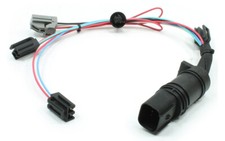
The DTC list in that bulletin reads like a parts-cannon shopping list: P0750, P0753, P0755, P0758, P0740, P0743, P0748, P0962, P0963 and P0712. That covers shift solenoid A and B circuits, the TCC solenoid, the pressure control solenoid circuits and the fluid temperature sensor. Ford's explanation is simple. The likely cause is an internal wiring harness routed wrong at the factory and pinched between the fluid pan and the main control, which causes an intermittent open or short and can blow a fuse in the battery junction box.
The procedure, per the bulletin:
- Read the build date on the transmission tag. If it is 12-1-2008 or later, the bulletin does not apply. Go to normal diagnostics in workshop manual section 307-01.
- Check the battery junction box fuse. Ford lists location F21 on the Crown Victoria, Grand Marquis and Town Car, and F79 on E-series and F-series.
- Drop the pan and look at the internal harness routing. A wire caught under the pan rail or crushed against the main control is the fault.
That is why "P0700 plus four solenoid codes" on a 2009 car should never start with four solenoids. Several circuits failing at once almost always share something: a fuse, a connector, or one damaged harness. If the insulation is cut through, replace the internal harness instead of taping it. It lives in hot fluid and vibrates against aluminum for the rest of its life.
Map the Companion Code Before You Order Parts
Once you have the real code, sort it into one of three groups. Each group has a different first test.
Circuit codes (P0743, P0750, P0753, P0755, P0758, P0962, P0963)
These mean the PCM saw a voltage it did not expect on a solenoid circuit. That is an electrical test, not a hydraulic one. Check the fuse, then check each solenoid's resistance at the case connector and again at the solenoid with the pan off. If the reading is good at the solenoid and bad at the connector, the harness is your fault. On 2009 units, see the bulletin above first.
Speed sensor codes (P0715, P0720, P0500)
These come with two 4R75-specific traps. First, only the 4R75E and 4R70E use a turbine speed sensor. A P0715 on a unit that has no TSS means the wrong calibration or the wrong transmission is in the vehicle. Second, Ford changed the output shaft speed sensor target in 2004. ATRA documents that the early ring gear in a late vehicle reads about 75 percent of true speed, and a late ring gear in an early vehicle reads about 400 percent. That produces ratio codes, speedometer faults and wild shifts that look like a valve body failure. Match the ring gear and sensor to the model year before you test anything else.
Performance codes (P0730, P0741, P1744, solenoid performance)
Here the PCM sent the right command and got the wrong result. The circuit is fine. Something in the hydraulics did not follow. This is where the 4R75 valve body earns its reputation, and the next section covers the bore that causes the most trouble.
The Solenoid Regulator Valve: One Bore, Many Codes
Every shift solenoid in this unit is fed by one regulated circuit. Sonnax calls it the solenoid regulator valve on the AODE and 4R70/4R75 family. Other makers call the same idea a solenoid modulator or actuator feed limit valve. Its job is to take line pressure and drop it to a steady, lower feed for the solenoids. Sonnax puts that feed in the 80 to 115 psi range on typical units.
When that bore wears, the feed goes wrong in one of two directions. Sonnax explains it this way: if feed pressure and flow are too high, a solenoid can be flooded beyond its ability to exhaust and strokes a shift valve when it should not. If feed is too low, the shift valves may not stroke fully. Either way you get shift complaints, solenoid performance codes and clutch damage. A new set of solenoids changes nothing, because the solenoids were never the problem.
The Sonnax wear guide for this family lists these symptoms at the solenoid regulator valve:
- Erratic shifts
- 2-3 neutral, or neutral after fourth
- No second, or third and reverse only
- Loss of forward under hard acceleration from a stop
If your customer describes any of those and the code list shows solenoid performance faults with no circuit faults, go to this bore before you buy electrical parts.
How to test it
Pull the valve body and vacuum test the solenoid regulator bore with the valve at rest. Sonnax's oversized kit 76948-47K gives the pass number: after repair, the indicated ports should hold a minimum of 18 in-Hg. A worn bore that will not hold close to that will not regulate solenoid feed under heat, no matter how clean the parts look.
How to fix it
If the bore fails, it gets reamed and fitted with an oversized valve. The 76948-47K kit is a valve and spring that goes into a bore reamed with Sonnax tool kit F-76948-TL47, held in the VB-FIX reaming fixture. Sonnax's instructions are short: ream until the valve strokes freely, install the valve with the longer spool end pointed inward, seat the spring over the outboard stem, reinstall the stock retainer, then vacuum test again. If you do not have the reamer, a complete valve body is the honest alternative. Do not reinstall a worn casting with a new valve and hope.
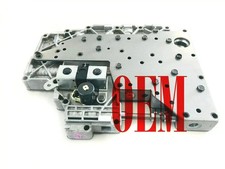
While the valve body is out, test the other bores Sonnax maps on this unit. The main pressure regulator valve covers soft shifts, low line rise and early clutch and band failure. The manual valve covers delayed engagement. The 1-2 and 3-4 shift valves both list gear ratio codes. One pull, one vacuum gauge, and you know which repair you are doing.
4R75W Sonnax Solenoid Regulator Valve Kit 76948-14K
The replacement solenoid regulator valve for the 4R70/4R75 family, for the bore behind most solenoid performance codes and erratic shifts. Vacuum test the bore first: a badly worn bore needs reaming and the oversized 76948-47K valve.
Get the 4R75W solenoid regulator kit →Need a different valve or a full rebuild kit? Browse the complete 4R75W parts collection.
Fluid Is Part of the Diagnosis
Ford's fluid reference lists MERCON V for the 4R70W, 4R75W and 4R75E through the 2008 model year, and MERCON LV for 2009 and later. Use the fluid the unit was built for. Wrong fluid or burnt fluid changes how the valves move in worn bores, and it can turn a marginal solenoid regulator bore into an erratic shift complaint. Check level hot, on level ground, and smell the dipstick. If the fluid is dark and burnt, the clutches have already paid for whatever fault set P0700, and the job may be bigger than a valve body.
A Clean Diagnostic Order
- Read all codes with a tool that pulls Ford continuous memory codes. Save freeze frame data.
- Check fluid level and condition hot.
- If several solenoid circuit codes set together, check the battery junction box fuse (F21 on the Panther cars, F79 on trucks and vans).
- On a 2009 4R75E, read the transmission tag. Build date before 12-1-2008 means drop the pan and inspect the harness routing for a pinch.
- For a single circuit code, check resistance at the case connector and at the solenoid to separate harness from solenoid.
- For speed sensor or ratio codes, confirm the sensor and the 2004 output ring gear match the model year, and confirm a TSS code only appears on a 4R75E.
- For performance codes with clean circuits, pull the valve body and vacuum test the solenoid regulator, pressure regulator and shift valve bores.
- Clear codes, road test hot, and recheck.
FAQ
Is P0700 on a 4R75W a bad transmission computer?
Rarely. The 4R75W and 4R75E have no separate transmission module; the PCM controls the transmission. P0700 is a pointer that a transmission fault is stored. Read the Ford-specific codes to find the actual solenoid, sensor, ratio or converter clutch fault before replacing anything.
Why does my 2009 Crown Victoria or F-150 show P0700 with several solenoid codes?
Ford issued a bulletin for some 2009 4R75E vehicles built before 12-1-2008. The internal wiring harness can be pinched between the fluid pan and the main control, causing intermittent shorts or opens and a blown fuse. Check BJB fuse F21 on Crown Victoria, Grand Marquis and Town Car, or F79 on E-series and F-series, then drop the pan and inspect the harness routing.
Can a worn valve body cause P0700 on a 4R75?
Yes. The solenoid regulator valve feeds every shift solenoid. When its bore wears, solenoid feed pressure goes too high or too low, causing erratic shifts, a 2-3 neutral, no second and solenoid performance codes. Sonnax's oversized repair calls for the bore to hold at least 18 in-Hg on a vacuum test.
What fluid does a 4R75W or 4R75E take?
Ford's fluid reference lists MERCON V for the 4R70W, 4R75W and 4R75E through the 2008 model year and MERCON LV for 2009 and later. Check the level hot on level ground, and treat dark, burnt fluid as a sign of clutch damage.
Working a 4R75 this week?
Internal harnesses, solenoids, valve bodies and rebuild kits — shipped fast from the USA.
Shop 4R75W parts →Sources
- Ford Motor Company service bulletin for 2009 4R75E vehicles, as reprinted by Vehicle Service Pros ("Fouled Ford Transmission"). Backs the affected 2009 F-150, E-150, Crown Victoria, Grand Marquis and Town Car with transmission build date before 12-1-2008; the gear selection, converter clutch and shift feel complaints; DTCs P0750, P0753, P0755, P0758, P0740, P0743, P0748, P0962, P0963 and P0712; the harness pinched between the pan and main control; BJB fuses F21 and F79; and workshop manual section 307-01. vehicleservicepros.com
- Sonnax — "Ford 4R70E, 4R70W, 4R75E, 4R75W, AODE Critical Wear Areas & Vacuum Test Locations." Backs the solenoid regulator valve symptom list (erratic shifts, 2-3 neutral, neutral after fourth, no second, third and reverse only, loss of forward under hard acceleration), the main pressure regulator, manual valve and 1-2 / 3-4 shift valve wear symptoms, and testing valves at rest. sonnax.com
- Sonnax — Oversized Solenoid Regulator Valve Kit 76948-47K instructions (PDF). Backs reaming with tool kit F-76948-TL47 and the VB-FIX fixture, installing the valve with the longer spool end inward, reusing the OE retainer, and the 18 in-Hg minimum vacuum test. sonnax.com (PDF)
- Sonnax — "Uncovering the Root Cause of Pressure Complaints: The Critical Role of Solenoid Modulator & AFL Valves," Maura Stafford. Backs the solenoid feed valve function, the typical 80-115 psi feed range, high feed flooding a solenoid and stroking shift valves, low feed leaving shift valves short, and the resulting solenoid codes and clutch failures. sonnax.com
- ATRA — Technical bulletin set 2009-85 (PDF). Backs the turbine speed sensor being used on the 4R70E/4R75E only, and the 2004 output shaft speed sensor ring gear change with the 75 percent and 400 percent speed errors from mismatched parts. atracom.blob.core.windows.net (PDF)
- Ford / Motorcraft — Automatic Transmission Fluid Quick Reference (US). Backs MERCON V for 4R70W/4R75W/4R75E through 2008 and MERCON LV for 2009 and later. fcsdchemicalsandlubricants.com (PDF)