P1744 is a Ford manufacturer code, not a generic one. Ford describes it as torque converter clutch system performance, and some code lists call it TCC mechanically stuck off. On a 4R75W or 4R75E, the four-speed in the Crown Victoria, Grand Marquis, Town Car, F-150 and E-series, it means the PCM commanded the converter clutch to apply and the clutch did not hold. Notice what is missing from that sentence: anything about the electrical circuit. The solenoid circuit has its own codes. P1744 is the PCM telling you the command went out and the converter kept slipping. This guide walks through what separates P1744 from its cousins, which live data proves it, where the 4R75 valve body wears in the exact spots Sonnax ties to code 1744, and the order to fix it in so you only open the transmission once.
P1744 vs P0741 vs P1742: Reading the Code Family
Ford logs converter clutch faults in a small family, and the code you have tells you which direction to look.
- P0743 and related circuit codes: the PCM saw an electrical fault on the TCC solenoid circuit itself. Open, short, or out-of-range current. That is a wiring, connector or solenoid problem.
- P0741 and P1744: the circuit is fine, the command went out, and slip stayed too high. These are mechanical and hydraulic performance codes, and they often set together. Ford's own bulletin for early 10R80 trucks lists an illuminated MIL with P0741 and P1744 stored and blames a sticking TCC valve in the main control valve body. Different transmission, same logic: Ford treats P1744 as a valve and clutch problem, not a solenoid problem.
- P1742: the opposite failure, converter clutch applied when it was not commanded. Ford's 2011 Crown Victoria 4R75E bulletin covers this one and sends you to the No. 7 check ball.
Jeff Parlee of the Sonnax TASC Force, writing about Ford slip codes in Transmission Digest, makes the point that "stuck off" sends people shopping for a solenoid when a better description is excessive TCC slip detected. He also notes the PCM may need to see the failure more than once in an ignition cycle before it sets the code, which is why a short test drive often will not reproduce it.
One more thing before you trust the code: slip is engine speed minus turbine speed. The 4R75E has a turbine shaft speed sensor; the PCM is doing arithmetic with it. Any open P0715, P0717 or P0720 has to be fixed first, because a slip code built on a bad speed signal is not a slip code.
How the 4R75 Applies Its Converter Clutch
The 4R75 inherited the AODE and 4R70W bypass converter design, and it works backwards from what most GM-trained techs expect. Gregg Nader at Sonnax describes three converter circuits: converter impeller in (CI), converter turbine out (CT), and converter bypass (CBY). Bypass oil fills the space between the front cover and the lockup piston from the moment the engine starts, and that oil holds the clutch released.
To apply, the PCM pulses the TCC solenoid, the bypass clutch control valve moves, and bypass pressure is reduced. Converter pressure behind the piston then pushes it into the cover. Because the PCM modulates bypass pressure rather than switching it, there are three stages: release, controlled modulated apply, and full apply. Nader is explicit about the consequence: low CT pressure is the same thing as low apply pressure, and it produces TCC slip. Bore wear at the bypass sleeve and plunger, the bypass valve and the converter regulator valve lowers apply pressure and weakens the valve's control of bypass oil at the same time.
So P1744 on this unit comes down to three questions. Is the converter getting enough pressure to apply? Can the bypass circuit actually exhaust? And is apply oil leaking away before it reaches the piston?
Step 1: Prove It on the Scan Tool
Ford's 4R75E service bulletin, reprinted by Vehicle Service Pros, uses two PIDs that do most of the work: TCC%, the solenoid duty cycle command, and TC SLIP ACT, actual converter slip in rpm. Graph them with throttle position, commanded gear, vehicle speed and transmission fluid temperature.
- TCC% climbs to full command and TC SLIP ACT drops near zero: the converter is holding. If P1744 keeps returning, look for an intermittent speed signal or a condition that only appears hot.
- TCC% at full command and TC SLIP ACT stays well above zero or hunts: classic P1744. The PCM is asking and the clutch is not holding.
- Slip is acceptable cold and grows as fluid temperature rises: a leak that opens up as the oil thins. Worn valve bores and pump stator bushings both behave this way.
- TCC% at zero and slip under 20 rpm right after the 1-2 shift: that is the bulletin's uncommanded apply condition (P1742), not P1744. The fix there is the No. 7 check ball, part EOAZ-7E195-B, with upper gasket 1L3Z-7C155-AA and lower gasket 1W7Z-7D100-AB. An earlier Ford bulletin, 09-20-14, covered the same check on 2005-2010 4R70/75E-W vehicles.
If the TCC% command never appears at all, the PCM is not commanding lockup, and you are chasing an input (throttle, temperature, speed or brake switch) that is keeping the strategy from enabling, not a P1744 failure.
Step 2: Line Pressure and Fluid Condition
Put a gauge on line pressure before you pull anything. The converter is fed from the main regulator, so a unit with low line rise will have low converter pressure and a slip code as a side effect. Sonnax's 4R75 vacuum test guide lists the main pressure regulator valve for low line rise, soft shifts and premature clutch and band wear.
Then look at the fluid. Dark, burnt ATF with friction material in the pan and a slip number that never improves points at a converter clutch that is already damaged. That changes the job: you will still repair the hydraulics, because they caused it, but the converter goes in the plan too.
Step 3: The Valve Body Bores Sonnax Ties to Code 1744
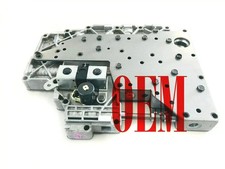
Sonnax's critical wear and vacuum test guide for the AODE, 4R70E, 4R70W, 4R75E and 4R75W valve body names the bypass clutch control valve (location 110) for codes 628, 741, 1741 and 1744, no lockup, TCC slip and low cooler flow. That last symptom is the tell. The worn valve that lets the converter slip also robs the cooler and rear lube circuit, so a P1744 truck with a history of hot fluid is pointing right at this bore. The repair for a worn bore is the oversized 76948-31 valve, which needs the matching reamer tooling.
At the outboard end of the same bore sits the plunger valve and sleeve, linked to shudder, delayed lockup and no lockup. Sonnax offers two drop-in fixes with no reaming. 76948-64K uses four .063 in. orifices to mimic the OE hydraulic design and is the better choice on 1996-and-later units, where harsh apply and engine lugging can show up if the OE calibration is not respected. 76948-04K uses a single .030 in. orifice for a firmer lockup. For a stock F-150 or police car, the 64K keeps the PCM's slip targets where Ford set them.
Shop the part for this fix
The Sonnax 76948-64 bypass clutch control plunger valve kit for the 4R75W is the drop-in repair for the bore Sonnax ties to code 1744. No reaming, OE-style apply feel.
Get the 4R75W Sonnax bypass valve kit →Need a solenoid, pump or limit valve instead? Browse the full 4R75W parts collection.
The second bore to check is the converter pressure limit valve (location 109). Sonnax's product notes for the oversized 76948-58K kit explain the two ways it fails: wear at the inboard spool leaks converter pressure away, and debris damage at the outboard spool can stick the valve in either a high or a low converter pressure position. Listed symptoms run from converter shudder and TCC slip to low converter pressure, overheated converters and damaged converters. Sonnax says to replace it when the valve binds or does not stroke smoothly, when it fails to hold the recommended minimum vacuum at the indicated ports, or when wear is visible. The 58K requires tool kit F-76948-TL47; there is also a drop-in 76948-56K with extended lands for milder wear.
Test both bores with the valves in their rest position, as the guide specifies.
Step 4: Air Check the Apply Circuit
A clean valve body and a P1744 that comes back means oil is leaking somewhere after the valve. Parlee's list of what makes a Ford converter clutch slip covers erratic speed sensors, the solenoid, worn TCC valve bores, low line pressure, a glazed or burned clutch, and a leak in the apply circuit, which he calls the most common cause, usually at the rear pump stator bushings. Those bushings support the turbine shaft and seal apply oil the way sealing rings would. Slight wear leaks a little cold and a lot hot. He was writing about Ford's FNR5 and 4F27E, but the sealing job is the same on any Ford whose stator support bushings carry converter oil.
With the valve body off, block the converter front passage in the case and apply air to the converter rear passage. It should hold like a good clutch pack. Bleed the air off slowly, because a wet circuit sprays. On the bench, install the converter, hold it in the bellhousing by bolting a wrench across the front, and squirt ATF into both passages before you test.
Step 5: The Converter Itself
After miles of slipping on worn bores, the lining may be cooked. Replace the converter only after the valve body passes vacuum testing and the apply circuit holds air.
Fluid After the Repair
Ford's transmission fluid quick reference lists MERCON V for the 4R70W, 4R75W and 4R75E through the 2008 model year and MERCON LV from 2009 on, so check the vehicle before you fill. The 2006 F-150 owner guide lists 13.9 quarts (13.2 L) of Motorcraft MERCON V, XT-5-QM, for the 4R70E and 4R75E. That is total capacity. A pan drop takes only part of it, and a converter replacement adds the converter's volume back, so fill to the hot mark on the dipstick and recheck after the road test.
P1744 Fix Order for the 4R75
- Fix speed sensor codes first. P1744 is only valid with good engine, turbine and output speed signals.
- Graph TCC%, TC SLIP ACT, gear, throttle and fluid temperature on a long, warm drive. Confirm high slip with lockup fully commanded.
- Rule out P1742 behavior (TCC% zero with low slip). That is the No. 7 check ball, a different repair.
- Check fluid level and condition, then gauge line pressure and line rise.
- Pull the valve body. Vacuum test the bypass clutch control valve, plunger sleeve and converter pressure limit valve with the valves at rest.
- Repair what fails: 76948-64K for the plunger sleeve on a stock unit, 76948-31 for a worn bypass valve bore, 76948-58K or 56K for the limit valve.
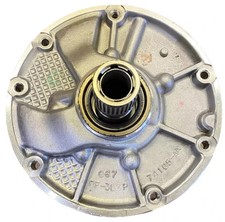
- Air check the converter apply circuit. Replace pump stator bushings or the pump if it leaks.
- Replace the converter last, after the circuit holds. Flush the cooler and fill with the correct MERCON fluid for the model year.
FAQ
Is P1744 on a 4R75W a bad TCC solenoid?
Usually not. P1744 is a performance code: the PCM commanded the converter clutch on and still measured too much slip. Electrical faults on the solenoid circuit set their own circuit codes. On this family the common causes are wear at the bypass clutch control valve and plunger sleeve, a worn or sticking converter pressure limit valve, and apply oil leaking at the pump stator bushings.
What is the difference between P1744 and P0741 on a Ford?
Both mean the converter clutch slipped while lockup was commanded, and they often set together. P0741 is the generic OBD-II code and P1744 is Ford's own code for TCC system performance. Ford's bulletin for early 10R80 trucks lists P0741 and P1744 stored together and blames a sticking TCC valve in the main control valve body, so treat them as the same hydraulic diagnosis.
Which scan tool PIDs confirm P1744 on a 4R75E?
Ford's 4R75E bulletin uses TCC%, the solenoid duty cycle command, and TC SLIP ACT, the actual converter slip in rpm. With TCC% at full command, TC SLIP ACT should drop close to zero. If the command is there and slip stays high or climbs as the fluid gets hot, the clutch is not holding.
Will a new torque converter fix P1744?
Only if the converter is the only problem, and on a high-mileage 4R75 it rarely is. Worn valve body bores and leaking stator bushings lower apply pressure and will slip a new converter too. Vacuum test the valve body and air check the apply circuit first, then replace the converter if the lining is damaged.
Working a 4R75 this week?
Valve bodies, pumps, TCC solenoids and rebuild kits — shipped fast from the USA.
Shop 4R75W parts →Sources
- Sonnax — "Ford 4R70E, 4R70W, 4R75E, 4R75W, AODE Critical Wear Areas & Vacuum Test Locations" (AODE-4R75E VacTestGuide, PDF). Backs the bypass clutch control valve (location 110) link to codes 628, 741, 1741 and 1744, no lockup, TCC slip and low cooler flow, with oversized valve 76948-31; the plunger valve and sleeve symptoms; the converter pressure limit valve (location 109); the main pressure regulator valve for low line rise; and testing valves in rest position. sonnax.com (PDF)
- Sonnax — Oversized Converter Limit Valve Kit 76948-58K product notes. Backs inboard spool wear causing converter pressure loss; outboard spool debris damage sticking the valve high or low; the symptom list (shudder and TCC slip, low converter pressure, overheated and damaged converters, excess converter pressure); the binding, vacuum and visual-wear replacement criteria; tool kit F-76948-TL47; and the drop-in 76948-56K alternative. sonnax.com
- Sonnax — "AODE/4R70W Series Bypass Clutch Control Valve Repair Options: When to Use Sonnax 76948-04K vs. 76948-64K." Backs the four .063 in. orifices in 76948-64K mimicking OE, its fit for 1996-later units, the single .030 in. orifice and firmer lockup of 76948-04K, and both kits being drop-in with no reaming. sonnax.com
- Sonnax — "Ford Bypass Converter Clutch Circuits," Gregg Nader. Backs the CI, CT and CBY circuits, bypass oil holding the clutch released, apply by reducing bypass pressure, the three stages of apply, low CT pressure causing TCC slip, and bore wear lowering apply pressure. sonnax.com
- Ford Motor Company service bulletins, as reprinted by Vehicle Service Pros. "Funny Shifting Ford Vic" (2011 Crown Victoria 4R75E) backs the TCC% and TC SLIP ACT PIDs, the uncommanded apply with P1742, the No. 7 check ball and parts EOAZ-7E195-B, 1L3Z-7C155-AA and 1W7Z-7D100-AB, and earlier bulletin 09-20-14. "Ford Clutch Is Stuck" (2017-2018 10R80) backs Ford pairing P0741 and P1744 for a sticking TCC valve in the main control valve body. vehicleservicepros.com (4R75E) • vehicleservicepros.com (10R80)
- Transmission Digest — "Body of Evidence" (FNR5/4F27E and code P0741), Jeff Parlee, Sonnax TASC Force. Backs slip codes meaning excessive TCC slip detected, the multiple-occurrence setting logic, the list of slip causes, the pump stator bushing leak that worsens hot, and the in-vehicle and bench air check methods. transmissiondigest.com
- Ford / Motorcraft — Automatic Transmission Fluid Quick Reference (US). Backs MERCON V for 4R70W/4R75W/4R75E through 2008 and MERCON LV for 2009 and later. fcsdchemicalsandlubricants.com (PDF)