P0742 is the generic OBD-II code for torque converter clutch circuit stuck on: the converter clutch is locked, or partly locked, when the computer says it should be released. On the Ford 4R75W and 4R75E behind the 4.6L and 5.4L in the Crown Victoria, Grand Marquis, Town Car, F-150, Expedition and E-series, the fault is real and well documented, but Ford's own PCM logs it as P1742, TCC solenoid failed on. If a generic reader or a parts-store printout sent you here with "P0742," read this as the diagnosis for that condition. This guide covers what the PCM measures, the two PIDs that prove it, Ford's No. 7 check ball bulletin, the valve body wear points Sonnax documents for this family, the electrical cases, and the order to fix it in.
What "Stuck On" Means to the PCM
Gregg Nader of Sonnax, writing about converter codes, puts the generic definition plainly: P0742 sets when the PCM "detects low slip speed with TCC commanded off." Slip is engine rpm minus turbine (input) rpm. With the clutch released, a healthy converter always slips some, because that fluid coupling is how it multiplies torque. When the PCM has the clutch commanded off and slip collapses to almost nothing, something other than the PCM is applying the clutch.
Ford's bulletins for this family use the same logic and give a number. The test in Ford's service bulletin for 2011 Crown Victoria and Grand Marquis 4R75E units is: with the TCC solenoid command at zero, if actual converter slip reads under 20 rpm in second gear, the converter is applied when it should not be. P1742 may be stored in the PCM when it happens. That is the Ford-language version of P0742, and the diagnosis below applies either way.
One thing the PCM needs to make that call is a valid input speed. The 4R75E carries a turbine shaft speed (TSS) sensor, so slip is measured directly. If P0715 or P0717 is also stored, fix the sensor first. A low-slip reading built on a bad TSS signal is not a converter fault.
How the Ford Bypass Clutch Gets Applied When It Should Not
The 4R75 inherited the AODE and 4R70W converter design, and it is backwards from what GM techs expect. Sonnax's write-up on Ford bypass converter clutch circuits describes three passages: converter impeller in (CI), converter turbine out (CT), and converter bypass (CBY). From engine start, bypass oil fills the space between the front cover and the lockup piston and holds the clutch off. To apply, the PCM commands the TCC solenoid, the bypass clutch control valve moves, bypass pressure is reduced, and converter pressure behind the piston pushes it into the cover. Because the PCM modulates bypass pressure instead of switching it, there are three stages: full release, modulated apply, and full apply.
So a converter that is stuck on is a converter that lost its release oil. Anything that drains the CBY circuit, or keeps it from filling, lets converter pressure win. That is a short list on this unit:
- A check ball that no longer seats and lets oil cross into a circuit it should not, which is what Ford's bulletin addresses.
- A bypass clutch control valve or plunger that sticks in the apply position from wear or debris.
- A TCC solenoid stuck mechanically open, or a control circuit that keeps it energized.
- Release oil leaking away at worn bores or seals between the valve body and the converter.
What the Driver Feels
Ford's bulletin describes the most common version: an uncommanded TCC apply or partial apply immediately after the 1-2 shift. Owners report the vehicle feels underpowered, or that the transmission upshifts too early, because a locked converter gives up the torque multiplication the engine relies on to pull away. In some vehicles there is a loss of rpm when coming to a stop in manual second. The bulletin also notes a normal behavior worth knowing before you condemn anything: the PCM may command fourth gear at speeds as low as 19 mph under light acceleration with throttle below 20 percent. That early 3-4 is calibration, not a fault.
The worse version is a converter that stays applied all the way to a stop. With the clutch locked, the engine is mechanically tied to the wheels, so it lugs and can stall as the vehicle stops, much like a manual car stopped without the clutch pedal down. If a 4R75 stalls when you come to a stop and restarts fine in Park, put converter stuck-on at the top of the list, and treat it as a drivability safety problem rather than a quirk.
Prove It on the Scan Tool
The two PIDs named in Ford's 4R75E bulletin are TCC%, the solenoid command state shown as duty cycle, and TC SLIP ACT, actual converter slip in rpm. Graph them with gear, throttle position, vehicle speed and fluid temperature, then road test in second, third and fourth.
- TCC% at 0, TC SLIP ACT under 20 rpm. Converter applied with no command. This is the stuck-on condition. Ford says to do the check in automatic second (not manual second), after the PCM commands second and before vehicle speed reaches 35 mph.
- TCC% at 0, slip a few hundred rpm and moving with throttle. Normal released converter. The bulletin does not apply; go back to the workshop manual, section 307-01A, for normal diagnostics.
- TCC% climbs and slip drops with it. The PCM is commanding the apply. That is a calibration or input issue, not a stuck converter.
- Slip normal cold, collapses hot. A leak in the release circuit that grows as the fluid thins. Worn bores behave this way.
Write the numbers down. You will want them to confirm the repair afterward.
Cause 1: The No. 7 Check Ball
This is the one Ford put in writing. When TCC% reads zero and slip is under 20 rpm, Ford's bulletin directs the tech to inspect the No. 7 check ball in the main control valve body for damage and replace it as needed. The bulletin parts list is short:
- Check ball, EOAZ-7E195-B
- Valve body upper gasket, 1L3Z-7C155-AA
- Valve body lower gasket, 1W7Z-7D100-AB
- Motorcraft MERCON LV ATF, XT-10-QLV (on the 2011 vehicles the bulletin covers)
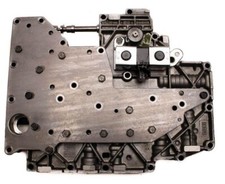
The same check ran in an earlier Ford bulletin, 09-20-14, for 2005-2010 vehicles with the 4R70/75 E and W units. A worn ball looks round and shiny until you put it next to a new one or try it in its seat. Replace it rather than flip it. While the valve body is apart, look at the separator plate seat for the ball: a ball that has been hammering a soft seat leaves a ring you can feel with a fingernail, and that plate will not seal a new ball either.
Cause 2: Bypass Clutch Control Valve and Plunger Sleeve
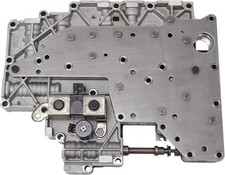
Sonnax's critical wear and vacuum test guide for the AODE, 4R70E, 4R70W, 4R75E and 4R75W valve body puts the bypass clutch control valve at location 110, linked to converter codes and TCC slip, with an oversized 76948-31 valve when the bore is worn. The plunger valve and sleeve in the outboard end of the same bore is tied to TCC apply and release concerns. Most of the published wear symptoms are slip and no-lockup, but a valve that binds in its bore does not care which way it binds. Varnish or a burr that hangs it in the apply position gives you a converter that will not release.
Sonnax's bypass valve repair note matters here for a different reason. It recommends the 76948-64K kit, with four .063 in. sleeve orifices that mimic the OE design, on 1996-and-later units where harsh TCC apply and engine lugging can occur if OE calibration is not followed. The 76948-04K uses a single .030 in. orifice and gives a firmer, quicker lockup. On a stock 4R75 that is already lugging, the 04K is the wrong direction. Use the 64K.
Vacuum test the bore with the valves in their rest position, per the guide. A bore that leaks enough to fail is worn enough to stick.
Shop the part for this fix
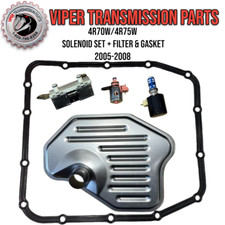
The Sonnax 76948-64 bypass clutch control plunger valve kit for the 4R75W is a drop-in sleeve with OE-style orifices, the right repair when a worn plunger bore is part of a lugging or apply-release complaint.
Get the 4R75W Sonnax bypass valve kit →Need a solenoid, gasket set or valve body instead? Browse the full 4R75W parts collection.
Cause 3: The TCC Solenoid and Its Circuit
Nader's converter code article lists a defective TCC PWM solenoid and a sticking TCC apply valve as the causes of P0742 on every unit he covers. The solenoid can fail two ways that matter here: debris holds the plunger off its seat so it vents or passes oil as if commanded, or the circuit keeps it energized. On a solenoid the PCM switches on the ground side, a control wire chafed to ground anywhere between the PCM and the solenoid turns it on regardless of what the PCM commands. TCC% will read zero on the scan tool, because that PID is the command, not the result.
The quick split is a ground check, not a road test with things unplugged. Key off, disconnect the PCM and the transmission case connector, and check the TCC control wire for continuity to ground. Any continuity means the harness can hold the solenoid on by itself. Then reconnect, back-probe the TCC control wire at the case connector, and watch it while TCC% reads zero: the control side should sit near battery voltage with the solenoid off. A circuit that tests clean while the converter stays applied points you back to hydraulics. Check the case connector for ATF wicking and the internal harness for chafe at the valve body bolts before you condemn a part. If the solenoid is the fault, measure it against the resistance spec in your service information rather than a number off a forum.
Cause 4: Contamination
Every stuck valve has a reason. Burnt fluid, clutch material in the pan and a filter that has not been changed in 100,000 miles are how bores get varnished and check balls get chewed. If you find debris, find where it came from before the valve body goes back in. A rebuilt valve body bolted onto a transmission that is shedding friction material will be back.
Fluid and Service After the Repair
Fluid type depends on the year. Ford's 2006 F-150 owner guide lists Motorcraft MERCON V, XT-5-QM, at 13.9 quarts (13.2 L) total for both the 4R70E and the 4R75E, and decodes door label code Q as the 4R75E. Ford's bulletin for the 2011 Crown Victoria and Grand Marquis calls for MERCON LV, XT-10-QLV, when the valve body comes off. Use what your owner guide or dipstick specifies for your model year, fill to the hot mark after a road test, and skip friction modifiers and additives. A converter that will not release does not need a slicker clutch.
P0742 / P1742 Fix Order for the 4R75
- Clear speed sensor codes first. A slip reading is only as good as the TSS and engine speed signals behind it.
- Graph TCC%, TC SLIP ACT, gear, throttle, speed and fluid temperature. Confirm slip under 20 rpm with TCC% at zero in automatic second below 35 mph.
- Check fluid level and condition. Debris changes the plan.
- Split electrical from hydraulic by unplugging the solenoid. Inspect the case connector and internal harness.
- Pull the valve body. Inspect and replace the No. 7 check ball (EOAZ-7E195-B) and check its seat in the plate.
- Vacuum test the bypass clutch control valve and plunger sleeve bore. Repair with 76948-64K for the sleeve, 76948-31 for a worn valve bore.
- Reassemble with new upper and lower valve body gaskets, refill with the correct fluid, and re-run the same PID test to prove the converter now releases.
FAQ
Does a Ford 4R75 actually set P0742?
Ford's PCM normally logs this condition as P1742, TCC solenoid failed on, and Ford's 4R75E bulletins reference P1742. P0742 is the generic SAE code for the same fault: the converter clutch shows little or no slip while it is commanded off. Some generic readers and code lists show the P0742 wording, but the diagnosis is the same.
What causes a 4R75 converter to lock up when it should not?
Ford's bulletin for the 4R75E points first at a damaged No. 7 check ball in the main control valve body, part EOAZ-7E195-B. The other causes are a bypass clutch control valve or plunger sticking in the apply position, a TCC solenoid stuck open by debris, and a control circuit shorted to ground that keeps the solenoid energized.
How do I confirm TCC stuck on with a scan tool?
Graph TCC% and TC SLIP ACT on a road test. Ford's test is TCC% at zero with TC SLIP ACT under 20 rpm, checked in automatic second after the 1-2 shift and before 35 mph. A released converter should show real slip that moves with throttle.
Can a stuck-on torque converter clutch make the engine stall?
Yes. With the clutch locked the engine is tied to the wheels, so it lugs and can stall as the vehicle comes to a stop. Ford's bulletins also describe a loss of rpm when stopping in manual second and a lack of power after the 1-2 shift on these units.
Working a 4R75 this week?
TCC solenoids, valve bodies, solenoid kits and rebuild parts — shipped fast from the USA.
Shop 4R75W parts →Sources
- Ford Motor Company service bulletin for 2011 Crown Victoria 4R75E, as reprinted by Vehicle Service Pros ("Funny Shifting Ford Vic," December 12, 2016). Backs the uncommanded or partial TCC apply after the 1-2 shift; P1742 stored in the PCM; the TCC% and TC SLIP ACT PIDs; the TCC% zero and slip under 20 rpm test; the No. 7 check ball in the main control valve body; and parts EOAZ-7E195-B, 1L3Z-7C155-AA and 1W7Z-7D100-AB. vehicleservicepros.com
- Ford Motor Company service bulletin for 2011 Mercury Grand Marquis 4R75E, as reprinted by Vehicle Service Pros ("Mercury Seems Indecisive and Powerless"). Backs the lack-of-power and early-upshift complaint; loss of rpm stopping in manual second; testing in automatic second before 35 mph; 4th gear commanded as low as 19 mph under 20 percent throttle as normal; workshop manual section 307-01A; and MERCON LV XT-10-QLV. vehicleservicepros.com
- Sonnax — "Beyond 1870: GM Converter Codes P0741, P0742 and 1887," Gregg Nader, September 15, 2003. Backs the P0742 "TCC stuck on" definition as low slip speed with TCC commanded off, and the sticking TCC apply valve and defective TCC PWM solenoid as causes. sonnax.com
- Sonnax — "Ford Bypass Converter Clutch Circuits," Gregg Nader. Backs the CI, CT and CBY circuits; bypass oil holding the clutch released; apply by reducing CBY pressure; and the three stages of apply. sonnax.com
- Sonnax — "AODE/4R70W Series Bypass Clutch Control Valve Repair Options: When to Use Sonnax 76948-04K vs. 76948-64K," December 20, 2023. Backs the plunger valve and sleeve wear on AODE, 4R70E/W and 4R75E/W units; the single .030 in. orifice in 76948-04K; the four .063 in. orifices in 76948-64K mimicking OE; and harsh TCC apply and engine lugging on 1996-later units if OE calibration is not followed. sonnax.com
- Sonnax — "Ford 4R70E, 4R70W, 4R75E, 4R75W, AODE Critical Wear Areas & Vacuum Test Locations" (PDF). Backs the bypass clutch control valve at location 110 with oversized valve 76948-31, the plunger valve and sleeve location, and vacuum testing with valves in rest position. sonnax.com (PDF)
Fluid capacity: Ford Motor Company, 2006 F-150 Owner Guide (archived), lists 13.9 qt (13.2 L) MERCON V XT-5-QM for the 4R70E and 4R75E and door code Q = 4R75E. fordservicecontent.com (archive.org)