P0700 is the most misread code on a Ford 4R70W, and the reason is right there in the name. "Transmission control system malfunction" sounds like a verdict on the transmission. It is not a verdict on anything. P0700 is a request to turn the light on. It is the transmission side of the powertrain saying that it has a problem and wants the driver to know, and nothing more.
Chase P0700 itself and you will replace parts at random. Treat it as an index card that points somewhere else, and the job gets short.

Why P0700 Behaves Differently on a 4R70W
On a vehicle with a standalone transmission control module, P0700 has a clean story: the TCM stored a fault, and because the TCM cannot command the malfunction indicator lamp directly, it asks the engine controller to do it. The engine controller logs P0700 as the reason. Two modules, two code lists, and you go read the second list.
The AODE and 4R70W family does not have a second module. Shift timing, line pressure and converter clutch control all live in the PCM alongside fuel and spark. There is no separate box to interrogate. So when P0700 shows up on a 4R70W truck, what it usually means in practice is that you are looking at the generic OBD-II side of the scan tool and the detail is sitting on the Ford-specific side.
That is the entire first step of this diagnosis, and it is free. Before touching the transmission, switch the tool to manufacturer-specific mode and pull continuous memory codes. Nine times out of ten a P0715, P0720, P0730, P0741, P1744 or a solenoid code is waiting there, and that code is the actual job.
What to write down before you clear anything
- Every stored code, generic and Ford-specific. Order matters less than the full set. A gear ratio code plus a solenoid code tells a different story than a gear ratio code alone.
- Freeze frame data. Engine load, vehicle speed, coolant temperature and transmission fluid temperature at the moment of the fault. A fault that only sets once the unit is hot is a clearance and viscosity problem. A fault that sets cold is usually electrical.
- Fluid level and condition at operating temperature. Not cold, not on a slope. Dark fluid with a burnt smell changes the whole plan.
- Whether the unit is in a default strategy. If it is stuck in one forward gear with no upshifts, the PCM has already given up and dropped into its failure management mode.
Mapping the Companion Code to a Valve
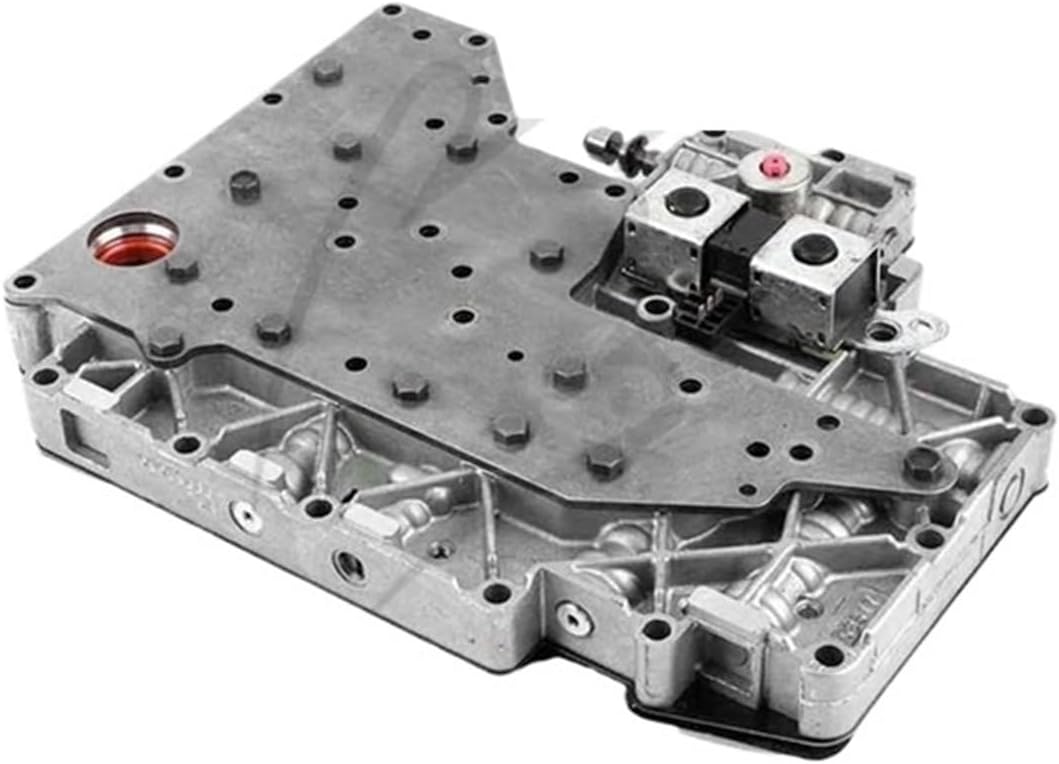
Here is where a 4R70W diagnosis gets faster than most. This valve body has been documented down to the individual bore, and specific wear locations produce specific complaints and specific codes. Sonnax publishes a critical wear area and vacuum test guide covering the 4R70E, 4R70W, 4R75E, 4R75W and AODE that numbers eleven valve locations and lists what each one does when it wears.
Read your companion code against that map before you order parts:
- Converter clutch codes. Sonnax lists codes 628, 741, 1741 and 1744 at the bypass clutch control valve, along with no lockup, TCC slip and low cooler flow. The neighboring bypass clutch control plunger valve and sleeve covers shudder, delayed lockup and general TCC apply and release concerns.
- Gear ratio codes. Both the 1-2 shift valve and the 3-4 shift valve list gear ratio codes as a wear symptom, along with no second, no fourth and wrong gear starts. A ratio code is a mechanical or hydraulic report, not a sensor complaint.
- Erratic shifting with strange neutral conditions. The solenoid regulator valve is the one to look at. Its wear list reads erratic shifts, a 2-3 neutral, a neutral after fourth, third and reverse only, no second, and loss of forward under hard acceleration from a stop.
- Low or unstable line pressure. The main pressure regulator valve covers poor shift quality, soft shifts, low line rise, erratic buzz and premature clutch and band failure. The boost valve covers low reverse boost, reverse slip, delayed reverse and burnt reverse clutch.
- Delayed engagement with burnt clutches. Check the manual valve, which lists delayed engagement, low line pressure and burnt bands and clutches.
That mapping is the difference between a two-hour job and a two-week job. A gear ratio code on a unit with clean fluid points at a shift valve bore, not at a sensor, and you can stop testing wiring.
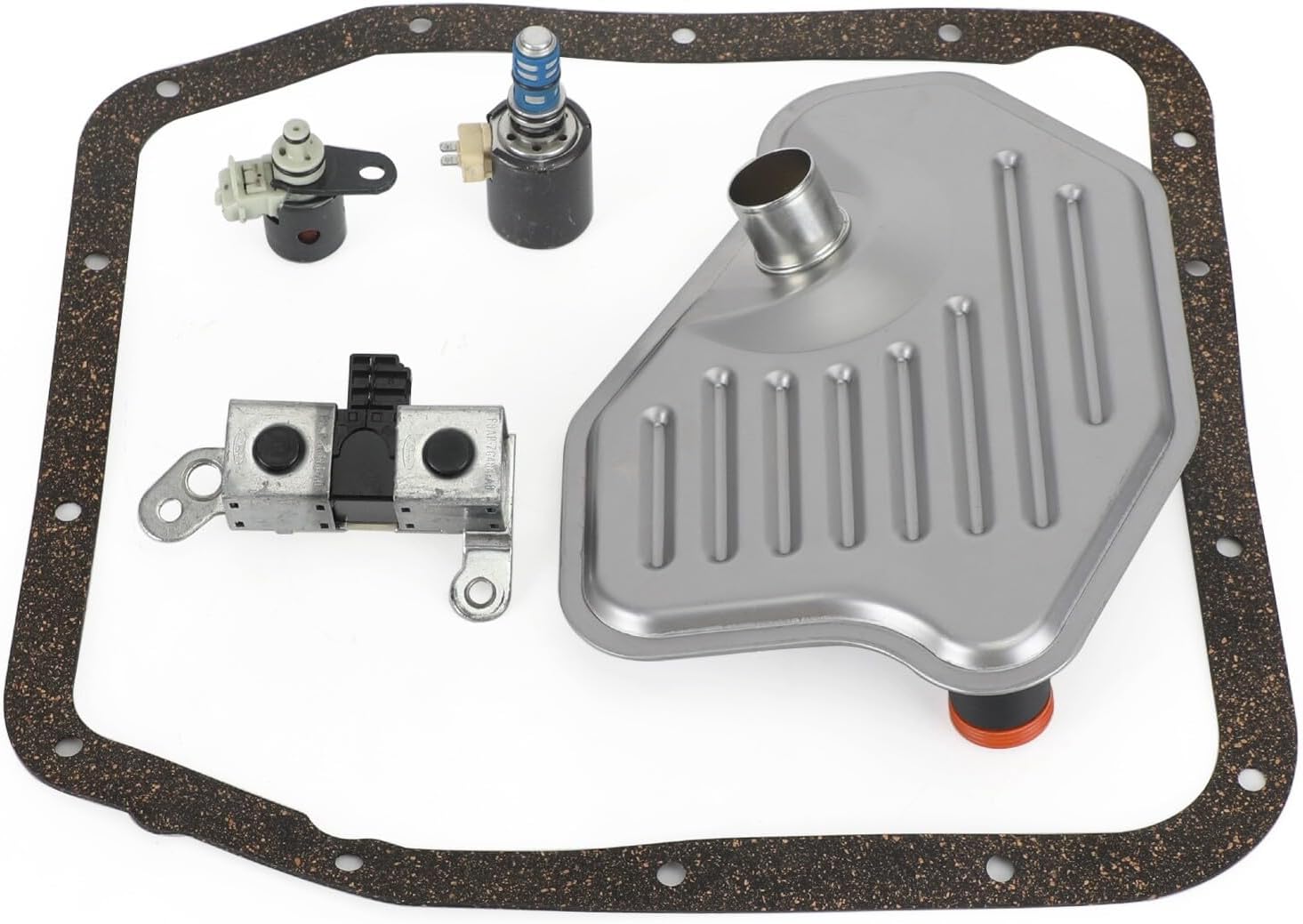
4R70W Shift Solenoid and Filter Kit
If the companion code is a solenoid fault and the solenoid fails a resistance check or will not track its command on live data, this is the direct replacement. The filter is included, which you are pulling the pan for anyway. Confirm your build year and pan configuration before ordering.
Get the 4R70W shift solenoid and filter kit →Need valve body parts or a full rebuild kit instead? Browse the complete 4R70W parts collection.
The Case That Breaks the Rule: P0700 With Nothing Useful Behind It
Sometimes you pull the Ford-specific codes and get nothing that explains the complaint. The truck slips under throttle, the shifts slide, and the code list is thin. On an AODE or 4R70W that pattern has a well-documented cause, and it is the one that costs shops the most money in repeat repairs.
Wayne Colonna described it in Transmission Digest: wear in the pressure regulator valve bore causes a reduction or complete loss of EPC pressure when the unit is hot. That means no line rise or almost none, which produces medium to full throttle slipping in gear and sliding shifts. The classic misdiagnosis follows immediately. A gauge shows EPC pressure near zero at any throttle opening, and near zero with the transmission unplugged as well, so the technician replaces the EPC solenoid. The problem stays.
The mechanism is worth understanding, because it explains why a new solenoid cannot help. EPC pressure is routed to the pressure regulator valve alongside a circuit Ford calls the boost circuit, and that boost circuit is routed back to the inlet side of the pump. When the bore wears enough between those two circuits, EPC pressure is drawn away by the pump itself. You are commanding pressure into a hole. No solenoid on earth fixes that.
The pan-off test that proves it in ten minutes
Colonna's quick check requires no special tooling. Drop the pan and filter, then blow compressed air into the TV pressure port and watch where it comes out:
- Air and fluid blowing out around the EPC solenoid area is normal. Do not chase it.
- Air and fluid blowing out of the filter is your answer. That is the bore wear letting EPC pressure escape to the pump inlet.
One honest note on the repair. That article was published in 2004 and concluded that no aftermarket fix existed, so the valve body had to be replaced. That is no longer true. Sonnax now catalogs oversized pressure regulator and boost valve kits for this family, 76948-16K for 1991 to 1995 units and 76948-17K for 1996 and later, which recondition the bore by reaming instead of replacing the casting. The diagnosis from 2004 still holds. The repair options got better.
Do not trust your eyes on the bore
Sonnax makes the same point from the bench side. Severe pressure regulator valve wear is common across the 4R70W, 4R70E, 4R75W, 4R75E and AODE, and scoring on the EPC end of the valve is usually obvious. The trap is stopping there. When the valve looks that bad, it is a good bet the bore is compromised too, and a worn casting will not seal properly even with a new valve in it.
Bore wear is often impossible to see with the naked eye. Vacuum testing is what finds it, and Sonnax notes that most of the time the test will show the bore needs reaming and an oversized valve. You can build the test tool yourself out of an old reverse boost sleeve: drill a hole through the end of the sleeve, insert a quarter inch rubber or plastic tube far enough in to block the oil feed holes in the side, slip a piece of vacuum hose over the tubing to reach your gauge, then insert a good pressure regulator valve into the bore, hold it inboard with a pick, and pull vacuum through the sleeve tool positioned in the bore beyond the EPC circuit. A low reading means wear. When in doubt, vacuum test.
Check the Solenoid Feed Before You Blame a Solenoid
One more bore deserves attention on any P0700 job that came in with solenoid performance codes. Every solenoid in the unit is fed by a single regulated circuit, called the solenoid regulator valve on this valve body and known generically as the actuator feed limit valve. It takes line pressure and knocks it down to a lower, consistent maximum for the solenoids, typically in the 80 to 115 psi range across transmissions.
Sonnax spells out why that valve is a root cause hiding behind a dozen different complaints. Bore wear there results in improper solenoid feed pressure and flow. If feed is too high, an on/off solenoid can be flooded beyond its ability to exhaust and will stroke a shift valve when it should not. If feed is too low, shift valves may not stroke fully. Either way you get shift concerns, clutch failures, solenoid codes and converter clutch apply problems, all from a valve nobody suspected.
The practical consequence is simple: a solenoid performance code on a high mileage 4R70W is not proof of a bad solenoid. Vacuum test the feed circuit before you spend money on the part it feeds.
Putting It Back Together Right
Fluid first, because getting this wrong undoes the repair. Ford's own automatic transmission fluid application chart lists MERCON V for the 4R70W and 4R70E as well as the 4R75W and 4R75E. MERCON LV is not a substitute here. LV is the back service fluid for a different set of units, the 5R110 TorqShift, 6HP26 and 6R60/6R75 among them, and Ford's chart is blunt about the general rule: the listed fluids are unique and must be used in the applications that call for them.
The same chart carries a caution worth repeating to customers who arrive with a bottle in hand. Ford states plainly that supplemental transmission fluid additives, treatments and cleaning agents should not be used, and that they may affect transmission operation and result in damage to internal components. No additive reseals a worn aluminum bore. It cannot.
Beyond fluid, three habits keep a repaired 4R70W repaired:
- Fix the bore, not just the valve. A new valve in a worn casting buys you a few thousand miles and a comeback.
- Vacuum test the whole valve body while it is out. You have it apart once. The eleven documented test locations take minutes to check as a group and catch the second problem you did not know about.
- Keep the fluid cool and clean. Heat is what thins fluid, and thin fluid is what turns marginal clearance into a real leak. If the truck tows, an auxiliary cooler is cheaper than a second overhaul.
FAQ
Does P0700 mean my 4R70W transmission is bad?
No. P0700 is a request to turn the malfunction indicator lamp on for a transmission fault, not a description of the fault itself. On its own it tells you nothing about which part failed. The useful information is in the companion code stored alongside it, and on most 4R70W applications you have to look on the manufacturer-specific side of the scan tool to find it.
Why do I only see P0700 and no other codes on my scan tool?
Usually because the tool is only showing generic OBD-II codes. The 4R70W is controlled by the PCM rather than a standalone transmission module, so the detail lives in the Ford-specific continuous memory codes. Pull those before you condemn anything. If the manufacturer-specific side really is empty and the unit has no line rise, check EPC pressure, because pressure regulator bore wear can starve the circuit without setting an electrical code.
Can low fluid cause P0700 on a 4R70W?
It can, indirectly. Low or aerated fluid causes pressure loss and slip, and the slip is what sets the ratio or clutch performance code that in turn triggers P0700. Check level at operating temperature before anything else. Ford's fluid chart specifies MERCON V for the 4R70W and 4R70E as well as the 4R75W and 4R75E, and the same chart warns against supplemental additives and cleaning agents.
Will replacing the EPC solenoid fix a 4R70W with no line rise?
Often not. Wayne Colonna documented in Transmission Digest that pressure regulator valve bore wear on the AODE and 4R70W can reduce or completely kill EPC pressure when the unit is hot, and that technicians replace the EPC solenoid only to have the problem remain. The tell is EPC pressure sitting near zero at any throttle opening and also with the transmission unplugged. Test the bore before you buy a solenoid.
Is it safe to drive a 4R70W with P0700 stored?
Getting it to a shop is fine. Living with it is not. P0700 normally rides along with a fault that is causing slip, and slip means heat, and heat is what burns clutches and bands. A worn valve that costs a valve body repair today turns into a full overhaul if you keep driving it slipping for a few thousand miles.
Sources
- Sonnax — "Ford 4R70E, 4R70W, 4R75E, 4R75W, AODE Vacuum Test Guide: Critical Wear Areas & Vacuum Test Locations." Backs the eleven numbered valve body test locations and the wear symptom lists used to map companion codes to bores: codes 628, 741, 1741 and 1744 plus no lockup and TCC slip at the bypass clutch control valve; gear ratio codes, no second, no fourth and wrong gear starts at the 1-2 and 3-4 shift valves; erratic shifts, 2-3 neutral, neutral after fourth, third and reverse only and loss of forward at the solenoid regulator valve; delayed engagement, low line pressure and burnt bands and clutches at the manual valve; and the pressure regulator and boost valve part numbers 76948-01, 76948-09, 76948-16K and 76948-17K. sonnax.com
- Transmission Digest — "I Lost My EPC!," Wayne Colonna, April 1, 2004. Backs AODE/4R70W pressure regulator valve bore wear causing reduced or complete loss of EPC pressure when hot, the resulting lack of line rise with medium to full throttle slipping and sliding shifts, EPC reading near zero at any throttle opening and with the unit unplugged, the misdiagnosis of replacing the EPC solenoid, the boost circuit routing back to the pump inlet that draws EPC pressure away, the compressed air test at the TV pressure port, and the interpretation that air out of the filter confirms the bore wear while air around the EPC solenoid is normal. transmissiondigest.com
- Sonnax — "Watch Out for 4R70W Pressure Regulator Valve & Casting Wear," Brian Wing, November 3, 2022. Backs that severe pressure regulator valve wear is common across the 4R70W, 4R70E, 4R75W, 4R75E and AODE, that scoring on the EPC end of the valve produces reduced line pressure or low line rise, that a badly worn valve means the bore is likely compromised and a worn casting will not seal even with a new valve, that bore wear is often invisible to the naked eye and vacuum testing usually shows reaming and an oversized valve are required, and the step-by-step build of a vacuum test tool from an old reverse boost sleeve using quarter inch tubing. sonnax.com
- Sonnax — "Uncovering the Root Cause of Pressure Complaints: The Critical Role of Solenoid Modulator & AFL Valves," Maura Stafford. Backs the function of the solenoid regulator or actuator feed limit valve in supplying a consistent regulated pressure to the solenoids, the typical 80 to 115 psi regulated feed range, that this location should always be vacuum tested for wear, and that bore wear producing feed pressure that is too high floods an on/off solenoid beyond its ability to exhaust while feed that is too low prevents shift valves from stroking fully, causing shift concerns, clutch failures, solenoid codes and TCC apply and release concerns. sonnax.com
- Ford Customer Service Division — "Automatic Transmission Fluid Chart" (PDF, Version 20, published October 2025). Backs the MERCON V application listing for the 4R70W, 4R70E, 4R75W and 4R75E, the fact that MERCON LV back servicing is authorized for a different set of units including the 5R110 TorqShift, 6HP26 and 6R60/6R75 rather than the 4R70W family, the statement that the listed fluids are unique and must be used in the applications recommending them, and Ford's caution that supplemental transmission fluid additives, treatments and cleaning agents may affect transmission operation and result in damage to internal transmission components. fcsdchemicalsandlubricants.com
- Sonnax — "AODE, 4R70W, 4R75W, 4R70E, 4R75E Valve Body Layout." Backs the valve body layout and valve identification used throughout, including the inboard and outboard pairings at each bore and the 2001-and-later overdrive servo regulator valve variation. sonnax.com