Most 4T65E lockup complaints walk in the door labeled wrong. The customer says "slipping," the scan tool says P0741, and somebody orders a converter. Before any of that, it pays to understand what lockup on this transaxle is actually supposed to do, because the 4T65E does not just slam a clutch on at cruise. It feathers the converter clutch with a duty-cycled solenoid, watches slip speed against a target, and reports release pressure back through a switch. Once you know which of those three pieces disagrees with the others, the diagnosis gets short. This is how the system works, what the PCM is grading, and where the circuit actually fails on the bench.
What the Converter Clutch Is Doing
Inside the converter, the clutch piston sits between two oil circuits. With the clutch released, converter feed oil from the pressure regulator valve flows in on the front side of the piston and holds it off the cover. That is release oil, and it is the normal state at idle and low speed. To apply, the valve body switches the circuit so release oil exhausts and regulated apply oil pushes the piston against the cover. Sonnax technical specialist Ed Lee describes the 4T65-E apply and release strategy as a variation of GM's ECCC (EC3) strategy, the same family used on the late-model 4L60-E: converter oil from the pressure regulator releases the clutch, and once apply is complete, line pressure supplies the clamping force.
That last detail matters more than it sounds. Because the fully applied clutch is clamped with line pressure, anything that raises line pressure also raises the load on the TCC piston, and anything that drops line pressure lets the clutch slip. Lee also points out a hardware weak spot: the OE flat pistons used in this family lack the reinforcing lip at the outer diameter found on most earlier 245mm pistons, so they deflect more easily. When a piston dishes, the contact area shrinks and holding force drops with it. The billet aftermarket piston made for the 258mm 4T65-E converter does not fit the 245mm version, so know which converter you have before you plan a fix.
The Control Side: Duty Cycle, Not On/Off
GM moved its converter clutches from simple on/off control to pulse-width-modulated control in the mid-1990s. Wayne Colonna's write-up in MOTOR (June 2006) lays out the logic using the 4L60-E as the example: the PCM sends a duty cycle to the TCC PWM solenoid, that solenoid regulates pressure in the TCC hydraulic circuit, and the amount of slip during apply is proportional to the duty cycle. More on-time means more regulated apply pressure and less slip. On the 4L60-E he scoped the PWM solenoid running a fixed 32 Hz frequency, and on the later EC3 calibrations he showed the clutch deliberately held at roughly 20-40 rpm of slip at cruise, with full lock only under high torque or high vehicle speed. A later reflash pulled that target below 10 rpm.
Those exact numbers are 4L60-E calibration values and will not match a 4T65E line for line, but the behavior is the same family, and it changes how you read the data. A 4T65E holding 20 or 30 rpm of slip at a light-throttle cruise may be doing exactly what it was programmed to do. The fault is not "some slip." The fault is slip that will not come down when duty cycle goes up, or slip that hunts up and down while the command holds steady.
Colonna identifies the three scan PIDs that tell the story on GM units:
- TCC Enable / TCC command (Yes/No). Whether the PCM has asked for lockup at all. If this reads No, nothing downstream matters yet; look at why the PCM is not enabling (temperature, throttle, speed, other codes).
- TCC PWM duty cycle (%). How hard the PCM is asking the clutch to clamp. Confirm whether your scan tool displays on-time or off-time before you trust the number; Colonna notes GM normally presents it as on-time, but generic tools are not always consistent.
- TCC slip speed (rpm). The difference between engine speed and turbine speed. This is the PCM's report card on the apply.
The Hydraulic Chain Behind Lockup
The duty cycle only sets a target. Whether the clutch reaches it depends on pressure arriving intact through several valves. Bob Warnke's Sonnax article "Troubleshooting the 4T65-E: A Matter of Interpretation" traces the chain: line pressure from the pressure regulator valve feeds the actuator feed limit (AFL) valve, which caps the pressure sent to the pressure control (EPC) solenoid; EPC control returns to the regulator through the boost sleeve; and line pressure flows through the TCC regulator valve to apply the TCC piston. Incorrect operation of any of those valves can raise both line pressure and TCC apply pressure.
Two wear points in that chain cause most real-world lockup trouble:
- The AFL valve bore in the channel plate. Sonnax's channel plate guide states the AFL valve regulates line pressure to a maximum of 115 psi to feed the EPC solenoid and the shift solenoids. When the bore wears, regulated oil leaks to exhaust, pressure and volume to the solenoids drop, and the low line rise can produce TCC slip that sets P0741 along with P1811 and long shifts.
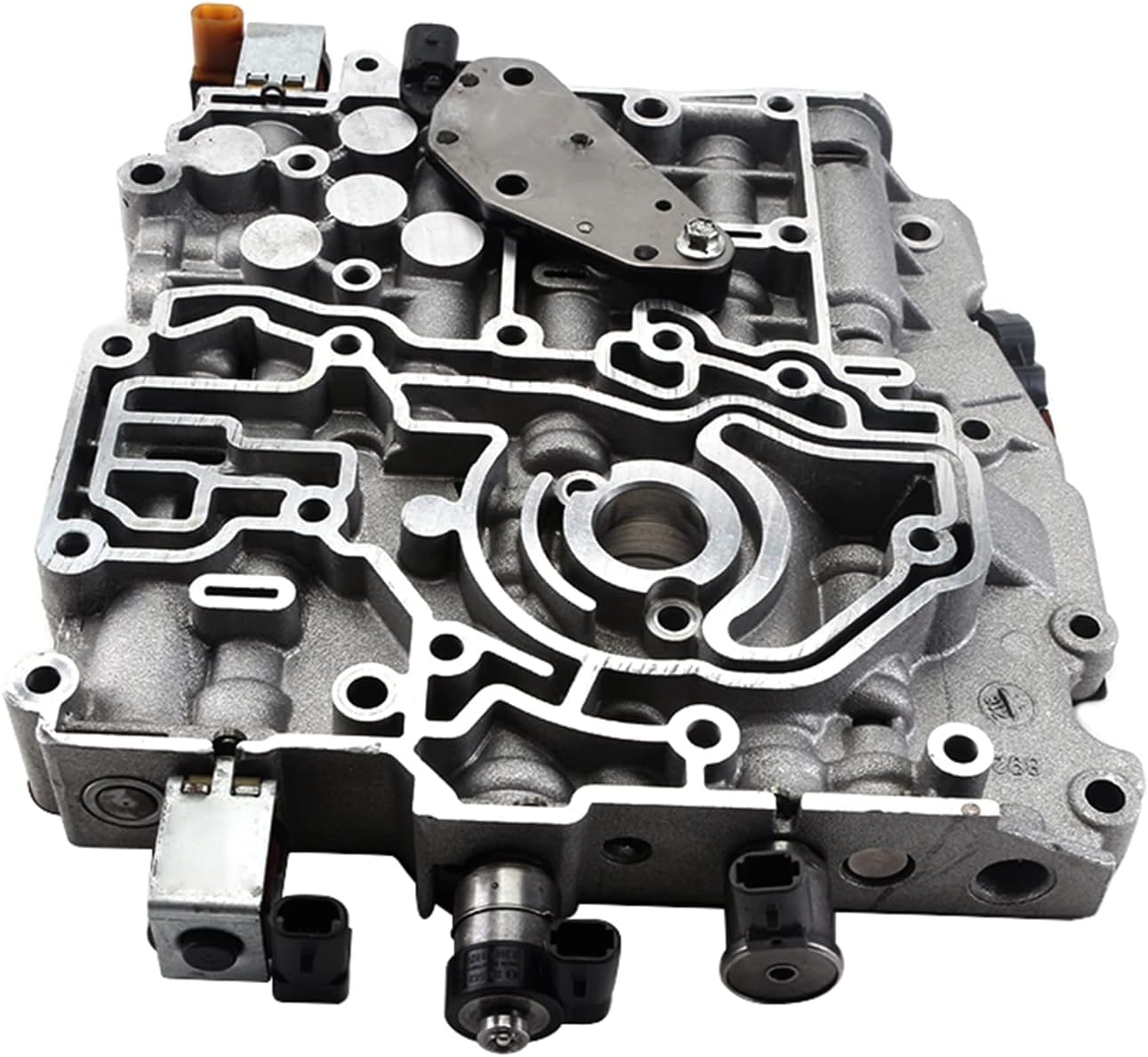
- The TCC regulated apply valve bore in the valve body. Per Sonnax's documentation for its 84754-34K kit, the OE bore wears and lets TCC signal (PWM) oil and TCC regulated apply oil leak. Apply pressure drops, the converter clutch slips, and the typical symptoms are TCC slip, P0741, and cycling TCC rpm. Sonnax's instructions also say to check the separator plate orifices for contamination on any TCC concern.
The TCC Release Switch: How the PCM Confirms Release
The 4T65E does not just trust slip speed. It also watches release pressure directly. Sonnax technical specialist Gregg Nader explains that on the 4T40-E and 4T65-E, the TCC release switch is part of the transmission fluid pressure (TFP) switch assembly mounted on the valve body. It is a normally closed switch that opens at about 20 psi in the TCC release circuit. With the engine off, or with the TCC applied (release circuit exhausted), the switch is closed. With the engine running and the clutch released, release pressure holds it open.
That gives the PCM two independent opinions about the clutch: what slip speed says and what the release switch says. Most of the useful diagnosis on this unit comes from noticing when those two opinions disagree.
How the PCM Grades Lockup: P0741, P0742 and P1887
Nader's Sonnax article lists the set conditions and the known causes for each converter code on this family. Calibrations vary by year and engine, so treat the thresholds as representative rather than universal.
| Code | What the PCM sees | Documented causes |
|---|---|---|
| P0741 TCC stuck off | High converter slip with TCC commanded on. Listed trigger: duty cycle above 50% and slip above 180 rpm for 7 seconds, occurring twice in one ignition cycle. | Worn TCC valve bores, damaged or worn pump bearing seal, defective TCC PWM or apply solenoid, restricted separator plate solenoid feed orifice, defective converter, PCM reprogram, channel plate sleeve or turbine shaft sealing ring damage. |
| P0742 TCC stuck on | PCM releases the TCC, but the release switch reports no release pressure. | Defective TFP assembly, defective TCC PWM solenoid, intermittent short to ground in the switch signal circuit, or line pressure low enough to restrict converter charge oil. |
| P1887 TCC release switch | TCC commanded on and slip shows it applied, but the switch says it is not. | Intermittent open in the signal circuit (fatigued wires, poor terminals, defective TFP), or residual release pressure from cross leaks at the pump bearing seal, turbine shaft or inside the converter. |
The P1887 line is the one that saves people money. Nader notes a normally working converter clutch can still set P1887 if internal cross leaks leave enough residual release pressure to hold the switch open. That is a sealing problem in the pump and turbine shaft area, not a bad converter.
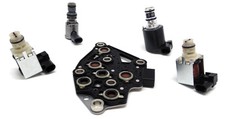
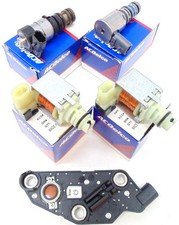
4T65E TCC Solenoid, 1997-2002
If the electrical checks and the duty-cycle data point at the solenoid itself, this is the direct replacement for earlier units. Match the build year before you order.
View the 4T65E TCC solenoid →Reading Lockup on the Scan Tool
Get the fluid to real operating temperature first. GM's owner manual for 4T65E-equipped cars like the 2008 Impala defines normal operating temperature as 180°F to 200°F (82°C to 93°C), which takes about 15 miles of driving when it is above 50°F outside. Lockup data taken cold is not worth much.
Then road test at a steady cruise with the PIDs above graphed together, plus TFT, vehicle speed and throttle position. Here is how to sort what you see:
- Enable says Yes, duty climbs, slip drops and stays down. Lockup is working. If there is still a complaint, look elsewhere.
- Enable says Yes, duty climbs, slip never drops. Apply pressure is not reaching the piston, or the clutch cannot hold it. Check the solenoid electrically, then the regulated apply valve bore, AFL bore, separator plate orifices and pump/turbine shaft sealing, in that order of cost.
- Duty holds steady, slip cycles up and down. Classic leak signature. Sonnax lists cycling TCC rpm as a symptom of regulated apply bore wear.
- Slip says applied, release switch says released. That is the P1887 pattern. Check the switch circuit and TFP first, then think cross leak.
- Shudder during apply. Confirm it is really the converter. Aaron Golas in GEARS Magazine notes that a shudder at 35-45 mph in third or fourth is a strong lockup candidate, but you should graph commanded versus actual TCC slip with VSS, TPS and load and check Mode 6 misfire counts per cylinder before blaming the converter.
When Too Much Pressure Is the Problem
Low apply pressure gets most of the attention, but the 4T65E is also known for killing converter pistons with too much. Warnke's Sonnax article describes over-pressurization of the TCC piston during apply, with damage starting at the outer edge of the lining and progressing to piston failure. The ground-off material collects at the return cooler checkball seat. Symptoms he lists include transmission noise, no movement as the filter plugs, harsh TCC apply, stall on engagement and coastdown shudder. Sonnax's answers in that article are its 84754-30K boost valve and sleeve kit for the line-pressure side, the 84754-34K TCC regulated apply valve kit, and an 84757-01K TCC relief valve that limits how far apply pressure can climb past what the piston material can take.
The takeaway for a rebuild: if you are replacing a converter with a scorched or dished piston, find out why it got that way. Putting a new converter behind the same worn valves just repeats the failure on the customer's dime.
Check the Fluid Before You Condemn Anything
Low fluid starves every circuit in the chain above, and it costs nothing to rule out. GM's 2008 Impala owner manual specifies DEXRON-VI and lists the automatic transaxle capacity at 7.4 qt (7.0 L), with a footnote that more may be needed when the converter is drained or replaced. Check it hot, on level ground, engine running, using the manual's procedure, and read the lower level on the stick. A drain-and-fill only replaces part of that volume, so do not expect a fluid service to cure a worn bore.
Working Order for a Lockup Complaint
- Pull every stored and pending code. P0741, P0742 and P1887 point to different halves of the system, and a P1811 alongside P0741 points upstream at line pressure.
- Verify fluid level and condition hot. DEXRON-VI, correct level, no burnt smell or heavy debris.
- Road test with TCC enable, duty cycle, slip, TFT and release switch state graphed. Decide which pattern you have before you touch a wrench.
- Check the TCC PWM solenoid and its circuit electrically against a known-good part of the same number.
- Inspect the TCC regulated apply valve bore, the AFL bore and the separator plate orifices. These are where most slip codes live on a unit that still has a healthy converter.
- If P1887 or unexplained release pressure, inspect pump bearing seal, channel plate sleeve and turbine shaft sealing rings for cross leaks.
- Condemn the converter last, and only after the pressure supply has been proven good.
Shop 4T65E TCC solenoids, valve bodies, pumps and full rebuild kits — shipped fast from the USA.
Shop 4T65E parts →FAQ
Does a 4T65E torque converter clutch lock up completely?
Not always. GM's EC3-style strategy, which Sonnax says the 4T65-E uses a variation of, often holds a small controlled slip at light-throttle cruise and applies fully under higher torque or speed. A little slip on the scan tool can be normal. The problem is slip that will not come down when the PCM raises the TCC duty cycle, or slip that cycles while the command holds steady.
What is the TCC release switch on a 4T65E?
It is part of the transmission fluid pressure (TFP) switch assembly on the valve body. Per Sonnax, it is normally closed and opens at about 20 psi of TCC release pressure, so it reads closed with the engine off or the clutch applied and open when the engine runs with the clutch released. The PCM compares it against slip speed to confirm release.
What sets P0741 on a 4T65E?
Sonnax documents the trigger as TCC duty cycle above 50 percent with converter slip above 180 rpm for 7 seconds, occurring twice in one ignition cycle. Calibrations vary by year and engine. Documented causes include worn TCC valve bores, a worn pump bearing seal, a bad TCC PWM solenoid, a restricted separator plate orifice and the converter itself.
Should I replace the torque converter for a 4T65E lockup code?
Only after the pressure supply is proven good. Most slip codes on a unit with a healthy converter trace to bore wear in the TCC regulated apply valve or the AFL valve, contaminated separator plate orifices, or sealing problems at the pump and turbine shaft. A new converter behind worn valves usually fails the same way.
Shop the 4T65E TCC solenoid at CoreTransmissionParts →
Related 4T65E guides
Sources
- Gregg Nader, Sonnax — "Beyond 1870: GM Converter Codes P0741, P0742 and 1887," September 15, 2003. Backs the 4T40-E/4T65-E TCC release switch being part of the TFP assembly, normally closed and opening at about 20 psi of release pressure; the P0741 trigger of duty cycle above 50% with slip above 180 rpm for 7 seconds, twice per ignition cycle; and the documented causes for P0741, P0742 and P1887, including residual release pressure from cross leaks. sonnax.com
- Ed Lee, Sonnax — "Upgrading the Flat TCC Pistons for the 4L30-E & 4T65-E," October 24, 2010. Backs the 4T65-E apply/release strategy as an ECCC (EC3) variation, converter oil releasing the clutch with line pressure clamping it after apply, the flat piston lacking an outer-diameter lip and deflecting, and the 258mm billet piston not fitting the 245mm 4T65-E. sonnax.com
- Bob Warnke, Sonnax — "Troubleshooting the 4T65-E: A Matter of Interpretation." Backs the pressure regulator to AFL to EPC chain, line pressure through the TCC regulator valve to the TCC piston, TCC piston over-pressurization with debris at the return cooler checkball seat, the symptom list, and Sonnax parts 84754-30K, 84754-34K and 84757-01K. sonnax.com
- Sonnax — "GM 4T65-E Channel Plate Common Problems & Solutions." Backs the AFL valve limiting line pressure to 115 psi for the solenoids and AFL bore wear causing low line rise, TCC slip and P0741. sonnax.com
- Sonnax — TCC Regulated Apply Valve Kit 84754-34K. Backs regulated apply bore wear leaking TCC signal (PWM) and regulated apply oil, the TCC slip / P0741 / cycling TCC rpm symptom set, and checking separator plate orifices on TCC concerns. sonnax.com
- Wayne Colonna, MOTOR — "Slip-Sliding Away: Deciphering GM Transmission DTC P1870," June 2006. Backs GM PWM TCC control (slip proportional to duty cycle), the 32 Hz fixed frequency, the TCC enable / duty cycle / slip rpm PIDs, and the 4L60-E EC3 controlled-slip values of 20-40 rpm and below 10 rpm after reflash. motor.com (PDF)
- General Motors — 2008 Chevrolet Impala Owner Manual. Backs DEXRON-VI, the 7.4 qt (7.0 L) capacity, and the 180-200°F operating temperature and level-check procedure. assets.gm.com (PDF)
- Aaron Golas, GEARS Magazine (ATRA) — "Shudder Diagnosis." Backs the 35-45 mph third/fourth gear lockup-shudder window and graphing commanded versus actual slip with Mode 6 misfire checks. gearsmagazine.com