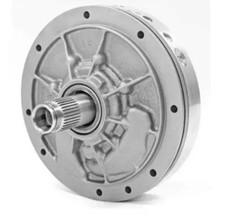
"It's making a noise" covers two completely different failure categories on a Ford 5R110W, and treating them as one problem wastes time and parts. A whine is continuous and tracks with engine speed, throttle, or line pressure -- it's almost always a hydraulic or gear-mesh issue, led by the front pump. A clunk is a single, momentary thump tied to a specific event -- a shift, an engagement into gear, or a transition into Reverse -- and it's almost always a mechanical clearance problem somewhere in the rear planet, the overrunning clutch (OWC), or the hardware that holds a clutch pack in place. This guide walks through how to tell them apart in the truck, then what each one is actually doing mechanically, with the real specs and part numbers behind both.
Step One: Does It Change With Load, or With a Shift?
Before touching a wrench, drive the truck and take notes on exactly when the noise happens. A whine that rises and falls with engine RPM, gets louder under load (towing, pulling a grade), or changes pitch when the torque converter clutch locks up is a continuous, speed-and-pressure-linked noise -- that's the signature of a hydraulic or gear-mesh problem, and the pump is the first suspect. A clunk that happens once, at a specific moment -- the 1-2 shift, the initial engagement into Drive or Reverse, or a coast-to-drive transition -- is an event-linked noise, and that's the signature of a mechanical clearance or retaining-hardware problem rather than anything hydraulic. Mixing these up leads to the classic mistake of replacing a pump for a noise the pump never made.
Whine: Pump Wear and Line Pressure
TransGo's technical bulletin for the 5R110W pump gives a concrete baseline to check a whine against: a healthy, stock-programmed unit should read roughly 150-170 psi at light-load cruise, 200-235 psi on hard throttle upshifts, with brief spikes to around 280 psi on full-throttle starts. A whine or growl from the front of the case that comes with pressure sitting well under those numbers, or bouncing instead of tracking throttle input cleanly, points at internal pump wear rather than a cosmetic noise you can ignore. The bulletin lists oil starvation, a bad electrical ground arcing through the case, tight converter-bushing clearance, and sustained high line pressure from aggressive tuning as the four ways this pump actually fails -- each leaves a different wear pattern on the gears, which is the subject of its own breakdown in our full 5R110W Pump Failure Symptoms guide. For noise diagnosis specifically, the takeaway is simple: a mechanical gauge on a road test, read against those stock figures, turns "it sounds off" into a number you can act on.
One thing worth ruling out before you assume it's internal wear: fluid level and condition. Low fluid or badly aerated ATF can produce a whine that disappears the moment the level and condition are corrected, and it costs nothing to check first. Make sure the right fluid is in it, too: Ford's ATF chart lists the 5R110 TorqShift by model year and notes that Ford authorizes back-servicing these units with MERCON LV for complete refill and top-off, so a pan topped up with the wrong fluid from the parts-store shelf is worth noting before you blame the pump.
Clunk: Rear-Planet / Overrunning-Clutch (OWC) Endplay
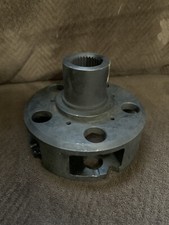
The most commonly overlooked clunk source on this transmission is endplay in the rear planet and overrunning clutch assembly. Transmission Digest's design-history writeup on the 5R110W notes that starting in late 2008, Ford began permanently attaching the OWC to the rear planet, which eliminated the planet thrust washers and let the factory save labor and material cost -- but it also means the planet can no longer "float" the way the original design allowed. The article lays out the actual field check: drop the rear ring gear and thrust bearing into the case, set the OWC/planet assembly into position, install the retaining ring, then use snap-ring pliers to move the ring gear up and down and measure total travel. That travel should be well over 1/16 inch. If it isn't, the stack-up from the back of the case through the sun gear, thrust bearings, and front planet doesn't have enough clearance, and the components bind and release abruptly on engagement instead of transitioning smoothly -- which is exactly what a clunk on a shift or initial engagement feels and sounds like.
This is also a part-sourcing problem, not just a diagnostic one. The rear-planet/OWC assembly is available separately from Ford without buying the full retrofit package: part number 9C3Z-7D006B for five-clutch-pack applications and 9C3Z-7D006AB for six-clutch-pack applications. Before installing either one, the endplay check above has to pass -- a new assembly dropped in without verifying that 1/16-inch-plus travel just reproduces the same clunk with new parts.
Clunk: A Low/Reverse Snap Ring That's Walking Out
The second mechanical clunk source is specific to engagement into Reverse. Sonnax's technical notes on the 5R110W low/reverse retaining ring describe the failure mechanism directly: the low/reverse pressure plate moves radially inside the case every time the transmission is put in Reverse, and the OEM retaining ring isn't stiff enough to resist that movement indefinitely. Over time it walks out of its case groove. Before it fails outright -- which shows up as reverse slip, no reverse, or no manual first -- that shifting ring and plate can produce an audible bang or clunk specifically on engagement into Reverse, since the plate isn't fully seated against a ring that's already started to migrate. Left alone, Sonnax notes the movement goes on to damage the case lugs themselves, which turns a $20-30 part into a case-level repair.
TransGo's shift kit for this transmission (SK 5R110W-A) documents the hydraulic side of the same complaint: a pressure regulator valve that sticks in the exhaust position -- partly from pump casting distortion -- drops line pressure low or to zero, and revving the engine to test engagement can then spike pump pressure hard enough to blow out the low/reverse clutch case lugs on a ring that's already compromised. The kit's fix pairs a two-piece hardened steel regulator valve with a high-tension low/reverse snap ring specifically engineered to resist the radial movement Sonnax describes, rather than just replacing the ring with another OEM-spec part that will eventually walk out the same way.
Shop the 5R110W thrust bearing kit →
A Field Test You Can Run Before You Pull the Pan
- Confirm fluid level, type and condition first. It's free and it rules out the most common cause of a false-positive whine. Per Ford's ATF chart, MERCON LV is authorized for complete refill and top-off on the 5R110 TorqShift.
- Put a mechanical gauge on the line and road test. Compare against TransGo's stock figures (150-170 psi cruise, 200-235 psi upshift, ~280 psi spike). Low or erratic readings point at the pump; steady, in-range readings with a whine present point elsewhere -- a bearing or gear-mesh noise that needs a teardown to pin down.
- Note the exact trigger for a clunk. A clunk only on the 1-2 shift or initial Drive engagement points toward the rear-planet/OWC endplay described above. A clunk specifically on engagement into Reverse, especially if it's gotten more noticeable over time, points toward the low/reverse retaining ring.
- Don't swap the pump to chase a clunk, and don't chase endplay to fix a whine. They are different failures with different fixes, and the field test above is what separates them before the pan comes off.
What It Costs to Ignore Either One
A whine that's really a worn pump doesn't fix itself -- line pressure keeps dropping, clutch packs start slipping under the reduced apply pressure, and a pump job turns into a clutch-pack job if it goes long enough. A clunk that's really out-of-spec OWC/planet endplay or a walking low/reverse ring doesn't fix itself either -- the Transmission Digest and Sonnax material above both describe the same pattern: a mechanical issue that's cheap to correct early becomes an expensive one (NLA retrofit packages, damaged case lugs) once it's left to progress. Treating either noise as background truck noise instead of running the field test above is the expensive path.
FAQ
Is a whine from a 5R110W always the pump?
Not always, but the pump is the most common source and the cheapest to rule out. TransGo's pump bulletin for this unit gives stock line pressure figures of roughly 150-170 psi at light-load cruise, 200-235 psi on hard throttle upshifts, and brief spikes near 280 psi on full-throttle starts. A whine paired with pressure that sits well below those numbers or bounces instead of tracking throttle cleanly points at the pump. A whine with normal, steady pressure readings is more likely a bearing or gear-mesh noise elsewhere in the case, which calls for a teardown rather than a pump swap.
What does a clunk on a 1-2 shift or into Reverse usually mean on a 5R110W?
It usually points to mechanical clearance in the rear planet/overrunning-clutch (OWC) assembly rather than a hydraulic problem. Transmission Digest's design history on this unit describes checking total endplay by moving the rear ring gear up and down with snap-ring pliers once the OWC/planet assembly is installed, and says that travel should be well over 1/16 inch. Out-of-spec endplay lets the stack-up bind and release abruptly on engagement, which is felt and heard as a clunk rather than a smooth shift.
Can a bad low/reverse snap ring cause a clunk before the transmission loses Reverse completely?
Yes, and it is worth checking before the failure becomes a no-reverse complaint. Sonnax's technical notes on this ring describe the low/reverse pressure plate moving radially inside the case during Reverse, which gradually walks the OEM retaining ring out of its groove. As the ring and plate shift position before fully disengaging, that movement can produce a bang or clunk on engagement into Reverse, and it progresses to case lug damage, reverse slip, and eventually no reverse and no manual first if it is not caught.
Do I need to pull the transmission to diagnose a 5R110W noise, or can I do it in the truck?
Most of the triage happens without pulling the unit. Checking fluid level and condition, reading line pressure with a mechanical gauge against TransGo's stock figures, and noting exactly which gear, shift, or load condition brings on the noise will usually separate a pump/pressure problem from a mechanical clunk. Confirming the actual cause -- gear wear inside the pump, rear-planet/OWC endplay, or a walked-out low/reverse ring -- requires opening the case, since all three can produce noise that sounds similar from the driver's seat.
Related 5R110W guides
Sources
- TransGo — 5R1-PMP-ALIGN pump alignment and failure-analysis bulletin (2018). Backs the stock line pressure figures used throughout this article (150-170 psi cruise, 200-235 psi upshift, ~280 psi spike) and the four documented 5R110W pump failure mechanisms (electrical ground arcing, oil starvation, tight converter-bushing clearance, sustained high line pressure) referenced in the whine section. transgo.com (PDF)
- Transmission Digest — "5R110W Upgrades," Mike Riley, December 1, 2013. Backs the late-2008 change attaching the OWC to the rear planet, the loss of planet "float," the rear-ring-gear endplay measurement procedure and the 1/16-inch-plus travel spec, and the rear-planet/OWC Ford part numbers (9C3Z-7D006B, 9C3Z-7D006AB) cited in the clunk section. transmissiondigest.com
- Sonnax — Low/Reverse Retaining Ring technical product page (part 36885, Ford 5R110W). Backs the failure mechanism of the low/reverse pressure plate moving radially in Reverse and walking the OEM retaining ring out of its groove, and the resulting case-lug-damage and reverse-slip progression described in the clunk section. sonnax.com
- TransGo — SK 5R110W-A shift kit product documentation. Backs the pressure-regulator-valve-sticking mechanism that drops line pressure and then spikes it hard enough to blow out low/reverse case lugs, and the kit's hardened regulator valve and high-tension low/reverse snap ring fix referenced alongside the Sonnax ring failure. transgo.com
- Ford Customer Service Division — Automatic Transmission Fluid Chart (Motorcraft). Backs the 5R110 TorqShift model-year fluid listing and Note 1, Ford's authorization to back-service these transmissions with MERCON LV for complete refill and top-off, cited in the fluid-check steps. fcsdchemicalsandlubricants.com (PDF)