A 62TE that sits in Drive for a second or two before it grabs is telling you something specific, and it is rarely a mystery once you know which clutches it is waiting on. The customer usually describes it one of three ways: the van rolls back a little on a driveway before it catches, the shift from Park to Reverse "clunks late," or the whole thing is fine all day but lazy on the first start of the morning. Each version points at a different circuit.
The trap is treating delayed engagement as one symptom with one fix. On this transaxle a late Drive, a late Reverse and a late both are three different diagnoses, and you can separate them in the driveway before a pan bolt comes out. The facts below come from Chrysler's 62TE service information, FCA bulletin 21-046-15, ATRA's 62TE technical material, Sonnax and Transmission Digest.
What Has to Apply for Drive and Reverse
You cannot diagnose an engagement without knowing what is engaging. The 62TE is a 41TE-style four-speed main box with an underdrive compounder behind it, and Chrysler's elements-applied chart spells out exactly which clutches carry each range:
- First gear (the Drive engagement), 4.127:1: underdrive (UD) clutch and low/reverse (L/R) clutch in the main box, with the compounder overrunning clutch holding. The low clutch (LC) is applied in coast only.
- Reverse, 3.215:1: reverse (R) clutch and L/R clutch in the main box, plus the low clutch in the compounder. Chrysler's own math: 2.21:1 through the main centerline times 1.45:1 through the compounder.
Put those side by side and the diagnostic logic falls out. L/R is common to both. UD is Drive only. R and LC are Reverse only. So:
- Late in both Drive and Reverse: think supply first (fluid level, filter, pump, line pressure), then the L/R circuit.
- Late in Drive only, Reverse is crisp: the UD circuit. L/R and supply are proven by the good Reverse.
- Late in Reverse only, Drive is crisp: the reverse clutch or the low clutch circuit. L/R is proven by the good Drive.
That one table saves more wasted labor on these units than any tool in the box. It is the same process of elimination Chrysler describes in the road test section: compare the clutch application chart with what the vehicle does in each range, and the element that is common to the failures is your suspect.
Step 1: Set the Fluid Level Correctly, Not Approximately
Most 62TE vans have no conventional dipstick, so the level gets guessed at and guessed wrong. A low unit aerates at the pump inlet, apply pressure sags, and every clutch takes longer to fill. That shows up first as a slow engagement, especially cold, when the oil is thick and the pump is working hardest.
This is not a theoretical cause. FCA bulletin 21-046-15 (July 14, 2015) covers 2015 Grand Caravan and Town and Country units with the 62TE, sales code DG2, where the complaint was harsh shifting under heavy acceleration. The entire published repair was to check the level and correct it with ATF+4, part 05013457AA. If the factory can ship them low, a quick-lube can service them low.
Do it the way the service information says:
- Level ground, parking brake set, engine idling in Park.
- Shift through all ranges several times with the vehicle stationary.
- Warm it up, wait at least two minutes, and check with the engine running using dipstick tool 9336A pushed in until the tip touches the pan (about 424 mm, 16.69 in, of insertion).
- Read the height off the tool, which is marked every 10 mm, and compare it against transmission fluid temperature from the scan tool using Chrysler's level-to-temperature chart.
While the tool is out, look at what is on it. Chrysler is blunt that color and odor do not tell you the condition of ATF+4, which darkens normally. What does matter: a burnt smell together with metal or friction material in the fluid means, in Chrysler's words, a complete recondition is probably required. If that is what you are looking at, stop diagnosing an engagement concern and start pricing a rebuild.
Use ATF+4 only. Full capacities and the fill procedure are in our 62TE fluid type and capacity guide.
Step 2: Find Where the Fluid Is Going
If the unit was low, the next question is why. A Transmission Digest case from Wayne Colonna is the best illustration of why that question matters on this transaxle. A 2016 Dodge Journey came in with delayed forward engagement, fluid pushing out of the vent in Drive only, and a stored P0740. Under the valve body cover the EMCC variable force solenoid (5169313AA) had broken at its mounting bracket and worked partway out of the valve body. It sat right next to the vent, so it was pumping fluid overboard and letting the converter clutch slip. The delayed Drive was simply the result of the low fluid that leak created.
The lesson: a delayed engagement with fluid on the outside of the case is a leak diagnosis first. Check the vent area, the pump seal and gasket, the cooler line connections and the pan rail. Chrysler's converter housing leak procedure says to verify the level, confirm the fluid is really transmission fluid, then find the true source before repairing anything. Topping it off and sending it home only resets the clock.
Step 3: Read the Codes That Actually Describe Slow Fills
The 62TE is not shy about telling you a clutch is taking too long, if you read past the generic codes. From ATRA's 62TE DTC list, the ones that matter for engagement:
- P1770 / P1771, inadequate element volume L/R. The controller measured the L/R clutch needing more oil than it should to apply. This is the most direct engagement code on the unit, and it lines up with late Drive plus late Reverse.
- P273A, inadequate element volume LC, and P273B, inadequate element volume DC. Compounder clutches running out of range. P273A with a late Reverse only is a strong pointer at the low clutch.
- P0944, loss of hydraulic pump prime. A supply problem, not a clutch problem. Level, filter and pump come first.
- P0868, line pressure low, and P0933 through P0935, line pressure sensor range and circuit codes. Confirm the sensor reading is believable before you trust a low pressure value.
- P0841, L/R pressure switch rationality, and P1775 / P1776, solenoid switch valve latched in the TCC or L/R position. These point at the valve body rather than the clutch pack.
No codes does not mean no problem. Element volume codes only set once the clutch has drifted far enough. The earlier warning is in the clutch volume indexes.
Step 4: Pull the Clutch Volume Indexes
Clutch volume index (CVI) is the controller's measurement of how much fluid it took to stroke a clutch. As ATRA explains it, the TCM watches how long the gear ratio takes to change after a shift request, using the input and output speed sensor values, and converts that time into a volume. A worn pack has more piston travel, needs more oil, and takes longer to apply. That is exactly what a delayed engagement feels like from the driver's seat.
ATRA publishes these 62TE clutch volume ranges:
- UD: 26 to 74
- 2/4: 16 to 54
- OD: 42 to 143
- L/R: 16 to 63
- LC: 16 to 25
- DC: 26 to 34
Read them against the elimination table above. Late in both ranges with L/R at or past the top of its window is a worn L/R pack or a leaking L/R feed. Late Drive only with UD high is the underdrive clutch. Late Reverse only with LC out of its narrow 16 to 25 window is the compounder low clutch. Note how tight the LC and DC windows are next to the main box clutches; a compounder clutch that has started to pass shows up here long before the customer feels a slip on the road.
Two cautions from ATRA's update conditions. Most of these values only update above 43 C (110 F) fluid temperature, and L/R updates on a 2-1 or 3-1 coast downshift. A cold read or a stale value is not a good value. Road test the vehicle warm, make the downshifts, then read them. If CVIs are in range and the delay persists, the clutches are probably fine and the oil is not getting to them fast enough, which moves you to the valve body.
Step 5: The Valve Body Bores That Cause It
Two wear points in the 62TE valve body cause delayed engagement directly, and both are well documented.
The L/R and low clutch switch valves
Sonnax's Chris Leach describes the 62TE low/reverse switch valve as a one-way valve for the L/R clutch in Reverse and Drive, with the low clutch switch valve doing the same job for the low clutch. The valve is heavily side-loaded because its diameter is too close to its length, so it wears its bore. When it does, oil leaks past the one-way valve and exhausts through the manual valve. The result, per Sonnax: low apply pressure, burnt clutches, and delayed or no Reverse, 1st and 2nd.
That is the mechanism behind a lot of repeat L/R failures. A new L/R pack goes in, the worn bore keeps bleeding apply oil, and the new clutch burns the same way. Sonnax recommends vacuum testing the bores, with 18 in-Hg as the pass line and anything below it worn. They also note that if port 1 fails, port 2 almost always does too, so plan on replacing both OE valves. Their fixes for the 62TE are the drop-in L/R switch checkball sleeve kit 92835-43K and the oversized 92835-47K for badly worn bores.
The solenoid switch valve
Chrysler's service information explains that the solenoid switch valve takes line pressure from the LR/CC solenoid and sends it either to the L/R clutch or to the converter clutch circuit. That makes it a shared valve between engagement and lockup. Sonnax groups the 62TE with the 45RFE family and notes the switch valve and its end plugs wear the bore as they stroke, leading to cross-leakage, plugs hanging up, failsafe, TCC concerns and codes including 841, 868, 1775 and 1776. A late engagement combined with lockup complaints or those codes is a switch valve bore until proven otherwise. Measure the valve before ordering tooling: Sonnax notes the 45RFE-family units moved from a 0.420 in to a 0.453 in large spool around the 2010 model year.
If the casting is worn in both places, a replacement valve body is often cheaper than the labor to ream and sleeve it on a van.
Step 6: If It Is Coming Apart Anyway
When CVIs are out of range, the fluid shows friction material, or the valve body has already been corrected and the delay is still there, the fix is inside the case. With the unit on the bench:
- Air check every clutch at 30 psi with test plate 9741 in place of the valve body, as Chrysler lays out. OD, R, 2/4, L/R, DC and LC should each give an audible thud and release cleanly. UD cannot be seen, so check it by function: with air on UD, the input shaft should not turn by hand; release the air and it should.
- Inspect the pump. Chrysler's clearances are 0.0035 to 0.0079 in outer gear to pocket and 0.0008 to 0.0018 in gear end face to reaction shaft support. A worn pump starves every circuit and shows up first as slow engagement cold. Pump-to-case bolts are 30 N·m (265 in-lb).
- Replace the bonded pistons with the frictions. A cracked or leaking piston seal gives the same late apply as worn frictions, and it will not show until the unit is back in the vehicle.
- Replace the cooler bypass valve. Chrysler says to replace it, and never clean or reuse it, after any transaxle failure.
- Run the Quick Learn. Chrysler requires the TCM/PCM Quick Learn after any overhaul involving clutch or seal replacement. Skip it and the controller is still using clutch volumes from the worn unit, and the first few hundred engagements will be wrong.
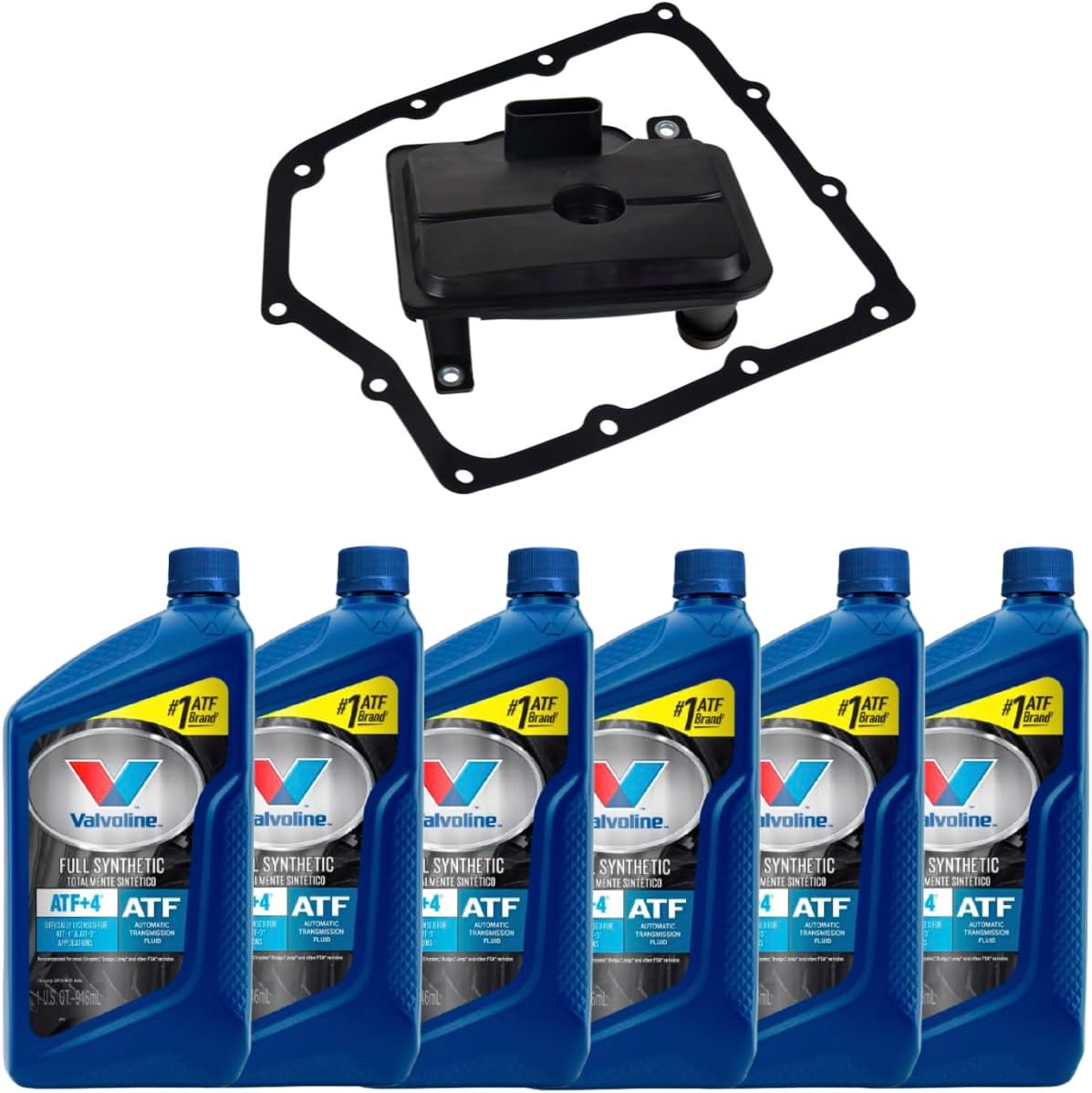
The filter job is 40 in-lb on the filter nuts and 50 in-lb on the pan bolts with Mopar ATF RTV, followed by four quarts of ATF+4 and a final level set with 9336A at operating temperature. Our 62TE filter and pan service guide walks through it.
Quick Reference: Symptom to Suspect
- Late Drive and late Reverse, worse cold: fluid level, filter, pump, then L/R clutch and L/R switch valve bore.
- Late Drive only: UD clutch and its feed. Check UD CVI.
- Late Reverse only: reverse clutch or compounder low clutch. Check LC CVI; see our 62TE no reverse guide.
- Late engagement plus lockup complaints or P1775/P1776: solenoid switch valve bore.
- Late engagement plus fluid at the vent: find the leak first, including a loose or broken EMCC solenoid.
Shop the part for this fix
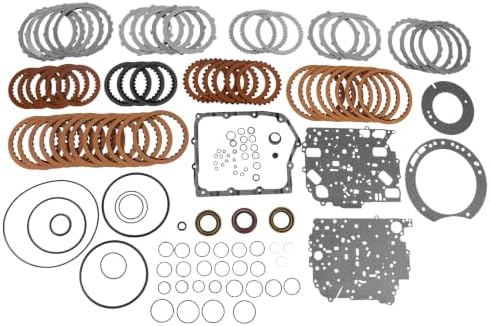
Burnt L/R or low clutch from a slow, leaking apply? This 62TE master level 2 rebuild kit includes the frictions, steels and bonded pistons that restore the apply.
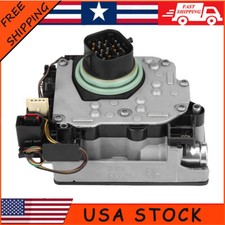
View the 62TE rebuild kit →Valve body side instead? See the 62TE solenoid pack or all 62TE parts.
Need parts for this job?
62TE valve bodies, pumps, solenoid packs, ATF+4 service kits and master rebuild kits with pistons, shipped from the USA.
Shop 62TE parts →FAQ
Why does my 62TE take a few seconds to go into Drive?
The most common causes are low fluid, a worn low/reverse (L/R) clutch or a worn L/R switch valve bore in the valve body. Drive uses the underdrive and L/R clutches, so if Reverse is also slow, suspect fluid supply or the L/R circuit; if only Drive is slow, suspect the underdrive clutch.
Can low fluid cause delayed engagement on a 62TE?
Yes. Low fluid aerates the pump feed and drops apply pressure, so every clutch fills slower. FCA bulletin 21-046-15 was issued because some 2015 Grand Caravan and Town and Country 62TE units were under-filled, and the only repair was setting the level correctly with ATF+4 using tool 9336A against fluid temperature.
What 62TE codes point to a delayed engagement?
P1770 and P1771 (inadequate element volume L/R) are the most direct. P273A (low clutch) and P273B (direct clutch) flag the compounder clutches, P0944 flags loss of pump prime, and P0868 flags low line pressure. With no codes, check the clutch volume indexes on a scan tool.
What are normal 62TE clutch volume index values?
ATRA lists UD 26 to 74, 2/4 16 to 54, OD 42 to 143, L/R 16 to 63, LC 16 to 25 and DC 26 to 34. Read them warm, since most only update above 110 F, and make sure they have updated recently before trusting them.
Do I need to do a Quick Learn after fixing a 62TE?
Chrysler requires the TCM/PCM Quick Learn after any overhaul that involves clutch or seal replacement. Without it the controller keeps using the old clutch volumes and engagements and shifts will be off until it relearns.
Sources
- Chrysler LLC — 2009 Automatic Transmission 62TE Service Information (Dodge Journey). Backs the elements-applied chart (UD and L/R in first, R, L/R and LC in reverse, 4.127 and 3.215 ratios, 2.21 x 1.45 reverse math), the road test elimination method, the 9336A fluid level procedure and 424 mm insertion, ATF+4 color and odor guidance, the solenoid switch valve function, 30 psi air checks with test plate 9741, pump clearances and bolt torque, filter and pan torques, cooler bypass valve replacement and the Quick Learn requirement. documents.cdn.ifixit.com (PDF)
- FCA US LLC — Service Bulletin 21-046-15, "Low Transmission Fluid Level," July 14, 2015 (via NHTSA). Backs the under-filled 2015 Grand Caravan and Town and Country 62TE (DG2) units and the check-and-correct-level repair with ATF+4 part 05013457AA. static.nhtsa.gov (PDF)
- ATRA — 62TE DTC list (2008 technical manual, Chrysler section). Backs P1770/P1771 inadequate element volume L/R, P273A/P273B LC and DC element volume, P0944 loss of pump prime, P0868 line pressure low, P0933-P0935 line pressure sensor, P0841 and P1775/P1776 switch valve codes. atracom.blob.core.windows.net (PDF)
- ATRA — Chrysler Clutch Volume Indexes (2012 technical manual). Backs how the TCM calculates CVIs from speed sensor ratio change time, the preliminary 62TE clutch volume ranges, and the 110 F / coast downshift update conditions. atracom.blob.core.windows.net (PDF)
- Sonnax — "Diagnosing 62TE, 68RFE Low/Reverse Switch Valve Issues," Chris Leach, 2025. Backs the L/R and low clutch switch valves acting as one-way valves in Reverse and Drive, bore wear causing delayed or no Reverse, 1st and 2nd, the 18 in-Hg vacuum test pass line, and kits 92835-43K and 92835-47K. sonnax.com
- Sonnax — "All in the Family: Identification & Repair of Chrysler Solenoid Switch Valve Problems," Tory Royce. Backs the 62TE in the 45RFE valve body family, solenoid switch valve bore wear symptoms and codes, and the 0.420 in to 0.453 in spool change around 2010. sonnax.com
- Transmission Digest — "62TE Delayed Forward Engagement," Wayne Colonna, April 28, 2023. Backs the 2016 Journey case: delayed Drive and fluid from the vent caused by a broken EMCC-VFS solenoid (5169313AA), with P0740. transmissiondigest.com