P0868 on a 66RFE reads like a sensor code, and that is why so many of them get a line pressure sensor thrown at them and come back two weeks later with the same light on. It is not a sensor code. It is the controller telling you it asked the hydraulics for a pressure, gave the pressure control solenoid everything it had, and still came up short. Understanding that one sentence is most of the diagnosis.
This is the walkthrough I use on the gas-HEMI 66RFE in Ram 2500 and 3500 trucks. If you are working the Cummins-backed unit instead, our 68RFE P0868 guide covers the diesel side, including what an aftermarket tune does to the desired-pressure target. The control logic is shared across the RFE family, so most of what follows applies to both, but the scan numbers below come from a gas truck, which is what you will be comparing against.
Related reading: 66RFE pressure control solenoid symptoms and 66RFE P0944 loss of pump prime.
What P0868 Actually Tests
ATRA's GEARS magazine published the RFE pressure-code set conditions in plain terms. P0868, Line Pressure Low, is monitored continuously while driving in all forward gears, and it sets if actual line pressure is more than 10 psi below desired line pressure [1]. That is the whole test: two numbers, compared, on a moving truck.
The useful part is how the controller gets those two numbers. Line pressure on the RFE is set by a variable force pressure control solenoid (PCS) built into the solenoid pack. It feeds oil to the end of the pressure regulator valve, and the duty cycle runs backwards from what most people expect: at its lowest duty cycle (5 percent, solenoid off) pressure rises to maximum, and at its highest (65 percent, solenoid on) pressure drops to minimum [1]. A line pressure sensor on a 5-volt reference reports back, and its signal should always sit between 0.35 and 4.75 volts. Outside that window the controller sets P0934 or P0935 instead [1].
Sonnax describes the RFE as a full-range transducer with real-time adaptive, closed-loop pressure control, unique to these Chrysler units [3]. Closed loop is the key. When actual pressure lags desired, the controller drops PCS duty cycle to ask for more. Sonnax spells out where that ends: P0868 sets when PCS duty cycle tries to go past its 5 percent operational low limit [3]. In other words, by the time you see this code, the controller has already commanded everything the solenoid can give and pressure still did not arrive.
Two practical conclusions fall out of that:
- A clean P0868 with no P0934 or P0935 means the controller believes the sensor circuit is electrically healthy. The shortfall is real until you prove the sensor is lying.
- A pressure control solenoid that is stuck open drives pressure high, not low. Swapping the PCS for P0868 only makes sense if you have proven it is not regulating.
Know What Normal Looks Like on a Gas Truck
You cannot call a reading low without a baseline. The GEARS article captured scan data from a healthy 2007 Ram 5.7L with a 545RFE, the same case and control system the 66RFE grew out of, behind the same family of HEMI [1]:
| Condition | Desired | Actual | PCS duty cycle |
|---|---|---|---|
| Neutral, idle | 124.97 psi | 128.97 psi | 19.03% |
| Drive, stopped, idle | 59.98 psi | 62.98 psi | 27.8% |
| 3rd gear, 1,239 rpm output | 119.97 psi | 119.97 psi | 19.73% |
In each case the solenoid voltage and the sensor voltage tracked each other within a few hundredths of a volt (2.363 V against 2.344 V in Neutral) [1]. Sonnax gives the outer limits for the family as 60 psi minimum and 150 to 160 psi maximum at stall [2]. Desired pressure moves around during a drive, and that is normal. What you are looking for is the gap between desired and actual, and where the duty cycle is sitting when the gap opens.
Read the Code Before You Read the Parts Catalog
Put desired line pressure, actual line pressure, PCS duty cycle, and line pressure sensor voltage on one screen and road test it. Recreate the conditions in the freeze frame: gear, temperature, load. Then sort the truck into one of these patterns.
Pattern 1: actual low, duty cycle pinned near 5 percent
The controller is asking for maximum and not getting it. If a mechanical gauge agrees with the sensor, the problem is oil supply or oil loss: fluid level, filter, pump, pressure regulator valve bore, or a circuit leaking downstream. This is the expensive pattern, and it is covered below.
Pattern 2: sensor says low, gauge says fine
Verify the sensor with hardware before you believe it. The OE line pressure adapter, tool No. 8259, installs in the case in place of the line pressure sensor; the sensor and a mechanical gauge then both thread into the tool, so you read actual pressure and the sensor's report at the same moment [5]. If they disagree, you have a sensor or circuit fault and a healthy transmission. Note the reverse case too: Transmission Digest warns that real low line pressure can go unnoticed behind a failed sensor reading normal [5].
Pattern 3: code is stored but live data looks perfect
That is an intermittent, and GEARS is direct about the usual cause: the solder and crimp where the wire meets the terminal pin in the line pressure sensor connector is very often faulty. Light tugging on the wires while watching sensor voltage will usually find it [1]. Record a data movie on the road so you capture the moment the code sets instead of guessing.
Pattern 4: 2016-2017 truck, pressure codes plus a one-gear limp
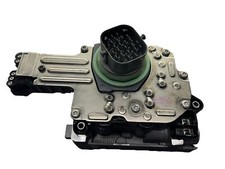
Check for open campaigns before you spend a dime. FCA Customer Satisfaction Notification T15 covers certain 2016-2017 Ram trucks with the 65/66RFE: the solenoid coil terminals were built out of specification, the interference stresses the terminals and can create an intermittent electrical connection, and the truck can be limited to one gear at 30-45 mph with the MIL on. The dealer fix is a replacement solenoid pack, about two hours of work [6]. Since the PCS lives in that pack, an intermittent pack connection is a real path to erratic pressure readings.
The Electrical Cause That Pulls Pressure Down
Chrysler does not set a dedicated circuit code for the PCS line pressure solenoid, which is why its faults show up as pressure codes [2]. Sonnax's Jim Mobley documents the common failure as an open circuit that sends the unit to maximum pressure, 150-160 psi at idle in Park, Neutral and Drive and 250 psi in Reverse. He also notes that the same circuit shorted to ground still shows current flow but produces the opposite: a low-pressure condition [2].
His non-invasive check is a low-current clamp on the PCS ground-control wire, key on, engine running, in Park or Drive, with normal current flow running 0.20 to 1.00 amps [2]. His example is a 2013 Ram 6.7L, so pull the wiring diagram for your VIN to find the right wire and pin on a HEMI truck. If other solenoids work and P0882 (low supply voltage) is not present, the power side is usually fine [2].
One more electrical cause is self-inflicted. Sonnax notes that in rare cases P0868 can set from higher adapted pressures or higher-than-normal system voltage, because extra voltage pushes more current through the PCS and drives duty cycle further toward its floor. Line pressure booster harnesses can do the same thing [3]. If someone has added a pressure booster or there is a charging-system problem, deal with that first.
When the Shortfall Is Hydraulic
Once the gauge confirms pressure really is low and the duty cycle shows the controller asking for more, you are looking for oil that is not being made or oil that is escaping.
- Fluid level and type. The 66RFE takes ATF+4 only, and Ram's procedure sets the level hot, at 170-180 F, on the upper dipstick holes [7]. Low fluid aerates at the pickup and the pump cannot make pressure. Free to check, check it first.
- Filter and pickup seal. If P0868 showed up right after a pan service, look at your own work. A sump filter not fully seated in the pump bore pulls air.
- Pump. Sonnax's 66RFE listing ties its remanufactured pump assembly to both "low pressure" and "pressure regulation codes" [4]. Worn pump gears and pocket clearances show up first when hot and at idle, when the pump turns slowest and the fluid is thinnest.
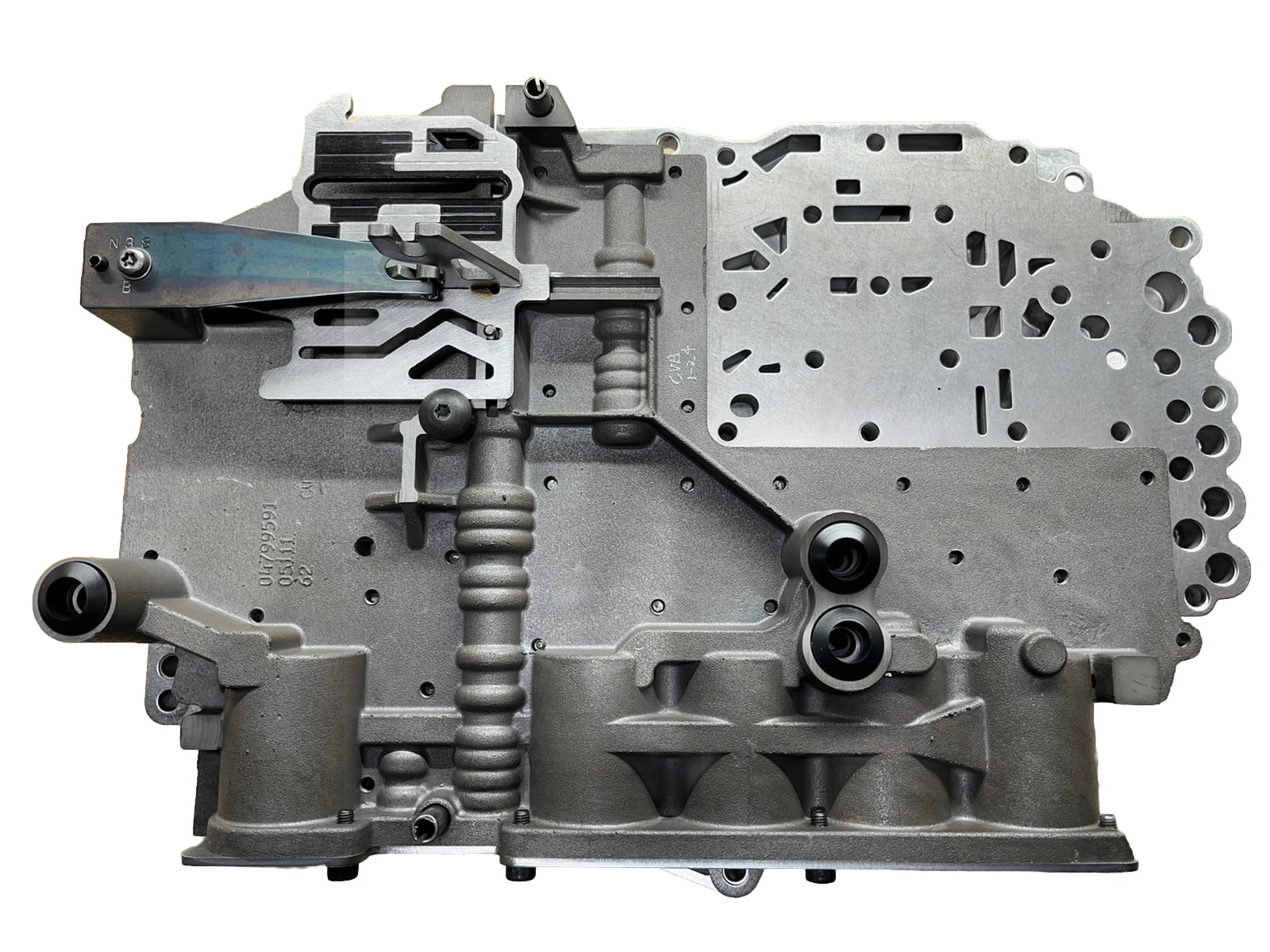
- Pressure regulator valve bore. Sonnax states that excess pressure regulator bore wear on the 45RFE, 545RFE, 65RFE, 66RFE and 68RFE allows critical oil loss that prevents normal line pressure control. Without adequate balance oil the valve sits out of position, and line pressure becomes unstable [8]. The fix is reaming the bore and fitting the oversized 44912-10K valve kit, which requires the F-44912-TL10 tooling [8].
- Solenoid switch valve and downstream leaks. Sonnax's 66RFE page lists code 868 among the codes its oversized solenoid switch valve and plug kits correct, alongside 841, 871, 988, 1775 and 1776 [4]. A worn switch valve bore cross-leaks apply oil, so the pump has to feed a leak before it can build pressure.
Sonnax Oversized Pressure Regulator Valve Kit 44912-10K
If the gauge confirms low pressure and the pump checks out, this is the Sonnax kit for a worn RFE regulator bore. CTP lists it under 68RFE, but Sonnax's part page covers the 66RFE too. Plan on the reamer tooling.
View the 44912-10K kit →Or browse the full RFE-family parts collection.
Why You Do Not Drive on P0868
Low line pressure means low clutch apply force. Transmission Digest's RFE overdrive-clutch write-up lays out the chain: insufficient apply force lets the clutch slip, slip makes heat, and heat burns the clutch [5]. The RFE overdrive pack is built from very thin, single-sided frictions, and they do not tolerate heat [5]. A P0868 that gets cleared and ignored tends to turn into a burned overdrive pack and a slip code a few thousand miles later. If you are already seeing flare on the 4-5 or 5-6 shifts, read our 66RFE slipping guide before you button anything back up.
The Order I Work It In
- Check the VIN for open campaigns (T15 on 2016-2017 trucks) [6].
- Pull every code. P0934/P0935 alongside P0868 sends you to the sensor circuit first [1]. P0882 sends you to supply voltage [2].
- Set fluid level hot with ATF+4 and look at the fluid [7].
- Road test with desired, actual, duty cycle and sensor volts on screen. Compare against the baseline table.
- Install tool 8259 with a gauge and confirm the sensor tells the truth [5].
- If the sensor is honest and pressure is low with duty cycle at its floor, pull the pan: filter seat, debris, then pump and valve body bores [4][8].
- If the pressure is erratic rather than just low, wiggle-test the sensor connector and clamp the PCS ground circuit [1][2].
Preventing It
Most hydraulic P0868s on these trucks come from heat and wear. Keep the fluid ATF+4 and keep it full, service it on Ram's severe schedule if the truck tows or plows, and fix a pan leak before it becomes a low-level problem. When the unit is apart for any reason, check the pressure regulator and switch valve bores. A worn bore is cheap to fix on the bench and costs you a clutch pack once it is back in the truck.
Shop 66RFE pressure control solenoids, pumps, remanufactured valve bodies, and rebuild kits, shipped fast from the USA.
Shop 66RFE parts →FAQ
Is P0868 on a 66RFE a bad line pressure sensor?
Usually not. A sensor circuit fault sets P0934 or P0935, because the signal leaves its 0.35 to 4.75 volt window. A clean P0868 means the controller trusts the sensor and saw actual pressure more than 10 psi below desired. Confirm with a mechanical gauge on tool 8259 before replacing the sensor.
Will a new pressure control solenoid fix P0868?
Only if the solenoid is proven not to regulate. On the RFE the solenoid at low duty cycle produces maximum pressure, and P0868 sets when the controller is already trying to push duty cycle below its 5 percent floor. If pressure is still low at that point, the pump, the regulator valve bore or a leak is usually the cause, not the solenoid.
What line pressure should a healthy 66RFE show?
GEARS magazine's scan capture from a healthy 5.7L RFE truck showed about 60 psi desired and 63 psi actual in Drive at idle, and about 125 to 129 psi in Neutral. Sonnax gives the family range as 60 psi minimum and 150 to 160 psi maximum at stall. Desired and actual should track each other closely.
Can I keep driving with P0868?
Not for long. Low line pressure means low clutch apply force, which lets clutches slip, build heat and burn. On the RFE the overdrive pack is especially vulnerable, so a P0868 ignored now often turns into a slip code and a rebuild later.
Does a recall cover 66RFE pressure problems?
FCA Customer Satisfaction Notification T15 covers certain 2016-2017 Ram trucks with the 65/66RFE whose solenoid coil terminals were built out of specification. The dealer replaces the solenoid pack at no charge. Check the VIN for an open campaign before paying for parts.
Sources
- ATRA / GEARS Magazine - "Diagnosing Pressure Trouble Codes," David Chalker, August 2017. Backs the P0868 set condition (monitored in all forward gears; actual more than 10 psi below desired), the P0934/P0935 0.35-4.75 V sensor window, PCS duty cycle behavior (5% = maximum pressure, 65% = minimum), the 2007 Ram 5.7L RFE baseline scan data, and faulty solder and crimp joints in the line pressure sensor connector as the common intermittent cause. gearsmagazine.com
- Sonnax - "Diagnosing Chrysler Transmission Max Line Pressure & P0933, P0869, P1745 Codes," Jim Mobley, January 12, 2023. Backs the absence of a dedicated Chrysler PCS circuit code, the open-circuit maximum pressure signature, the statement that a short to ground produces low pressure, the 0.20-1.00 A low-current clamp test, the P0882 supply cross-check, and the 60 psi minimum / 150-160 psi stall range. sonnax.com
- Sonnax - "Achieving a Progressive Pressure Boost in RFEs: Chrysler 45RFE, 545RFE, 65RFE, 66RFE & 68RFE," April 5, 2016. Backs the closed-loop adaptive pressure control design, that P0868 sets when PCS duty cycle tries to exceed the 5% operational low limit, and that higher adapted pressures, higher system voltage or line pressure boosters can trigger it. sonnax.com
- Sonnax - Chrysler 66RFE unit page. Backs the remanufactured pump listed for low pressure and pressure regulation codes, and code 868 among the codes corrected by the oversized solenoid switch valve and plug kits (with 841, 871, 988, 1775, 1776). sonnax.com
- Transmission Digest - "68RFE Overdrive Clutch Failure: What to Check First," Sonnax TASC Force. Backs the OE line pressure adapter tool No. 8259 gauge-plus-sensor verification, the warning that low pressure can hide behind a failed sensor, the low pressure to slip to heat to burned clutch chain, and the thin single-sided overdrive frictions. transmissiondigest.com
- FCA US LLC - Customer Satisfaction Notification T15, Transmission Solenoid Pack. Backs the 2016-2017 Ram 65/66RFE out-of-spec solenoid coil terminals, the intermittent connection, the one-gear 30-45 mph limit with MIL, and the dealer solenoid pack replacement of about two hours. chrysler.com (PDF)
- Stellantis / Mopar - 2018 Ram 1500/2500/3500 Owner's Manual (PDF). Backs ATF+4 only for the gas-engine six-speed and the 170-180 F hot level check. vehicleinfo.mopar.com (PDF)
- Sonnax - Oversized Pressure Regulator Valve Kit 44912-10K. Backs pressure regulator bore wear causing oil loss and loss of line pressure control on the 45RFE, 545RFE, 65RFE, 66RFE and 68RFE, the out-of-position valve from lost balance oil, and the F-44912-TL10 tooling requirement. sonnax.com