
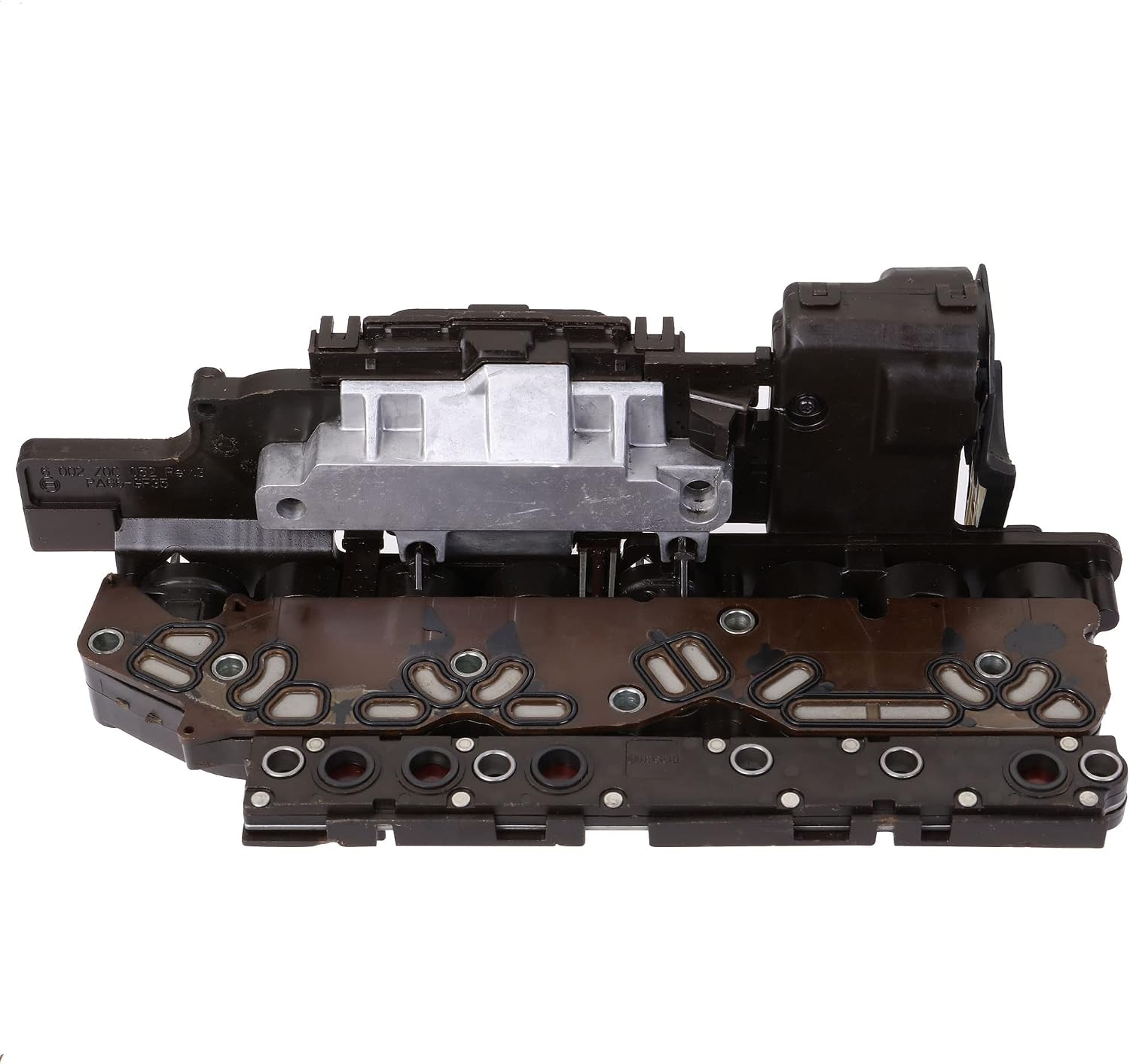
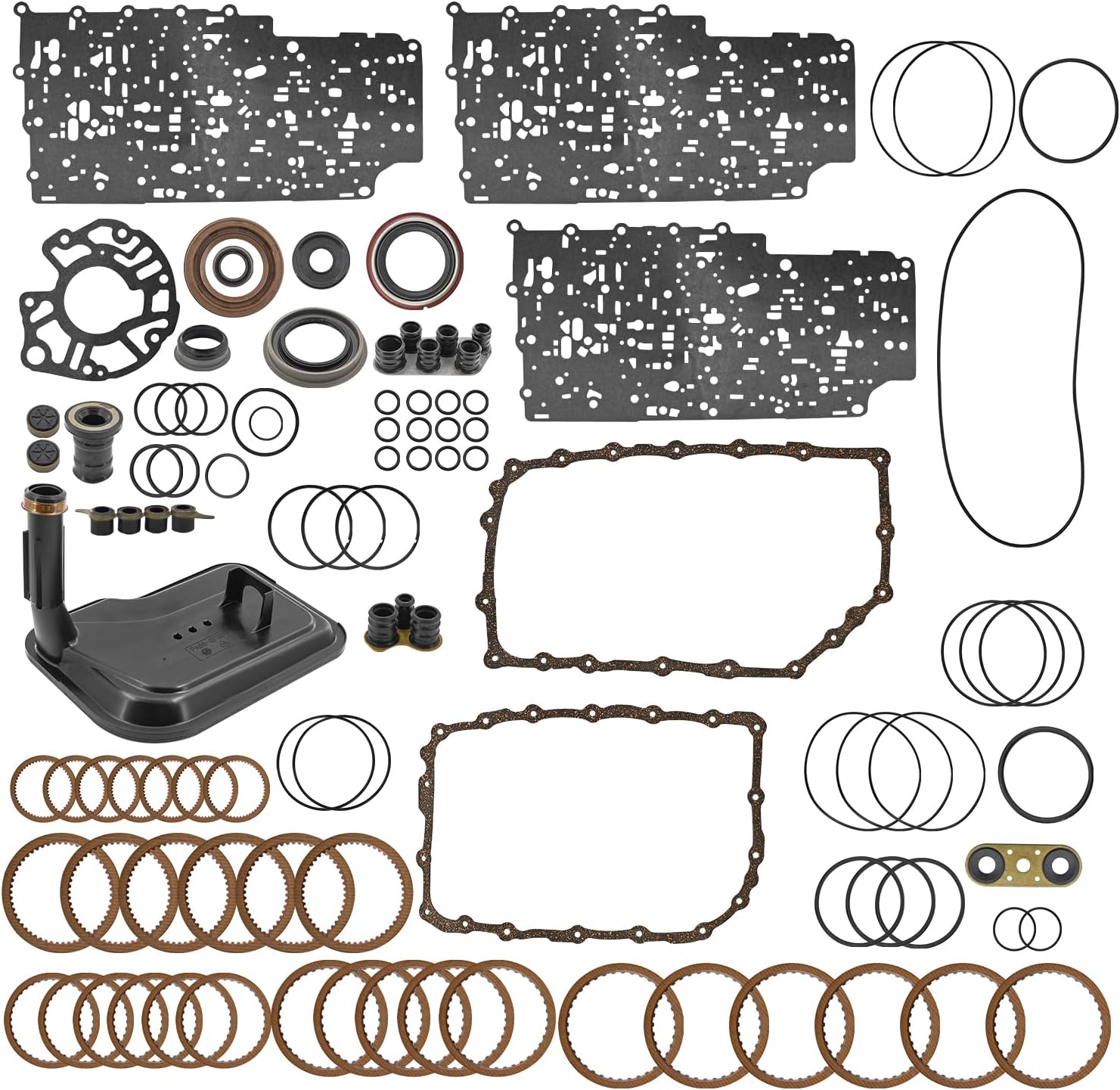
Most 6L80 parts mistakes are not diagnostic mistakes. They are identification mistakes made three days earlier, at the parts counter. The 6L family shares one architecture across four duty-class variants and more than a decade of running production changes, and GM did not make much of it obvious from the outside. Order by "2010 Silverado six-speed" and you have a coin flip on at least three parts.
This is the order I work through when a 6L unit lands on the bench, or when a customer calls with a VIN and no paperwork. Easiest check first, definitive check last.
First, know what family you are in
The 6L80 arrived for 2006 to replace the aging 4L60-E, first in select Cadillac models and the Corvette. By 2007 it was in a wide spread of pickups and SUVs, and GM spun off the lighter-duty 6L45 and 6L50 along with the heavy-duty 6L90, per Sonnax technical support specialist Tory Royce writing for Transmission Digest. Sonnax puts 6L80 production north of eight million units across roughly twenty GM models.
All four share one layout: a variable displacement vane pump integral to the bellhousing, a pressure regulator valve in the pump cover, and a Transmission Electro-Hydraulic Control Module bolted to the valve body inside the pan. That is exactly why so many parts look interchangeable in a catalog photo and are not.
Step 1: The glove box label, 60 seconds, vehicle still assembled
GM puts a Service Parts Identification label on the inside of the glove box. Per the factory owner manual, it carries the VIN, the model designation, paint information, and production options and special equipment. Those production options are the RPO codes, and the transmission has one:
- MYA — 6L45
- MYB — 6L50
- MYC — 6L80
- MYD — 6L90
Two cautions. The label is frequently long gone on a 250,000-mile work truck, and it describes what left the factory, not what is bolted in today. On a unit already replaced once, the label is a hypothesis, not proof. Verify it against the hardware below before you spend money.
Step 2: The boss letter on the valve body
Sonnax’s 6L80 family identification guide documents a machined-down boss on the upper valve body casting that maps straight to the RPO code: an A boss is a 6L45, B is a 6L50, C is a 6L80 and D is a 6L90. When it is there, it is fast and it is right.
Sonnax also says plainly that the method is not foolproof, as some valve bodies do not have any bosses machined down. Treat a letter you find as confirmation, and a letter you cannot find as nothing at all. Do not reason your way to "no C, so it must not be a 6L80."
Step 3: Upper casting numbers, split at 2010
GM revised the upper valve body castings partway through the run, so the number you are hunting depends on the year. From the same Sonnax identification guide:
- 6L80 and 6L90, 2010 and earlier: upper casting 9404
- 6L80 and 6L90, 2010-later: upper casting 0955
- 6L45, 2010 and earlier: 9405; 2010-later 7114
- 6L50, 2010 and earlier: 9405; 2010-later 7117
- Lower casting, all of the above, both eras: 9581 or 0945
Read that list carefully. The upper casting separates the small units (6L45/6L50) from the big ones (6L80/6L90) and early from late — but it does not separate a 6L80 from a 6L90. They share 9404 early and 0955 late. The lower casting separates nothing at all; every unit in the family uses 9581 or 0945. A parts listing that proudly says "casting 0955" has told you it is a late big-unit casting and nothing more.
Sonnax notes one more visual on the early units: early 6L80 and 6L90 upper castings carry exhaust slots that the later castings do not.
Step 4: The center support feed holes, the definitive check
If you remember one thing off this page, make it this. The center support feed holes in the upper casting sit in a different place on each variant:
- 6L45 and 6L50: holes centered
- 6L80: holes offset toward the front
- 6L90: holes offset toward the rear
That one feature does what the casting numbers and the boss letters cannot: it separates a 6L80 from a 6L90 on a bare casting, every time, with no label and no paperwork.
Here is the failure it prevents. A 6L80 valve body will bolt straight onto a 6L90 case, and a 6L90 valve body will bolt onto a 6L80 case. Nothing stops you. But because the center support holes are offset differently, the case ports no longer line up with the ports in the upper casting, and the unit comes out with forward gears and no reverse. Royce’s Transmission Digest write-up lists this alongside the more familiar no-reverse causes: an out-of-place #5 checkball, a wrong separator plate or gaskets, an improperly indexed snap ring, cracked welds in the 3-5-R drum, a stuck 3-5-R clutch regulator valve. What sets the valve body mismatch apart is the timeline — it shows up immediately after a valve body replacement. If that is how the customer describes it, check the casting before you pull the unit back apart.
Step 5: Case length, when you have both in front of you
Roughly 25 percent of the 6L90’s internal components were upgraded over the 6L80 to raise torque capacity, and to house the stronger input and output gearsets and a different output shaft, GM stretched the case by 1-3/8 inches. Two units side by side on the floor, that is a tape measure and you are done. One unit alone with nothing to compare against, it is no help at all, which is why the feed holes above are the better tell.
Generation splits inside the 6L80 itself
Landing on "it is a 6L80" is only half the job. Three running changes decide which parts actually fit.
2012: the UNIGEAR output shaft and its matching speed sensor
During model year 2012, Chevrolet and GMC trucks with the 6L80 and 6L90 received a redesigned output shaft assembly. The earlier design was a stack of pieces: separate output shaft, output carrier ring gear, ring gear spacer, output carrier internal front gear and snap rings. The replacement, called UNIGEAR, integrates all of it into one piece. Wayne Colonna documented the change in Transmission Digest, and the part that bites people is not the shaft. It is the sensor.
- Previous design output speed sensor: GM 24265535
- Updated stepped design output speed sensor: GM 24265536
The stepped sensor is slightly shorter, which is what holds the correct air gap against the UNIGEAR shaft. Mix them and you get one of two outcomes: the previous-design sensor against a UNIGEAR shaft causes immediate damage to the speed sensor, and the stepped sensor against a previous-design shaft leaves too much air gap and sets a code. The UNIGEAR assembly back-services earlier 6L80 and 6L90 units as long as the stepped sensor goes in with it, and the kit is model dependent, so the VIN is required.
Practical consequence at the counter: a 6L80 output speed sensor advertised as "2006-2019, fits all" is not a part you want. Buy to the shaft you have. Chasing a speed sensor code on one of these? Our 6L80 speed sensor write-up covers the electrical side.
2014: the eighth checkball
Sonnax TASC Force member Jim Dial wrote this one up for Transmission Digest, and it catches experienced builders specifically because they are experienced. Split the valve body halves, dump the checkballs into the basket, wash everything, start reassembling from memory — and there are eight checkballs on the bench when the build you remember had seven.
Sometime in 2014, GM revised the separator plate and added checkball #8 to address a clunking sensation during both acceleration and deceleration in first gear. Why it exists is worth knowing. When Drive is selected from Park or Neutral on a 6L80, first gear is commanded with engine braking, meaning the low reverse clutch is applied: shift solenoid 1 on, clutch select valve 2 moves left, and CBR 1/4-5-6 pressure routes to the low reverse clutch apply passage — through checkball #8. As speed builds, the TEHCM turns engine braking off ahead of the 1-2, because a low reverse clutch still applied during a 1-2 is a severe bind-up.
So the separator plate and the checkball count are a matched pair. A late plate with an early checkball layout, or the reverse, is a hydraulic problem you built yourself. Count them, and match the plate to the unit in front of you.
TEHCM bolts: 53mm and 55mm
Not identification exactly, but the same lesson about parts that look identical and are not. Mike Souza documented a case in GEARS Magazine: a truck came back with a reverse delay and an off-feeling 2-3 shift after a dealer TEHCM replacement, and the cause was a broken piece of aluminum casting sitting in the #5 checkball bathtub, blocking the Drive 1-6 feed hole. Per the factory manual, the two side bolts to the TEHCM are 53mm (2.09 in) long and the others are 55mm (2.17 in). A 55mm bolt in a 53mm location bottoms out, and torquing it to pull the module flush broke the casting. Factory information tags these hand tighten only, and the correct sequence is to snug the two side bolts first so the TEHCM sits flush before the rest go in. Souza’s added tip: a small washer under each side bolt.
Fluid, while you have that label out
Do not guess this one either. The GM owner manual for the 2015 Silverado specifies DEXRON-VI Automatic Transmission Fluid for the automatic transmission on every application except the 6.2L with the 8-speed, which takes DEXRON-HP. The transfer case on four-wheel-drive units takes DEXRON-VI as well. Somebody putting DEXRON-HP in a 6L80 because they read one line too low on the same chart is a real thing that happens. Our 6L80 fluid type and capacity guide has the fill quantities.
The counter checklist
Before you order anything for a 6L unit, you should be able to answer all five of these:
- Which variant? RPO off the glove box label, confirmed by the boss letter or the center support feed hole offset.
- Early or late casting? 9404 versus 0955 on the upper, with 2010 as the split.
- Which output shaft? Pre-2012 multi-piece or 2012-and-up UNIGEAR — this decides the speed sensor part number.
- Seven checkballs or eight? Pre-2014 or 2014-and-up separator plate.
- What is the VIN? The UNIGEAR kit is model dependent, and a TEHCM has to be programmed to the VIN anyway.
Five answers and the parts show up correct. Skip them and you find out on the test drive, with the pan already sealed.
FAQ
What is the RPO code for a 6L80?
MYC. GM's Regular Production Option code for the 6L80 is MYC, the 6L90 is MYD, the 6L50 is MYB and the 6L45 is MYA. Those same four letters are what Sonnax maps to the machined-down boss on the valve body upper casting, so the letter on the casting and the code on the vehicle label should agree. The vehicle-side code is on the Service Parts Identification label, which GM puts inside the glove box.
How do I tell a 6L80 from a 6L90 without pulling the transmission?
Read the Service Parts Identification label in the glove box and look for MYC or MYD. That is the fastest honest answer on an assembled vehicle. If the label is gone or the unit is already out of the truck, the 6L90 case is 1-3/8 inches longer than the 6L80 case, so a side-by-side measurement settles it. On a bare valve body, look at the center support feed holes in the upper casting: the 6L80 is offset toward the front, the 6L90 is offset toward the rear.
Will a 6L80 valve body work in a 6L90?
It will bolt in, and that is exactly the trap. Sonnax and Transmission Digest both document the result: the center support holes in the upper casting have a different offset between the two models, so the case ports do not line up. The unit ends up with forward gears and no reverse. If a 6L80 or 6L90 lost reverse immediately after a valve body replacement, check the casting before you tear into the 3-5-R drum.
What changed on the 6L80 in 2012?
GM went to the one-piece UNIGEAR output shaft assembly in Chevrolet and GMC trucks during model year 2012, replacing a stack of separate output shaft, carrier ring gear, ring gear spacer, internal front gear and snap rings. The UNIGEAR requires the stepped output speed sensor, GM 24265536, instead of the earlier 24265535. Running the previous sensor against a UNIGEAR shaft damages the sensor immediately, and the stepped sensor against an older shaft opens the air gap far enough to set a code.
Why are there eight checkballs in my 6L80 valve body?
Because it is a 2014 or later unit. Sonnax technical specialist Jim Dial documented the change in Transmission Digest: sometime in 2014 the separator plate was revised and a #8 checkball was added to address a clunk during acceleration and deceleration in first gear. It sits in the low reverse clutch apply circuit used when first gear is commanded with engine braking. Earlier units have seven. If you dumped the checkballs into a parts basket and counted eight, do not assume one belongs to another job.