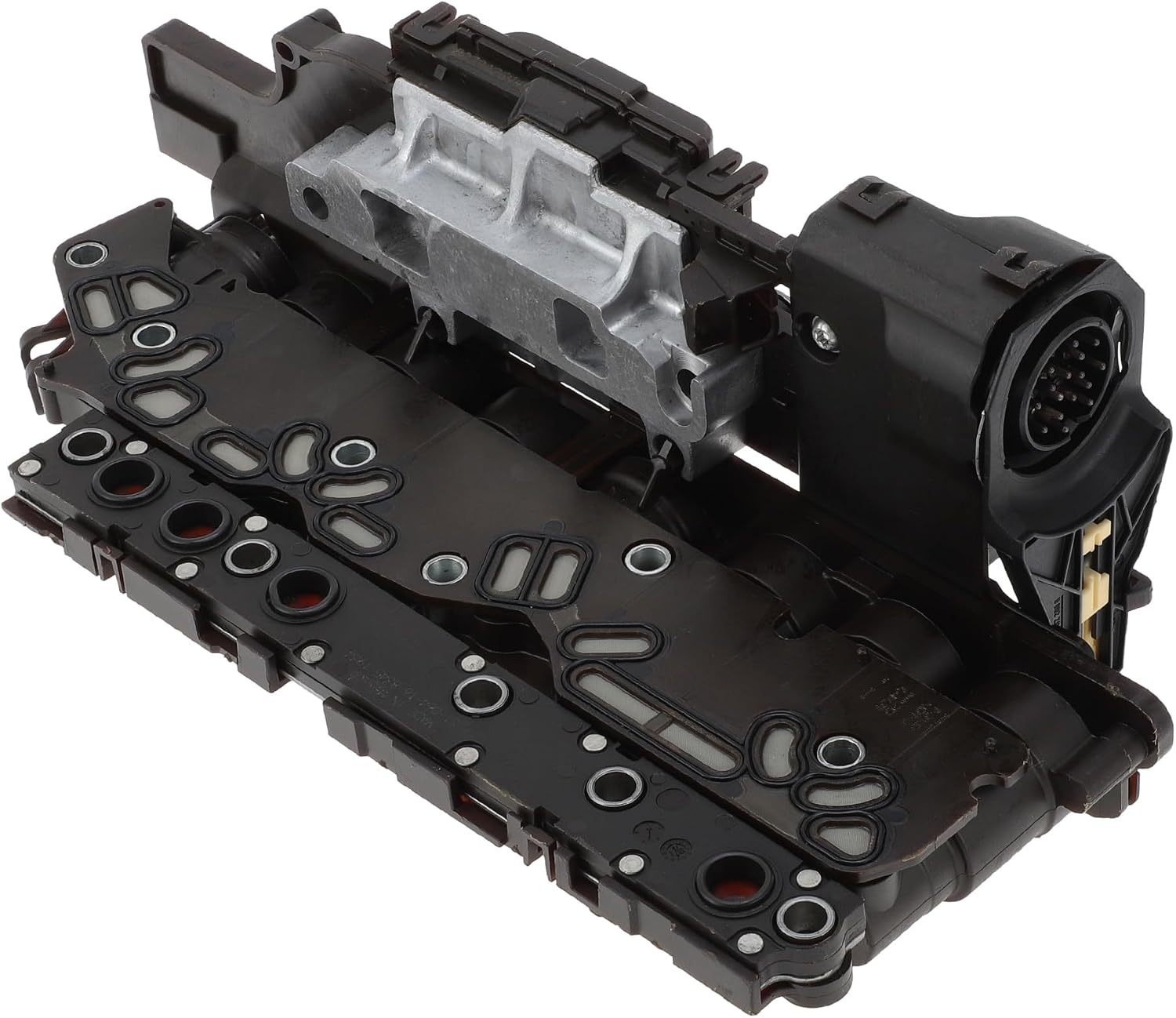
A gas Silverado 2500HD with a 6L90 that shifts badly usually gets one of two treatments: a fluid change, or a quote for a rebuilt transmission. Neither is a diagnosis. The 6L90 in these trucks is controlled by a TEHCM (the TCM and solenoid body bolted to the valve body inside the pan), and almost every shift complaint traces back to one of four things: a calibration GM has already rewritten, a clutch circuit leaking oil before it reaches the piston, a worn valve bore that cannot regulate apply pressure, or adapts that have learned around a problem. This page walks the shift complaints we see on the 2500HD gas trucks, with the GM bulletins and valve body data that sort them out.
If your truck has a 30-40 mph shudder, a heat problem or no Reverse, those are covered in 6L90 Silverado 2500 common problems and fixes. This guide stays on shift quality: harsh, late, flared and firm shifts.
The short version: Firm 3-2 downshift on a cold 2016 2500HD 6.0L, sometimes with P0777: GM bulletin 16-NA-182, reprogram the TCM. Harsh 2-3 on a 2007-2009 truck: GM bulletin 09-07-30-004J, check the pump cover seal rings (one-piece rings built before December 2008 leak) and air check the 1-2-3-4 / 3-5-R housing weld. Harsh shifts, flares or slip codes on a high-mileage truck: vacuum test the valve body, especially the clutch boost valve bores Sonnax stamps B, F and K. Only reset adapts after the cause is fixed.

First, Confirm It Is a 6L90 and Write Down the Year
Check the RPO label for MYD. GM's 2016 Silverado HD specification sheet pairs the Hydra-Matic 6L90 with the 6.0L Vortec gas engine and the Allison 1000 with the Duramax. Diesel trucks are a different transmission and none of this applies.
The model year matters more on this unit than most, because the fixes split by build date. The early 2007-2009 trucks have hardware problems in the pump cover and clutch housing. The 2016 trucks have a known calibration issue. The high-mileage trucks of every year wear out valve body bores.
| Spec (2016 Silverado HD, 6.0L) | Value |
|---|---|
| Transmission | Hydra-Matic 6L90, RPO MYD |
| Gear ratios | 1st 4.03, 2nd 2.36, 3rd 1.53, 4th 1.15, 5th 0.85, 6th 0.67, Rev 3.06 |
| Fluid | DEXRON VI |
| Service fill (pan and filter) | 5.7 L / 6.0 qt |
The big step from 1st to 2nd (4.03 to 2.36) is why a 2500HD with a trailer feels every flaw in the 1-2 shift. A clutch that applies a little late or a little hard is easy to feel at that ratio drop and that weight.
Shift Problem 1: Firm 3-2 Downshift When Cold (2016 Trucks)
GM bulletin 16-NA-182, June 2016, covers 2016 Silverado and Sierra 2500/3500 with the 6.0L L96 and the 6L90 MYD (Express and Savana vans too, for the code only). Two complaints:
- An illuminated MIL with P0777 active or in history, typically in cold ambient temperatures of about 23 to 41 F.
- On the Silverado and Sierra, a firm 3-2 downshift at light or heavy throttle, typically with transmission fluid below 77 F. GM notes the firm downshift does not affect the vans.
GM's cause is a software anomaly, and the correction is a revised calibration: update the TCM through SPS with the latest software. The procedure is under Control Solenoid Valve and Transmission Control Module Assembly Programming and Setup in SI.
The diagnostic lesson: on a 2016 truck with a cold-only firm 3-2 and a P0777 history, check the calibration level before you condemn a pressure control solenoid. P0777 reads like a solenoid stuck-on code, and plenty of TEHCMs have been replaced for a problem that was software.
Shift Problem 2: Harsh 2-3 Shift (2007-2009 Trucks)
GM bulletin 09-07-30-004J, February 2014, covers 2007-2008 Silverado and Sierra with the 6L80 or 6L90 (RPOs MYC, MYD). Its condition list includes harsh 2-3 shifts, harsh 4-5 or slip in 5th, slip on acceleration when passing, delayed Reverse, and P0776, P2715 or P2723. The bulletin gives two separate causes.
Cause A: one-piece pump cover seal rings
The 1-2-3-4 and 3-5-R clutches are fed through seal rings on the pump cover stator shaft. GM says 2006, 2007, 2008 and early 2009 transmissions used a one-piece seal ring, and starting December 2008 a two-piece ring went into production. The one-piece ring can leak and cause a harsh 2-3, typically at low mileage.
ATSG's Wayne Colonna described the same failure from the field: a flared 2-3 upshift and delayed, harsh engagement into Drive or Reverse on 6L80/90 units built before December 2008, worse cold. His explanation of the harsh part is useful: leakage at the rings slows clutch apply, and the TCM raises line pressure to compensate, so the shift that was soft becomes harsh as the adapts chase it.
The fix per GM: inspect the rings. If they are one-piece, replace them with new one-piece rings (ring kit 24248581); GM says the pump cover does not have to be replaced. Install them exactly as SI shows. GM warns that wrong orientation causes a repeat harsh 2-3. Never install one-piece rings on a two-piece cover; the two-piece cover is identified by a notch in the ring grooves for the ring tab. ATSG notes the two-piece cover (24248573) retrofits as a complete assembly, needs a pump alignment tool (GM J-46664 or an aftermarket equivalent), and the 13 pump cover bolts torque to 11 Nm (97 in-lb).
Cause B: cracked 1-2-3-4 / 3-5-R clutch housing
On 2006-2008 units the same bulletin points to a cracked weld on the 1-2-3-4 / 3-5-R housing. The test: soap on the weld, thumb over the air bleed passage, air into the 3-5R feed hole, and look for bubbles. Bubbles mean a new housing. For the 6L90 GM lists a complete assembled housing for 2007-2008 MYD, part 24238695, with pistons, seals, clutches and bearing installed. GM TechLink adds that if the 1-2-3-4 / 3-5-R bearing is left out on assembly, harsh shifts will occur.
Shift Problem 3: Harsh, Soft or Flared Shifts on a High-Mileage Truck
Past 100,000 miles, and especially on a truck that towed for a living, the valve body is where shift quality goes. The 6L90 does not use a classic shift valve train. Each clutch has its own regulator valve fed by a pressure control solenoid, and a boost valve that feeds pressure back to the balance end of that regulator. When the bores wear, the regulator cannot hold a steady apply pressure, and the shift gets harsh, soft, or flares.
Sonnax lists these results of a worn clutch boost valve bore on the 6L45/50/80/90: shift quality not load sensitive, clutch pressure solenoid codes, burnt clutches, delayed engagement, harsh shifts, slide shifts, slip codes, and slips and flares. There are three of these bores, identified by casting stamps:
| Casting stamp | Boost valve | When that clutch is working |
|---|---|---|
| K | 1-2-3-4 clutch boost | Held in 1st through 4th; releases on the 4-5 upshift |
| F | 3-5-Reverse clutch boost | Applies on the 2-3 and 4-5 upshifts, releases on the 3-4; Reverse |
| B | 4-5-6 clutch boost | Applies on the 3-4 upshift, held through 6th |
The clutch assignments in the right column follow the standard 6L80/90 clutch apply chart in GM service information (1-2-3-4 applied in 1st through 4th, 3-5-R in 3rd, 5th and Reverse, 4-5-6 in 4th through 6th). Use them to narrow which bore matches your complaint, then prove it with a vacuum test.
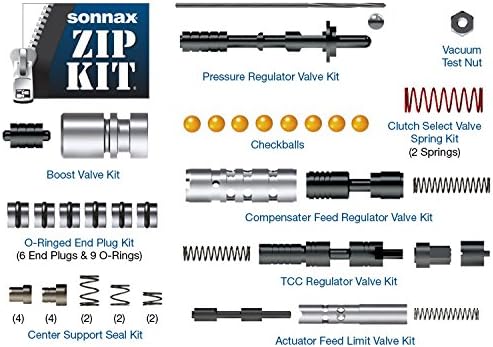
Sonnax's instruction is to recondition the bore and install the oversized valve (104740-01) if vacuum at the indicated ports falls below the recommended minimum in-Hg or the wear is visible. When testing the B or F location, block the exhaust on the far side of the core. Sonnax also notes that the boost valves only work if the shift solenoids are fed correct pressure, and points to the actuator feed limit (AFL) valve kit (104740-47K) for solenoid performance codes, wrong gear starts and harsh or soft shifts.
On a high-mileage 2500HD with a mix of complaints (one harsh shift, one flare, a slip code that comes and goes), a full valve body zip kit that addresses all the high-wear bores in one pass is usually less labor than chasing them one at a time. More on the testing in 6L90 valve body problems and testing.
Shift Problem 4: Shifts Get Worse After a Repair
The 6L90 adapts every shift. That is good on a healthy unit and a trap on a sick one. Two rules from the field:
- Reset adapts after the repair, not instead of it. A Service Fast Learn belongs after a transmission, valve body or TEHCM replacement. GM's scan tool will not run a fast learn unless fluid temperature is in a set window; GM's service update 14876 for the 8-speed lists 167-185 F, and the 6L90 procedure in SI has its own conditions. Follow the SI steps for the VIN. If the truck has a specific shift complaint, find the cause first. Resetting adapts on a leaking circuit just gives the TCM a clean slate to learn the same harsh shift again.
- Check line pressure after any rebuild. Sonnax's no-movement analysis for the 6L80/90 notes that line pressure near 60-68 psi with no rise points at the line pressure control solenoid in the TEHCM stuck in exhaust, and under about 30 psi at idle points at a missing pressure regulator boost valve retaining pin in the pump. A pump or TEHCM that cannot raise pressure will make the TCM fight every shift, and the clutches lose.
Also confirm the cooling side. GM bulletin 22-NA-182 lists harsh shifting among the conditions caused by a twisted cooler line on low-mileage trucks, and it covers the 2021 Silverado and Sierra 2500HD/3500HD with RPO MYD.
When It Really Is the TEHCM
The TEHCM gets blamed for most 6L90 shift complaints, and it is the right answer less often than it is replaced. It is the likely fault when you have repeat solenoid circuit or performance codes that survive a calibration update, a gear ratio code with clean clutches and a good vacuum test, or no line rise with the connector unplugged and a good pump. If you replace it, the new unit has to be programmed and set up through SPS, and then you run the Service Fast Learn. A used TEHCM swapped in without setup is a common cause of harsh shifts all by itself. See 6L90 shift solenoid symptoms for the code-by-code breakdown.
A Diagnostic Order That Saves Money
- Pull codes, check the calibration level, and look for 16-NA-182 on a 2016 truck.
- Check fluid level at the check plug at operating temperature with DEXRON VI, and look at the cooler lines.
- Road test cold and hot. Note which shift (1-2, 2-3, 3-2, 4-5) and whether it is harsh, soft or flared.
- Match the shift to the clutch: a 2-3 problem is the 3-5-R circuit; on an early truck that means seal rings and housing.
- On a teardown, air check the housing weld, inspect the pump cover rings, and vacuum test the valve body.
- Fix the hardware, then program and set up as needed, then run the Service Fast Learn.
Shop 6L90 valve body kits, seal ring kits, TEHCM assemblies and rebuild kits for the Silverado 2500HD — shipped fast from the USA.
Shop 6L90 parts →Shop the 6L90 AFL valve kit → All 6L90 parts
Keep the numbers at the bench. Our free transmission fluid spec chart lists the correct ATF for the 6L90 and dozens of other units, so nobody tops off a work truck with the wrong fluid.
FAQ
Why does my 2016 Silverado 2500 6.0L bang into 2nd on a 3-2 downshift when it is cold?
GM bulletin 16-NA-182 covers 2016 Silverado and Sierra 2500/3500 trucks with the 6.0L L96 and the 6L90 (RPO MYD). It describes a firm 3-2 downshift at light or heavy throttle, usually with transmission fluid below 77 F, caused by a software anomaly. The fix is a TCM reprogram with the latest calibration through SPS, not hard parts.
What causes a harsh 2-3 shift on a 6L90?
On 2006-2009 units GM bulletin 09-07-30-004J lists two causes: leaking one-piece 1-2-3-4 and 3-5-R clutch fluid seal rings on the pump cover, and a cracked weld on the 1-2-3-4 / 3-5-R clutch housing. On higher-mileage trucks of any year, a worn clutch boost valve bore in the valve body can also cause harsh shifts, flares and slip codes.
Should I do a fast learn to fix a harsh shift on a 6L90?
Only after the cause is fixed. A Service Fast Learn resets the shift adapts and belongs after a transmission, valve body or TEHCM replacement, or after a mechanical repair. Running it on a truck with a leaking seal ring or a worn valve bore just lets the TCM learn around the leak again, and the harsh shift comes back.
What fluid and how much does a Silverado 2500HD 6L90 take for a service?
DEXRON VI. GM's TechLink capacity table lists RPO MYD at 5.7 liters or 6.0 quarts for a pan and filter service. Set the final level at the check plug with the fluid at operating temperature rather than pouring in a fixed amount.
Sources
- General Motors — Service Bulletin 16-NA-182, "DTC P0777, Firm 3-2 Downshifts (Reprogram TCM)," June 2016 (hosted by NHTSA). Backs: 2016 Silverado/Sierra 2500/3500 L96 and MYD coverage, P0777 at 23-41 F ambient, the firm 3-2 below 77 F fluid temperature, the software cause and the SPS reprogram correction. GM 16-NA-182 (PDF)
- General Motors — Service Bulletin 09-07-30-004J, "Slips in Reverse or Third, Delayed Reverse or Drive Engagement, DTC P0776, P2715, P2723, Harsh 2-3 Shifts," February 2014 (hosted by NHTSA). Backs: 2007-2008 Silverado/Sierra MYD coverage, the condition list, the one-piece vs two-piece seal ring change in December 2008, ring kit 24248581, the orientation warning, the housing weld air test and MYD housing 24238695. GM 09-07-30-004J (PDF)
- General Motors — Service Bulletin 22-NA-182 (May 2025, replaces PIP5792E) and Service Update 14876 (December 2014), hosted by NHTSA. Backs: harsh shifting from a twisted cooler line with 2021 Silverado/Sierra 2500HD/3500HD MYD coverage, and the GDS2 Service Fast Learn fluid temperature window of 167-185 F on the 8-speed. GM 22-NA-182 (PDF) and GM 14876 (PDF)
- ATSG — Wayne Colonna, "GM 6L80/90 Flare 2-3 and/or Engagement Concerns," Vehicle Service Pros, October 2013. Backs: the pre-December 2008 2-3 flare and harsh engagement, the slow apply and line rise explanation, two-piece pump cover 24248573, the alignment tool, and 13 pump bolts at 11 Nm (97 in-lb). vehicleservicepros.com: 6L80/90 revised pump rings
- Sonnax — Oversized Clutch Boost Valve 104740-01 product and technical page, and "GM 6L45/50, 6L80/90 No Movement Conditions: Analysis & Repair Tips." Backs: clutch boost valve function and wear symptoms, the B/F/K bore stamps, the vacuum test instruction, the AFL kit 104740-47K symptoms, and the 60-68 psi and under-30 psi line pressure readings. sonnax.com/parts/1702 and sonnax.com/tech_resources/1216
- General Motors — 2016 Chevrolet Silverado HD Specifications and GM TechLink Transmission Capacities & Fluids 2025. Backs: the 6L90 with the 6.0L and the Allison with the Duramax, the gear ratios, and DEXRON VI at 5.7 L / 6.0 qt for RPO MYD. 2016 Silverado HD spec sheet (PDF) and GM TechLink capacities (PDF)