A customer says the truck will not go into overdrive. That one sentence covers at least four different failures on a 6L90, and three of them do not involve taking the unit apart. Turn the complaint into a gear number first, because the 6L90 has two overdrive ratios and losing one is a different problem from losing both.
The order I work a no-overdrive 6L90 on a 2500HD, a 3500HD, an Express van or an Escalade: define the missing gear, read the pattern against the clutch application chart, rule out the reasons the TCM is holding overdrive back on purpose, then start testing hydraulics. That order keeps you from pulling a pan to fix a cooler line.


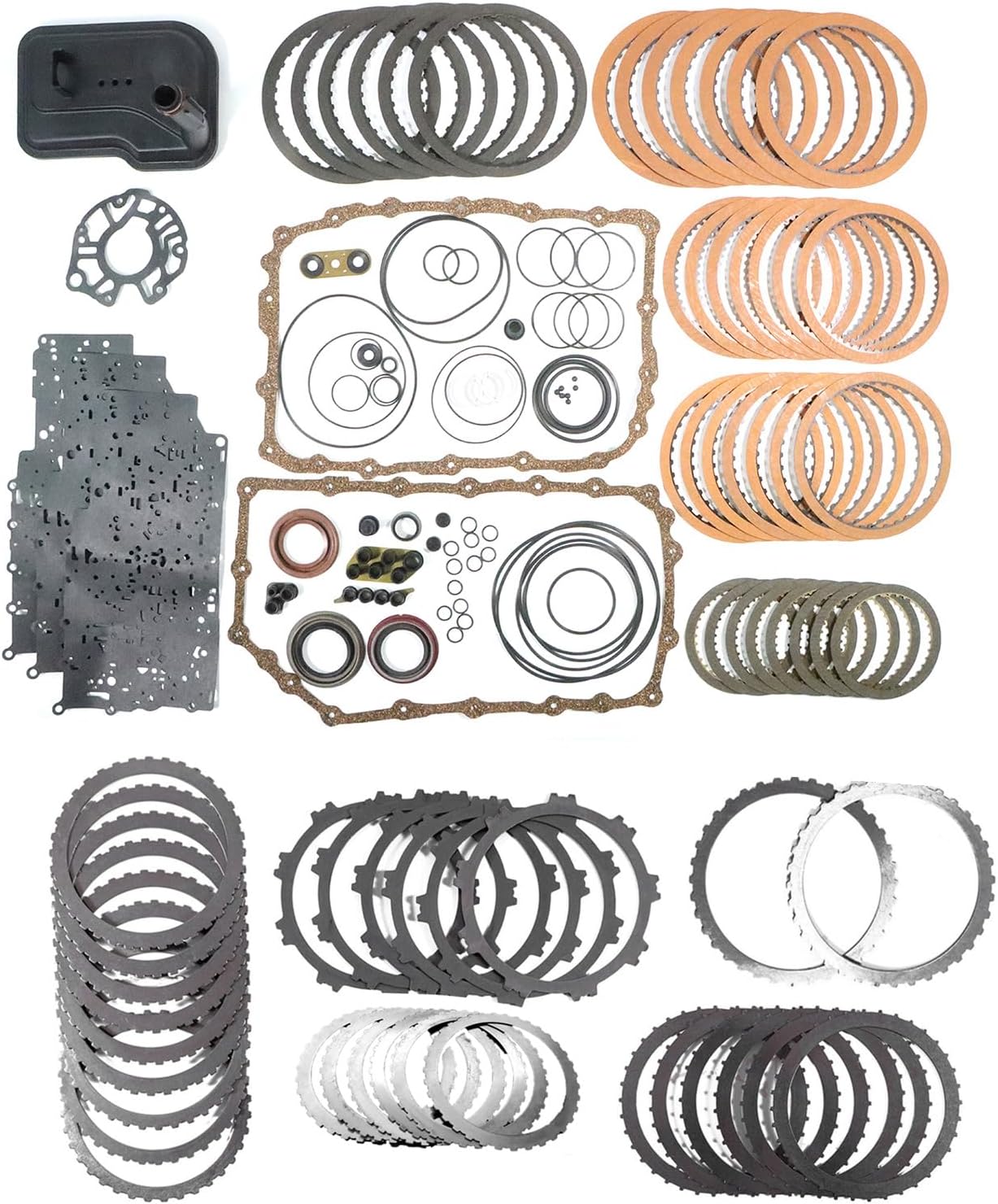
Define the missing gear before you touch anything
The 6L90 shares its gear set and clutch layout with the 6L80. Sixth gear is 0.67:1 and fifth is 0.85:1, so both are overdrive ratios. Fourth, at 1.15:1, is not. Here is the full set with the apply components, which is the single most useful chart in this diagnosis:
| Range | Ratio | Applied components |
|---|---|---|
| Reverse | 3.06:1 | 3-5-Reverse clutch, low/reverse clutch |
| 1st | 4.03:1 | 1-2-3-4 clutch, low sprag holding (low/reverse clutch in manual 1st) |
| 2nd | 2.36:1 | 1-2-3-4 clutch, 2-6 clutch |
| 3rd | 1.53:1 | 1-2-3-4 clutch, 3-5-Reverse clutch |
| 4th | 1.15:1 | 1-2-3-4 clutch, 4-5-6 clutch |
| 5th | 0.85:1 | 3-5-Reverse clutch, 4-5-6 clutch |
| 6th | 0.67:1 | 2-6 clutch, 4-5-6 clutch |
Read that chart sideways and the diagnosis narrows itself:
- No 4th, no 5th, no 6th. The 4-5-6 clutch is the only component common to all three. Either the clutch is gone or its apply circuit is not getting pressure.
- Fourth is fine, but no 5th and no 6th. Fifth and sixth share nothing with each other except the 4-5-6 clutch, which fourth just proved is working. Two unrelated clutches do not quit on the same day. That pattern is a control-side problem, not a clutch.
- Sixth only is missing. That points at the 2-6 clutch circuit, or at the TCM choosing not to command sixth.
- Stuck in one gear with no shifts at all. That is fail-safe, not a missing clutch. On this unit family an electrical failure while running in 1st, 2nd or 3rd drops the transmission to 3rd, and a failure while in 4th, 5th or 6th drops it to 5th. A truck that never leaves 3rd is not missing overdrive, it is in limp.
Confirm the missing gear with math, not with your backside. Watch input and output speed sensor rpm on the scan tool and divide input by output: top gear should land near 0.67, fifth near 0.85. If Gear Commanded reads 6 and the measured ratio sits at 1.15, the TCM is asking for overdrive and not getting it, which is a different fault from the TCM never asking. The TCM runs the same math and sets P0729 for an incorrect 6th gear ratio, P0735 for 5th and P0734 for 4th, so pull codes before the test drive and again after.
Cause 1: the TCM is holding overdrive back on purpose
This is the most common no-overdrive 6L90 that walks in, and the one most often misdiagnosed as a failed transmission. The TCM restricts upshifts when fluid temperature is out of range, and the 6L90 cooling path has two documented weak points.
GM bulletin 22-NA-182, which replaced PIP5792E, covers the 6L80, 6L90, 8L90, 10L80, 10L90 and 10L1000 with complaints of harsh shifting, shudder, surging, stalling, neutral/flare and transmission overheating, before or after an overhaul. The cause GM lists first is not internal: a twisted cooler line on a low-mileage vehicle. The correction is to disconnect the line at the auxiliary cooler, untwist it, reconnect and recheck fluid level, replacing the line if it stays misshaped. On some trucks you have to drop the underbody panels to see it. GM notes a twisted cooler line can also set DTC P27EC in the TCM on ETRS units.
The second item in that bulletin matters even more here. If the line is not twisted, the thermal bypass valve is next. GM states that on the 6-speed units, 6L80 and 6L90, the TBV opens at 158°F (70°C) and sits external to the transmission. A TBV stuck in bypass never routes fluid to the cooler, temperature climbs, and the TCM pulls gears to protect the unit. Stuck the other way, fluid never warms and the calibration holds off the top gears waiting for heat that never comes.
Check these before anything hydraulic:
- Transmission fluid temperature PID. If TFT is still under roughly 100°F after a real drive, the bypass side is stuck open and overdrive is being withheld by calibration. If it climbs past 220°F on level ground with no load, you are into protection. DTC P0218 sets when fluid exceeds 270°F for ten minutes.
- Tow/Haul and range position. Tow/Haul raises shift points and can keep the unit out of top gear, and an internal mode switch reading a manual position does the same. Free, and worth thirty seconds.
- Fluid level and condition, checked hot. The 6L90 takes DEXRON-VI and nothing else; GM lists DEXRON-VI Automatic Transmission Fluid for the 6-speed in the Silverado 2500HD/3500HD owner manual. Low fluid starves the highest-flow circuits first, and those are the ones carrying overdrive.
Cause 2: actuator feed limit bore wear starving the solenoid feed
If temperature and fluid check out and the TCM is commanding a gear it is not getting, the next stop is the actuator feed limit valve. It regulates line pressure down to the constant feed the control solenoids meter from, so every clutch pressure control solenoid in the TEHCM sits downstream of it.
Sonnax is direct about what happens when that aluminum bore opens up. Excess AFL bore wear, they write, "prevents proper regulation of oil pressure supplied to control solenoids resulting in harsh or soft shifts, solenoid codes, wrong gear starts, and clutch/band failure." The repair for the 6L45, 6L50, 6L80 and 6L90 is actuator feed limit valve kit 104740-47K, a sleeved drop-in that gives the valve a fresh, unworn bore and seals off the existing wear.
The tell is a mismatch between command and result: the TCM commands fifth, solenoid current is correct, no circuit fault sets, and the gear either never arrives or arrives soft and flares. Solenoid performance codes on a unit with healthy line pressure almost always mean the feed to that solenoid is bad, not the solenoid itself.
Prove it on the bench with a vacuum test, not a visual. Seal the circuit with the valve body dry and pull air past the spool; tight spool-to-bore clearance restricts airflow and lets the bore hold vacuum. Sonnax puts numbers on it: a known-good bore might return 18 in-Hg while a known-bad bore in the same location returns only 10 in-Hg. A worn bore can look perfect under a shop light and still fail that test, which is why castings get reused and the complaint comes back.
Cause 3: the 4-5-6 clutch or its regulator valve
If the truck lost fourth along with fifth and sixth, stop looking at calibration and start on the 4-5-6 clutch circuit.
That clutch is fed through the CBR1/4-5-6 clutch regulator valve, which Sonnax lists in its 6L45 through 6L90 valve body layout as a 6L80/6L90-only valve managing 4-5-6 clutch apply. The valve is metered by clutch pressure control solenoid 3, which also serves the low/reverse clutch, which is why GM describes solenoid 3 in the P0796 definition as the 1-R/4-5-6 solenoid. A stuck or leaking regulator valve produces the same missing gears as a burnt clutch, so separate the two before ordering parts. If reverse is still strong, both halves of that circuit remain candidates. If reverse is weak or gone as well, suspect the shared solenoid and regulator valve first, since that is the only place the two symptoms overlap.
When the clutch itself is the problem, the cause is usually heat. ATRA’s Gears magazine lists the 4-5-6 as one of the three most common apply components to fail on these units, alongside the 1-2-3-4 and the 3-5-R, and notes that the 4-5-6 clutch will typically fail from overheating when there are cooler bypass valve issues. That is the same thermal bypass valve from the GM bulletin above, which is why a no-overdrive complaint and a burnt 4-5-6 pack land in the same truck so often. Replace the clutch, leave the bypass valve alone, and you will see the vehicle again.
Two other items from that coverage are worth checking during teardown: a fractured dampener shaft on the 4-5-6 assembly, and cracks in the stator support tube or liner. The stator support distributes apply oil to the clutches, so a crack or gasket leak there starves whichever circuit it opens into. Gears also flags checkball wear on early applications, where worn balls migrate through the valve body and cause slipping and clutch damage. That matters here specifically: the number three checkball is a shuttle seated against the 4-5-6 clutch passage in Park, Reverse, Neutral and Drive first through third, so a ball out of place takes overdrive with it.
On the rebuild, the factory 4-5-6 pack is the weak point on hard-worked units. Sonnax offers a heavy duty apply piston kit (104960-01K) and two high capacity kits, 104960-10K for the 36-tooth OE style hub and 104960-20K for the 45-tooth Powerglide style. The high capacity design replaces the OE waved plate with a toothed apply plate, freeing enough stack height for one additional friction: seven in a 6L80, eight in a 6L90. On a 3500HD that tows for a living, that is the difference between a rebuild and a repeat.
The repair, in the order it pays
- Cooler line and thermal bypass valve. Untwist or replace the line per 22-NA-182 and verify fluid level after. If the TBV is the suspect, a bypass upgrade kit removes the failure point and gives full cooler flow at every temperature.
- Fluid. Correct level, DEXRON-VI, checked hot. Dark fluid with a no-overdrive complaint means you are past the calibration causes.
- Valve body. Vacuum test the AFL bore, the CBR1/4-5-6 clutch regulator valve, the pressure regulator and boost assembly, and the TCC regulator. Repair with the AFL kit, or a full Zip Kit that seals the main line, clutch apply control, solenoid feed and lockup circuits in one pass. Account for every checkball before the halves go back together.
- Unit. If the 4-5-6 pack is burnt, the fluid is black and the ratio never arrives, the transmission comes out. Do the clutch, the apply piston and the bypass valve in one visit.
- Relearn. After a valve body or TEHCM change, run the adaptive relearn. A unit that flares on the 4-5 shift for the first fifty miles is usually just untrained.
Need the 4-5-6 clutch drum for this job?
If the 4-5-6 pack is burnt and the drum or shaft went with it, Core Transmission Parts stocks the 6L90 4-5-6 clutch drum with shaft for 2007-2016 units, along with the rest of the 6L90 catalog.
See the 6L90 4-5-6 clutch drum →FAQ
Why does my 6L90 shift into 4th but not 5th or 6th?
Because fifth and sixth share no apply component that fourth has not already proven working. Fourth uses the 1-2-3-4 and 4-5-6 clutches, fifth uses the 3-5-R and 4-5-6, and sixth uses the 2-6 and 4-5-6. If fourth engages properly, the 4-5-6 clutch is fine, and two unrelated clutches failing at the same time is very unlikely. Check fluid temperature, Tow/Haul, fluid level and the thermal bypass valve before considering a teardown.
Can a bad thermal bypass valve cause a no-overdrive complaint?
Yes, and in both directions. GM bulletin 22-NA-182 states the 6L80 and 6L90 thermal bypass valve opens at 158°F (70°C) and sits external to the transmission. Stuck so that fluid never reaches the cooler, temperature climbs and the TCM restricts gears to protect the unit. Stuck the other way, fluid never reaches operating temperature and the calibration holds off the top gears. Either way the driver reports no overdrive.
Does P0796 mean I need a new TEHCM?
Not by itself. P0796 is clutch pressure control solenoid 3 stuck off, and that solenoid meters pressure to the CBR1/4-5-6 clutch regulator valve serving the low/reverse and 4-5-6 clutches. A worn actuator feed limit bore feeds every control solenoid inconsistent pressure, and a good solenoid on a bad feed logs as a failed solenoid. Vacuum test the AFL bore before buying a module.
What fluid does a 6L90 take?
DEXRON-VI, and nothing else. GM lists DEXRON-VI Automatic Transmission Fluid for the 6-speed transmission in the Silverado 2500HD/3500HD owner manual, and that specification carries across 6L90 applications. DEXRON-VI is not interchangeable with DEXRON-III, nor with the DEXRON ULV fluid the 10-speeds use, and the wrong fluid produces shift complaints that send people chasing electrical faults.
My 6L90 is stuck in one gear. Is that the same problem?
No, that is fail-safe. On this unit family an electrical failure while running in 1st, 2nd or 3rd defaults the transmission to 3rd, and a failure while in 4th, 5th or 6th defaults it to 5th. In fail-safe the line pressure control solenoid is off, so line pressure goes to maximum and engagements feel harsh, and the TCC will not apply. Scan it for stored codes instead of treating it as a missing overdrive gear.
Need parts for this job?
We stock the 6L90 side of this repair: valve body kits, cooler bypass upgrades, 4-5-6 clutch and apply piston parts, master rebuild kits and the bench tooling that goes with them.
Browse all 6L90 transmission parts →
Sources
- General Motors — Service Bulletin 22-NA-182, "Information on 6L80 6L90 8L90 10L80 10L90 10L1000 Equipped Vehicles With A Harsh Shift, Shudder, Surge, Stall, Neutral/Flare, Transmission Overheating and/or High Transmission Fluid Temperature," August 2023 (replaces PIP5792E). Backs the twisted cooler line as a documented cause on low-mileage vehicles, the untwist-or-replace correction and the instruction to remove underbody panels to inspect, DTC P27EC setting in the TCM on ETRS units, and the thermal bypass valve opening at 158°F (70°C) and being external to the transmission on the 6-speed 6L80 and 6L90. nhtsa.gov (PDF)
- Chevrolet — 2022 Silverado 2500HD/3500HD Owner Manual, "Recommended Fluids and Lubricants." Backs the DEXRON-VI Automatic Transmission Fluid specification for the 6-speed transmission, and the separate DEXRON ULV specification used by the 10-speed. chevrolet.com (PDF)
- Sonnax — Actuator Feed Limit Valve Kit 104740-47K, GM 6L45/6L50/6L80/6L90. Backs the quoted description that AFL bore wear "prevents proper regulation of oil pressure supplied to control solenoids resulting in harsh or soft shifts, solenoid codes, wrong gear starts, and clutch/band failure," the listed complaints of solenoid performance codes, wrong gear starts and clutch failure, and the sleeved drop-in repair that provides a new unworn bore. sonnax.com
- Sonnax — "GM 6L45, 6L50, 6L80, 6L90 Valve Body Layout." Backs the CBR1/4-5-6 clutch regulator valve being a 6L80/6L90-only valve that manages 4-5-6 clutch apply, the actuator feed limit valve’s association with solenoid performance codes and clutch failure, and the locations of the clutch select valve, TCC regulator valve, converter feed limit valve, compensator feed regulator valve and pressure regulator and boost assembly in the same casting. sonnax.com
- Gears Magazine (ATRA) — "Tackling Clutch Failure in the GM 6L80/90." Backs the 1-2-3-4, 3-5-R and 4-5-6 clutches being the most common apply components to fail on these units, the 4-5-6 clutch typically failing from overheating caused by cooler bypass valve issues, the 4-5-6 dampener shaft fracture and stator support tube and liner cracking, the stator support distributing apply oil to the clutches so leaks there cause clutch failure, and checkball wear on early applications allowing balls to migrate through the valve body and cause slipping and clutch damage. gearsmagazine.com
- Sonnax — "Vacuum Testing for Leakage." Backs the vacuum test method of sealing a circuit with the valve body dry and pulling air past the spool so that tight clearance restricts airflow and holds vacuum, and the reference comparison of a known-good bore returning 18 in-Hg against a known-bad bore in the same location returning 10 in-Hg. sonnax.com
- Sonnax — "6L80, 6L90 Upgrade Options for the 4-5-6 Clutch," Gregg Nader, December 2020. Backs the heavy duty 4-5-6 apply piston kit 104960-01K, the high capacity kits 104960-10K (36-tooth OE style hub) and 104960-20K (45-tooth Powerglide style hub), and the high capacity design replacing the OE waved plate with a toothed apply plate to allow one additional friction, for seven in a 6L80 and eight in a 6L90. sonnax.com