A Silverado comes in turning 2,700 rpm at 65 mph on the interstate when it used to turn 1,600. The customer writes "won't shift into overdrive" on the ticket. That one phrase covers at least three unrelated repairs on a 6L80, and the thing that separates them costs nothing: find out exactly which gears are gone before you touch a wrench.
Get that wrong and you sell a teardown for a pinched cooler line, or replace a control module GM's own bulletin tells you in writing not to replace.
Related reading: our 6L80 slipping under load writeup and the 6L80 limp mode guide.


Overdrive on a 6L80 is two gears, not one
GM publishes the Hydra-Matic 6L80 ratios on its own spec sheets: First 4.03, Second 2.36, Third 1.53, Fourth 1.15, Fifth 0.85, Sixth 0.67, Reverse 3.06. Read fourth again. At 1.15:1 it is still a reduction. Only fifth and sixth are overdrive on this unit, which means "no overdrive" is a complaint about two gears, and a truck can lose one of them without losing the other.
Put numbers on the customer's description. On a half-ton with a 3.42 axle and a 32-inch tire at 65 mph, the tach lands roughly here:
- Sixth (0.67) — about 1,560 rpm
- Fifth (0.85) — about 1,980 rpm
- Fourth (1.15) — about 2,680 rpm
- Third (1.53) — about 3,570 rpm
So the truck sitting at 2,700 rpm is holding fourth and has lost two gears. One sitting near 2,000 has lost only sixth. One screaming at 3,500 never got out of third, which is a bigger problem than the customer described. Ask what the tach reads at highway speed before the vehicle is even on the hoist and you have already split the diagnosis three ways.
The clutch that owns fourth, fifth and sixth
ATRA's GEARS Magazine coverage of this family names the three apply components that cause most of the trouble: the 1234 clutch, the 35R clutch and the 456 clutch. The names are the application. The 4-5-6 clutch is applied in fourth, fifth and sixth.
That gives you the fork the whole job hangs on:
- No fourth, fifth or sixth, tops out in third. One circuit is gone and it is the 4-5-6. This is mechanical or hydraulic, and it is a teardown conversation.
- Fourth works, fifth and sixth do not. The 4-5-6 clutch is applying and holding. Fifth and sixth each need a second clutch on top of it, and two different clutches rarely quit on the same afternoon. Look at heat, line pressure, calibration and converter lockup strategy before you pull anything.
Techs skip this fork constantly, pull the unit, find nothing conclusive, and rebuild a transmission over a cooling fault.
GM 16-NA-027 names this exact complaint
If the truck is a 2015 or 2016 Silverado, Suburban, Tahoe, Sierra, Yukon or Yukon XL with the 6L80 (RPO MYC), stop and read GM bulletin 16-NA-027 before anything else. Its subject line is the complaint verbatim: no fourth, fifth and sixth gears, malfunction indicator lamp illuminated, DTC P0796 active or history.
The cause GM gives is a broken 4-5-6 Clutch (with Output Carrier Shaft) Hub Assembly, component 475. And then the detail that catches almost everyone: with this condition, the fluid pan will be clean, containing little or no debris, and the fluid will also be clean with no distress.
That is backwards from how most of us read a pan. Here a clean pan is a fingerprint, because the failure is a torsional fracture of a shaft, not a friction pack grinding itself into powder. Nothing wears, so nothing shows up. ATRA describes the same part from the other direction: the 456 dampener absorbs engine firing pulses while the converter clutch is applied, and when that shaft fractures or snaps off the drum it presents as a clutch that simply no longer applies.
GM closes the bulletin by telling you what not to buy: if the 4-5-6 clutch hub is found broken, the control solenoid valve assembly (TEHCM) is not the cause and should not be replaced. The warranty labor operation is 8468030, 4-5-6 clutch hub replacement. P0796 on one of these trucks is not a solenoid code. It is a broken hub telling you a clutch it cannot see is not doing its job.
Ratio math beats guessing
The free test is arithmetic. Log input (turbine) speed, output speed, commanded gear, TCC slip speed and transmission fluid temperature, then divide input by output while driving. That number is the gear the transmission is actually in, regardless of what it was told to do.
How to read it:
- Commanded fifth, measured ratio near 1.15. It never left fourth. The apply that was supposed to happen did not.
- Commanded sixth, measured ratio near 0.85. It held fifth. Same story, one gear up.
- Ratio wandering between two values under throttle. That is a clutch slipping, not a clutch failing to apply, and it is the urgent version. A clutch that never applies stays cool. A clutch that slips burns, and every mile makes the repair bigger.
- Ratio correct in top gear but rpm never drops at cruise. The gears are fine and the converter clutch never locked. Different circuit, different repair.
Keep fluid temperature on the screen the entire time. If overdrive disappears only above a certain sump temperature, you have just diagnosed the job without opening anything.
Heat is the most common reason a healthy 6L80 refuses overdrive
GM bulletin 22-NA-182 lists harsh shifting, shudder, surging, stalling, neutral/flare and transmission overheating on 6L80-equipped vehicles, explicitly including complaints that show up after the transmission has been overhauled. The cause in the bulletin is a twisted cooler line on low mileage vehicles. Untwist it at the auxiliary cooler, replace it if the rubber stays misshaped, then reset the fluid level.
The same bulletin gives a number worth writing on the shop wall: the thermal bypass valve on the 6L80 and 6L90 opens at 158°F (70°C), and it sits external to the transmission. For contrast, the 8L90's opens at 194°F and the 10-speeds open at 143°F with the valve inside the valve body. If that valve will not open, or the line downstream of it is pinched, the fluid never reaches the cooler and sump temperature climbs with nothing to stop it.
Two things follow. First, the module starts protecting itself: as fluid temperature rises it pulls converter lockup and top gear, which the driver experiences as a truck that "won't shift into overdrive" only when it is hot or towing. Second, and worse, ATRA lists cooler bypass valve malfunction as a direct cause of 456 clutch overheating. So the cooling fault is not just a comfort complaint. It is what eats the exact clutch that gives you fourth, fifth and sixth.
Sonnax adds the same outcome from the opposite end of the circuit. Wear at the balance end of the pressure regulator valve bore produces high line pressure, harsh shifts and overheating from insufficient cooler and converter lube flow. Wear at the outboard spool drops converter feed pressure and leaves line pressure low. Either way the cooler is being starved by a valve bore, not by a hose.
Put a gauge on the mainline
Before anything comes apart, get a mechanical reading and compare it to the documented signatures Sonnax publishes for this family:
- Parked around 60 to 68 psi with no rpm rise whatsoever — the line pressure solenoid is stuck in exhaust mode. Unplugged reads no different, which is why this one fools people.
- 30 psi or less at idle — look for a missing boost valve roll pin or a missing pump pressure relief ball and spring.
- Low line pressure with a soft converter — outboard spool wear in the pressure regulator bore.
Sonnax also gives a quick way to clear one suspect off the board: if the unit shifts through the gears on the rack, that is generally an indication it is not an actuator feed limit valve issue. And if the transmission has already been apart once, verify the separator plate matches the valve body. The Type 1 plate, part #24245720, is a seven-check-ball plate; Type 2 uses eight, and early Type 1 bodies cannot be updated to the later configuration. The check balls themselves are imidized plastic, 0.250 inch. A plate mismatch costs you specific gears while line pressure reads perfectly normal the entire time.
The leak that starves the clutch: PIP5175E
GM PIP5175E covers 6L80 (RPO MYC) units built at the Silao, Mexico plant across a wide range of trucks and SUVs. The complaints: delayed engagement into drive, shudder at launch, slipping when shifting into first, second, third or fourth, and a bump or clunk during the 1-2 shift — often only once the transmission is at operating temperature.
The cause is loose stator support to pump cover bolts causing a leak at the stator support to pump cover gasket. The test is one you can do with the pan and control assemblies off: apply compressed air to the 1-2-3-4 clutch apply passage and watch for air escaping out of the compensator feed passage in the pump cover. Wear eye protection. If nothing leaks there, listen for excessive air leakage inside the case, and look up through the case opening between the pump stator support and the 1234/35R clutch housing for a gap or a misaligned gasket.
GM is emphatic about how you check those bolts: never with a hand tool. They are torqued at the factory and never loosened, so you check them by attempting to rotate them counterclockwise with your fingers, or a socket turned with your fingers. If any bolt is loose or the gasket is misaligned or leaking, the pump cover must be replaced — cover kit 24248573 — and the 1-2-3-4 clutch plates inspected, 24224147 frictions (six) and 24258080 steels (five). The bulletin also states the transmission adapts must be reset after the pump cover is replaced.
ATRA puts the same joint more bluntly: if that gasket leaks, clutch failure is imminent. Vacuum or air test the stator support to isolate it rather than assuming.
Sometimes it is a calibration, not a part
GM PI0952 is a useful reminder that GM ships software fixes for shift-timing complaints. It covers 2012 Avalanche, Silverado, Suburban, Tahoe, Sierra and Yukon models with the 5.3L and the 6L80 (RPO MYC), for a 2-3 shift flare during cold ambient temperatures — typically when fluid temperature is 25°C (77°F) or lower, on the first few 2-3 shifts after the truck has sat for hours, then gone once the fluid warms. The correction is a TCM reprogram through SPS, labor operation K5363, with battery voltage held between 12 and 15 volts during programming.
GM attaches a warning that matters: use that calibration only when the customer has specifically described that flare, because applying it to a transmission that does not have the concern can degrade 2-3 shift feel. Software is not a shotgun. But any 6L80 that had its pump cover, valve body or control module replaced without a relearn is shifting on somebody else's learned numbers, and that is worth checking before you sell a teardown.
Rule out the gear cap and shift stabilization first
Before anything comes apart, make sure the truck is actually being allowed to use overdrive. GM's 2012 Escalade owner manual (same 6L80 logic as the trucks) describes two behaviors that read as "no overdrive." In M (Driver Shift Control), the number in the DIC is the highest gear available: select 5 and the transmission shifts 1st through 5th on its own, but 6th cannot be used until the driver selects it with the plus button. A customer who bumped the lever into M and forgot will swear sixth is gone. The manual also describes a shift stabilization feature that analyzes vehicle speed, throttle position and load before an upshift and holds the current gear if the engine cannot maintain speed in the next one; GM's own wording is that this may appear to be a delayed shift while the transmission is operating normally. Verify the lever is in D, the DIC shows no gear cap, and the complaint happens on flat ground with light throttle before you chase hardware.
A working order of operations
- Establish which gears are actually missing with ratio math and commanded gear, not the customer's description.
- Set the fluid level by temperature, engine running, in Neutral. Level moves pressure and pressure holds clutches.
- Pull codes and history. P0796 with no fourth, fifth or sixth on a 2015-2016 truck goes straight to 16-NA-027.
- Log fluid temperature during the complaint. If overdrive only disappears hot, inspect the cooler lines and the thermal bypass valve before anything internal.
- Mainline gauge at idle and 1,500 rpm, in Drive and Reverse, against the signatures above.
- Drop the pan. Clean pan with no fourth, fifth or sixth points at the hub. Metal means the pump and converter are in the job and the cooler has to be replaced or flow tested.
- Air test the stator support per PIP5175E before condemning a clutch pack.
- Then pull the unit, not before.
Keeping it from coming back
- Address the bypass valve on anything that came in hot. Heat is the documented killer of the 456 clutch, and a rebuild dropped back into a transmission that cannot reach its cooler will fail the same way.
- Flow test or replace the cooler after any hard-part failure. Fresh clutches fed contaminated fluid have a short life.
- Inspect the rubber cooler lines during any R&R. Bulletin 22-NA-182 exists because a twisted line produces a symptom list that reads exactly like a bad rebuild.
- Use DEXRON VI and reset the adapts on anything you replaced. A fast learn takes minutes; a comeback does not.
- Tell the customer to use tow/haul when loaded. It keeps the module from holding lockup and top gear on a grade, which is exactly the load case that cooks the clutch.
Need the part for this one
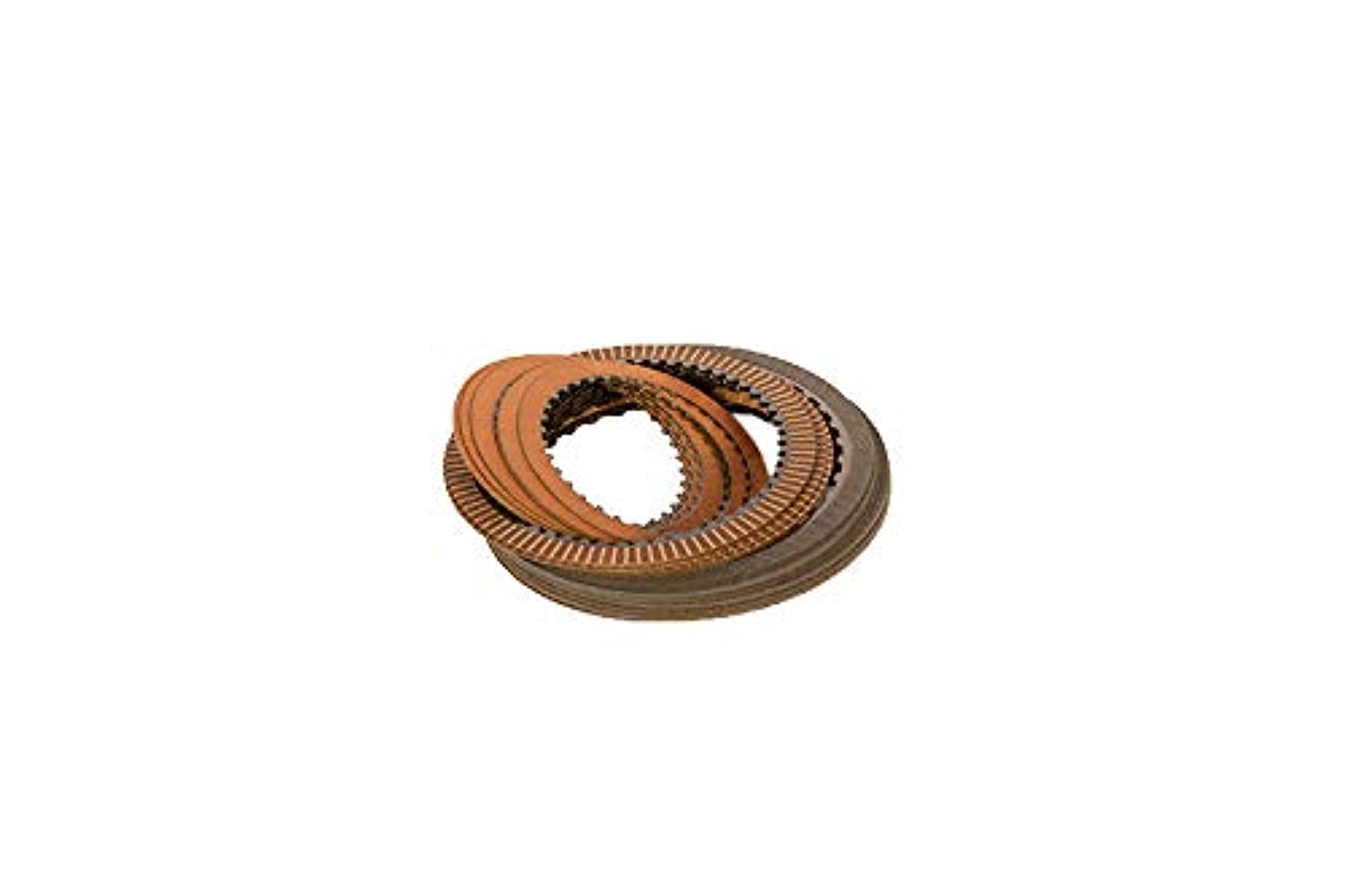
If the pan is clean and fourth, fifth and sixth are all gone, the repair is the 4-5-6 clutch drum and shaft assembly — not a solenoid and not a module. Get the whole drum with the shaft rather than chasing the hub alone, and inspect the cooler circuit while the unit is out. The full 6L80 catalog has the pistons, clutch packs, pumps and gasket kits that go with the job.
6L80 4-5-6 Clutch Drum with Shaft →FAQ
Why won't my 6L80 shift into 5th or 6th gear?
Start by checking whether fourth still works, because that answer splits the repair. The 4-5-6 clutch applies in fourth, fifth and sixth, so if all three are gone the fault is in that one circuit and the transmission will top out in third. If fourth is fine and only fifth and sixth are missing, the 4-5-6 clutch is holding and the likely causes are overheating, low or unstable line pressure, or a converter lockup problem rather than a failed clutch pack.
Is it safe to drive a 6L80 that won't shift into overdrive?
Short distances to get it to a shop, usually yes. Continuing to drive it is a bad trade. Running without top gear means higher engine speed, more heat into the fluid, and a converter that may never lock, and heat is what turns a non-apply into a burned clutch pack and a contaminated cooler. If the gear is missing because a clutch is slipping rather than not applying, every additional mile makes the repair bigger. Do not tow with it.
Does P0796 mean a bad solenoid on a 6L80?
Not necessarily, and on 2015-2016 GM trucks it frequently does not. GM bulletin 16-NA-027 documents P0796 together with no fourth, fifth and sixth gears being caused by a broken 4-5-6 clutch hub with output carrier shaft, and the bulletin states that in that case the TEHCM is not the cause and should not be replaced. The giveaway is a clean pan with clean fluid, because the failure is a fractured shaft rather than a clutch wearing itself away.
Will a fluid change fix a 6L80 that won't go into overdrive?
Only if the real problem is fluid level or fluid condition, which does happen. A low level drops line pressure and can cost you the top gears, and setting the level correctly is temperature dependent on this unit, so a quart count is not good enough. If the level is right and the fluid is clean, new fluid will not restore a gear. Fix the level first because it is free, then move on to the cooling circuit and a pressure reading.
What is the difference between "no overdrive" and "no 4th, 5th and 6th"?
They are different failures that customers describe with the same words. On a 6L80, fourth gear is 1.15:1 and is still a reduction, so only fifth (0.85) and sixth (0.67) are true overdrive. Losing just fifth and sixth means the 4-5-6 clutch is still working. Losing fourth as well means the whole 4-5-6 circuit is down and the truck is stuck in third at around 3,500 rpm at highway speed, which is the more serious of the two.