
A 6R140 with 150,000+ miles on it is not failing because of its odometer. It is failing, when it fails, at three specific wear points that Ford and Sonnax have both documented with part numbers: the line pressure control valve bore, the converter hub support pump bearing, and the variable bleed solenoids losing their calibration. None of those are catastrophic on their own, and none require a rebuild if you catch them early. What they require is knowing what to actually check, instead of throwing a fluid change at a problem that is hydraulic or electronic.
This is not a repeat of our filter and pan service guide, which covers the torque specs and refill quantities for a routine drop. This is what to inspect once the truck has real miles and real duty cycle on it -- towing, plowing, fleet use -- and the symptoms are starting to show up even though the fluid looks fine.
Ford already updated the valve body procedure once
Ford issued Special Service Message SSM 46451 in March 2017, and it is specific: 2009-2017 vehicles equipped with a 6R80, 6R100 or 6R140 transmission got an updated main control valve body overhaul procedure, documented in Workshop Manual Section 307-01. The bulletin is explicit that not every valve body needs to be replaced -- the direction to techs is to inspect the bores, springs and valves during diagnosis and repair, and only replace what is actually out of spec. Ford even points to a companion video, General Service Bulletin G0000093, to help with that inspection.
The practical read for a high-mileage truck: if you are chasing a shift complaint on a 2009-2017 6R140 and the valve body is the suspect, do not assume a full valve body swap is the fix. Pull it, inspect the bores and valve travel against spec, and replace only the worn components. That is also exactly what a Sonnax ZIP kit rebuild does -- it targets the specific bores that wear, not the whole casting.
The line pressure control bore: the hydraulic root of harsh or soft shifts
Sonnax's own technical write-up on its oversized line pressure control valve kit describes the actual failure mechanism: constant movement of the line pressure control valve wears its bore over time. Which direction the wear goes determines which symptom you get:
| Wear location | Effect | Symptoms |
|---|---|---|
| Balance spool end | Fluid escapes past the worn bore | High line pressure, harsh shifts, overheating from reduced cooler and converter flow |
| Outboard spool | Diverts converter feed pressure | Low line pressure, soft shifts, burnt clutches |
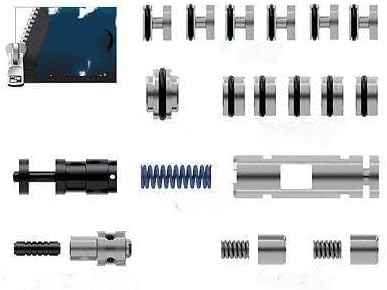
Sonnax's fix is an oversized line pressure control valve kit (part 126740-08K), which requires reconditioning the bore first with its reaming tooling before the new oversized valve goes in. The point for a high-mileage truck is diagnostic: if you are seeing either harsh shifts with heat buildup, or soft shifts with burnt clutch material in the pan, check this bore before you assume the problem is a clutch pack or a sensor. It is a known, specific, named wear point -- not a guess.
Solenoid calibration drift: shifts that will not adapt
The 6R140 and its 6R80 sibling share variable bleed solenoids, and Sonnax's technical note on timing-related shift issues on this platform says plainly that these solenoids "have a tendency to lose their calibration or banding over time." Each solenoid is manufactured and identified to a specific band (1 through 5); when one drifts, the PCM is working from a band identity that no longer matches the solenoid's actual output, which throws off shift control, clutch overlap timing, and adaptation.
What that looks like in the driveway: a flared or binding upshift, a 1-2 slide (tied to the C/26 regulator, which depends on accurate solenoid output), a 2-3 flare or bind-up, shifts that are fine one time and harsh the next, or adaptations that simply will not lock in no matter how many drive cycles you give them. On the 6R140 specifically, Sonnax also ties 5-6 shift complaints to the 4-5-6 latch valve circuit, which is affected the same way.
The fix Sonnax documents is reprogramming the correct solenoid strategy code and solenoid body ID into the PCM so it knows each solenoid's actual band and position -- not swapping parts blind. If you are replacing solenoids on a high-mileage 6R140, confirm the band stamped on the new part matches what the PCM strategy expects, and do not reuse a solenoid you suspect has drifted.
The whine that is not the main pump
A high-pitched whine on a high-mileage 6R140 gets blamed on "the pump" a lot, and it is sometimes a narrower, cheaper problem: the converter hub support pump bearing. Sonnax's technical article on its replacement impeller hub for this unit notes that on many cores it has handled, the integral seal on this bearing is the first thing to fail. Once the seal goes, lubrication pressure at that bearing drops, and if the bearing itself follows, you get the whine.
Sonnax sells the direct OE-style replacement bearing as part 126202, and recommends replacing it any time the impeller hub is serviced -- its reasoning is that a needle bearing can look fine visually and still be worn past usable life. If a whine shows up on a high-mileage truck and converter/lube pressure testing points to this circuit rather than the main pump body, this is a far smaller job than a pump replacement.
The high-mileage 6R140 checklist
Put together, here is the order I actually work a high-mileage 6R140 that is starting to show symptoms, whether that is a shift complaint, a noise, or just a truck that has towed hard for years without an internal inspection:
- Fluid condition and level, hot. Burnt or dark fluid changes everything downstream of it. Rule this out first, every time.
- Pan and magnet. Friction material or metal in the pan tells you whether you are looking at a wear-point fix or a bigger problem before you go any further.
- Line pressure test. High or low against spec points you directly at the line pressure control bore in the direction Sonnax documents above.
- Converter/lube pressure at the hub support bearing circuit, if there is an audible whine. Confirms or rules out the bearing before you pull the pump.
- Valve body bore and valve inspection per SSM 46451's direction -- inspect before you replace. This is also where a ZIP-kit style rebuild targets the line pressure bore from the section above in the same job.
- Solenoid band verification against PCM strategy if shifts are flared, binding, or will not adapt after a repair.
Fluid service is still the cheapest insurance
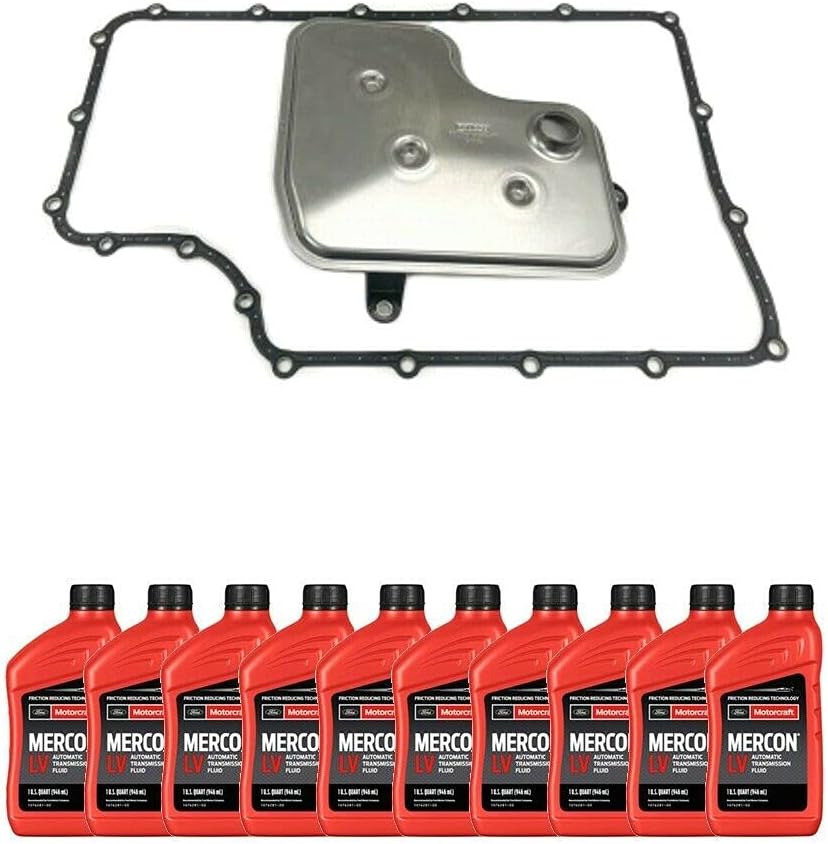
None of the wear points above are prevented by a fluid change by themselves, but dirty or overheated fluid accelerates every one of them. ATS Diesel's own install manual for its 6R140 deep pan recommends a full fluid and filter service every 30,000 miles, especially on trucks that tow, and says plainly that this is well short of Ford's longer factory interval. On a truck that plows, tows a trailer regularly, or runs fleet miles, that is the number to plan around -- not the number in the glovebox manual written for light-duty use. Our filter and pan service guide has the exact pan bolt torque, filter part number and refill quantities for that job.
When a checklist item turns into a rebuild
Every wear point above has a targeted fix: a bore kit, a bearing, a solenoid reprogram, a valve body inspection. None of them by themselves mean the transmission is done. Where I draw the line is when more than one shows up at once on a truck that has never had an internal service -- worn line pressure bore plus a whining bearing plus drifted solenoids on a 200,000-mile unit is a rebuild conversation, not a parts-chase. Our 6R140 problems and service guide covers that broader picture, and our valve body wear guide goes deeper on that specific component.
6R140 shift solenoid kit, 2011 and up
Matched solenoid set for the calibration-drift symptoms covered above. Sold by our sister store, CoreTransmissionParts.
Shop the part for this fix →Symptoms point past the solenoids and valve body? The master rebuild kit with gaskets covers the full internal service.
Need parts for this job?
Our 6R140 parts page has the valve body kit, solenoid kit, service kits and the hard parts for when a checklist item turns into a bigger repair. Checkout is on site.
FAQ
What is the first thing that wears out on a high-mileage 6R140?
Based on Sonnax's own technical bulletins, two hydraulic wear points show up most: the line pressure control valve bore, which wears from constant valve oscillation and causes either high line pressure with harsh shifts or low line pressure with burnt clutches, and the converter hub support pump bearing, whose integral seal fails first and produces a high-pitched pump whine. Neither is a mileage-triggered recall; they are wear patterns Sonnax engineered fix kits around.
Does Ford have a bulletin covering the 6R140 valve body at high mileage?
Yes. Ford Special Service Message SSM 46451 covers 2009-2017 vehicles with a 6R80, 6R100 or 6R140 transmission and documents an updated main control valve body overhaul procedure in Workshop Manual Section 307-01. It specifically says not every valve body needs replacement -- techs are directed to inspect the bores, springs and valves first and replace only what is out of spec.
Does a whining noise from a 6R140 at high mileage mean the pump is failing?
It often points to the converter hub support pump bearing specifically, not the whole pump. Sonnax's technical write-up on the replacement hub says the integral seal on this bearing is usually the first thing to fail, which drops lubrication pressure, and the bearing itself follows with a high-pitched whine. It is a separate, serviceable wear point from the main pump body.
Why do shifts get harsh or flared on a high-mileage 6R140 that was never rebuilt?
Sonnax's technical note on 6R80/6R140 timing-related shift issues attributes this to the variable bleed solenoids losing their calibration, or banding, over time. A drifted solenoid can read as a different band than it actually is, which throws off the PCM's shift control and clutch-overlap timing -- producing flared upshifts, 1-2 slide, 2-3 flare, or adaptations that will not lock in, even with no other failure present.
How often should a 6R140 get fluid and filter service if the truck tows?
ATS Diesel's own install manual for its 6R140 deep pan recommends a full fluid and filter service every 30,000 miles, especially on trucks that tow, and notes this is well short of Ford's longer factory interval. We cover the exact pan bolt torque, filter part number and refill quantities in our 6R140 filter and pan service guide.
Related guides
- 6R140 Filter and Pan Service Guide
- 6R140 Valve Body Wear and Fix
- 6R140 Pump Failure Symptoms
- 6R140 Pressure Control Solenoid Symptoms
- Ford 6R140 TorqShift Problems and Service Guide
Sources
- Ford Motor Company, Special Service Message SSM 46451 (March 2017), hosted by NHTSA. Backs the 2009-2017 6R80/6R100/6R140 coverage, the updated main control valve body overhaul procedure in Workshop Manual Section 307-01, the inspect-before-replace direction, and the GSB G0000093 video reference. static.nhtsa.gov (PDF)
- Sonnax, Oversized Line Pressure Control Valve Kit, part 126740-08K. Backs the line pressure control bore wear mechanism, the balance-spool versus outboard-spool failure directions and their opposite symptoms (high pressure/harsh shifts versus low pressure/burnt clutches), and the oversized valve kit fix. sonnax.com
- Sonnax, "Troubleshooting Ford 6R80/6R140 Timing-Related Shift Issues." Backs the variable bleed solenoid calibration/banding drift, the resulting flared and binding shift symptoms, the 1-2 slide and 2-3 flare mechanisms, the 4-5-6 latch valve circuit note for the 6R140, and the solenoid strategy/body ID reprogramming fix. sonnax.com
- Sonnax, "There's a New Hub in Town." Backs the converter hub support pump bearing failure pattern, the integral seal failing first, the resulting whine, and the OE-replacement bearing part 126202. sonnax.com
- ATS Diesel, Installation Manual P/N 301-900-3368, 6R140 Deep Transmission Pan. Backs the 30,000-mile severe-duty fluid and filter service recommendation for towing use, versus Ford's longer factory interval. ATS install manual (PDF)