A spot of red fluid under a Ford truck or Mustang usually means one thing on a 6R80: something at the back half of the case is weeping. The hard part isn't noticing the leak, it's finding which of several possible points is actually responsible, because more than one of them can leak at the same time. A well-documented repair case from a Sonnax technical specialist shows exactly how that plays out, including a fix that looked complete and then failed again within a day.
This guide walks through the real leak points on a 6R80 in the order they get blamed, what actually causes each one, and the one cause that's easy to miss because it doesn't look like a seal problem at all.

Why 6R80 leaks are hard to pin down
The 6R80 doesn't have a conventional dipstick on most applications. In place of it is a plastic plug in the case where a dipstick tube would normally sit. That design detail matters for leak diagnosis for a reason most people don't expect: because the fill point is sealed rather than open to atmosphere, anything that raises pressure inside the case has to find another way out. That "another way out" is usually whichever gasket, seal or O-ring is weakest at the moment, and on a 6R80 there are several candidates sitting close together at the back of the case.
A Sonnax technical specialist documented a case that shows this clearly. A 2009 Ford F-150 with a 5.4L V8 and 6R80 came in with an intermittent leak, sometimes nothing for weeks, sometimes a puddle more than a foot across in a short period. On the lift, the most obvious source looked like the case connector. That diagnosis wasn't wrong, but it also wasn't the whole story.
Leak point 1: the case connector O-rings
The case connector (sometimes called the bulkhead connector) is where the internal wiring harness exits the transmission case to meet the vehicle harness. It carries its own set of O-ring seals, and those seals have a documented history of failure on the 6R80. ATSG flagged the same problem in 2009 on the closely related ZF6HP26 and recommended replacing the connector outright. Ford followed with its own bulletin for the 6R80, TSB 11-2-25, and revised it in 2014 as TSB 14-0069. The revision is specific: it only pays to replace the connector's original red or orange O-rings with the updated black O-rings, not the whole connector assembly. ATRA repeated the same fix in a 2012 technical bulletin (#1495).
In the documented case, the shop replaced the connector with the latest version and added dye to the fluid to monitor it. The truck came back within a day or two with the same leak. That is the detail worth remembering: a case-connector repair that doesn't hold is not automatically proof the part was installed wrong. It can mean something else is forcing fluid past a seal that would otherwise be fine.
Leak point 2: a stuck vent check valve (the one people miss)
With the truck back on the lift and leaking again, the technician parked it over a large piece of cardboard and let it sit. The dye showed leaks at multiple points at once, not just the connector. When the fill plug was removed to check the fluid level, there was a loud rush of air escaping the sump; pressure that should never have been there.
The transmission vent, mounted at the top front of the case, is supposed to bleed off exactly that kind of pressure buildup as the fluid heats and cools. It's also nearly impossible to see with the transmission still in the vehicle, which is why it gets overlooked. Pulling the cap off a spare 6R80 core turned up the cause: a red rubber check valve inside the vent, likely installed to keep water from being drawn in through the vent on a water crossing or wash. That valve was holding back enough pressure to force fluid out of several seals simultaneously, including the connector that had just been replaced.
The fix is simple once you know to look for it: the check valve can be picked out of the vent by hand. If the entire vent housing comes off by accident while you're trying to remove just the cap, a plastic GM 350-style vent is a documented substitute. Removing the check valve is worth doing before you chase any other leak on a 6R80, because a pressurized sump will make an otherwise sound gasket look like a failed one.
Leak point 3: the pan gasket and filter seal
The 6R80's pan gasket is a reusable-style gasket, and it's sturdy when it's handled correctly. The common way to damage it is over-torquing the pan bolts during a fluid and filter service, which can distort the gasket enough to seep afterward even though it looked fine going back on. Reusing a gasket that's already been crushed once is the other common mistake. If a leak shows up at the bottom edge of the pan shortly after a service, start here before looking anywhere else, and replace the gasket rather than reusing it.
Leak point 4: cooler line fittings
The two cooler lines that run fluid out to the radiator or an auxiliary cooler and back use fittings at the transmission case. Over time these fittings, and the metal lines themselves, are exposed to road salt and debris and can corrode or crack, especially on trucks that see winter roads. A leak that tracks back along the underside of the vehicle toward the cooler lines, rather than pooling directly under the bell housing or the pan, points here. This is also the point most affected by a pressurized vent for the same reason as the case connector: a weak fitting will show fluid sooner under internal pressure than it would otherwise.
Make sure it is transmission fluid, and the right fluid
Red fluid at the back of the case is not automatically a 6R80 leak on a 4x4. Ford's product data for Motorcraft MERCON LV (XT-10-QLVC), the fluid the 6R80 is filled with, says it is "dyed red for ease of leak detection" and is also specified "for use in all transfer cases." On a four-wheel-drive F-150 or Expedition, the transfer case bolted to the tail of the 6R80 runs the same red fluid, so a wet spot at the adapter can be a transfer case input or output seal. Ford's 2016 Expedition owner's manual lists the transfer case on MERCON LV with a capacity of only 1.5 qt (1.4 L), so even a slow seep there runs it low quickly. Check the transfer case level before you pull anything off the transmission.
Low transmission fluid on a 6R80 always means a leak somewhere. The same Ford manual states that the transmission does not consume fluid, and that slipping, slow shifts or any sign of leaking fluid are reasons to have it checked. If a customer says it "just uses a little," that is a leak you have not found yet.
When you top the unit back up after a leak repair, use MERCON LV only. Ford's same data sheet says MERCON LV is not to be used where MERCON ULV or MERCON V is called for, and the reverse applies: a shop that tops off a 6R80 with whatever red ATF is on the shelf has created a second problem while fixing the first.
Set the level the way Ford does, or you can create a leak you did not have. Ford's level check procedure, as reproduced in Camerota's 6R80 installation guide, has you cycle the selector through every position, then read the fill-plug indicator with the scan tool showing 96.7-102°C (206-215°F) fluid temperature, using the upper edge of the dotted (B) area. It also warns plainly not to overfill. In my experience an overfilled 6R80 is one of the most common reasons fluid turns up at the vent after a service, because the extra oil has nowhere to go once it expands hot. Reinstall the fill plug to 26 lb-ft (35 Nm), not tighter.
How to actually diagnose it, instead of guessing
- Remove the vent check valve first, or at least rule it in or out. It costs nothing to check and it changes how every other leak point behaves.
- Clean the transmission thoroughly, add UV dye to the fluid, and road test it. A one-time inspection on a lift misses an intermittent leak, as the documented case showed. Park over cardboard or a clean floor and give it time.
- Inspect every candidate point under UV light at once: the case connector, the pan rail, both cooler line fittings, and the fill plug. Multiple glowing points means a pressure problem, not four unrelated failures.
- If it's the connector, use the current revision parts: black O-rings per TSB 14-0069, not the original red or orange ones.
- If it's the pan, replace the gasket and torque the bolts to spec rather than reusing a gasket that's already been compressed once.
Not the same problem: electrical failsafe at the same connector
One wrinkle worth flagging: the same general connector area on a 6R80 is also tied to a completely different complaint that has nothing to do with fluid leaking out. A GEARS Magazine case from ATRA describes a 2012 Expedition where a failing bulkhead connector caused the output speed sensor signal to drop out intermittently, setting codes P0720 and P0722, dropping the speedometer to zero, and putting the transmission into failsafe until the key was cycled. That is an electrical fault in the connector's internal wiring, not a seal failure, and the fix there was the connector part itself, not an O-ring kit. If your symptom is a wrench light, a dead speedometer or the transmission holding one gear rather than fluid on the ground, that's a different repair; our 6R80 limp mode guide covers that version in detail.
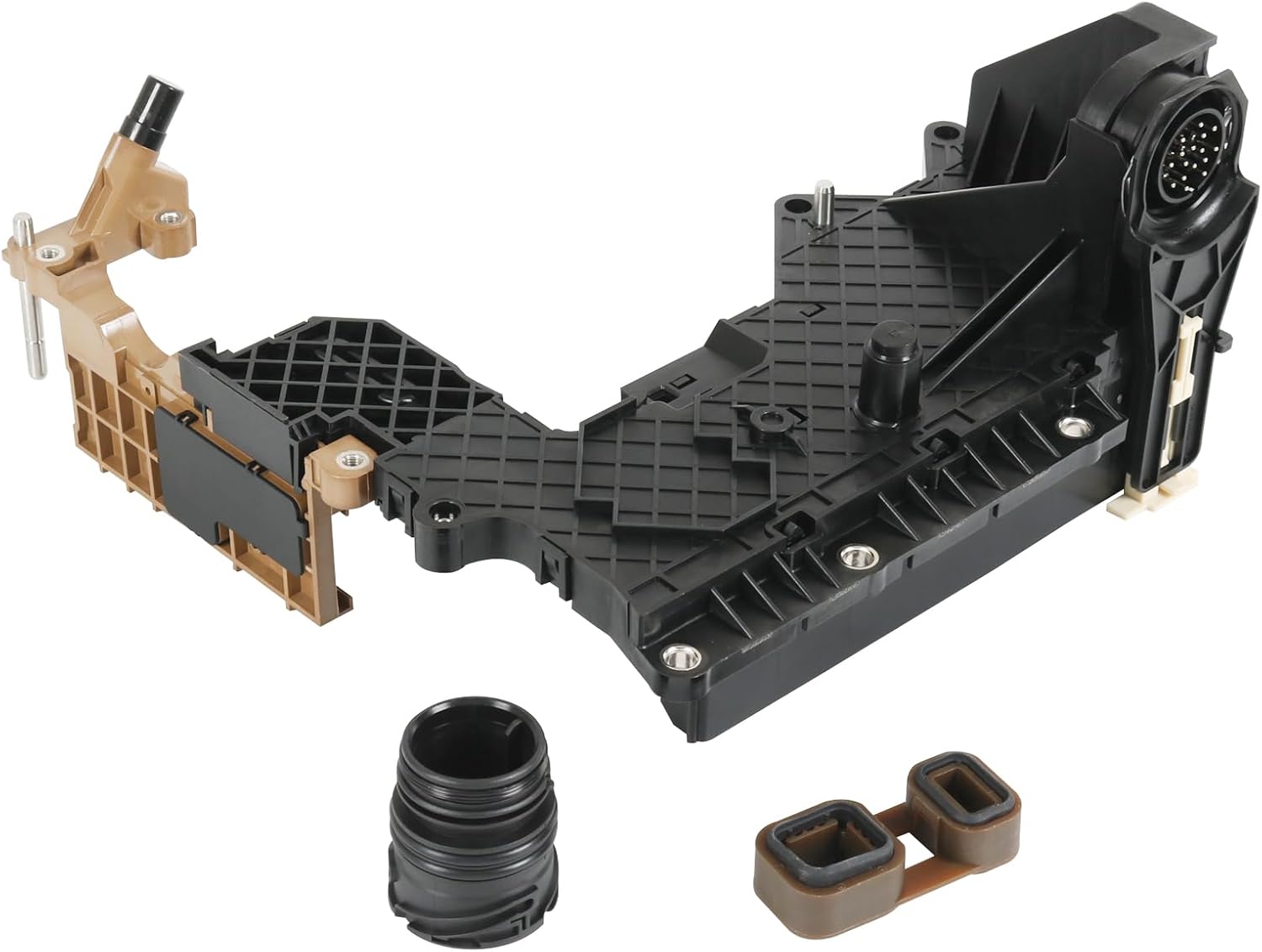
6R80 case connector with updated seals
The documented fix for the most common 6R80 leak point: a replacement case connector sleeve with the current O-ring revision. Sold by our sister store, CoreTransmissionParts.
Shop the part for this fix →Need parts for this job?
Our 6R80 parts page has case connectors, filter and pan gasket kits, coolers and cooler lines, and Motorcraft MERCON LV. Checkout is on site.
FAQ
Where does a Ford 6R80 most commonly leak?
The case connector (also called the bulkhead connector) is the most documented leak point, covered by Ford TSB 11-2-25 and its 2014 revision TSB 14-0069. After that, the pan gasket and filter seal, the cooler line fittings, and a clogged transmission vent are the next most common sources. Several of these can leak at the same time, which is what makes the 6R80 a hard unit to chase with a single fix.
I replaced the case connector O-rings and the leak came back. Why?
A documented Sonnax/Transmission Digest case on a 2009 F-150 found exactly this. After the connector was replaced, the leak returned within a day. The actual cause was a clogged check valve inside the transmission vent, which pressurized the sump and forced fluid out of several seals at once, including the connector that had just been fixed. Pulling the check valve out of the vent solved it.
Does a 6R80 have a transmission dipstick?
No. Most 6R80 applications use a plastic fill plug in place of a dipstick tube, checked at the correct fluid temperature with the engine running. That plug is also a common point people suspect for leaks, though it is less common than the case connector, pan gasket or vent.
Can a bad transmission vent actually cause a fluid leak?
Yes. The 6R80 vent is supposed to relieve pressure that builds up in the sump as the fluid heats and cools. If a check valve inside the vent sticks closed, that pressure has nowhere to go and gets forced out through every seal and gasket on the case at once, including ones that are otherwise in good condition. This is an underdiagnosed cause of leaks that look like they're coming from several places.
Related guides
- 6R80 Limp Mode Causes and Fix
- 6R80 Common Problems and Fixes
- 6R80 Slipping: Causes and Fix
- 6R80 Fluid Type and Capacity
- 6R80 Overheating Prevention
Sources
- Sonnax, Ed Lee (Sonnax TASC Force), "6R80 Transmission: Solving a Leak Mystery," November 28, 2017. Backs the 2009 F-150 case, the case connector bulletin lineage (ATSG 2009 on the ZF6HP26, Ford TSB 11-2-25, 2014 revision TSB 14-0069, ATRA bulletin #1495), the red/orange-to-black O-ring update, the vent check valve diagnosis, and the GM 350 vent substitution. sonnax.com
- Transmission Digest, Ed Lee, "Solving the 6R80 Leak Mystery," November 1, 2017 (same case, Transmission Digest edition). Backs the same bulletin history and the leak returning after the first connector replacement. transmissiondigest.com
- GEARS Magazine (ATRA), Rolly Alvarez, "Heavy Metal! Multiple 6R60E/6R80E Problems Traced to Bulkhead Connector," December 2015. Backs the distinction between a connector fluid leak and a connector electrical/signal fault, including the P0720/P0722 codes, the speedometer dropout and failsafe entry on a 2012 Expedition. gearsmagazine.com
- Ford Motor Company, TSB 13-6-8, "6R80 Transmission High Gear Engagement From A Stop," June 7, 2013. Backs the related lead-frame/connector hardware family referenced for the electrical failsafe distinction above; full detail covered in our 6R80 limp mode guide. static.nhtsa.gov (PDF)
- Ford Motor Company / Motorcraft, "MERCON LV Automatic Transmission Fluid" product data (FCSD Chemicals and Lubricants catalog, XT-10-QLVC). Backs the red dye for leak detection, use in all transfer cases, and the warning not to use MERCON LV where MERCON ULV or MERCON V is specified. fcsdchemicalsandlubricants.com
- Ford Motor Company, 2016 Expedition Owner's Manual, Maintenance and Capacities and Specifications chapters (archived copy of Ford's PDF). Backs the transfer case on MERCON LV at 1.5 qt (1.4 L), the statement that the transmission does not consume fluid, and the advice to have slipping, slow shifts or leaking fluid checked. Owner's manual (PDF)
- Camerota, Ford 6R80 Transmission Installation Guide, reproducing Ford workshop manual section 307-01 procedures. Backs the level check sequence, the 96.7-102°C (206-215°F) check temperature, the dotted (B) area reading, the do-not-overfill warning and the 26 lb-ft (35 Nm) fill plug torque. camerota.com (PDF)