A Mustang owner who says the automatic is slipping usually means one of four things: the engine flares between gears, the car feels flat pulling away from a light, the tach climbs at full throttle without the car picking up speed, or the rpm wanders at cruise. On a 2011-2017 Mustang with the 6R80, those come from different parts of the transmission, and only some of them are burned clutches. The rest are a lead frame, a calibration, or a worn valve body.
Our general 6R80 slipping guide covers this unit across every Ford that uses it. This one sticks to the Mustang and the way Mustangs get driven: hard launches, high-rpm shifts, aftermarket tunes, and the occasional supercharger bolted on in a driveway. Every bulletin and trade article behind the specifics is linked in the Sources section at the bottom.


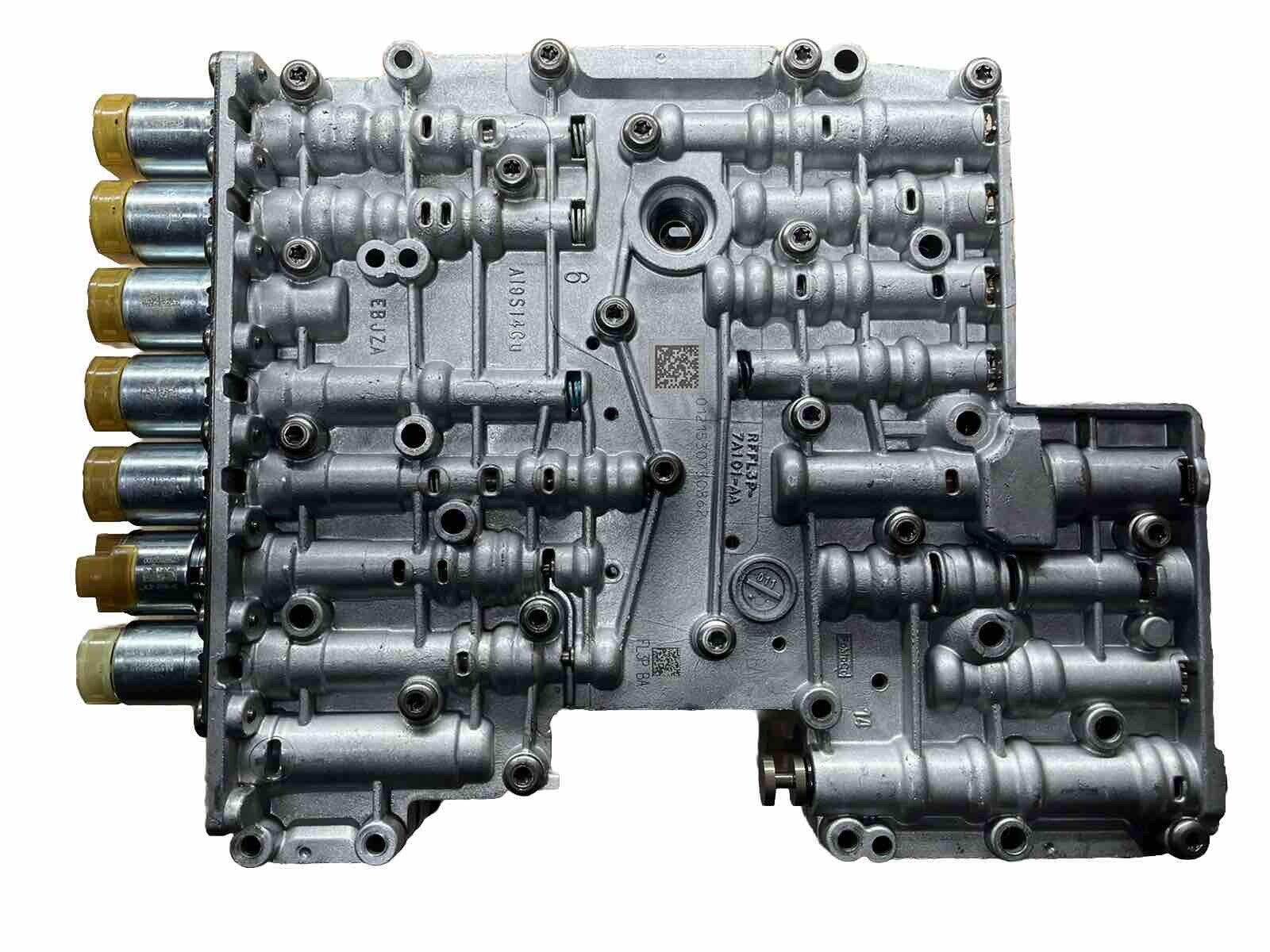
Which Mustangs have the 6R80
Ford put the 6R80 behind the Mustang's optional automatic starting in 2011 and kept it through 2017. The 2018 car moved to the 10R80 ten-speed, which is a different transmission with a different fluid. Make sure you know which one you have before you buy a single part.
| Years | Body | Engines with the 6R80 | What to watch for |
|---|---|---|---|
| 2011-2014 | S197 | 3.7L V6, 5.0L V8 | Lead frame 5th-gear starts (TSB 13-6-8), 2009-2014 valve body |
| 2015-2017 | S550 | 2.3L EcoBoost, 3.7L V6, 5.0L V8 | 2015-later valve body and pressure regulator changes |
| 2018-up | S550 | 10R80, not a 6R80 | MERCON ULV, different parts entirely |
Ford's own fluid chart backs that split. It lists the 6R80 for the Mustang with the 3.7L, 5.0L and 2.3L EcoBoost on MERCON LV, and the 10R80 Mustang on MERCON ULV.
What "slipping" means on a Mustang
| What the driver feels | What it usually is | First check |
|---|---|---|
| Flat from a stop, speedometer at zero, wrench light | Starting in 5th on a lead frame fault (2011-2014) | Commanded gear at launch, P0720/P0722 |
| RPM flare on the 1-2 or 2-3, then it catches | Solenoid output or valve body wear, adapts not learned | Shift time and ratio through the shift |
| Harsh and flare shifts right after a tune or swap | Calibration or solenoid strategy mismatch | Strategy and body ID in the PCM vs. the case tag |
| Tach climbs at wide open throttle, car does not pull | A clutch that cannot hold the torque, or burned frictions | TSS vs. OSS times ratio at WOT, fluid condition |
| RPM wanders at steady cruise | Converter clutch slip | TCC slip actual vs. desired |
Only the fourth row is a classic slipping clutch, and even then you need to know whether the clutch was overpowered or just worn out. That decision changes the parts list, so it is worth getting right before the pan comes off.
Prove it on the scan tool
A clutch slip is turbine speed running faster than output shaft speed times the gear ratio. Graph turbine shaft speed (TSS), output shaft speed (OSS), commanded gear and engine rpm together through the complaint. The 6R80 ratios are 4.17, 2.34, 1.52, 1.14, 0.87 and 0.69 for 1st through 6th, and 3.40 in Reverse. Say the car is in 3rd at 1,800 rpm OSS. TSS should sit near 2,740. If TSS keeps climbing past that while commanded gear holds at 3rd, a clutch is letting go. If TSS matches the math and engine rpm is the only number moving, look at the converter.
Both speed sensors, the range sensor and the fluid temperature sensor live on the valve body assembly, per ATRA's Lance Wiggins in GEARS. That matters on a Mustang: if TSS or OSS drops out, the PCM loses its ratio math and can default to a failsafe gear, and a car stuck in a high gear feels exactly like a slip from a stop.
Once you know which gears slip, the clutch apply chart tells you which clutch is suspect. The 6R80 has three driving clutches (A, B, E) and two brake clutches (C, D), as GEARS Magazine lays out in its 6R80 update series. Each gear uses two of them.
| Gear | Ratio | Clutches applied |
|---|---|---|
| 1st | 4.17 | A + D (one-way clutch holds in Drive on 2011-up) |
| 2nd | 2.34 | A + C |
| 3rd | 1.52 | A + B |
| 4th | 1.14 | A + E |
| 5th | 0.87 | B + E |
| 6th | 0.69 | C + E |
| Reverse | 3.40 | B + D |
Slips in 1st through 4th point at A. Slips in 3rd, 5th and Reverse point at B. Slips in 4th, 5th and 6th point at E. On Mustangs that get launched hard, I find A and B worn more often than anything else, because they carry the load in the gears where the car makes its hardest pulls.
The 1st-gear test that is specific to 2011 and later
For 2011, Ford added a one-way clutch to the rear planetary. GEARS Magazine explains that on the later design the D clutch only applies until about 3 mph and then releases, leaving the one-way clutch to hold 1st in Drive. The D/E solenoid is normally high, about 50 mA applies D and about 850 mA releases it. So drive the car in Drive and then in manual 1, where D stays on for engine braking. If it slips in 1st in Drive but holds in manual 1, the one-way clutch is the suspect, not A.
2011-2014: the 5th-gear start that feels like a slip
Ford TSB 13-6-8 covers 2011-2014 Mustangs with the 6R80 built on or before April 8, 2013 that engage 5th gear when starting. The bulletin describes the wrench light and the seat belt minder possibly lit, the speedometer at zero and dashes in the odometer while driving. The symptoms can clear after a key cycle, and P0720 and P0722 may or may not be stored. The fix is molded lead frame AL3Z-7G276-A with 2.2 hours of labor on the Mustang, and the bulletin states that shift solenoids do not have to be replaced.
GEARS explains why the car behaves that way. When the system loses control, the 6R80 goes to failsafe: 5th gear in Drive if the failure happened in 5th or 6th, and 3rd gear in manual for other failures. A Mustang pulling away from a light in 5th has a 0.87 ratio doing a 4.17 job, so the owner calls it slipping. On the scan tool it is obvious. Commanded gear reads 5th at launch, or OSS reads zero while the car is moving. A real slip shows commanded 1st and TSS running ahead of OSS times 4.17.
If you have one of these cars, check the VIN for open campaigns first. The later Mustang lead frame recalls are mapped by year in our 6R80 Mustang common problems post.
Tunes, swaps and solenoid strategy
Mustangs get tuned more than any other 6R80 car, and the transmission is part of the calibration. Every 6R80 has a case tag with a 13-digit solenoid body strategy and a 12-digit solenoid body identification, per GEARS. Those numbers are the calibration data for the specific solenoids in that valve body. Each solenoid comes in one of five calibration bands, and the band number is printed beside the barcode on the solenoid. If the strategy in the PCM does not match the valve body, GEARS warns you can get harsh shifts, driveability problems or transmission damage.
That is the first thing I check on a tuned car with a new slip complaint. Read the strategy and ID the PCM is using, compare them to the case tag, and enter the right ones through programmable parameters if they do not match. A used transmission or a valve body swap with the old numbers left in the PCM will flare from day one. So will a tune file that changed torque output without the shift and pressure tables that go with it.
After the codes are right, reset the adaptive tables and drive it. Sonnax notes that relearn can sometimes finish in three to five shift cycles. If the flare is still there after the car has learned, the problem is hardware.
When the solenoids are the hardware
Sonnax's Jim Dial explains that the 6R80's variable bleed solenoids can lose calibration over time, drifting from their original band. A band 3 can start acting like a band 5 or a band 1.5, and the PCM can no longer control shift overlap and adaptation correctly. On the 1-2, the C clutch regulator valve is positioned by SSC solenoid output and a balance circuit. A slow SSC output gives a 1-2 slide, and the same error on release can cause a 2-3 flare. That is a slip the clutches did not start. Solenoids are replaced only with parts that match the original band, or as a matched solenoid body with its own tag. Our 6R80 shift solenoid symptoms post covers the electrical tests.
2015-2017: the later valve body
The S550 Mustang runs the later 6R80 valve body, and it is not the same part as the 2011-2014 one. Sonnax identifies the 2015-later upper and lower castings by the FL3P rough forging number, with a new FL3P separator plate that has an angular cutout. The pressure regulator valve and sleeve also changed, adding a fourth size variation to the ZF6HP and 6R80 family.
That pressure regulator is the part to look at on a high-mileage S550 that slips. Sonnax lists the symptoms of a worn regulator on these units as harsh or flare shifts, erratic line pressure, slips in Forward and Reverse, delayed or no Reverse, and converter clutch slip. Low line pressure takes holding capacity away from every clutch at once, so the slip shows up in more than one gear and gets worse hot. Sonnax also warns to measure both the sleeve and the valve before any bore repair, because mixing early and late parts causes line pressure and shift problems.
If the fluid is clean and the slip is spread across gears, rebuild or replace the valve body before you tear down the transmission. Our 6R80 valve body testing guide walks through the checks. When you order, match the casting and the start-stop or non-start-stop version, then program the new solenoid body strategy and ID.
Extra power and burned clutches
A clutch holds based on its friction area and the pressure applied to it. Ford sized the 6R80 clutch packs and line pressure for the factory engines. Add boost and a hard launch, and the A and B clutches see more torque than they were built for. When that happens, the slip shows up at wide open throttle first, usually on the 2-3 or 3-4 with the tach jumping a few hundred rpm before the shift completes.
Pull the pan before you decide anything. Clean MERCON LV with a light film of normal wear in the pan means the clutches are being overpowered but have not failed yet, and a calibration with more pressure may hold it for a while. Burnt fluid and friction material in the pan mean the clutches have already slipped long enough to damage themselves. No fluid change, shift kit or tune will bring them back. That transmission needs an overhaul with a full master kit, and on a car with real power it needs a clutch pack upgrade done during that overhaul, not after the next failure.
Fluid: check it before anything else
The Mustang 6R80 takes MERCON LV, Motorcraft XT-10-QLVC. Ford's chart lists it for every 6R80 Mustang engine. There is no dipstick tube on these cars. The level is checked at the fill plug with the car level, the engine running and fluid temperature read on the scan tool, using the procedure in Ford's workshop manual section 307-01. A car that has been raced, slid around or run low on a long highway pull can be a pint or two down, and that alone causes a slip in turns or under hard acceleration. The full procedure and capacities are in our 6R80 fluid type and capacity post. Do not use MERCON ULV in a 6R80. That fluid belongs in the 10R80.
The fix, by what you found
- 2011-2014, starts in 5th, speedometer at zero: lead frame AL3Z-7G276-A per TSB 13-6-8. The solenoids stay.
- Flares after a tune, swap or valve body: match the strategy and body ID to the case tag, load a correct calibration, reset adapts.
- Flares that survive a relearn, clean fluid: solenoid drift or valve body wear. Matched solenoid body or a remanufactured valve body, then program and relearn.
- 2015-2017, slip in several gears and Reverse, worse hot: pressure regulator valve and sleeve wear. Valve body repair or replacement for the FL3P castings.
- Slips in 1st in Drive only, holds in manual 1: one-way clutch.
- Burnt fluid, friction material, slip follows one clutch: overhaul with a master kit and a cooler flush, with clutch capacity upgrades on a modified car.
- Low fluid, clean pan: correct the level with MERCON LV, find the leak, recheck the shifts.
6R80 master rebuild kit with clutch plates, 2011-2017
When a Mustang's clutches are burned, this kit has the frictions, steels, seals and gaskets for a 2011-2017 overhaul, S197 or S550. Sold by our sister store, CoreTransmissionParts.
Shop the part for this fix →Need a different kit? The rebuild kits collection has the other 6R80 kits.
Need parts for this job?
Mustang 6R80 master rebuild kits, lead frame kits, valve bodies by year, solenoid kits and MERCON LV are on our 6R80 parts page, with checkout on site.
FAQ
Why is my Mustang 6R80 slipping?
On a 2011-2017 Mustang the common causes are low or worn MERCON LV, solenoids or valve body wear that let a shift flare, a calibration or solenoid strategy that does not match the transmission, and burned clutches on cars that see hard launches or extra power. A 2011-2014 car that pulls away weakly with the speedometer at zero is usually starting in 5th from a lead frame fault, not slipping. Graph TSS, OSS and commanded gear before replacing anything.
Is there a TSB for a 6R80 Mustang starting in 5th gear?
Yes. Ford TSB 13-6-8 covers 2011-2014 Mustangs with the 6R80 built on or before April 8, 2013 that engage 5th gear when starting. The wrench light may be on, the speedometer reads zero and P0720 or P0722 may be stored. The fix is lead frame AL3Z-7G276-A with 2.2 hours of labor, and the bulletin says the solenoids do not need to be replaced.
Can a tune make a 6R80 slip?
It can make it feel like one. The PCM controls line pressure, shift timing and converter apply, and it has to know the solenoid body strategy and ID for the transmission in the car. A calibration that raises engine torque without matching pressure, or a solenoid body ID that does not match the valve body, causes flares and harsh shifts. Load a matching file, enter the codes from the case tag and reset the adaptive tables before you condemn the hardware.
What fluid does a 6R80 Mustang take?
MERCON LV, Motorcraft part XT-10-QLVC in quarts. Ford's fluid chart lists MERCON LV for the 6R80 Mustang with the 3.7L, 5.0L and 2.3L EcoBoost. The 10R80 that replaced it in 2018 takes MERCON ULV, which is a different fluid and does not belong in a 6R80.
Related guides
- 6R80 Mustang Common Problems and Fixes
- 6R80 Slipping: Causes and Fix
- 6R80 P0720 Fix
- 6R80 Valve Body Problems and Testing
- 6R80 Shift Solenoid Symptoms
Sources
- Ford Motor Company — Technical Service Bulletin 13-6-8, "6R80 Transmission High Gear Engagement From A Stop," June 2013, hosted by NHTSA. Backs the 2011-2014 Mustang coverage, the April 8, 2013 build cutoff, the 5th-gear start symptoms, P0720/P0722, lead frame AL3Z-7G276-A, the no-solenoids note and the 2.2-hour Mustang labor. static.nhtsa.gov (PDF)
- GEARS Magazine (ATRA) — Lance Wiggins, "Controlling the 6R80," July 2015. Backs the sensors on the valve body assembly, the 5th and 3rd gear failsafe modes, the 13-digit strategy and 12-digit solenoid body ID, the five solenoid bands and the warning about mismatched solenoid body data. atracom (PDF)
- GEARS Magazine (ATRA) — David Chalker, "Updates to the Ford 6R80," June 2016. Backs the A, B and E driving clutches and C and D brake clutches, the 2011 one-way clutch, the D clutch releasing at about 3 mph, and the 50 mA apply and 850 mA release values. gearsmagazine.com
- Sonnax — Jim Dial, "Troubleshooting Ford 6R80 & 6R140 Timing-Related Shift Issues." Backs solenoid band drift, the C clutch regulator and SSC behavior behind a 1-2 slide and 2-3 flare, and the three-to-five-cycle adapt relearn. sonnax.com
- Sonnax — "Spotting the Changes to Ford 6R80 '15-Later Valve Bodies," November 2019. Backs the FL3P castings and separator plate, the fourth pressure regulator size variation, the worn-regulator symptom list including slips in Forward and Reverse, and the measure-before-repair warning. sonnax.com
- Ford Customer Service Division — Motorcraft Automatic Transmission Fluid Chart by vehicle. Backs MERCON LV (XT-10-QLVC) for the 6R80 Mustang with the 3.7L, 5.0L and 2.3L EcoBoost, and MERCON ULV for the 10R80 Mustang. fcsdchemicalsandlubricants.com (PDF)