A 6R80 that pulls in Drive but will not move in Reverse is one of the cleaner problems this unit gives you, because Reverse only uses two clutches. Once you know which two, and which of them also work in the forward gears, the truck usually tells you where the fault is before the pan comes off. The catch is that Ford changed how one of those clutches is used in 2011, and that change hides a failing clutch in Drive on later trucks.
This guide covers how Reverse is built inside the 6R80, the known Ford software bulletin for an intermittent loss of Reverse, and a step-by-step way to separate a range-sensor, valve body or clutch problem. Ford bulletin numbers are quoted where they exist, and every source is listed at the bottom.

How the 6R80 makes Reverse
The 6R80 is Ford's version of the ZF 6HP26. It has five clutches, lettered A through E, feeding a Lepelletier gearset (a simple front planetary plus a Ravigneaux rear set). Reverse is a two-clutch range:
- B clutch (3-5-R). Sonnax describes it by function as the 3-5-R clutch, applied by the B solenoid. It is on in 3rd, 5th and Reverse. In their 2-3 shift quality article, the 2-3 shift is the 3-5-R clutch coming on as the 2-6 clutch releases.
- D clutch (low/reverse brake). It holds the rear planetary carrier to the case. It applies in Park, Reverse and Neutral, and in 1st gear at low speed.
So if the truck has no Reverse, either the B clutch is not applying, the D clutch is not holding, or the controller is not asking for Reverse in the first place. That gives you three branches to work through: range input and software, hydraulic and solenoid control, and the clutches themselves.
The 2011 change that hides a bad D clutch
In 2011 Ford added a one-way clutch to the rear planetary. ATRA Technical Bulletin 1861 and GEARS Magazine both describe what that did to the D clutch. On earlier units without the one-way clutch, the D clutch stays applied throughout 1st gear. On 2011-later units, the D clutch only applies until about 3 mph and then releases, and the one-way clutch carries 1st gear from there.
That matters for diagnosis. On a 2011-later truck, a D clutch that has burned or lost its apply pressure can still launch in Drive, because the one-way clutch does the holding. Reverse has no one-way clutch to fall back on, so Reverse is where the failure shows up first. The other place it shows up is engine braking in Manual 1, which also needs the D clutch. A truck with no Reverse and no engine braking in Manual 1, but good 2nd, 3rd and 5th gears, is pointing at the D clutch circuit.
GEARS Magazine also notes that the D clutch is controlled by the SSD (VFS4) solenoid, which is a normally high solenoid. It applies the D clutch at low current, about 50 mA, and releases it at high current, about 850 mA. On a scan tool that shows commanded current, a D solenoid sitting at the high end while the selector is in Reverse means the controller is not asking for D, and you should look at the range input before the hydraulics.
Cause 1: Software (2015-2017 F-150, no codes)
If the complaint is intermittent and specific, check this first. Ford TSB 20-2060 (March 2020) covers 2015-2017 F-150 trucks with the 6R80 that have an intermittent loss of Reverse engagement, loss of the ability to shift into Reverse, or a neutral condition when shifting from Manual 1 or Manual 2 to Reverse at low speed while the truck is still rolling, with no DTCs set. Ford says it may be caused by various strategies in the PCM software, and the fix is to reprogram the PCM and run the Adaptive Learning Drive Cycle from Workshop Manual section 307-01. Labor is 0.9 hours.
The key words are "rolling" and "no DTCs." A truck that will not go into Reverse from a dead stop, or that sets codes, is not a TSB 20-2060 truck. Ford also warns that after the adaptive reset the transmission may shift firmer than normal for several days while it relearns, so tell the customer before they come back with a new complaint.
Cause 2: Range input from the lead frame
The controller decides it is in Reverse from the transmission range (TR) sensor, and on the 6R80 that sensor is part of the molded lead frame bolted to the top of the valve body. If the TR signal is wrong, the controller never commands the Reverse clutches, even though the manual valve inside may be in the right place.
Watch the TR PID on the scan tool while you move the shifter slowly through P, R, N and D. It should change cleanly at each detent and match the selector. If it lags, reads an in-between state or skips Reverse, check the shift cable adjustment first, then the lead frame. A TR, TSS or OSS code with the no-reverse complaint points the same way.
Ford has already recalled this exact failure once. Compliance recall 12C23 (NHTSA campaign 12V190) covered certain 2011-2013 F-150, Expedition, Navigator and Mustang vehicles with the 6R80 for a faulty transmission range sensor, which Ford describes as integral to the lead frame. The complaints listed were Reverse not engaging, the electronic PRNDL not showing R, inoperative backup lamps and an intermittent rear camera. Until an inspection tool reached dealers, Ford's instruction was to replace every lead frame. If your no-reverse truck also has dark backup lamps or a camera that will not come on, that is the range sensor talking, not a clutch. Ford's 12C23 procedure also warns that 5 to 8 quarts can come out once the pan, filter and main control are off, so have fluid on hand.
This is also a common comeback after a lead frame job. Ford's Customer Satisfaction Program 19N01 procedure notes that when you install a new lead frame, the TR sensor pin must be aligned with the manual control valve, and the six long bolts are torqued to 53 lb-in (6 Nm). If the pin is not engaged with the manual valve, the lead frame reports the wrong range. A truck that lost Reverse right after a lead frame or valve body swap should have that pin checked before anything else.
Cause 3: Low fluid
It sounds too simple, but on a unit with no dipstick it gets missed. Reverse needs high apply pressure on both the B and D clutches, and a low level lets the pump pull air when the truck is backed up an incline or turned hard. The symptom is often a delayed Reverse that gets worse when hot, then no Reverse at all. Check the level at the fill/check plug with the engine running and the fluid at operating temperature, following our 6R80 fluid type and capacity guide, and top up only with MERCON LV. While the pan is off, look at what is in it. Fine friction material and a burnt smell tell you a clutch is already damaged. A clean pan with a low level means you need to find the leak.
Cause 4: B or D clutch hydraulic control
If the level is right and the TR input is correct, the next question is whether the valve body is delivering apply pressure to the two Reverse clutches. On this unit that comes down to the solenoids and the clutch regulator valves behind them.
- B solenoid. Because the B clutch is also used in 3rd and 5th, a weak B circuit usually shows up as a 2-3 or 4-5 flare or a ratio code as well as a slipping or delayed Reverse. The Sonnax 2-3 shift quality article walks through that overlap. If 3rd and 5th are clean, the B circuit is less likely.
- D solenoid (SSD). Check commanded current in Reverse against the roughly 50 mA apply value from GEARS. If the command is correct and the D clutch still will not hold, the problem is the solenoid output, the D regulator circuit or the clutch itself.
- Solenoid circuits. Any P0750-P0775 range circuit code gets fixed before you judge the hydraulics. Check the case connector for fluid wicking into the harness side. A corroded pin causes intermittent solenoid faults that look like hydraulic problems.
On earlier units there is one more leak point in the D circuit. GEARS Magazine documented that the pre-one-way-clutch design fed the low/reverse piston through two apply areas, D1 and D2, with a D2 rubber tube seal at the case. On the updated design the D2 port is machined closed, the center support has the D2 passage cast shut, and only the D1 apply area remains. On an early unit with low D clutch pressure, a hardened or missing D2 tube seal is a real suspect. Do not mix early and late center supports or pistons, because the passages do not match.
Cause 5: Burned B or D clutch
If the hydraulics check out, the clutch pack itself has failed. Air-check the B and D clutches with the valve body off. You should hear a solid apply and a clean release, not a hiss. A leaking B circuit usually means piston seal or sealing ring damage, and a leaking D circuit on an early unit points back to the D2 tube seal area. A clutch that applies but was run slipping for miles will still slip once it is back together. Either way it is a teardown, and our 6R80 slipping guide covers the related forward-gear symptoms.
When you rebuild, match the parts to the design level. The 2011-later rear planetary, one-way clutch, center support and D piston are a set. GEARS notes Ford also added a bias spring to hold tension on the one-way clutch so it does not rattle during garage shifts. Leave it out and you will hear it on every shift into gear.
Diagnosis flow, in order
- Check fluid level at the fill plug, hot and running. Look at the pan contents if it is already off.
- Pull codes from the PCM with a scan tool that reads transmission data, and save freeze frame before clearing.
- No codes, 2015-2017 F-150, only when shifting M1/M2 to R while rolling: apply TSB 20-2060 (PCM reprogram and adaptive drive cycle).
- Watch the TR PID through every range. If it does not show Reverse, check cable adjustment, then the lead frame and TR pin alignment.
- Check 3rd and 5th gear quality. Flares or ratio codes there point at the B circuit. Good 3rd and 5th with no Manual 1 engine braking point at the D circuit.
- Check commanded D solenoid current in Reverse (low current applies). Correct command with no hold means hydraulics or clutch.
- Air-check B and D with the valve body off. A leak or burned pack means a teardown with parts matched to the design level.
After any repair, clear codes, reset adaptives and complete the Adaptive Learning Drive Cycle in WSM 307-01. Road test with the fluid fully hot, including several Reverse engagements from a stop and on an incline.
6R80 overhaul rebuild kit with gaskets
When an air check shows a burned B or D clutch, this kit covers the frictions, steels, pistons and sealing rings for the teardown. Sold by our sister store, CoreTransmissionParts.
Shop the part for this fix →If the fault is in the valve body instead, see the 6R80 valve body Zip Kit or the rebuild kits collection.
Need parts for this job?
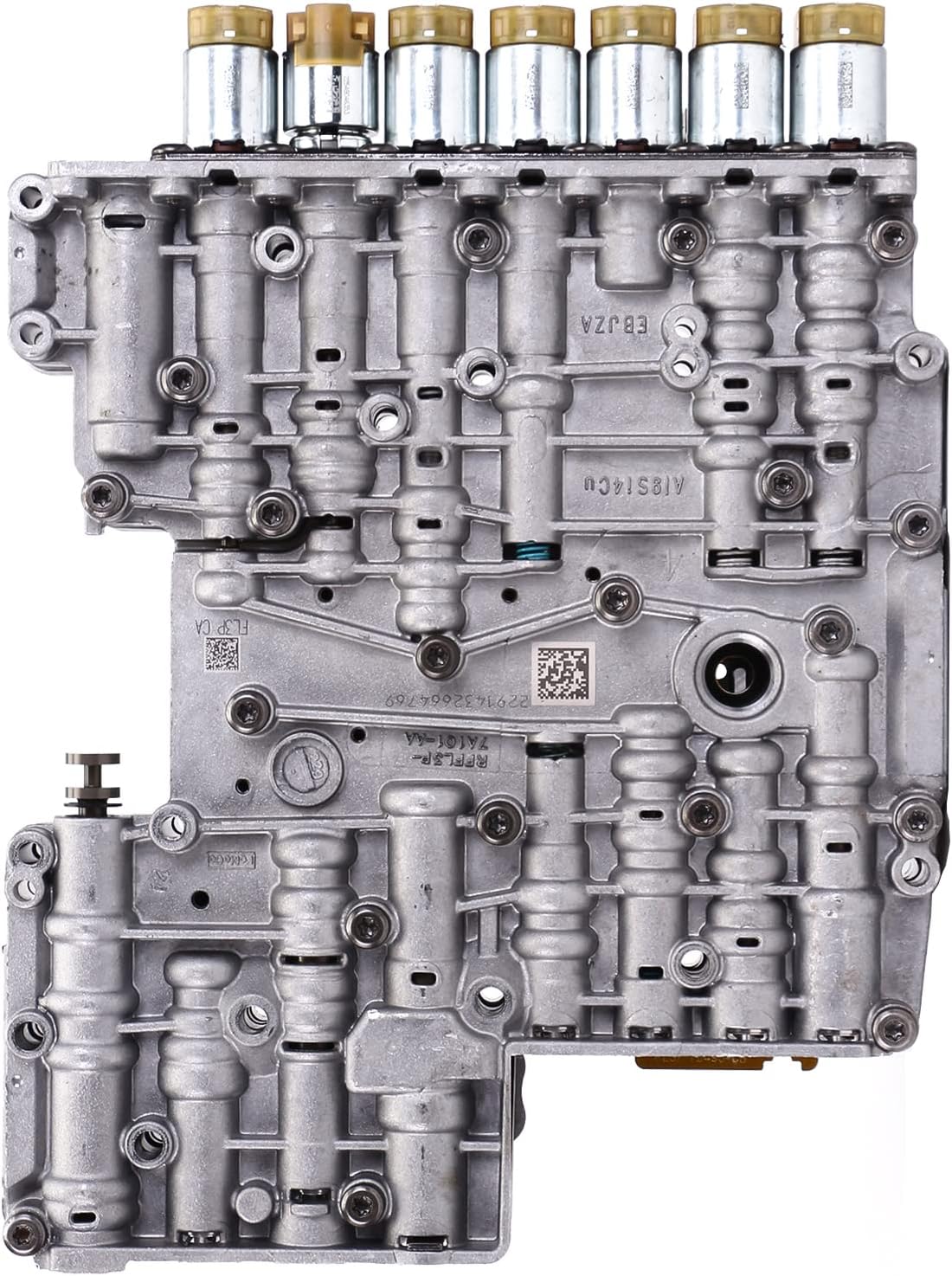
Our 6R80 parts page has master rebuild kits, complete valve bodies with solenoids, solenoid sets, lead frames, filter kits and Motorcraft MERCON LV. Checkout is on site.
FAQ
Which clutches does a 6R80 use for reverse?
Reverse uses two clutches: the B clutch, also called the 3-5-R clutch, and the D clutch, the low/reverse brake that holds the rear planetary carrier to the case. The B clutch also works in 3rd and 5th, so how those gears shift tells you whether the B circuit is healthy.
Why does my 6R80 drive forward but have no reverse?
On 2011-later units a one-way clutch carries 1st gear, and the D clutch only applies until about 3 mph. A burned D clutch can still launch the truck in Drive, but reverse has no one-way clutch to fall back on, so reverse fails first. Loss of engine braking in Manual 1 is the other clue.
Is there a Ford bulletin for 6R80 loss of reverse?
Yes. Ford TSB 20-2060 covers 2015-2017 F-150 trucks that intermittently lose reverse or go to neutral when shifted from Manual 1 or Manual 2 to Reverse while still rolling, with no codes set. The fix is a PCM reprogram and the Adaptive Learning Drive Cycle.
Can a bad lead frame cause no reverse on a 6R80?
It can. The transmission range sensor is part of the molded lead frame, and if it reports the wrong range the controller never commands the reverse clutches. After a lead frame replacement, Ford requires the TR sensor pin to be aligned with the manual control valve, and a misaligned pin is a common cause of range problems.
Related guides
- 6R80 Limp Mode Causes and Fix
- 6R80 Slipping: Causes and Fix
- 6R80 Shift Solenoid Symptoms and Replacement
- 6R80 Valve Body Problems and Testing
- 6R80 Common Problems and Fixes
Sources
- Ford Motor Company, TSB 20-2060, "6R80 Transmission - Intermittent No Engagement/Neutral State During Manual Shift to Reverse Events With No DTCs," March 6, 2020. Backs the 2015-2017 F-150 loss of Reverse when shifting from Manual 1 or Manual 2 to Reverse while rolling with no DTCs, the PCM software cause, the reprogram and Adaptive Learning Drive Cycle (WSM 307-01), the 0.9 hour labor time, and the firmer shifts during relearning. static.nhtsa.gov (PDF)
- ATRA, Technical Bulletin 1861, "6R80 Clutch and Solenoid Apply Charts," July 2018. Backs the 2011 one-way clutch addition and the D clutch applying throughout 1st on earlier units but releasing above about 3 mph on 2011-later units. atracom.blob.core.windows.net (PDF)
- GEARS Magazine (ATRA), "Updates to the Ford 6R80." Backs the D clutch releasing at about 3 mph on one-way-clutch units, and the SSD (VFS4) normally high solenoid applying D at about 50 mA and releasing at about 850 mA. gearsmagazine.com
- GEARS Magazine (ATRA), "Updates to the Ford 6R80 Part 2." Backs the elimination of the D2 apply area, the D2 case port machined closed with no D2 rubber tube seal, the D2 passage cast shut in the center support, and the one-way clutch bias spring. gearsmagazine.com
- Sonnax, "Troubleshooting Ford 6R80 & 6R140 2-3 Shift Quality Issues." Backs the B solenoid controlling the 3-5-R clutch and the 2-3 shift as the 3-5-R clutch applying while the 2-6 clutch releases. sonnax.com
- Ford Motor Company, Customer Satisfaction Program 19N01 Supplement #1, June 25, 2019. Backs the TR sensor pin alignment with the manual control valve when installing the molded lead frame and the 53 lb-in (6 Nm) torque on the six lead frame bolts. static.nhtsa.gov (PDF)
- Ford Motor Company, Compliance Recall 12C23 dealer letter and technical instructions (NHTSA 12V190), 2012. Backs the Reverse, PRNDL, backup lamp and rear camera symptoms, the faulty transmission range sensor integral to the lead frame on 2011-2013 F-150, Expedition, Navigator and Mustang, the instruction to replace all lead frames pending an inspection tool, and the 5 to 8 quarts recovered when the main control is removed. static.nhtsa.gov (PDF) · dealer letter (PDF)