A 6T40 or 6T45 dripping fluid in the driveway sends most owners straight to "it needs a new pan gasket," and sometimes that is right. But GM has issued separate bulletins for at least two other leak points on this transaxle that a pan reseal will not touch, and a third common spot — a left-side axle seal — gets misdiagnosed as a pan leak because the fluid runs down the case and pools near the same spot on the ground. Chasing the wrong leak means a shop reseals a pan that was never the problem, the car comes back three weeks later leaking the same amount, and now there is a comeback plus a customer who does not trust the diagnosis.
Here is where 6T40/6T45 fluid actually gets out, the GM paperwork behind each one, and which jobs can be done without pulling the transmission.


Torque Converter Housing: the Most Documented Leak on This Unit
GM's bulletin PI0950A (February 2015 revision) covers automatic transmission fluid leaks from the torque converter housing area on 2008-2013 Chevrolet Malibu, 2010-2013 Chevrolet Equinox, 2011-2013 Chevrolet Cruze, 2012-2013 Chevrolet Captiva Sport and Sonic, 2010-2013 Buick LaCrosse, 2011-2013 Buick Regal, 2012-2013 Buick Verano, 2010-2013 GMC Terrain, and 2009-2010 Saturn Aura, all equipped with 6T30, 6T40, 6T45 or 6T50 transaxles built before February 1, 2013.
The bulletin is specific about the source: fluid leaking from the torque converter housing and the torque converter seal itself. GM's fix is a revised seal assembly, part number 24266675, built with a more robust sealing material than the original. Two things in the bulletin matter for whether you can do this job without pulling the transmission: GM says do not remove the transmission from the vehicle just to replace this seal unless there is also an internal repair needed, and it recommends installing the new-style seal any time the transmission does come out for another reason, since the original material is the known weak point.
On a car built after February 2013 with a confirmed converter housing leak, this is still the first thing to check — the revised part is what ships now regardless of build date, and the housing area is where the original seal lived whether or not your VIN falls inside the bulletin's window.
Auxiliary Fluid Pump Seal: Specific to Certain 2014 Malibu Builds
GM bulletin PI1071B covers a transmission fluid leak at the auxiliary fluid pump seal on 2014 Chevrolet Malibu models with the 6T40 (RPO MNH). This is a second, smaller pump some 6T40 applications use to help maintain line pressure, and its seal sits on top of the transmission where it is easy to spot once you know to look.
The repair itself is straightforward — replace the seal, now sold as kit 24273082 — but the bulletin adds two steps that matter for not doing this job twice. Lubricate the new seal with transmission fluid before installing the pump, and after the repair, run the engine at 4,000 RPM for at least 30 seconds with the transmission in Park, then shut it off and inspect the auxiliary pump area again before calling the job done. Skipping that verification step is how a seal that was seated wrong gets handed back to the customer.
On 6T40 BAS hybrid builds specifically, there is a related failure worth knowing about even though it is not in PI1071B: the auxiliary pump feed pipe where it enters the case can crack and leak down along the valve body cover, producing a no-movement or low-line-pressure complaint rather than a visible external puddle. That pipe is cheap enough that rebuilders replace it on every overhaul rather than waiting for it to fail.
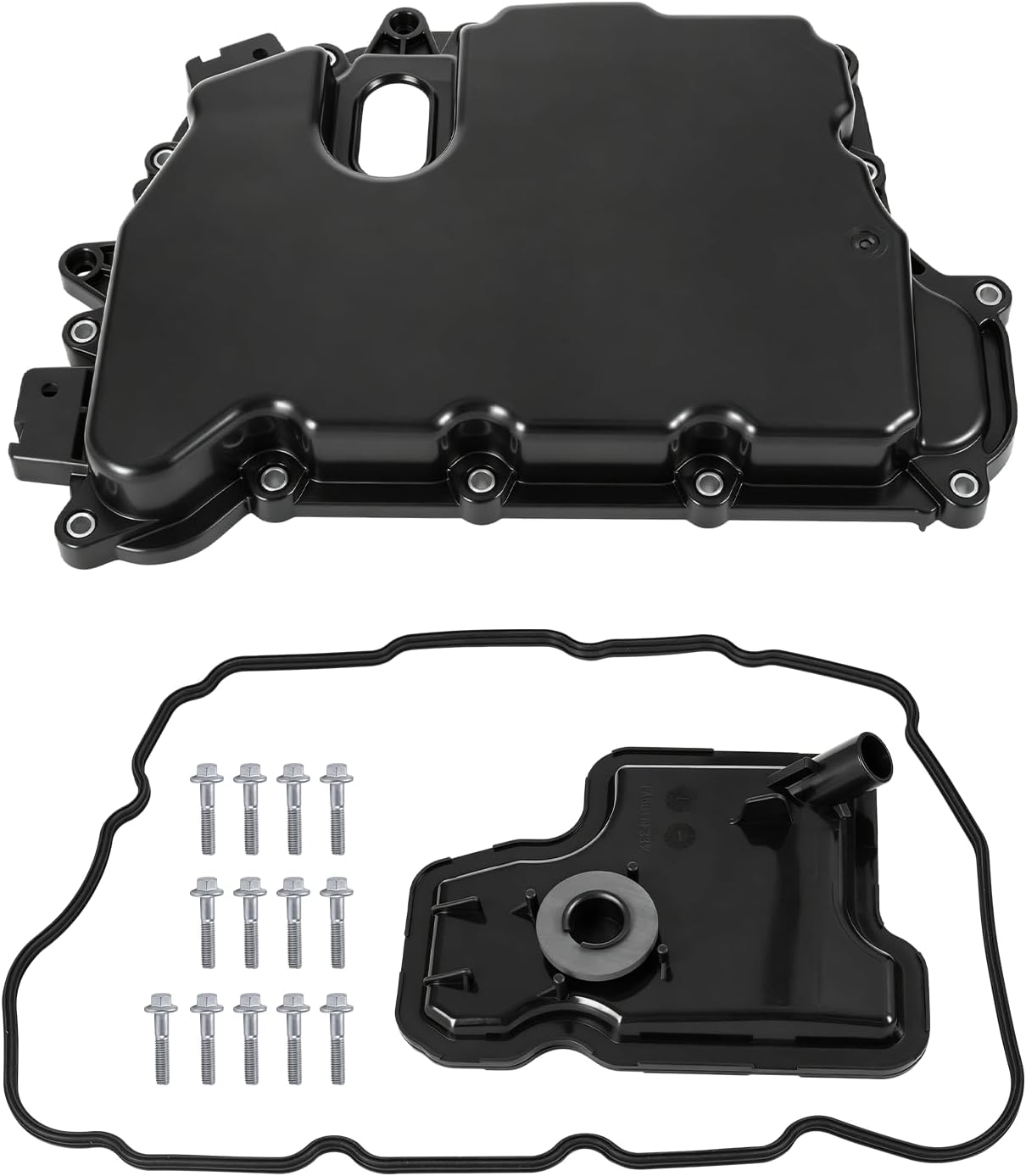
Pan Gasket and Filter: the Leak Everyone Checks First, for Good Reason
The 6T40's pan bolts thread into a soft aluminum case, and that changes how you approach this one compared to a steel-case unit. Over-tightening does not make the seal better — it warps the pan flange and creates a leak path that no amount of additional torque fixes, so follow the factory sequence and torque spec rather than snugging bolts down by feel. A published service manual fastener reference for the Malibu's 6T40/6T45 lists the transmission bolts at 50 N·m (37 lb-ft); confirm the exact value and bolt pattern against the service information for your specific application before using that number as gospel, since fastener tables vary by year and bolt location.
Reuse of a hardened or compressed gasket is the other repeat offender. The gasket is cheap relative to the labor of dropping the pan twice, so a new gasket and filter go on every time the pan comes down, not just when there is an active leak. If the pan was leaking at a corner or along one edge rather than uniformly, check the pan flange itself for a ding or warp before blaming the gasket — a bent flange will leak with a brand new gasket installed.
Left-Side Axle Seal: the One That Gets Blamed on the Pan
Fluid from a failed left-side axle seal runs down the case and pools near the same general area as a pan leak, which is why this one gets misdiagnosed more than it should. According to a repair writeup in trade publication Vehicle Service Pros, the root cause on the 6T40 is not the seal itself failing first — it is the output shaft bushing that supports the axle wearing out. The bushing is pressed into the case, so once it wears, the axle loses its support, flexes slightly under load, and that movement is what damages the seal and starts the leak.
Because the bushing is pressed in, a straight seal swap without addressing the bushing is a comeback waiting to happen — the new seal has the same unsupported axle working against it. The job can be done without pulling the transmission: aftermarket tool kits combine a bushing removal tool, an indexed installation tool, a new wider bushing, and the replacement seal in one kit. Before buying parts, also inspect the bushing journal on the axle's stub shaft itself for scoring, since a badly worn original bushing can damage the shaft it rode on.
Fluid Type, Capacity, and Reading the Leak Off the Level
The 6T40 (RPO MNH) runs DEXRON VI, and GM's current TechLink capacities chart lists a 4.0-6.0 liter (4.2-6.3 quart) fluid change capacity for this unit. There is no dipstick — level is set through a fill/level plug, and a 6T40 running low from any of the leaks above will not reliably throw a fluid-level code on its own. It shows up first as delayed engagement, harsh shifts, or torque converter shudder, which is exactly the symptom set techs chase as a valve body or solenoid problem before anyone checks the level.
To check it correctly, per the GM-based procedure published in ATRA's Gears Magazine, bring the fluid to operating temperature, run the shifter through each range with the brake applied, let it idle in Park for at least three minutes so foaming settles, then remove the level plug with the vehicle level and the engine running — fluid should drip from the hole once it is full. The temperature window matters: check it with fluid at 85-95°C (185-205°F), not whatever it reads sitting in the driveway, or you will walk away thinking you topped it off when it is still low.
| Where fluid shows up | Likely source | GM documentation |
|---|---|---|
| Wet/dripping from bell housing area, especially pre-Feb 2013 build | Torque converter housing seal | PI0950A — seal 24266675 |
| Leak on top of transmission, 2014 Malibu 6T40 | Auxiliary fluid pump seal | PI1071B — seal kit 24273082 |
| Leak along pan flange, uniform or at one edge | Pan gasket (or warped flange) | No bulletin — torque spec and gasket reuse are the usual causes |
| Wet trail from left side near the axle, pools near pan | Axle seal, caused by output shaft bushing wear | No GM bulletin — documented trade repair procedure |
| Delayed engagement or shudder, no visible puddle | Low fluid from a slow leak anywhere above | Check level hot at 85-95°C per GM procedure before condemning parts |
6T40 overhaul gasket & seal kit at Core Transmission Parts
Covers the pan gasket, filter and the internal seals you will disturb pulling the pan or chasing a leak at the case — one kit instead of ordering pieces separately.
View the 6T40 overhaul gasket & seal kit at Core Transmission Parts →6T40 and 6T45 pan and filter kits, pumps, and the sealing ring installer tool — shipped fast from the USA.
Shop 6T40 parts →FAQ
Where do 6T40 and 6T45 transmissions leak most often?
Four spots account for most 6T40/6T45 external leaks: the torque converter housing seal (GM bulletin PI0950A), the auxiliary fluid pump seal on applicable 2014 Malibu builds (GM bulletin PI1071B), the pan gasket, and a left-side axle seal that fails because of output shaft bushing wear. The first two have documented GM fixes with specific part numbers; the pan and axle seal are more generic but still predictable failure points on this unit.
Is a 6T40 fluid leak always the pan gasket?
No. Fluid from a failed left-side axle seal or a torque converter housing seal runs down the case and often pools in roughly the same spot a pan leak would, which is why techs misdiagnose it as the pan. Before resealing the pan, trace the leak dry with cleaner and UV dye if needed and confirm the fluid trail actually starts at the pan flange rather than higher up the case.
Can the 6T40 torque converter seal be replaced without pulling the transmission?
GM's bulletin PI0950A specifically says not to remove the transmission from the vehicle just to replace the torque converter seal unless there is also an internal repair needed; the seal is accessible with the transmission in the vehicle. If the transmission is already coming out for another reason, GM recommends installing the revised seal, part 24266675, at the same time since it was the known weak point.
What fluid and how much does a 6T40 need after a leak repair?
The 6T40 (RPO MNH) uses DEXRON VI, with a fluid change capacity of 4.0-6.0 liters (4.2-6.3 quarts) per GM's current TechLink capacities chart. There is no dipstick; the level is set hot, at 85-95°C (185-205°F), through the level plug with the engine running and the shifter cycled through each range first.
Does a low fluid level on a 6T40 always mean there is a leak?
Not necessarily, but it should be treated as one until ruled out. A 6T40 running low from an undetected leak will not reliably throw a code; it shows up first as delayed engagement, harsh shifts, or torque converter shudder. If the level comes up low on a vehicle with no obvious puddle, check all four leak points above rather than just topping off the fluid and sending it back out.
Related guides
- 6T40 Common Problems and Fixes
- 6T40 Overheating: Prevention and Fixes
- 6T40 Fluid Change Cost
- 6T40 No Movement in Any Gear: Diagnosis
- GM 6T40 / 6T45 Wave Plate Failure: Why P0776 Is Not Just a Solenoid
Sources
- General Motors — Preliminary Information PI0950A, "Automatic Transmission Fluid Leak from Torque Converter Housing Area," February 2015 (via NHTSA). Backs the vehicle applications, the 6T30/6T40/6T45/6T50 build-date window, the torque converter seal as the leak source, the revised seal part 24266675, and the guidance on removing the transmission only when necessary. static.nhtsa.gov (PDF)
- General Motors — Preliminary Information PI1071B, "Transmission Fluid Leak at Auxiliary Pump Seal," April 2015 (via NHTSA). Backs the 2014 Chevrolet Malibu 6T40 (RPO MNH) application, seal kit 24273082, the fluid-lubrication step, and the 4,000 RPM/30-second post-repair leak check. static.nhtsa.gov (PDF)
- General Motors — GM TechLink, "2026 Transmission Capacities & Fluids" chart (U.S. and Canada). Backs the 6T40 (RPO MNH) DEXRON VI fluid type and 4.0-6.0 liter / 4.2-6.3 quart fluid change capacity. gm-techlink.com (PDF)
- Gears Magazine (ATRA) — "Checking the Fluid: Is It That Big of a Deal?" Backs the GM-based hot fluid-level check procedure, the 85-95°C (185-205°F) check temperature, and the level-plug method on 6T40E transaxles. gearsmagazine.com
- Vehicle Service Pros — "Another In-Vehicle Repair." Backs the 6T40 left-side axle seal leak caused by output shaft bushing wear and the in-vehicle bushing/seal replacement approach. vehicleservicepros.com