A 6T40 that runs hot almost never has a bad cooler. In the ones I see on the bench, the heat is being made inside the unit: fluid packed up past the standpipe, a converter clutch that drags or slips, or a worn valve bore that dumps the oil that was supposed to go to the cooler. Bolt a bigger cooler on any of those and you have spent money to cool a symptom.
This is how I chase heat on the GM 6T40 and 6T45 (Cruze, Malibu, Equinox, Terrain, Sonic, Encore, Trax, Verano and the rest): what the warning means, how to prove where the heat is coming from with a scan tool and an infrared gun, and what actually prevents it. The GM, GEARS, Transmission Digest and Sonnax references are listed at the bottom.

What the Warning and the Code Mean
GM gives the driver one warning. The 2014 Cruze owner manual describes a TRANSMISSION HOT — IDLE ENGINE message with a chime when the fluid gets hot, says driving with high fluid temperature can damage the vehicle, and tells the owner to stop and let it idle until the message clears. On the scan tool you will usually find P0218, transmission fluid over temperature.
That idle advice is sound. In Park the converter is not slipping under load, no clutches are shifting, and the pump is still sending fluid through the cooler. Heat input drops and heat rejection keeps going. But the message is the last warning, not the first. By the time it appears, the fluid has been hot long enough to start hardening seals and glazing clutch lining.
For reference, the normal number is lower than most people think. GEARS Magazine gives the correct level-check window as 185-205 F (85-95 C). That is where a healthy 6T40 lives. In the Transmission Digest case covered below, a 2012 Cruze set P0218 with the scan tool showing 260 F.
Cause 1: Overfill Past the Thermal Standpipe
This is the first thing I check, because it is the most common and the cheapest. The 6T40 has no dipstick. The Cruze manual tells owners it is not necessary to check the level, that a leak is the only reason for fluid loss, and that checking and changing it is a special procedure best left to the dealer. So every fill is done by a shop, and plenty of them are done wrong.
GEARS Magazine explains why it is so easy to get wrong. The case uses a fluid level control valve, which works as a thermally controlled standpipe. It has a bimetal strip that opens and closes a passage as temperature changes. Below about 60 C (140 F) it lets fluid drain from the valve body cover area into the sump. Above 60 C, fluid is held in the cover area, which changes what you see at the check plug. Check it cold and it reads wrong. Top it off to the plug cold, and it is overfull once it warms up.
GEARS is blunt about the result: overfilling will make the transmission overheat and set P0218, and as little as half a quart over can push fluid out of the vent. The rotating parts churn the excess fluid, and that churning is heat. A wet vent and oil misted on the case around it is a good clue.
How to set it right
- Engine running, selector in Park, fluid at 185-205 F on the scan tool TFT reading, per GEARS.
- Remove the check plug near the axle seal. Fluid should just drip from the hole. A steady stream means it is overfull; let it drain down to a drip.
- If it needs fluid, add DEXRON-VI (the fluid GM lists for this transmission) until it drips at temperature, then reinstall the plug.
A related lesson from a different GM unit: Transmission Digest ran a 6T75 overheating case where the flow meter showed normal cooler flow and the real problem was a small overfill from checking at the wrong temperature. A GM engineer told the author that in the overheating cases GM had reviewed, the transmission had been overfilled. Different transmission, same trap with DEXRON-VI and a temperature-sensitive level.
Cause 2: A Converter Clutch That Drags or Slips
The torque converter is the biggest heat source in any automatic. When the converter clutch is fully applied, it makes very little heat. When it is fully released, the fluid coupling makes heat, but the cooler is sized for it. The worst case is in between: a clutch that is partly applied and slipping, turning engine power straight into fluid heat.
The input shaft seal case
Transmission Digest published a 2012 Cruze 6T40 that came back after a rebuild for the classic 3-5-Reverse snap ring blowout. It had P0218 stored. The scan tool showed 260 F and an infrared gun read 250 F at the pan. The tech measured about a 30 F drop across the cooler lines, which told him the cooler was doing its job. Temperature stayed stable in Park and climbed as soon as the unit went into gear.
The cause was the input shaft seal. It had been installed without enough drag on the shaft, and the converter clutch was applied just enough to drag but not enough to stall the engine. The fix was a new seal, pressed in (not driven in with a hammer) to the original depth, with the seal-to-shaft fit checked. After that, the adapts reset and the unit ran normally. That is a textbook example of heat coming from inside the unit while the cooler was fine.
Worn TCC control valve bore
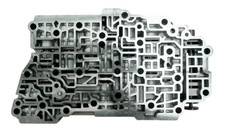
On a high-mileage Gen 1 or Gen 2 unit, the TCC control valve bore wears from constant valve oscillation. Sonnax lists the results for its oversized TCC control valve kit 144510-05K: excess TCC slip, low cooler flow, overheating, low converter and lube flow, TCC lining failure and TCC codes. Read that list again. The same wear that makes heat also cuts the flow that carries heat out. That is why a worn 6T40 can go from fine to cooked in a hurry.
Cause 3: The Gen 3 Lube-On-Demand Valve
Know which generation you have. Transmission Digest's pump identification guide lays it out: Gen 1 launched in the 2008 Malibu and was phased out during 2012, Gen 2 kept a similar pump with a slightly different pressure regulator valve, and Gen 3 arrived for 2015 with a completely redesigned pump built for fuel economy. GM's product update bulletin PI0604C confirms the 2012 Gen 2 changeover and lists the 2012 exceptions that stayed Gen 1: the Cruze and Sonic with the 1.8L (LUW), the Captiva Sport 3.0L (LFW) and the Orlando. All 2013 vehicles in that bulletin are Gen 2. The same bulletin shows revised valve body parts for Gen 2, including the torque converter clutch regulator apply valve, so match any valve body or kit to the generation you pulled.
The Gen 3 pump adds a lube-on-demand valve. Per Transmission Digest, below 87 psi it stays closed and lube flow goes through an orifice in the separator plate. Above 87 psi it opens and delivers double the cooler flow during TCC apply at higher line pressure. The bore wears, and when it does, converter feed pressure goes straight to exhaust. The results are converter apply problems, lube and cooler flow problems that cause overheating, and reduced line pressure. They report used castings pulling 0 in-Hg on a vacuum test. Any Gen 3 on the bench for heat, converter or low line pressure complaints should have that bore vacuum tested.
Cause 4: Old or Wrong Fluid
DEXRON-VI is the fluid GM lists for the 6T40 in the Cruze manual. Anything else changes friction behavior at the converter clutch and shift clutches, and a clutch that slips a little longer on every apply is making heat. Worn-out fluid does the same thing as its friction modifiers break down.
GM's own schedule tells you how hard the fluid gets used. The 2014 Cruze manual defines severe service as mainly driven in heavy city traffic in hot weather, mainly driven in hilly or mountainous terrain, frequently towing, high-speed or competitive driving, or taxi, police and delivery use. On the severe chart, the automatic transmission fluid change comes up three times in 150,000 miles: at 45,000, 90,000 and 135,000 miles. On the normal chart it shows up once. A lot of commuter Cruzes in hot climates are really severe-service cars.
One practical note from GEARS: if you drain it warm, only about half of the fluid comes out. Drain it cold, then set the level hot.
How I Diagnose a Hot 6T40, in Order
- Pull codes and freeze frame. P0218 with a freeze frame at highway speed and light load points inside the unit. P0218 on a long grade with a trailer may just be load.
- Verify the level at 185-205 F at the check plug. Fix any overfill before anything else and road test again.
- Watch TFT in Park, then in gear. If TFT is stable in Park and climbs as soon as it is in gear, as in the Transmission Digest Cruze, look at converter drag and input shaft seal fit.
- Watch TCC slip on a steady cruise. Compare engine speed to input (turbine) speed with the TCC commanded on. My rule of thumb: a locked converter should show slip near zero and stay there. Slip that wanders or climbs while commanded on, with TFT rising, is converter or TCC control valve trouble.
- Check the temperature split across the cooler lines with an IR gun at operating temperature. The Cruze in the TD case showed about 30 F, which meant the cooler was working. Little or no split with a hot pan means low flow or a restricted cooler. Measure actual cooler flow if you have a flow meter.
- On the bench: vacuum test the TCC control valve bore (Gen 1/2) or the lube-on-demand bore (Gen 3), check input shaft seal drag, and inspect the converter clutch for heat damage.
Prevention That Actually Works
- Set the level hot, every time. Most of the P0218 cars I see were serviced by someone who filled it cold.
- Treat hot-climate commuting as severe service and change DEXRON-VI on the 45,000-mile severe interval, with a new filter and pan gasket where serviceable.
- Do a proper rebuild, not a parts swap. Vacuum test the valve bores, fix them with the correct kit or a replacement valve body matched to the generation, and press the input shaft seal to the right depth with drag checked.
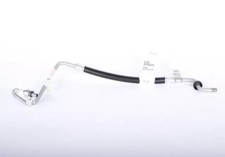
- Keep the cooler circuit clean. After any failure that put debris in the fluid, flush or replace the cooler and lines. A kinked or damaged line cuts flow as surely as a worn valve bore.
- Respect the warning. Stop and idle in Park when TRANSMISSION HOT appears, as GM says, and get it scanned if it comes back under a normal load.
6T40 filter and pan gasket kit (24230708) at Core Transmission Parts
For a severe-service fluid change done right: new filter and pan gasket, a cold drain, then set the level hot at the check plug.
View the 6T40 filter kit →6T40 and 6T45 filter kits, cooler lines, valve bodies and rebuild kits — shipped fast from the USA.
Shop 6T40 parts →Related guides
- 6T40 Towing Upgrades and Cooling
- 6T40 Torque Converter Shudder
- 6T40 Fluid Change Cost
- 6T40 Valve Body Symptoms
- 6T40 Common Problems and Fixes
FAQ
What temperature is too hot for a 6T40?
GEARS Magazine gives 185 to 205 F as the correct fluid level check temperature, so that range is normal operating temperature. In the Transmission Digest case on a 2012 Cruze, P0218 was stored with the scan tool reading 260 F and the pan at 250 F. If TFT keeps climbing well past 205 F during steady cruising with no towing, something is making heat and needs to be diagnosed.
Can overfilling a 6T40 cause overheating?
Yes. GEARS Magazine states that overfilling a 6T40/6T45 will make it overheat and set P0218, and that as little as half a quart over can push fluid out the vent. The case uses a thermally controlled standpipe, so the level has to be set hot, at the check plug, with the engine running in Park.
Will a bigger cooler fix a 6T40 that runs hot?
Only if the fluid is getting to the cooler and the heat is coming from load. If the TCC control valve bore or the Gen 3 lube-on-demand valve bore is worn, Sonnax and Transmission Digest both list low cooler flow and overheating as the result, and a bigger cooler cannot fix a flow problem. Check the temperature split across the cooler lines first.
How often should 6T40 fluid be changed to prevent overheating?
GM's 2014 Cruze owner manual lists an automatic transmission fluid change three times inside its 150,000-mile severe-service chart, at 45,000, 90,000 and 135,000 miles. Severe service includes heavy city traffic in hot weather, hilly terrain, towing and delivery use. Use DEXRON-VI and drain it cold, since draining it warm only gets about half out.
What does TRANSMISSION HOT IDLE ENGINE mean on a Cruze?
GM's Cruze manual says the message and chime appear when the transmission fluid gets hot, that driving that way can damage the vehicle, and that you should stop and let it idle until the message clears. Idling in Park keeps fluid moving through the cooler without the heat of converter slip. If it comes back without a heavy load, get it scanned for P0218.
Sources
- General Motors — 2014 Chevrolet Cruze Owner Manual. Backs the TRANSMISSION HOT — IDLE ENGINE message and idle instruction, no dipstick and the special check procedure, DEXRON-VI as the specified fluid, the severe-service definition, and the severe-schedule ATF changes at 45,000, 90,000 and 135,000 miles. assets.gm.com (PDF)
- General Motors — Bulletin PI0604C, "Information on 6T30/6T40/6T45/6T50 Automatic Transmission Product Updates" (May 2013). Backs the 2012 Gen 2 changeover, the 2012 vehicles that stayed Gen 1, all 2013 units being Gen 2, and the revised valve body parts including the TCC regulator apply valve. static.nhtsa.gov (PDF)
- ATRA / GEARS Magazine — "6T40/45 Diagnosis and Fixes." Backs overfill causing overheating and P0218, the half-quart vent leak, the bimetal fluid level control valve and its 60 C (140 F) behavior, the 185-205 F check at the plug near the axle seal, and a warm drain removing only about 50 percent. gearsmagazine.com
- Transmission Digest — "Looking for the cause of repeated 6T40 torque converter failure." Backs the 2012 Cruze P0218 case: 260 F on the scan tool, 250 F at the pan, about 30 F across the cooler lines, heat rising only in gear, and the under-drag input shaft seal causing converter clutch drag. transmissiondigest.com
- Transmission Digest — "GM 6T40 Pump Identification Guide." Backs the Gen 1/2/3 pump timeline, the Gen 3 lube-on-demand valve opening at 87 psi to double cooler flow, bore wear sending converter feed to exhaust, overheating and low line pressure, and 0 in-Hg vacuum results. transmissiondigest.com
- Sonnax — Oversized TCC Control Valve Kit 144510-05K. Backs TCC control valve bore wear causing excess TCC slip, low cooler flow, overheating, low converter and lube flow, and TCC lining failure on Gen 1 and Gen 2 units. sonnax.com