Every summer I get the same 6T40 on the bench. Compact crossover, a small camper or a utility trailer behind it, a long grade in July, and now it flares on the 3-4 or slips into 5th. The owner swears they were under the tow rating. Usually they were. The problem is that a 6T40 was built for a compact car's torque, and towing turns every weak spot it has into a heat problem.
This is what I tell customers who want to keep towing with one: what GM actually rates these vehicles for, what heat does inside this unit, how to set the fluid correctly, and which upgrades are worth money. The main facts are cited inline, with the GM, ATRA, GEARS and Sonnax references at the bottom.

Start With What GM Rates It For
The 6T40 and its heavier brother the 6T45 share one architecture. ATRA's 2008 introduction manual lists the 6T40 at 177 lb-ft input torque and 277 lb-ft output torque, 178 lb, DEXRON-VI fluid, and RPO codes MH8 / MHB (6T40) and MH7 / MHC (6T45). The 6T45 is the heavy-duty version: ATRA lists a 1.25 inch drive chain instead of 1 inch, a 5-pinion input planetary, a ribbed case and a heavier differential. If you plan to tow, you want to know which one you have.
The tow rating lives in the owner manual, not on the transmission. GM's 2014 Chevrolet Equinox owner manual is a good example because it lists both engines side by side:
| 2014 Equinox | Max trailer (with trailer brakes) | GCWR |
|---|---|---|
| 2.4L L4, FWD | 1,500 lb (680 kg) | 5,787 lb |
| 2.4L L4, AWD | 1,500 lb (680 kg) | 5,952 lb |
| 3.6L V6, FWD | 3,500 lb (1,588 kg) | 7,937 lb |
| 3.6L V6, AWD | 3,500 lb (1,588 kg) | 8,157 lb |
Two things matter here. First, GM caps any trailer without its own brakes at 1,000 lb (454 kg), and it says the maximum assumes only the driver in the vehicle, so passengers and cargo come off the trailer number. Second, the 3,500 lb ratings belong to the V6, and in my experience the V6 crossovers of that era used GM's larger six-speed, not a 6T40-family unit. People see "3,500 lb Equinox" online and hook that to a four-cylinder with a 6T40. Check the RPO on the service parts label before you quote anyone a number.
The same manual also says not to tow at all in the first 500 miles, and for the first 500 miles of towing to stay under 50 mph and avoid full-throttle starts. That is break-in for the converter and clutches, and it is worth passing on to anybody who just bought a hitch.
Why Towing Kills a 6T40: It Is Almost Always Heat
A 6T40 does not usually break a hard part from towing. It cooks. Heat comes from three places: converter slip, clutch slip during shifts, and fluid shear. A trailer adds load to all three at once. When the converter clutch cannot stay applied, the converter turns engine power straight into fluid heat, and that fluid is what lubricates and applies every clutch in the box.
GM builds a warning into the cluster for exactly this. The Equinox manual describes a TRANSMISSION HOT -- IDLE ENGINE message and chime when fluid gets hot, and states that driving with high fluid temperature can damage the vehicle. On the scan tool the code you will see is P0218, transmission fluid over temperature.
The valve body wear that chokes cooler flow
This is the part most "towing upgrade" articles skip, and it is the one that matters on a high-mileage unit. The 6T40's converter clutch is managed by the TCC regulator valve and the TCC control valve, and both bores wear.
- Sonnax says bore wear at the TCC regulator valve reduces TCC apply and converter charge pressure, and lists slipping or harsh TCC, no TCC apply, fluid overheating, poor fuel economy and codes P0741 and P0742 as the results. Their kit 144740-38K covers Gen 1 and Gen 2 6T30/40/45/50 and the Gen 3 6T31/35/41/46/51, with oversized kit 144740-16K for badly worn bores.
- Sonnax's oversized TCC control valve kit 144510-05K lists excess TCC slip, low cooler flow, overheating, low converter and lube flow, TCC lining failure and TCC codes on Gen 1 and Gen 2 units. The cause is bore wear from continuous valve oscillation.
- On a Gen 3 (2015 and later), Sonnax's pump write-up explains the lube-on-demand valve stays closed under 87 psi and opens above it to deliver double the cooler flow. That bore is side-loaded and wears; Sonnax reports used castings pulling 0 in-Hg on a vacuum test, with converter feed going straight to exhaust. The result is TCC apply problems, poor lube and cooler flow that leads to overheating, and low line pressure. Kit 144510-19K is their fix.
Put those together and the pattern is obvious. A worn valve body lets the converter slip, the slip makes heat, and the same wear cuts the flow that is supposed to carry that heat to the cooler. A bigger external cooler cannot fix that. It will cool whatever small amount of fluid still reaches it. If a towing 6T40 is running hot, confirm TCC slip and cooler flow before you spend money on coolers.
Set the Fluid Level Right, Hot, at the Plug
Most 6T40 applications have no dipstick. ATRA notes the level is set at the check plug, and the Equinox owner manual tells owners that checking and changing the fluid is a special procedure best left to a shop. This is where a lot of towing damage actually starts, in both directions.
- Check it hot. GEARS Magazine's 6T40/45 diagnosis article gives the window: fluid at 185-205 F (85-95 C), engine running, in Park, checked at the plug near the axle seal. Checking it cooler reads falsely low, and people then overfill it.
- Do not overfill. GEARS is explicit that an overfilled 6T40/6T45 will overheat and set P0218, and that as little as half a quart over can push fluid out of the vent. The case uses a thermally controlled standpipe, the fluid level control valve, with a bimetal strip that opens and closes a passage as temperature changes. It needs the level right to do its job.
- Drain it cold. The same article notes that draining warm fluid only gets about half of it out, so pull the drain plug when the transmission is cold.
After any fluid work, adapts matter too. GEARS lists the adaptive learn window at a TFT of 155-215 F (70-100 C). Run the fast learn with a scan tool once the unit is up to temperature, not stone cold in the service bay.
Change the Fluid on the Severe Schedule
GM's own maintenance schedule answers the "how often" question. The Equinox manual defines severe service as vehicles mainly driven in hot city traffic, in hilly or mountainous terrain, used for delivery or taxi work, and frequently towing a trailer. On that severe chart, the automatic transmission fluid change comes at 45,000 miles (72,000 km). On the normal chart, it does not show up until 97,500 miles (156,000 km).
If the vehicle tows, it is on the 45,000-mile schedule, whatever the owner thinks. I go further on a unit that tows regularly in summer, because a drain-and-fill on a 6T40 only replaces part of the fluid. ATRA lists roughly 4.2-6.3 quarts for a fluid change against 7.4-9.5 quarts for an overhaul fill, so one drain leaves a lot of old fluid behind. Two drain-and-fills a few hundred miles apart gets you much closer to fresh DEXRON-VI. The GM manual also lists automatic transmission fluid, along with engine oil, cooling system and brakes, as the items to inspect before and during any towing trip.
Drive It Like a Builder Would
How the rig is driven changes the heat load more than any bolt-on. GM's towing section is short and correct:
- The vehicle can tow in D, but use a lower gear if the transmission shifts too often. Constant 5-6 hunting on a grade unlocks the converter over and over. Every unlock is heat.
- Use the manual range-select mode when towing or going downhill. GM describes it as limiting top gear, which holds a gear where the converter can stay locked.
- Do not use Fuel Economy (eco) mode when towing. It is tuned for early upshifts and light throttle, which is the opposite of what a loaded 6T40 needs.
- On long downgrades, downshift before you start down, per the manual, so the brakes are not doing all the work.
After a hard pull, do not shut it off right away. The manual suggests letting the engine idle in Park for a few minutes after towing at high altitude on steep grades, and that is good practice for the transmission too, since the cooler keeps working while the engine runs.
Upgrades Worth the Money (and What Is Not)
Here is my honest ranking for a 6T40 or 6T45 that has to tow.
- Correct level and fresh DEXRON-VI on the 45,000-mile schedule. Cheapest, biggest effect. Replace the filter and pan gasket when you are in there.
- Watch TFT. A scan tool or OBD monitor showing transmission fluid temperature tells you when to back off before the cluster warning ever comes on. If you see it climbing during a steady cruise with no shifting, suspect TCC slip, not the cooler.
- Fix the TCC valve bores on any rebuild. The Sonnax regulator and control valve kits above, and the lube-on-demand kit on a Gen 3, restore the converter apply and cooler flow that towing depends on. If the casting is too far gone, a replacement valve body is faster.
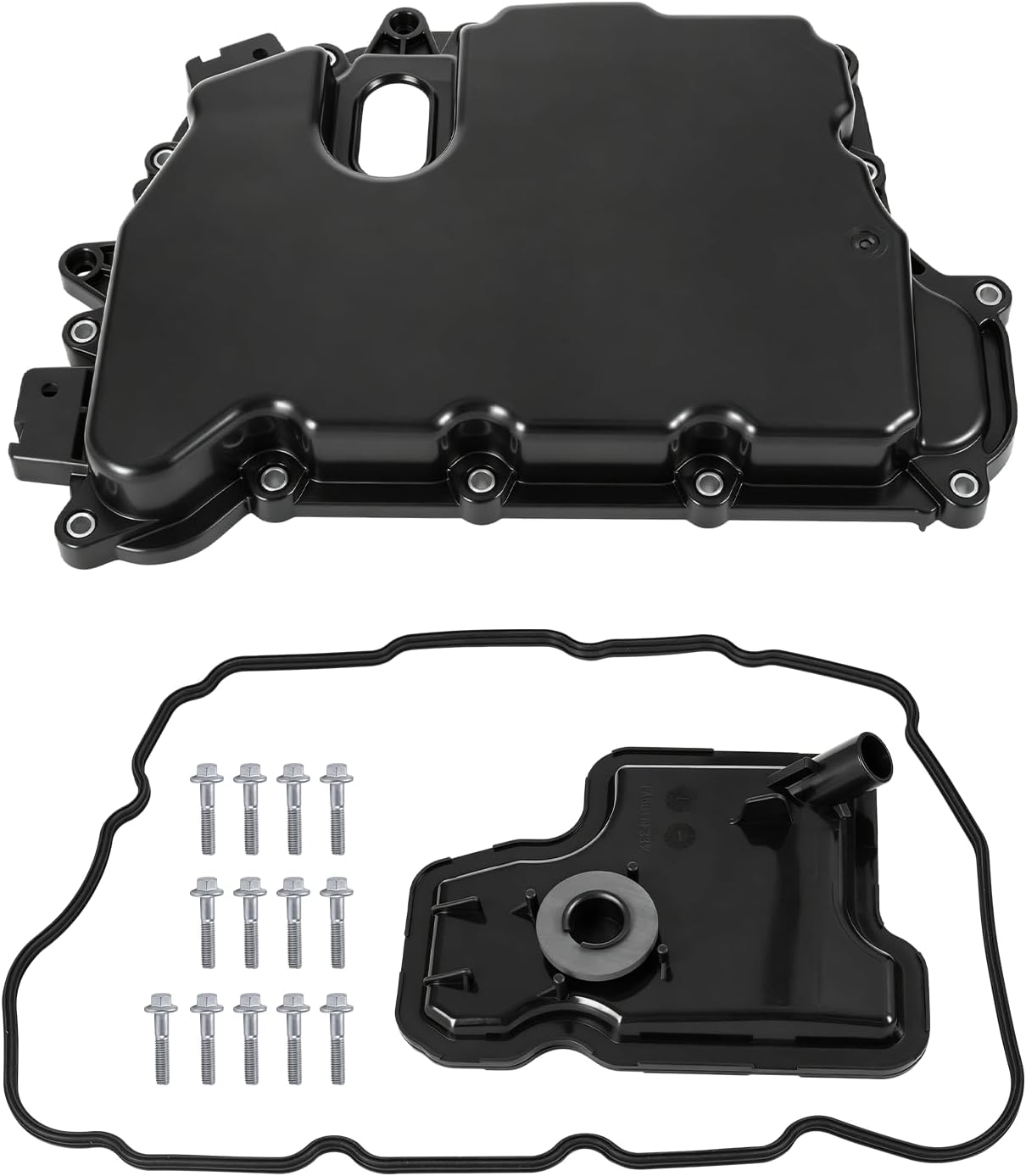
- An auxiliary cooler, installed right. On a vehicle that tows often it can help, but only on a unit with healthy flow. Plumb it after the factory cooler, keep lines clear of the exhaust, and remember it adds fluid volume, so reset the level hot at the plug afterward.
- Stay under the rating. No upgrade changes the 177 lb-ft input rating or the GCWR on the door. If the trailer needs more, it needs a different tow vehicle.
What I skip: "towing" shift kits that just raise line pressure on a stock valve body with worn bores, and additives sold as a cure for slipping. Neither fixes a converter that will not stay locked.
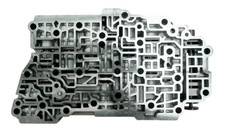
6T40 valve body (2012-2021) at Core Transmission Parts
If testing shows worn TCC regulator or control valve bores on a Gen 2 or later unit, a replacement valve body restores converter apply and cooler flow. Match it to the generation you pulled before ordering.
View the 6T40 valve body →6T40 and 6T45 pan and filter kits, valve bodies, pumps and rebuild kits — shipped fast from the USA.
Shop 6T40 parts →Related guides
- 6T40 Torque Converter Shudder
- 6T40 Slipping: Causes and Fix
- 6T40 Fluid Change Cost
- 6T40 Identification Guide
- 6T40 Common Problems and Fixes
FAQ
How much can a 6T40 safely tow?
Go by the vehicle's rating, not the transmission's name. GM's 2014 Equinox owner manual rates the 2.4L four-cylinder at 1,500 lb with trailer brakes and 1,000 lb without, with a GCWR of 5,787 lb FWD or 5,952 lb AWD. The 3,500 lb figures you see belong to V6 models that use a larger GM six-speed, so check the RPO code before quoting a tow rating.
How often should I change 6T40 fluid if I tow?
GM classes frequent trailer towing as severe service. In the 2014 Equinox manual the severe schedule calls for an automatic transmission fluid change at 45,000 miles, versus 97,500 miles on the normal schedule. Use DEXRON-VI and set the level hot at the check plug afterward.
Does an auxiliary transmission cooler help a 6T40?
It can lower fluid temperature on a vehicle that tows often, but it only helps if the fluid is actually reaching the cooler. On a unit with a worn TCC control or regulator valve bore, Sonnax lists low cooler flow and overheating as symptoms, and a bigger cooler will not fix a hydraulic flow problem. Any added cooler also adds fluid volume, so the level must be reset hot at the check plug.
What does P0218 mean on a 6T40?
P0218 is transmission fluid over temperature. GEARS Magazine notes an overfilled 6T40/6T45 will overheat and set it, and that as little as half a quart over can push fluid out the vent. Verify the level at 185 to 205 F before chasing coolers or valve body wear.
Should I tow in Drive or Manual mode?
GM says the vehicle can tow in D, but to use a lower gear if the transmission shifts too often, and to use the range-limiting manual mode when towing or going downhill. Holding a lower gear stops constant 5-6 hunting, which keeps the converter clutch applied and reduces heat.
Sources
- General Motors — 2014 Chevrolet Equinox Owner Manual. Backs the trailer ratings and GCWR table, the 1,000 lb limit without trailer brakes, the 500-mile break-in rules, towing in D and using a lower gear, manual range selection, no eco mode when towing, downshifting before grades, the TRANSMISSION HOT message, the severe-service definition (frequent trailer towing) and the 45,000-mile severe vs 97,500-mile normal ATF change intervals. assets.gm.com (PDF)
- ATRA — 6T40 (RPO MH8, MHB) / 6T45 (RPO MH7, MHC) introduction, 2008 technical manual. Backs the 177 lb-ft input and 277 lb-ft output ratings, RPO codes, the 6T45 heavy-duty differences, DEXRON-VI, the check plug, and the 4.2-6.3 qt fluid change vs 7.4-9.5 qt overhaul capacities. atracom (PDF)
- ATRA / GEARS Magazine — "6T40/45 Diagnosis and Fixes." Backs overfill causing overheating and P0218, the half-quart vent leak, the 185-205 F level check at the plug, the thermally controlled fluid level control valve, draining cold, and the 155-215 F adaptive learn window. gearsmagazine.com
- Sonnax — TCC Regulator Valve Kit 144740-38K. Backs TCC regulator bore wear reducing TCC apply and converter charge pressure, the overheating and P0741/P0742 symptoms, the unit coverage, and oversized kit 144740-16K. sonnax.com
- Sonnax — Oversized TCC Control Valve Kit 144510-05K. Backs TCC control valve bore wear causing excess TCC slip, low cooler flow, overheating, low converter and lube flow, and TCC lining failure on Gen 1 and Gen 2 units. sonnax.com
- Sonnax — "GM 6T40 Pump Identification & the Gen. 3 Lube-on-Demand Valve." Backs the 87 psi lube-on-demand valve doubling cooler flow, side-loaded bore wear, 0 in-Hg vacuum results, the resulting overheating and low line pressure, and kit 144510-19K. sonnax.com