A delayed engagement on a GM 6T70 or 6T75 is the complaint where the driver pulls the lever into Drive or Reverse, the engine sits there at idle, and a second or two later the unit finally bites, sometimes with a thump. It can be a cheap fix or a full rebuild. The trick is not guessing.
This guide covers GM's own definition and cause list, which clutches apply for Drive and Reverse, how to split a fluid or pressure problem from a clutch problem, and the Gen 1 versus Gen 2 parts mix-up that puts fresh rebuilds back on the lift. The specs come from GM service information for the 6T70/6T75 and a Transmission Digest case study, listed in the Sources at the end.

What GM counts as a delayed engagement
GM puts a number on it. In the 6T70/6T75 road test procedure, the garage shift check runs Park to Reverse, Reverse to Neutral, Neutral to Drive, Drive to Reverse and Reverse to Drive, pausing 2 to 3 seconds in each position with the brake applied. GM's standard is that engagements are immediate, meaning less than 2 seconds to complete when transmission fluid temperature is above 20°C (68°F), and not harsh.
That temperature qualifier matters. A 6T70 that takes a moment to go into gear on a cold January morning and is crisp once warm is not necessarily failing the GM standard. One that takes three seconds with the fluid at operating temperature is.
GM also gives you a way to measure it when the engagement is too soft to feel: watch Transmission ISS on the scan tool. The input speed sensor reads the 4-5-6 and 3-5-Reverse clutch housing, which turns with the turbine. In Park or Neutral the ISS reads close to engine speed. When the range clutches apply, the turbine is held against the stationary output and ISS drops to 0 RPM. Time from lever movement to ISS at zero is your engagement time. Record it in Drive and Reverse, hot and cold.
What has to apply for Drive and Reverse
You cannot diagnose a delay without knowing which clutches are involved. From GM's shift solenoid valve state chart for the 6T70/6T75:
- Drive, 1st gear: the 1-2-3-4 clutch applies, fed by pressure control solenoid 5 (normally low). The low one-way clutch holds the reaction side. Ratio is 4.484.
- 1st braking (manual low): same as above plus the low and reverse clutch, which pressure control solenoid 3 feeds through the shift valves.
- Reverse: the 3-5-Reverse clutch, fed by pressure control solenoid 2 (normally high), plus the low and reverse clutch. Ratio is 2.88.
So Drive and Reverse share no clutch pack at engagement. That single fact sorts most of these jobs:
- Delay in both Drive and Reverse: think common supply first. Fluid level, pump output, filter and filter neck seal, line pressure, idle speed, linkage, adapts.
- Delay in Drive only: the 1-2-3-4 clutch circuit. Piston seals, clutch clearance, the 1-2-3-4 piston spring retainer, PC solenoid 5 and its valve body circuit.
- Delay in Reverse only: the 3-5-Reverse and low and reverse clutches. Low and reverse piston seals and bleed hole, 3-5-Reverse piston and housing, PC solenoids 2 and 3.
GM's list of delayed engagement causes
The 6T70/6T75 road test procedure lists what GM wants ruled out before anyone condemns hard parts. Delayed engagement may be caused by:
- Low idle speed. Compare actual engine idle to desired idle. The pump is engine driven through a drive link, sprockets and a pump shaft, so low idle means low pump output.
- Low fluid level.
- Incorrect line pressure. Check the Line PC Sol. Pressure command on the scan tool and run the line pressure check.
- Cold transmission fluid temperature. Read TFT on the scan tool before you judge the engagement.
- Selector linkage. Inspect and adjust.
- Incomplete or incorrect adapting. Repeat the maneuver multiple times to see if the delay improves. If it does not, GM sends you to the Harsh First and Reverse Shift procedure.
Work that list in order. Four of the six items cost nothing but time.
Step 1: Set the fluid level the GM way
Most of the delayed engagements that roll into a general repair shop are low fluid, and most of the low-fluid readings that get missed come from checking it cold. GM's procedure for the 6T70/6T75:
- Level surface, parking brake on, engine running.
- With the brake applied, move the lever through every range and pause about 3 seconds in each, then back to Park.
- Idle at 500-800 RPM for at least 1 minute.
- Read TFT on the scan tool or the driver information center. Check the level only with TFT between 82°C and 93°C (180°F and 200°F). If it is cold, GM says to drive the vehicle in 2nd gear until it comes up to range.
- Check at least twice and read the lower side of the dipstick. The level should be in the crosshatch band. It does not have to reach the MAX mark.
- If it is low, add no more than 0.5 L (one pint) at a time without rechecking, then find the leak.
GM calls for DEXRON-VI only. For reference, GM's approximate capacities are 4.0-6.0 L (4.2-6.3 qt) for a drain plug fluid change, 5.0-7.0 L (5.3-7.4 qt) with the valve body cover removed and 7.0-9.0 L (7.4-9.5 qt) for an overhaul.
Read the fluid while you are there: GM says red or dark brown is normal, black and burnt means look for metal and debris, and milky means coolant or water. If readings are inconsistent from one pull to the next, GM specifically calls out a plugged transmission vent.
One more GM note worth passing along to anyone who just changed the fluid: with the engine off there must be at least enough fluid to wet the end of the dipstick bullet before you start it. A unit that was drained and under-filled will delay, then slip, then burn up the 1-2-3-4 clutch.
Step 2: Scan data and adapts
With the level right and the unit hot, check for codes first. Solenoid, TFP switch or ratio codes change the diagnosis. With no codes, graph these on the garage shift test: engine speed, Transmission ISS, Transmission OSS, TFT, Line PC Sol. Pressure Cmd., PC Sol. 2, 3 and 5 Pressure Cmd., and the TFP switch states.
If the delay started right after a valve body, control solenoid valve assembly or TCM replacement, a software update or a rebuild, suspect the adapts before the hardware. GM requires the Transmission Adaptive Values Learn procedure after any of those repairs, and states that skipping it can cause poor transmission performance and DTCs. The procedure runs from the scan tool under Module Diagnosis, Transmission Control Module, Configurations/Reset Functions. The preconditions are strict:
- Drive wheels blocked, parking brake and service brake applied, zero throttle.
- TFT between 70-100°C (158-212°F).
- Lever cycled from Park to Reverse 3 times first, to purge air from the reverse clutches.
- No active DTCs, and line pressure control able to provide 1,000 kPa and within spec.
That last precondition is a diagnostic clue in itself. If the learn will not run and everything else is met, GM's troubleshooting list includes line pressure that cannot reach 1,000 kPa and clutches that are not properly assembled. A learn that aborts on a unit with a delayed engagement is pointing you toward pressure or internal parts.
Step 3: Prove line pressure with a gauge
Do not trust the commanded number alone. GM's line pressure check uses a DT 21867-A gauge (or equivalent) on the line pressure test port. With the scan tool in Transmission Output Controls, step the Line PC solenoid up and down in increments of about 200 kPa (29 psi), let the reading settle at each step, and compare actual pressure to the solenoid valve pressure chart. GM has you run the sweep at least 3 times for consistent readings. The scan tool will only control the solenoid in Park and Neutral below 1,500 RPM, which protects the clutches. Reinstall the test port plug at 12 N·m (106 lb-in).
If pressure tracks the command, the pump, filter and regulator are doing their jobs and the delay is inside a clutch circuit. If pressure is low across the sweep, or low only at idle and comes up with RPM, you are looking at the supply side.
Delay in every range: the supply side
GM's "No Drive in All Ranges" table is the same parts list you work through for a delay in all ranges, just earlier in the failure. On the oil pump assembly it calls out:
- Fluid leaks or improper fluid level.
- Damaged, clogged or improperly installed oil filter, and a damaged or leaking filter neck seal. A leaking neck seal lets the pump pull air. Expect a delay that is worse cold, pump whine and aerated fluid on the stick.
- Worn, binding or failed drive sprocket, driven sprocket or drive link, and worn sprocket thrust washers.
- Loose or missing oil pump bolts, and stripped splines on the pump shaft or driven sprocket.
- A leaking fluid outlet seal assembly.
The filter and neck seal are the cheap end of that list, and the filter is serviced with the pan. If the unit has high miles and the pan shows fine friction material, a filter and gasket service with a proper hot level check is a reasonable first repair. If the pan shows metal, it is not.
Delay into Drive only: the 1-2-3-4 clutch
If Reverse is crisp and Drive is late, the 1-2-3-4 clutch is taking too long to fill and stroke. The usual causes are worn or leaking piston seals, excessive clutch clearance from worn frictions, a damaged 1-2-3-4 piston spring retainer (which GM lists under No Drive in All Ranges), or a leak in the feed circuit from PC solenoid 5 through the valve body. ATRA's GEARS Magazine has also documented worn AFL/solenoid accumulator bores in 6T70 valve bodies leaking in the clutch apply circuit, which shows up first as bumps and flares and eventually as durability failures.
Then there is the one that catches rebuilders. Transmission Digest covered a 2015 Equinox with the 3.6 L and a 6T75 that came in with a delayed engagement into Drive and a slip in 1st. The cause was a Generation 1 1-2-3-4 clutch apply piston installed in a Generation 2 transmission. The Gen 2 piston's apply fingers are 0.147 in. taller, 0.785 in. versus 0.638 in. on Gen 1. With the short Gen 1 piston in a Gen 2 case, clutch clearance was too large for the pack to hold. Gen 2 also went to thinner 1-2-3-4 frictions, 0.058 in. versus 0.061 in. on Gen 1.
Per that article, Gen 2 parts were phased in selectively starting with the 2013 model year, and all 2014 and later units should have Gen 2 components. The lesson: measure the apply fingers on any piston that goes into a 6T70/6T75 and match the piston, frictions and steels to the generation of the case. Mixing a Gen 1 kit into a Gen 2 unit, or reusing a core piston from the wrong generation, builds a delayed engagement into a brand-new rebuild.
Delay into Reverse only: 3-5-Reverse and low and reverse
A late Reverse with a normal Drive points at the two clutches that apply for Reverse. GM's "No First and Reverse Gears" and "Harsh First and Reverse Shift" tables list the low and reverse parts to inspect: worn, damaged or debonding low and reverse piston seals, a broken or deformed piston, a broken or fatigued return spring, a disengaged spring retainer, and porosity or improper finish on the case cover where the piston lives.
Pay attention to the low and reverse piston bleed hole. GM calls out an improperly positioned or too-large bleed hole as a cause of no 1st and Reverse, and a plugged or improperly positioned air bleed as a cause of harsh 1st and Reverse. A bleed that is too big loses apply oil and slows engagement. One that is plugged traps air, and the engagement goes from late to harsh. It is also why GM has you cycle Park to Reverse three times before the adaptive learn.
If the delay into Reverse comes with flared or harsh 2-3 and 4-5 shifts, or P0776, look hard at the 3-5-Reverse clutch. Its wave plate and drum failures often show up first as a late Reverse.
Making the call
- Delay only when cold, under 2 seconds once warm: within GM's standard. Verify the level hot and move on.
- Delay everywhere, low level or aerated fluid: set the level, find the leak, service the filter and neck seal.
- Delay after a valve body, TCM or solenoid job: run the Transmission Adaptive Values Learn before anything else.
- Line pressure low on the gauge: pump, filter, pump drive and regulator side.
- Pressure good, Drive late, Reverse fine: 1-2-3-4 clutch circuit. On a rebuilt unit, confirm piston generation first.
- Pressure good, Reverse late, Drive fine: low and reverse and 3-5-Reverse clutch circuits.
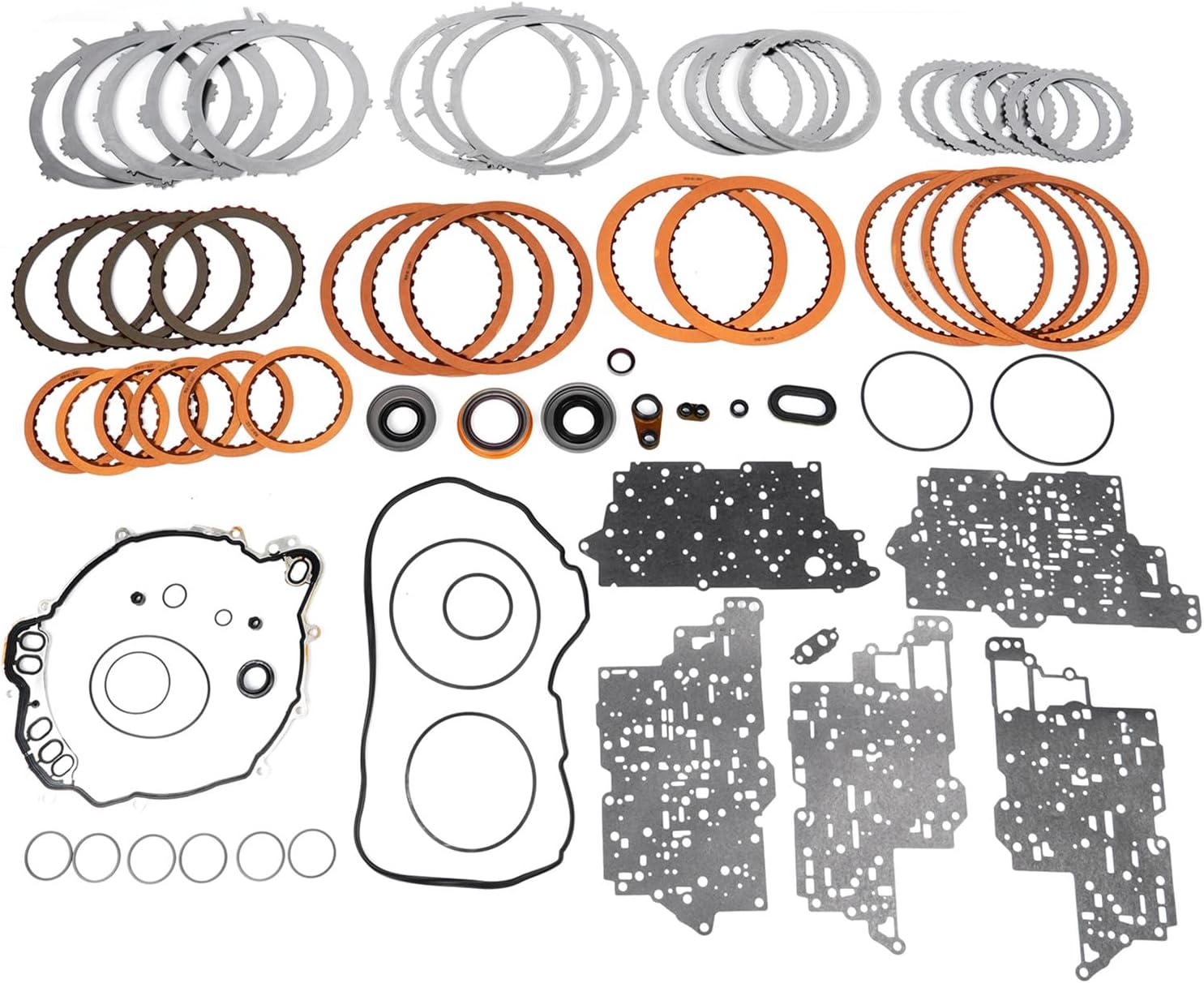
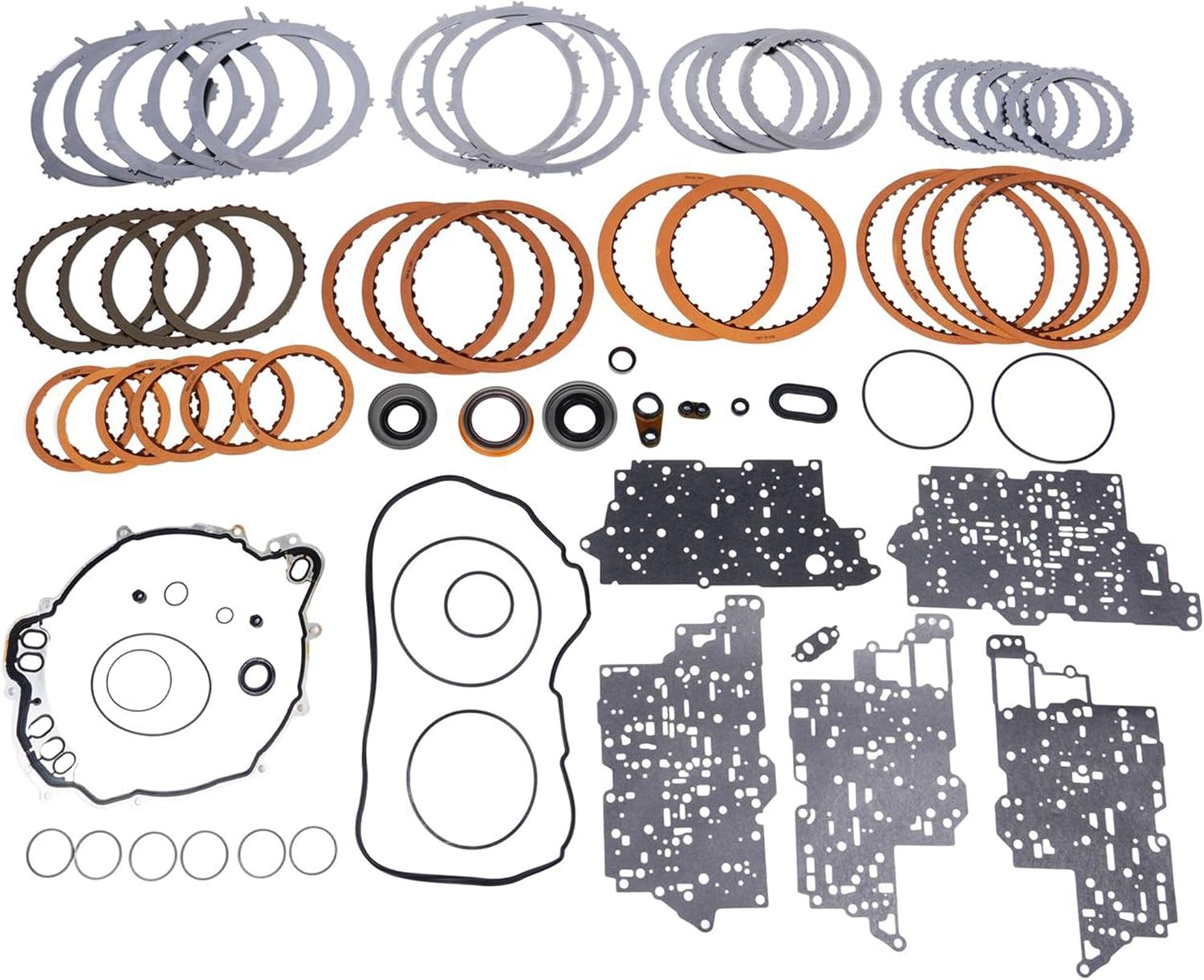
When the diagnosis lands inside the case, the pistons, seals and frictions come as a set. Order the kit for the correct generation: 2007-2012 units are Gen 1, and all 2014-up units are Gen 2. On a 2013, check the parts in the unit before you order, since that was the changeover year.
6T70 Gen 2 master rebuild kit at Core Transmission Parts →
6T70 Gen 1 Master Rebuild Kit
For 2007-2012 units, the kit that keeps Gen 1 frictions with Gen 1 hardware so clutch clearance comes out right. Looking for something else? Browse all 6T70 parts.
View the Gen 1 kit →Need parts for this job?
6T70 filter and pan gasket kits, Gen 1 and Gen 2 master rebuild kits, pumps and valve bodies, shipped from the USA.
Shop 6T70 parts →FAQ
Why does my 6T70 take a few seconds to go into Drive?
GM lists six causes for a delayed engagement on the 6T70/6T75: low idle speed, low fluid level, incorrect line pressure, cold fluid, selector linkage and incomplete or incorrect adapts. Check the fluid level hot first, then line pressure. If those are good and only Drive is slow, the 1-2-3-4 clutch circuit is the likely cause.
How long should a 6T70 take to engage?
GM's road test standard is less than 2 seconds to complete the engagement when transmission fluid temperature is above 20 °C (68 °F). You can time it on a scan tool by watching Transmission ISS drop to 0 RPM after you move the lever.
Is a delayed engagement when cold normal on a 6T70?
Some delay on a cold start is allowed, because GM's 2-second standard only applies with fluid above 20 °C and GM lists cold fluid temperature as a cause. If the engagement is still slow once the fluid is at operating temperature, it is a real fault. A delay that is much worse cold can also point to a leaking filter neck seal letting the pump draw air.
Can low transmission fluid cause delayed engagement on a 6T70?
Yes, and it is the most common cause. GM says to check the level only with fluid at 82-93 °C (180-200 °F), reading the lower side of the dipstick in the crosshatch band, and to add no more than 0.5 L at a time. Checking it cold is how low fluid gets missed.
Why does my rebuilt 6T75 have a delayed engagement into Drive?
One documented cause is a Gen 1 1-2-3-4 clutch apply piston installed in a Gen 2 transmission. The Gen 2 piston's apply fingers are 0.147 in. taller, so the Gen 1 piston leaves too much clutch clearance and the unit delays and slips in 1st. Also make sure the Transmission Adaptive Values Learn was run after the rebuild.
Sources
- GM service information (Saab 9-4X, Automatic Transmission 6T70/6T75) — Road Test. Backs the garage shift sequence, the less-than-2-second engagement standard above 20°C, using Transmission ISS reaching 0 RPM to measure delay, and the list of delayed engagement causes (low idle, low fluid, line pressure, cold TFT, selector linkage, adapts). saabwisonline.com
- GM service information (6T70/6T75) — Transmission Fluid Level and Condition Check, and Fluid Capacity Specifications. Back the DEXRON-VI requirement, the 82-93°C (180-200°F) check temperature, the 2nd-gear warm-up, the crosshatch band and 0.5 L add limit, the fluid condition and vent notes, and the 4.0-6.0 L, 5.0-7.0 L and 7.0-9.0 L capacities. level check · capacities
- GM service information (6T70/6T75) — Line Pressure Check, and Shift Solenoid Valve State and Gear Ratio. Back the DT 21867-A gauge procedure, the 200 kPa (29 psi) increments, the Park/Neutral below 1,500 RPM limit, the 12 N·m test plug torque, and the clutch and solenoid states for Reverse, 1st and 1st braking with the 4.484 and 2.88 ratios. line pressure check · solenoid state chart
- GM service information (6T70/6T75) — No Drive in All Ranges, No First and Reverse Gears, and Harsh First and Reverse Shift. Back the oil pump, filter, filter neck seal, sprocket and drive link checks, the 1-2-3-4 piston spring retainer, and the low and reverse piston, seal, return spring, bleed hole and case cover inspections. no drive · no 1st and reverse · harsh 1st and reverse
- GM service information (6T70/6T75) — Transmission Adaptive Values Learn. Backs the repairs that require the learn, the scan tool path, the 70-100°C TFT window, the three Park-to-Reverse cycles to purge air from the reverse clutches, and the troubleshooting items including 1,000 kPa line pressure capability and properly assembled clutches. saabwisonline.com
- Transmission Digest — Wayne Colonna, "GM 6T70/75 slips and delays in first." Backs the 2015 Equinox 3.6 L 6T75 delayed-Drive case, the Gen 1 piston in a Gen 2 unit, the 0.638 in. and 0.785 in. apply finger heights, the 0.061 in. and 0.058 in. friction thicknesses, and the 2013-2014 Gen 2 phase-in. transmissiondigest.com Related: ATRA GEARS Magazine, Keith Clark, "Things That Go Bump", on worn AFL/solenoid accumulator bores leaking in the clutch apply circuit.