"It slips" is the least useful sentence a 6T70 Equinox owner can say, and also the most common one. On this transaxle the gear it slips in tells you almost exactly which clutch, which regulator valve and which bulletin you are dealing with, so a slipping Equinox should be diagnosed with a clutch apply chart and a scan tool before anyone quotes a rebuild. This guide walks through it the way we do it at the bench: confirm it is really the 6T70, separate converter slip from clutch slip, map the slip to a clutch, then fix the cause instead of the symptom. Numbers in brackets point to the Sources list at the bottom.
Confirm the unit and the generation first
Only the V6 Equinox has a 6T70. GM's wave plate bulletin lists the 2008-2009 Equinox with the 6T70/75 under RPO MH2 (FWD) or MH4 (AWD) [1], and GM bulletin 18-NA-358 lists the 2014-2017 Equinox under RPO M7U or M7W [2]. Four-cylinder Equinoxes run the 6T40/45 family, and the 2018-up Equinox has no V6 at all.
Generation matters more for a slip than for almost any other complaint. ATRA notes that the M7U/M7W units got the Gen 2 controls update for the 2013 model year, while other RPO codes waited until 2014 production [4]. Sonnax lists what changed: Gen 2 dropped the four TEHCM pressure switches in favor of clutch pulse learn, moved from variable bleed to variable feed solenoids, revised the 4-5-6 accumulator piston and spring, and went to a new 1-2-3-4 piston with notched legs and nine thinner frictions instead of seven [5]. Parts and adapt strategies are generation-specific, so read the RPO label in the glovebox before ordering anything.
Step 1: Is it the clutches or the converter?
A lot of "slipping" Equinoxes are really a converter clutch that will not hold, and the RPM flare looks identical from the driver's seat. GM's road test procedure for the 6T70/6T75 gives you the numbers to separate them [3]:
- With steady throttle and no shift in progress, TCC Slip Speed should stay under 100 RPM once the TCC is commanded on. More than 100 RPM for over 6 seconds after apply sends you to torque converter diagnosis [3].
- The electronically controlled capacity clutch is designed to slip about 20 RPM in 2nd through 6th, depending on application, so a small steady slip number is normal [3].
- For gear slip, watch Transmission ISS, Transmission OSS, Commanded Gear and Gear Ratio. During an upshift at a steady 15 to 20 percent throttle, the shift should be felt (or engine speed should change) within 1 to 2 seconds of the commanded gear change [3]. If Commanded Gear changes and Gear Ratio wanders or never settles, the oncoming clutch is not holding.
GM's 18-NA-358 makes the same point for the 2014-2017 Equinox: before blaming the valve body for a shudder, flare or slip, watch TCC slip speed while the converter clutch is applied during the event, and rule out an engine misfire [2]. A converter problem fixed with a valve body is a comeback waiting to happen.
Step 2: Use the clutch apply chart to name the clutch
The 6T70 uses five clutches plus a low one-way clutch, and every gear is two clutches. Sonnax's apply chart [5] breaks down like this:
| Gear | Clutches applied |
|---|---|
| 1st (Drive) | 1-2-3-4 + low one-way clutch (low/reverse added for engine braking) |
| 2nd | 1-2-3-4 + 2-6 |
| 3rd | 1-2-3-4 + 3-5-R |
| 4th | 1-2-3-4 + 4-5-6 |
| 5th | 3-5-R + 4-5-6 |
| 6th | 2-6 + 4-5-6 |
| Reverse | 3-5-R + low/reverse |
Read it backwards and the slip pattern points at a clutch:
- Slips in 1st through 4th, 5th and 6th fine: 1-2-3-4 clutch.
- Slips in 2nd and 6th: 2-6 clutch.
- Slips or flares in 3rd and 5th, reverse weak or gone: 3-5-R clutch.
- Slips in 4th, 5th and 6th: 4-5-6 clutch.
GM's own symptom tables are organized the same way: "No Fourth, Fifth, and Sixth Gear," "No Second and Sixth Gear," "No Third, Fifth, and Reverse Gear," and so on [3]. That is the logic to use on a slip as well.
The 3rd/5th/reverse slip: the 3-5-R wave plate
On a 2008-2009 Equinox this is the first suspect. GM bulletin 09-07-30-012F describes a slip, flare or harsh shift in 3rd and/or 5th and no reverse, usually with P0776 (Clutch Pressure Control Solenoid 2 Stuck Off), and sometimes P0777, P2723, P0717, P0716, P2715 or P2714 [1]. The broken 3-5-R wave plate lets the piston over-stroke and leak off apply. GM's fix is the updated waved plate 24254103, separating the case halves to clean out debris, and replacing the pump fluid filter and the control solenoid filter plate [1]. Do not put a TEHCM in it on the P0776 alone; the bulletin says not to replace the TEHCM for any DTC unless service diagnostics call for it [1]. The full teardown, the special coverage history and the parts list are in our Equinox 6T70 common problems guide.
The 4th/5th/6th slip: the 4-5-6 clutch and its accumulator
A slip that shows up on the 3-4 shift and stays in 5th and 6th is the 4-5-6 circuit. Sonnax ties a worn 4-5-6 accumulator piston bore to 3-4 flare, 3-4 harsh, a burned 4-5-6 clutch, ratio codes and slipping [5]. Wear in that bore bleeds off apply pressure, the clutch takes too long to come on, and the frictions burn. Replacing the clutch pack without fixing the accumulator bore just burns the new pack.
If the clutch is already gone, GM's inspection list for the 4-5-6 assembly is a good bench checklist: the 4-5-6 piston and its seals, the backing plate retainer, the dam piston and its seals for wear or delamination, the dam retainer, the reaction carrier hub splines, the 3-5-R/4-5-6 housing for cracks, porosity or plugged passages, its bushing, the input shaft thrust bearing, the clutch plate splines, and the piston return spring for breakage or fatigue [3]. Gen 2 moved the 4-5-6 piston seal from the piston into the housing and changed the return springs, so check that the housing and piston match [5].
The 1st-gear slip: wrong 1-2-3-4 piston after a rebuild
A 2014-2017 Equinox that slips in first and is slow into Drive after someone else rebuilt it has a known cause. Transmission Digest documented a 2015 Equinox 3.6L that came back with exactly that, and the problem was a Gen 1 1-2-3-4 apply piston installed in a Gen 2 unit [6]. The Gen 2 piston fingers measure 0.785 in. versus 0.638 in. on Gen 1, and Gen 2 frictions are 0.058 in. versus 0.061 in. [6]. With the short piston in a Gen 2 case, the clutch clearance is too big to hold. Measure the piston fingers before the unit goes back together, and buy the kit for the generation on your bench.
The 2014-2017 slip, flare and shudder: valve body debris
GM bulletin 18-NA-358 covers 2014-2017 Equinox units (RPO M7U, M7W) with a launch shudder in 1st, a shudder in 4th, or a 2-3 or 3-2 shudder that may come with flare, slide, slip or a harsh shift [2]. GM blames debris in the upper and/or lower valve body, or scored valves that stick. Once misfire and TCC slip are ruled out, the bulletin has you try to reproduce the launch shudder with a power brake in first for 5 seconds or less, and if it reproduces, replace both the upper (24281084) and lower (24257450) valve bodies together [2]. GM also notes that TEHCM replacement has not fixed this concern [2]. Check the speed sensors for debris; debris on the sensors means an internal failure, and scored valves without sensor debris points GM toward the final drive bearing [2].
Line pressure and the Gen 1 pressure switches
When the slip does not line up with a single clutch, or it is slipping in several gears that do not share a clutch, check line pressure. GM's procedure: gauge in the line pressure test hole, then use the scan tool's Transmission Output Controls to step the Line PC Solenoid up and down in roughly 200 kPa (29 psi) increments, at least three times, in Park or Neutral below 1500 RPM, and compare to the solenoid valve pressure chart [3]. Reinstall the test plug at 12 Nm (106 lb in) [3].
On a 2008-2012 Gen 1 Equinox, add the TEHCM pressure switches to the list. Sonnax notes those switches monitor the clutch regulator valves and feed the adaptive learn calculations, open at 8 psi and close at 12 psi, and have a very high failure rate from delamination and contamination, typically setting P0752, P0872, P0877 and/or P0989 [5]. A switch that lies to the TCM can make adapts chase the wrong numbers and produce flares and slips that look mechanical. Gen 2 units have no pressure switches [5].
After the repair: let it relearn
A 6T70 that was repaired correctly can still feel like it slips if the adapts were never reset. ATRA's procedure is to run Service Fast Learn Adapts with the scan tool, then shut the engine off and let the TCM power down before restarting to finish it [4]. On Gen 2, ATRA explains that the TCM calculates clutch fill time from a learned volume (CP Learn) during steady driving: 4-5-6 clutch in 3rd, 1-2-3-4 and 2-6 in 5th, and 3-5-R in 6th, and it aborts the learn on rough roads [4]. Give it a drive on smooth pavement that holds each of those gears before you judge shift quality.
Fluid level and condition
Check it before anything else, and check it hot. ATRA's procedure is a level surface, engine idling for a minute, and transmission fluid temperature between 180 and 200 degrees F [4]. Low fluid can make the pump suck air and make apply pressure inconsistent, so a slip can come from low fluid alone. The fluid is DEXRON VI (GM calls for nine quarts of 88861037 on the 3-5-R clutch repair), and the internal filter is not a service item [1][4]. Burnt fluid with friction material in the pan means the clutch is already damaged and a fluid change will not bring it back.
Quick reference
| Slips in | Clutch | Usual cause on an Equinox |
|---|---|---|
| 3rd, 5th, weak or no reverse | 3-5-R | Broken wave plate, P0776 [1] |
| 4th, 5th, 6th | 4-5-6 | Worn accumulator piston bore, burned pack [5] |
| 1st (and slow into Drive) | 1-2-3-4 | Gen 1 piston in a Gen 2 unit after rebuild [6] |
| 2nd and 6th | 2-6 | 2-6 clutch pack or regulator valve wear |
| Launch, 4th or 2-3/3-2, with shudder | Varies | Valve body debris, 2014-2017 [2] |
| Cruise RPM flare, no shift | TCC | TCC slip over 100 RPM [3] |
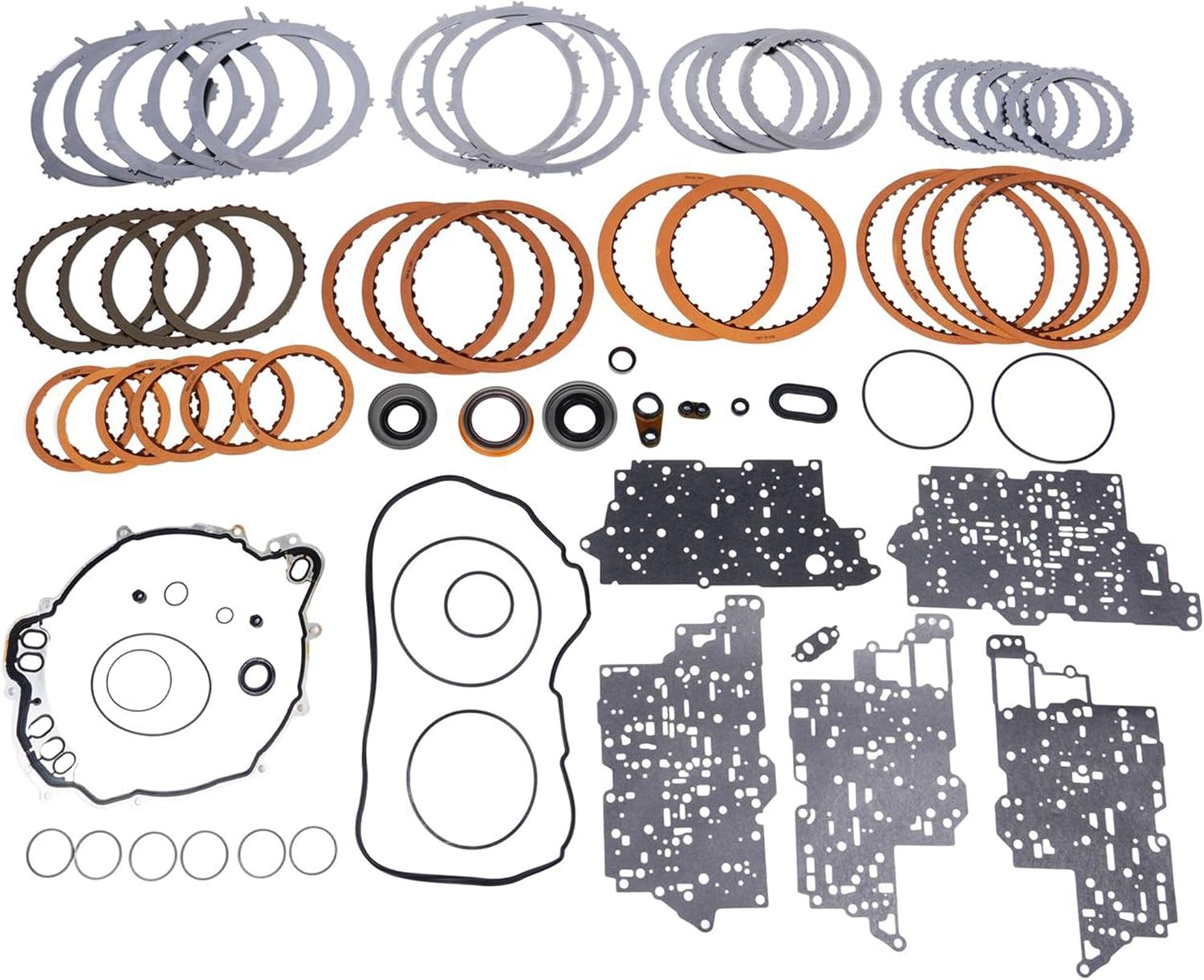
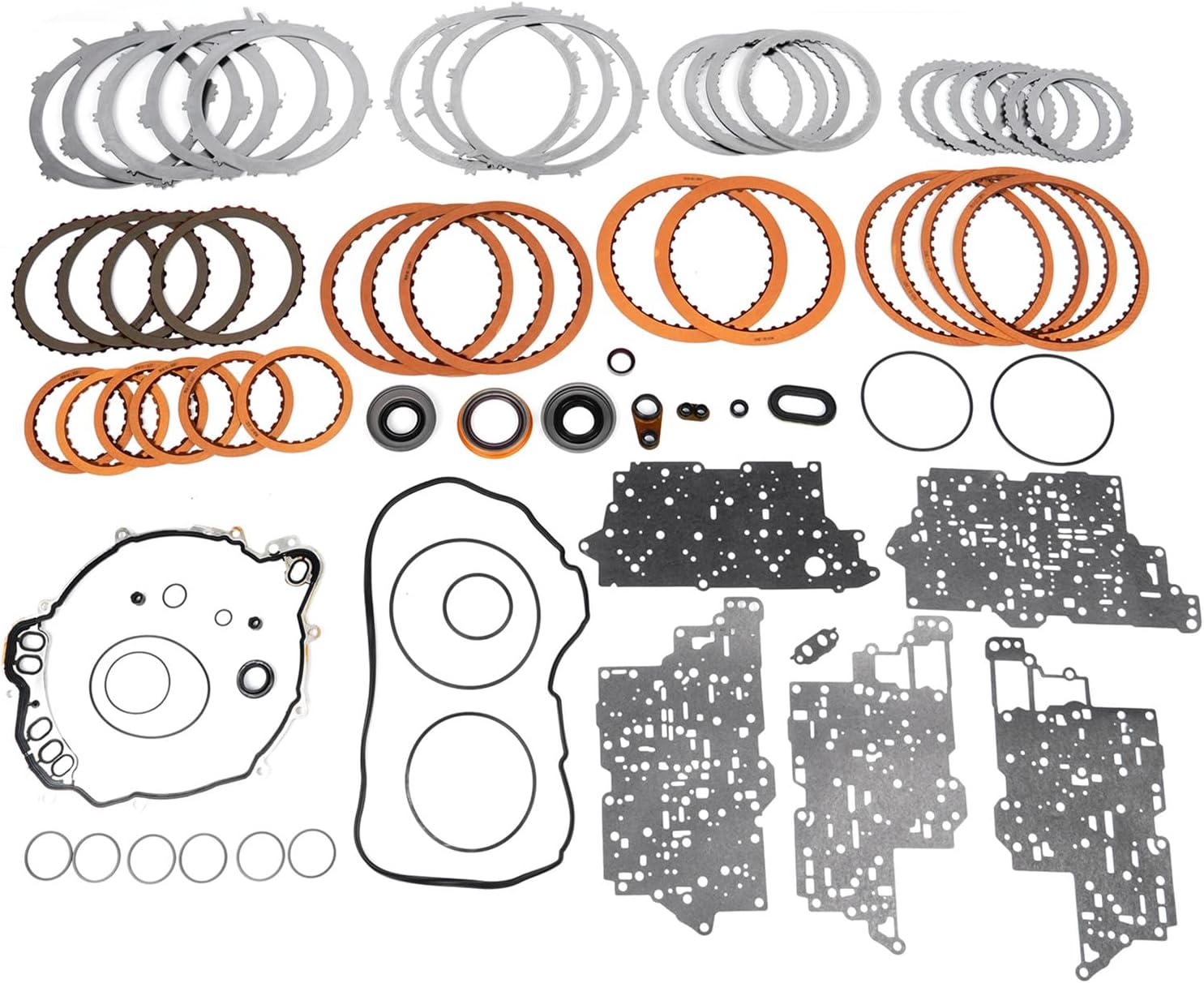
Shop the part for this fix: 6T70 master rebuild kit
When the slip is a burned 3-5-R, 4-5-6 or 1-2-3-4 pack, this CoreTransmissionParts master kit has the frictions, steels, gaskets and seals for the overhaul. Match the generation to your unit.
View the 6T70 master rebuild kit at CoreTransmissionPartsLooking for something else? Browse all 6T70 parts at CoreTransmissionParts.
Need parts for this job?
Our 6T70 parts page has Gen 1 and Gen 2 rebuild kits, valve bodies, clutch drums and solenoid kits for the V6 Equinox, all on our own checkout. For fluid specs across every unit, see the transmission fluid spec chart.
FAQ
Why is my Chevy Equinox transmission slipping?
On a V6 Equinox with the 6T70, the gear it slips in points at the cause. Slip in 3rd and 5th with weak reverse is usually the broken 3-5-R wave plate from GM bulletin 09-07-30-012F, slip in 4th through 6th points at the 4-5-6 clutch and its accumulator, and a 2014-2017 slip with shudder is often valve body debris under GM bulletin 18-NA-358. Check fluid level hot and rule out converter clutch slip first.
How do I tell converter slip from transmission slip on a 6T70?
Watch TCC Slip Speed on the scan tool. GM's road test says it should stay under 100 RPM once the converter clutch is commanded on; more than 100 RPM for over 6 seconds is a converter problem. If Commanded Gear changes but Gear Ratio does not settle, a clutch inside the transmission is slipping.
Can a fluid change fix a slipping Equinox transmission?
Only if the fluid was low or the slip came from a low level. Check it on a level surface, idling, at 180 to 200 degrees F, and top up with DEXRON VI. If the fluid is burnt and the pan has friction material, the clutch is already damaged and needs a repair, and after any repair run Service Fast Learn Adapts.
Does a slipping 6T70 need a new TCM?
Usually not. GM bulletin 09-07-30-012F says not to replace the TEHCM for a DTC unless service diagnostics call for it, and 18-NA-358 says TEHCM replacement has not fixed the 2014-2017 shudder and flare concern. On 2008-2012 Gen 1 units, failed pressure switches can be rebuilt instead of replacing the whole TEHCM.
Related guides
Sources
- General Motors, Service Bulletin 09-07-30-012F, "No Reverse, 3rd or 5th, Check Engine Light Illuminated, DTC P0776" (2008-2009 Equinox, RPO MH2/MH4). Backs the 3rd/5th slip and flare symptoms, P0776 and companion codes, the broken 3-5-R wave plate cause, updated plate 24254103, the case-split clean-out with new filters, and the TEHCM caution. static.nhtsa.gov (PDF)
- General Motors, Service Bulletin 18-NA-358, "Shudder, 2-3 Upshift or 3-2 Downshift Concern." Backs the 2014-2017 Equinox RPO M7U/M7W listing, the shudder with flare, slip or harsh shift symptoms, the misfire and TCC slip checks, the 5-second power brake test, valve bodies 24281084 and 24257450, the TEHCM note and the speed sensor debris check. static.nhtsa.gov (PDF)
- GM service information for the 6T70/6T75 (2011 Saab 9-4X workshop manual), Road Test, Line Pressure Check and "No Fourth, Fifth, and Sixth Gear." Backs the scan tool parameters, the TCC slip limit of 100 RPM for 6 seconds, the roughly 20 RPM ECCC slip, the 1-2 second shift timing check, the 200 kPa line pressure steps below 1500 RPM, the 12 Nm test plug torque, and the 4-5-6 clutch inspection list. Road Test / Line Pressure Check / No 4th, 5th, 6th
- ATRA, "6T70 Product Issues and Updates" seminar. Backs the 2013 Gen 1/Gen 2 split by RPO, Service Fast Learn Adapts, the CP Learn gears for each clutch and the rough-road abort, and the fluid check at 180-200 degrees F with a non-serviceable filter. atracom (PDF)
- Sonnax, "6T70/6F50 Webinar." Backs the clutch apply chart, the Gen 2 changes (no pressure switches, VFS solenoids, 4-5-6 accumulator, notched 1-2-3-4 piston, nine frictions, relocated 4-5-6 piston seal), the Gen 1 pressure switch 8/12 psi values and P0752/P0872/P0877/P0989, and the 4-5-6 accumulator piston symptoms. Sonnax (PDF)
- Transmission Digest, "GM 6T70/75 Slips and Delays in First." Backs the 2015 Equinox 3.6L case, the Gen 1 piston in a Gen 2 unit, apply finger heights of 0.638 in. and 0.785 in., and friction thickness of 0.061 in. and 0.058 in. transmissiondigest.com