A V6 Equinox that starts, idles and goes nowhere is one of the most common tow-ins we see from this platform. The good news is that a 6T70 tells you a lot about what broke if you ask it the right questions before anybody pulls it out. Which ranges are missing, what the fluid looks like hot, and what input speed does when you drop it into gear will usually narrow a "won't move" down to one or two components. This guide walks through that process using GM's own service information and bulletins. Numbers in brackets point to the Sources list at the bottom.

Which Equinox, Which 6T70
Only the V6 Equinox has a 6T70. The four-cylinder trucks use the smaller 6T40/6T45, and the 2018-and-later Equinox dropped the 6T70 altogether. Within the V6 trucks there are two groups that matter for this diagnosis:
- 2008-2011 (RPO MH2 front-drive, MH4 all-wheel drive). These are the early Gen 1 units. GM's internal mode switch bulletin PI0269B and the 3-5-Reverse wave plate coverage 14404B both name the 2008-2009 or 2009-2011 Equinox [5][6].
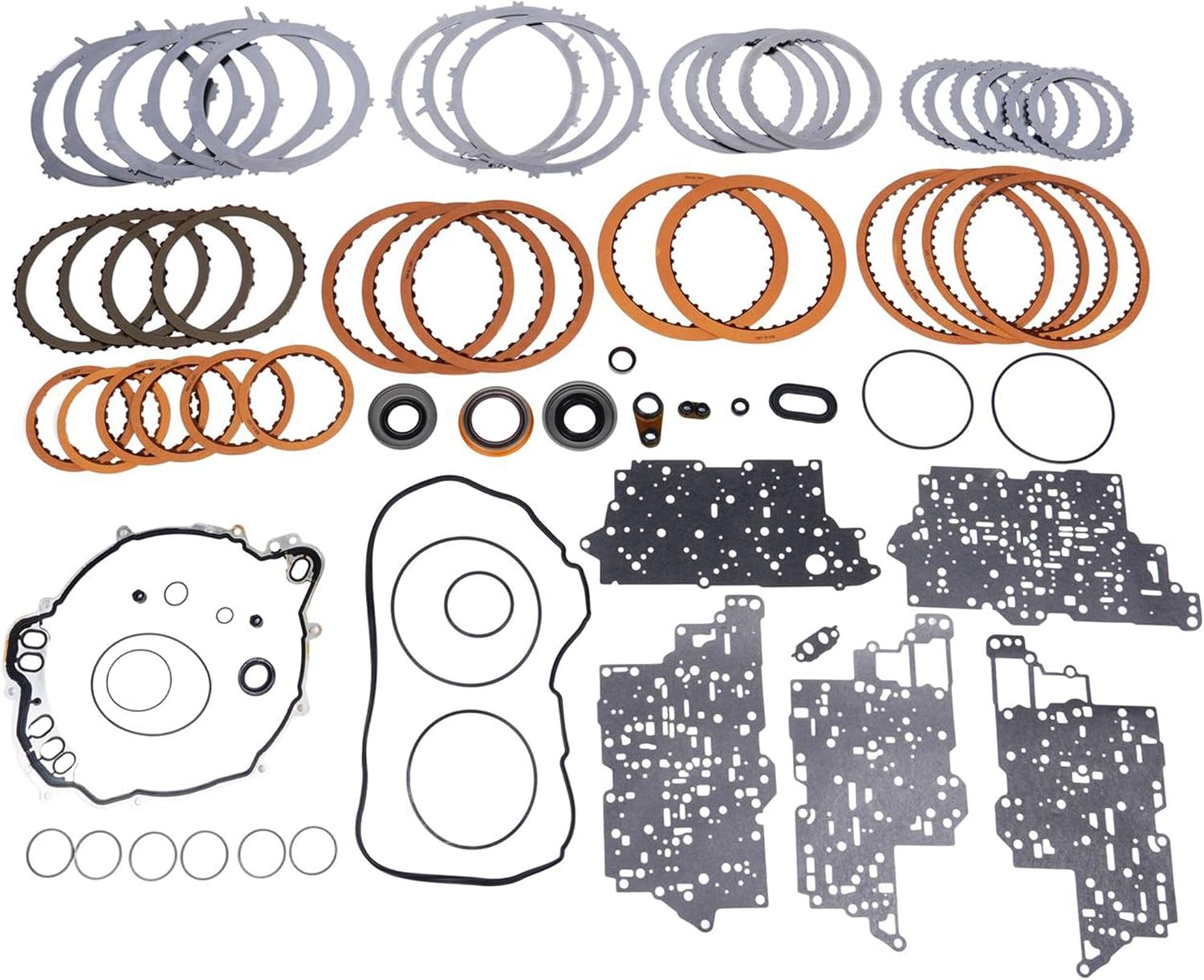
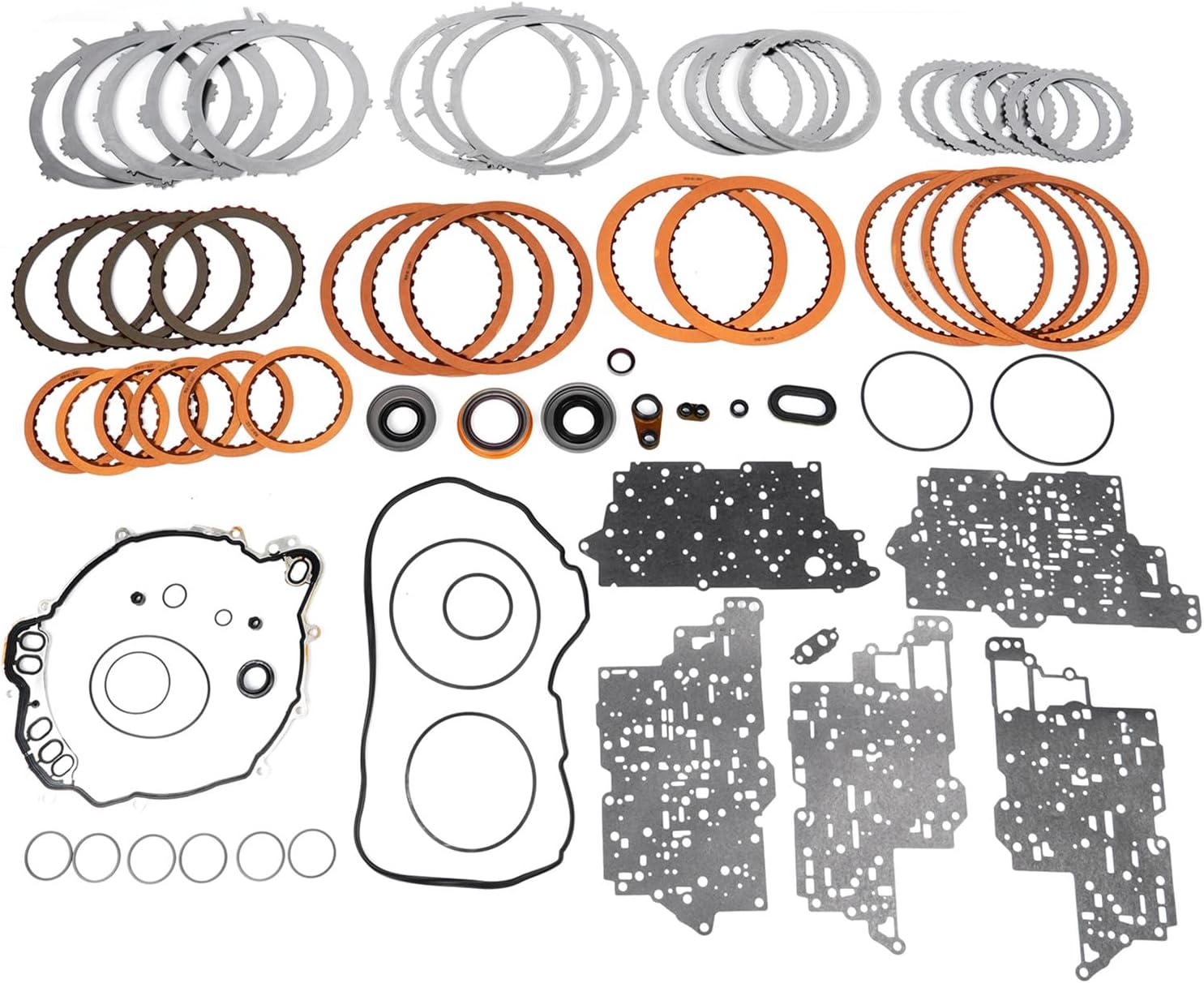
- 2013-2017 (RPO M7U front-drive, M7W all-wheel drive). GM's 2014-2017 valve body bulletin 18-NA-358 lists the Equinox under these codes. These are later-production units, and clutch pistons and control parts are not always interchangeable with the early trucks, which is why the rebuild kits above are split by year.
Check the service parts label before ordering anything. A kit for the wrong generation costs you a day.
Step 1: Sort It by What Is Missing
Every forward gear and Reverse on a 6T70 needs two holding devices. From the Sonnax clutch apply chart for the 6T70/75 [4]:
| Range | Applied |
|---|---|
| Park / Neutral | Low and Reverse clutch |
| Reverse | 3-5-Reverse clutch + Low and Reverse clutch |
| Drive, 1st | 1-2-3-4 clutch + low one-way clutch (Low and Reverse clutch added for engine braking in manual 1st) |
| 2nd | 1-2-3-4 clutch + 2-6 clutch |
| 3rd | 1-2-3-4 clutch + 3-5-Reverse clutch |
| 4th | 1-2-3-4 clutch + 4-5-6 clutch |
That chart is the whole diagnosis in miniature. Put the selector in Drive, then in Reverse, and write down exactly what happens in each. Then match it to the GM symptom list it points to:
- No Drive and no Reverse. Something common to every range: fluid supply, the pump drive, the converter, or an input spline. GM's "No Drive in All Ranges" page is the list to work [1].
- No Drive, Reverse is fine. The 1-2-3-4 clutch is the shared element for 1st through 4th. GM's "No First, Second, Third, and Fourth Gear" page goes straight to the 1-2-3-4 clutch plates, piston, return spring and wave plate [1].
- No Reverse and no 1st. The Low and Reverse clutch and one-way clutch assembly. GM lists a broken low and reverse retainer, stripped splines and leaking or debonded piston seals in the case cover [1].
- Reverse only missing. The 3-5-Reverse clutch. On a 2008-2009 Equinox, this is the cracked wave plate GM covered under 14404B [5].
Also note whether it moves a little and then quits, moves only after warming up, or moves only cold. A unit that drives cold and quits hot is losing pressure to a leak that opens up as the fluid thins. A unit that is dead from the first start is usually mechanical.
Step 2: Check the Fluid the GM Way
Do not skip this because "it was full last oil change." GM's 6T70 level procedure starts with a warning that matters on a no-move truck: before starting the engine, there must be at least enough fluid to wet the end of the dipstick bullet with the engine off, so there is enough in the sump to fill the components once it starts [2]. If the stick is dry, add fluid before you crank it.
Then do the real check [2]:
- Park level, set the parking brake, selector in Park, start the engine.
- Foot on the brake, move through each range and pause about 3 seconds in each, then back to Park.
- Idle at 500-800 rpm for at least 1 minute.
- Read the level only when transmission fluid temperature (TFT) is between 180 and 200 degrees F (82-93 C). Check it at least twice and read the lower side of the stick.
On a no-move Equinox you usually cannot drive it to temperature, so get what you can from the condition. GM's procedure says very dark or black fluid with a burnt odor gets checked for metal; a small amount of friction material is normal, but big parts or metal particles mean flush the cooler and lines and overhaul the transmission [2]. Milky or cloudy fluid means coolant or water, which is a full teardown on its own. If the readings are inconsistent, GM says to inspect the transmission vent for a clog [2].
Step 3: Rule Out the Shifter Before the Transmission
Before condemning hard parts, make sure the transmission is actually being put in gear. GM's "Shift Indicator Indicates Wrong Gear Selection" page checks the shift cable for damage, that it is attached and locked into the shifter bracket and the transmission bracket, that the shift lever is properly attached to the manual shaft, and that the manual shaft is not twisted [1]. A cable end that has popped off the transmission lever gives you a selector that moves and a transmission that stays in one range.
The 2009-2011 Equinox has its own electrical wrinkle. GM bulletin PI0269B covers a check engine light with DTC P182E on 6T70 units built February 2009 through July 2010, and notes that in rare cases there is no PRNDL display at all [6]. GM's verification steps are worth copying for any range complaint: verify shift cable adjustment, verify the ECM Park/Neutral switch status in every range, and verify the internal mode switch (IMS) A/B/C/P parameters in every range on the scan tool. If the code does not reset, the bulletin calls for replacing the IMS (the manual shift detent lever with shaft position switch assembly) [6]. If the IMS is telling the TCM the wrong range, the TCM will not command the right clutches, and the truck can sit there in "Drive" with nothing applied.
Step 4: Let Input Speed Tell You Where It Is Slipping
With the cable and IMS confirmed, put the scan tool on transmission input shaft speed (ISS), output shaft speed (OSS), engine speed and TFT. Hold the brake, select Drive and watch ISS.
- ISS drops toward zero when you select Drive. Something downstream of the input is holding. The forward clutch circuit is working, and the problem is in the output side, the final drive or the axles. On an all-wheel-drive truck, check that the front axles are actually turning before you blame the transmission.
- ISS stays up near engine speed in Drive. The turbine is spinning free, so the 1-2-3-4 clutch (or the one-way clutch behind it) is not holding. If Reverse pulls ISS down normally, you have just isolated the 1-2-3-4 circuit.
- ISS reads zero all the time, even in Park and Neutral. Either the sensor circuit is dead, or the turbine is not being driven. Stripped turbine shaft splines and missing converter-to-flexplate bolts are both on GM's no-drive list [1]. Look through the inspection cover before you go further.
If you have codes, take them seriously. ATRA's 6T70 seminar ties a no-movement condition to DTC P2723 [3], and a no 3rd, 5th or Reverse to P0776 [3]. A 6T70 throwing P2723 with no forward movement is pointing you at the clutch circuit that clutch-performance code covers, not at a wiring problem.
Step 5: The Hard-Parts Causes, by Symptom
No Drive and no Reverse
The 6T70 pump is not driven directly off the converter hub. It sits off-axis and is driven by a drive sprocket, a driven sprocket and a drive link (chain). GM's "No Drive in All Ranges" list calls out a disengaged, worn, binding or failed drive sprocket, driven sprocket or drive link; worn sprocket thrust washers; loose or missing pump bolts; stripped splines on the pump shaft or driven sprocket; and a damaged, clogged or improperly installed filter or leaking filter neck seal [1]. Any of those means no pressure, and no pressure means no clutch applies in any range.
The same GM list adds stripped or sheared turbine shaft splines, missing converter bolts, a damaged input shaft thrust bearing, stripped or loose input shaft splines to the 3-5-Reverse/4-5-6 clutch housing, a missing manual shift shaft pin, a binding manual shift detent lever, a binding park pawl actuator, stripped Low and Reverse splines to the reaction carrier, stripped input carrier splines and a cracked case [1].
No Drive, Reverse works
This is the 1-2-3-4 clutch until proven otherwise. GM's list: damaged or worn 1-2-3-4 clutch plates, a broken piston or damaged, worn or delaminating piston seals, a broken or binding return spring, a broken or disengaged spring retainer, and a broken or fatigued 1-2-3-4 wave plate. It also lists stripped splines on the output sun gear shell, a disengaged input ring gear retainer, and sheared splines on the low and reverse/one-way clutch assembly [1]. The one-way clutch matters here because Drive 1st holds on the low one-way clutch, not the Low and Reverse clutch [4]. If manual 1st moves the truck but Drive does not, the one-way clutch has let go.
Reverse missing, forward gears fine
GM's "No Reverse Gear" list centers on the 3-5-Reverse clutch: damaged or stripped plates and backing plate, stripped splines on the 3-5-Reverse/4-5-6 housing to the turbine shaft, a broken backing plate retainer, leaking piston seals, a warped or debonded piston, and a broken return spring. It also includes the speed sensor reluctor wheel and retainer and a seized input shaft thrust bearing [1].
On a 2008-2009 Equinox, the usual cause is the cracked 3-5-Reverse wave plate. GM's special coverage 14404B describes the loss of 3rd, 5th and Reverse and warns that the broken plate generates debris, so the repair requires replacing the pump fluid filter and the control solenoid filter plate as well [5]. ATRA says flatly that the 3-5-Reverse wave plate is the one most commonly broken, and recommends installing the updated wave plates in all four clutches when one fails: 1-2-3-4 24259063, 2-6 24259816, 3-5-Reverse 24254103 and Low-Reverse 24259817 [3].
The No-Move That Shows Up After a Rebuild
This one catches good builders. ATRA describes 6T70/75 units that come back with no movement, and sometimes P2723, right after a repair that included a new reaction planetary carrier [3]. The story is usually the same: the unit came apart for a no 3rd, 5th or Reverse with P0776, the broken 3-5-Reverse wave plate had chewed up the reaction carrier, and a new carrier went in. Parts illustrations often show the reaction carrier and input ring gear as one assembly, but they are serviced as separate pieces, along with the ring gear snap ring. If the ring gear is not installed onto the new reaction carrier, the result is a no-drive [3]. The fix is to install the ring gear.
Repair or Replace?
If Step 3 turned up a cable, a bracket or an IMS problem, you are done without opening the case. Everything in Step 5 is a teardown. Once it is apart, a few rules keep it from coming back:
- Replace the filter every time. GM lists a damaged, clogged or misinstalled filter as a no-drive cause on its own [1], and GM requires the pump filter on a wave plate repair [5].
- Update the wave plates in every clutch, not just the one that broke [3].
- Flush the cooler and lines whenever metal is found, per GM [2]. Debris that stays in the cooler comes straight back into the new valve body.
- Match the generation. Gen 1 and Gen 2 pistons and valve bodies are not a free swap. If you are mixing parts across years, confirm the clutch piston and control parts match before assembly.
After the repair, the TCM will need to relearn clutch fill on a road test before the shifts settle. That is normal and is covered in our Equinox shift problems guide.
Shop the part for this fix: 6T70 master rebuild kit
When the diagnosis ends at a clutch pack, a piston or a wave plate, this CoreTransmissionParts master kit has the frictions, steels, gaskets and seals for the overhaul. Match the generation to your Equinox.
View the 6T70 master rebuild kit at CoreTransmissionPartsLooking for something else? Browse all 6T70 parts at CoreTransmissionParts.
Need parts for this job?
Our 6T70 parts page has Gen 1 and Gen 2 master rebuild kits, filters, pumps, valve bodies and clutch drums for a V6 Equinox, all on our own checkout. For fluid specs across every unit, see the transmission fluid spec chart.
FAQ
Why won't my Equinox move in Drive or Reverse?
When a V6 Equinox will not move in either Drive or Reverse, the cause is usually something every range shares: low fluid, a clogged or misinstalled filter, a failed pump drive sprocket or drive link, stripped turbine shaft splines or missing converter bolts. Check the fluid level first, then confirm the shift cable is attached at the transmission before condemning internal parts.
Why does my Equinox go in Reverse but not Drive?
Every forward gear from 1st through 4th uses the 1-2-3-4 clutch, and Drive 1st also depends on the low one-way clutch. If Reverse works and Drive does not, GM's service information points to the 1-2-3-4 clutch plates, piston, seals, return spring or wave plate. If manual 1st moves the truck but Drive does not, suspect the one-way clutch.
What does P2723 mean on a 6T70 that won't move?
ATRA ties a 6T70 no-movement condition to DTC P2723. It is a clutch-performance code, so it points you at a clutch circuit that is not holding rather than at a wiring fault. On a unit that was just repaired with a new reaction carrier, ATRA says to check that the separately serviced input ring gear was installed.
Can low transmission fluid stop an Equinox from moving?
Yes. GM's 6T70 procedure says there must be at least enough fluid to wet the end of the dipstick bullet before the engine is started, or the sump cannot fill the components. Add fluid if the stick is dry, then set the final level with fluid temperature between 180 and 200 degrees F.
Is a 6T70 Equinox that won't move worth rebuilding?
Often, yes, if the case and drums are not damaged. Most no-move failures come down to a clutch pack, a piston, a wave plate or the pump drive, all of which are covered by a master rebuild kit. Replace the filter, update all the wave plates and flush the cooler so the repair does not come back.
Related guides
Sources
- General Motors service information, Automatic Transmission 6T70/6T75, symptom diagnosis (2011 Saab 9-4X workshop information system). Backs the parts-and-causes lists for no drive in all ranges (pump drive sprocket, driven sprocket and drive link, filter, turbine shaft and input splines, converter bolts, manual shaft pin, park pawl actuator), no 1st through 4th (1-2-3-4 clutch, piston, wave plate, one-way clutch splines), no 1st and Reverse (Low and Reverse clutch), no Reverse (3-5-Reverse clutch), and the shift cable and manual shaft checks. No Drive in All Ranges / No First-Fourth Gear / No First and Reverse / No Reverse Gear / Shift Indicator Wrong Gear
- General Motors service information, 6T70/6T75 Transmission Fluid Level and Condition Check. Backs the minimum level before starting (wet the dipstick bullet), the range-cycling and 1-minute idle procedure, the 180-200 F (82-93 C) TFT window, the fluid condition rules (burnt fluid, metal means flush cooler and overhaul, milky means coolant) and the vent check. saabwisonline.com
- ATRA, "6T70 Product Issues and Updates" seminar. Backs the no movement / P2723 condition after a reaction carrier replacement and the separately serviced input ring gear, the P0776 no 3rd, 5th or Reverse link, the 3-5-Reverse wave plate as the most commonly broken, and the updated wave plate part numbers 24259063, 24259816, 24254103 and 24259817. atracom (PDF)
- Sonnax, "6T70 & 6F50" technical webinar. Backs the 6T70/75 clutch apply chart (Park, Reverse, Neutral, 1st braking and holding, 2nd through 6th) and the GM clutch names. Sonnax (PDF)
- General Motors, Special Coverage Adjustment 14404B, "Transmission Clutch Wave Plate" (via NHTSA). Backs the 2008-2009 Equinox 6T70 coverage, the loss of 3rd, 5th and Reverse from a cracked 3-5-Reverse wave plate, and the required pump fluid filter and control solenoid filter plate replacement. static.nhtsa.gov (PDF)
- General Motors, Preliminary Information PI0269B, "DTC P182E" (via NHTSA). Backs the 2009-2011 Equinox 6T70 coverage (RPO MH2, MH4), units built February 2009 through July 2010, the possible missing PRNDL display, and the shift cable, Park/Neutral switch and IMS A/B/C/P verification steps. static.nhtsa.gov (PDF)