A slipping Malibu 6T70 usually gets one of two bad answers: "change the fluid and see" or "it needs a transmission." Neither is a diagnosis. The 6T70 is a clutch-to-clutch six-speed, every gear uses two clutches, and the gear the car slips in tells you which clutch is losing apply pressure. Add one line pressure test and a look at the codes, and most Malibus can be sorted into a wave plate, a pump sealing problem, a worn regulator circuit or a burned pack before the unit ever comes out. This is the order we work it in. Numbers in brackets point to the Sources list at the bottom.
Make sure it is a 6T70 Malibu
Only the 3.6L V6 Malibu has the 6T70. ATRA lists the Z-body Malibu with two six-speeds: the 6T40/45 (RPO MH7/MHC) behind the four-cylinder and the 6T70/75 (RPO MH2/MH4/MY9/MH6) behind the 3.6L [4]. The 3.5L V6 Malibu of the same era used a four-speed, so none of what follows applies to it. GM also lists the 2015 Malibu with RPO M7W in its 6T70 shudder bulletin [2].
Almost every 6T70 Malibu on the road is a Gen 1 unit. ATRA explains that the Gen 2 controls update arrived for the 2013 model year only on RPO M7U/M7W/M7V/M7X; other RPO codes did not get it until 2014 production [4]. A 2009-2012 Malibu therefore has the Gen 1 TEHCM with clutch pressure switches, Gen 1 pistons and Gen 1 frictions, and that changes both the likely causes and the parts you order. Read the RPO sticker before you buy anything.
Step 1: Check the fluid the way GM does it
Low fluid alone will make a 6T70 slip, because the pump starts pulling air and apply pressure goes soft on the clutch that needs the most volume. GM's level check is specific [3]:
- Level ground, parking brake on, engine running. Hold the brake and move the lever through every range, about 3 seconds each, then back to Park.
- Idle at 500 to 800 RPM for at least a minute.
- Read the level only when transmission fluid temperature (TFT) is between 180 and 200 degrees F (82 to 93 C). If it is cold, drive it in second gear until it comes up to range.
- Check at least twice, read the lower side of the dipstick, and keep it in the crosshatch. Add no more than one pint (0.5 L) at a time. Inconsistent readings mean you should check that the vent is clean.
The 2010 Malibu owner manual makes the same point from the driver's side: the six-speed dipstick does not give a usable reading until the transmission is at operating temperature, and a drain-and-refill takes about 5.0 L (5.3 qt) of DEXRON-VI [6]. A cold "it's low" reading on a Malibu is not proof of anything.
Look at the fluid while you are there. GM says brown fluid is not by itself contamination, and a small amount of friction material is normal. Very dark or black fluid with a burnt smell means look for metal and debris; big pieces or metal particles mean an overhaul plus a cooler and line flush [3]. If you find that, the slip already cost you a clutch pack and a fluid change will not bring it back.
Step 2: Rule out the converter clutch
An RPM flare at steady cruise with no shift in progress is often the torque converter clutch, not a gear. GM's 6T70 road test sets the line: once the TCC is commanded on, TCC Slip Speed should stay under 100 RPM, and more than 100 RPM for over 6 seconds means converter diagnosis [3]. The electronically controlled capacity clutch is designed to slip around 20 RPM in 2nd through 6th, so a small, steady number is normal [3]. If TCC slip looks fine and the flare happens during or right after a shift, keep going.
Step 3: Name the clutch from the gear it slips in
Put a scan tool on it and watch Commanded Gear, Gear Ratio, Transmission ISS and Transmission OSS. GM's road test expects a shift to be felt, or engine speed to change, within 1 to 2 seconds of the commanded gear change at a steady 15 to 20 percent throttle [3]. When Commanded Gear changes and Gear Ratio wanders or never settles, the oncoming clutch is not holding. Sonnax's apply chart tells you which one [5]:
| Gear | Clutches applied |
|---|---|
| 1st | 1-2-3-4 + low one-way clutch |
| 2nd | 1-2-3-4 + 2-6 |
| 3rd | 1-2-3-4 + 3-5-R |
| 4th | 1-2-3-4 + 4-5-6 |
| 5th | 3-5-R + 4-5-6 |
| 6th | 2-6 + 4-5-6 |
| Reverse | 3-5-R + low/reverse |
The common gear in the complaint is the clutch to suspect. Slip in 3rd and 5th with a weak reverse is 3-5-R. Slip in 2nd and 6th is 2-6. Slip from 4th up is 4-5-6. Slip in 1st through 4th is 1-2-3-4. A slip in gears that share no clutch is not a clutch problem at all; that is a pressure problem, and it gets its own section below.
3rd, 5th and reverse: the 3-5-R wave plate
The 2008-2009 Malibu is listed by RPO in GM bulletin 09-07-30-012F [1]. The complaint is a slip, flare or harsh shift in 3rd and/or 5th, often with no reverse and P0776 (Clutch Pressure Control Solenoid 2 Stuck Off); P0777, P2723, P0717, P0716, P2715 or P2714 can also set [1]. A broken 3-5-R wave plate lets the piston over-stroke and leak off apply. GM's repair is the updated waved plate 24254103, a case split to get the broken pieces out, a new pump fluid filter and a new solenoid filter plate, and the bulletin warns against replacing the TEHCM for any code unless the service diagnostics call for it [1].
ATRA adds two things worth knowing on the bench. First, wave plate debris is what damages the planetary, so on any unit that is apart, install the new-design wave plates in every clutch, not just 3-5-R: 1-2-3-4 is 24259063, 2-6 is 24259816, 3-5-R is 24254103 and low/reverse is 24259817 [4]. Second, if the reaction carrier gets replaced, the input ring gear and its snap ring are serviced separately; leave the ring gear off and the car will not move and may set P2723 [4]. ATRA says this no-drive comeback shows up on the Z-body Malibu along with the other GM crossovers [4].
Slipping in several gears: line pressure and the pump outlet seal
When the slip is spread across gears that do not share a clutch, or every shift feels soft and late, measure line pressure before you condemn a clutch. GM's procedure: gauge in the line pressure test port, then use the scan tool's output controls to step the line pressure control solenoid in roughly 200 kPa (29 psi) increments, at least three times, in Park or Neutral below 1500 RPM, and compare against the solenoid valve pressure table [3]. Torque the test plug back to 12 Nm (106 lb in) [3].
ATRA's note for this unit is short and useful: check line pressure at idle, and if it is low, inspect the pump outlet seal for damage [4]. GM's "Fluid Pressure High or Low" table fills in the rest of the list [3]:
- Pump: loose pump bolts, leaking or damaged pump outlet seals, a damaged filter seal, a damaged or mis-installed filter, and a sticking line pressure blow-off valve.
- Drive gear support: a leaking converter seal or fluid passage tube gasket, or a damaged passage tube.
- Upper valve body: a leaking gasket, or a worn, sticking or damaged pressure regulator valve or spring.
- Control valve and TCM assembly: leaking filter plate seals, or a variable bleed solenoid stuck high or low.
Most of that list is a leak between the pump and the regulator. On a Gen 1 Malibu it can also show up as codes before it shows up as a slip. Sonnax notes that the Gen 1 TEHCM pressure switches open at 8 psi and close at 12 psi, have a high failure rate from delamination and contamination, and typically set P0752, P0872, P0877 and/or P0989 [5]. ATRA puts the same four codes next to the idle line pressure check and the pump outlet seal [4]. So before you buy a TEHCM for a pressure switch code, put a gauge on it. Low idle pressure points at the pump side; good pressure with switch codes points at the switches themselves.
2nd and 6th: the 2-6 clutch
A slip or flare on the 1-2 shift that comes back on the 5-6 shift is the 2-6 clutch, which lives in the case cover on this unit. GM's inspection list for "No Second and Sixth Gear" is the bench checklist: worn or damaged 2-6 plates, a backing plate with sheared splines or a bad surface finish, stripped input ring gear splines or a broken input ring gear retainer on the reaction carrier, a broken 2-6 piston or delaminating piston seals, a broken or binding return spring or disengaged spring retainer, a worn piston bore in the case cover, and stripped case splines [3]. ATRA also notes the 2-6 clutch snap ring and its case groove were updated, so check that you are matching parts from the same design [4].
4th, 5th and 6th: the 4-5-6 clutch and accumulator
If the 3-4 shift flares and 5th and 6th slip, the 4-5-6 circuit is losing pressure. Sonnax ties a worn 4-5-6 accumulator piston bore to 3-4 flare or harsh 3-4, burned 4-5-6 clutches, ratio codes and slipping [5]. A new clutch pack without repairing the accumulator bore just burns again. This is the most common reason a "freshly rebuilt" 6T70 comes back slipping in the upper gears.
2015 Malibu: slip with shudder is a valve body bulletin
The 2015 Malibu with RPO M7W is in GM bulletin 18-NA-358 [2]. The complaint is a launch shudder in 1st, a shudder in 4th, or a 2-3 or 3-2 shudder, and it can come with flare, slide, slip or a harsh shift. GM blames debris in the upper and/or lower valve body or scored, sticking valves [2]. After ruling out misfire and TCC slip, the bulletin has you try to repeat the launch shudder with a power brake in first for 5 seconds or less, and if it repeats, replace the upper (24281084) and lower (24257450) valve bodies together [2]. GM states that TEHCM replacement has not fixed this concern, and that debris on the speed sensors means an internal failure that a valve body will not cure [2].
After any repair, reset and relearn
A 6T70 that was fixed correctly can still feel soft until it learns. ATRA's procedure is Service Fast Learn Adapts with the scan tool, then key off and let the TCM power down before restarting [4]. On a Gen 1 Malibu, the TCM also leans on the pressure switches to learn, which is one more reason to fix a switch or a leak instead of clearing codes and hoping. Drive it on smooth pavement and let it hold each gear before you judge the shifts.
Quick reference
| Malibu symptom | Suspect | First check |
|---|---|---|
| Flare at cruise, no shift | Converter clutch | TCC Slip Speed over 100 RPM for 6 s [3] |
| Slips 3rd and 5th, weak or no reverse, P0776 | 3-5-R wave plate | Bulletin 09-07-30-012F [1] |
| Slips in gears with no common clutch | Line pressure | Idle line pressure, pump outlet seal [3][4] |
| P0752/P0872/P0877/P0989 on 2009-2012 | Gen 1 pressure switches or low pressure | Gauge before TEHCM [4][5] |
| Slips 2nd and 6th | 2-6 clutch | Case cover piston, plates [3] |
| 3-4 flare, slips 5th and 6th | 4-5-6 clutch | Accumulator piston bore [5] |
| 2015 M7W, slip with shudder | Valve bodies | Bulletin 18-NA-358 [2] |
Shop the part for this fix: 6T70 master rebuild kit
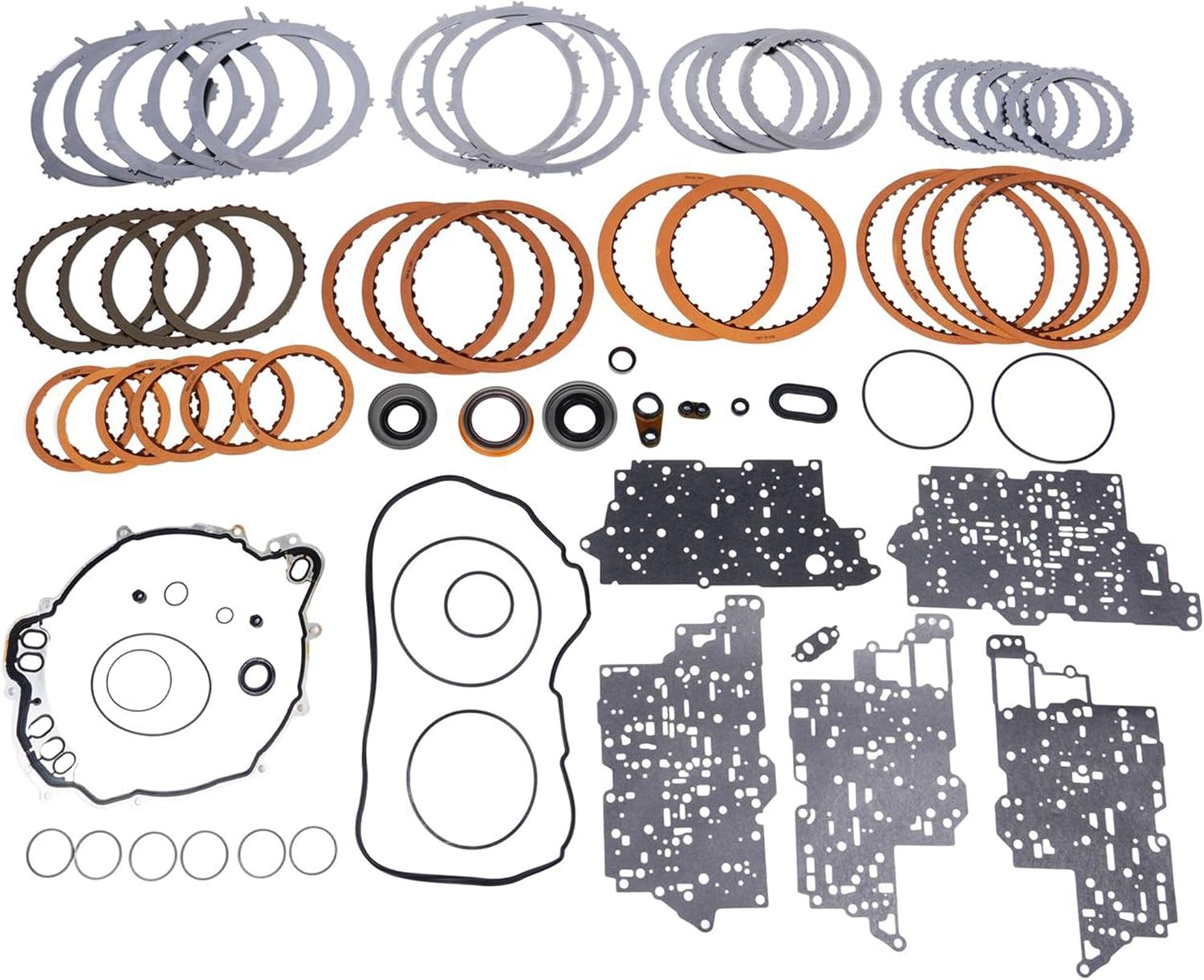
When a Malibu slip turns out to be a burned 3-5-R, 2-6 or 4-5-6 pack, this CoreTransmissionParts master kit covers the frictions, steels, gaskets and seals for the overhaul. Match the generation to your unit.
View the 6T70 master rebuild kit at CoreTransmissionPartsLooking for something else? Browse all 6T70 parts at CoreTransmissionParts.
Need parts for this job?
Our 6T70 parts page has Gen 1 rebuild kits with pistons, pumps, valve bodies and clutch drums for the 3.6L Malibu, all on our own checkout. For fluid specs across every unit, see the transmission fluid spec chart.
FAQ
Why is my Chevy Malibu transmission slipping?
On a 3.6L Malibu with the 6T70, the gear it slips in points at the cause. Slip in 3rd and 5th with weak or no reverse is usually the broken 3-5-R wave plate from GM bulletin 09-07-30-012F, slip in gears that share no clutch points at low line pressure, and slip in 2nd and 6th or 4th through 6th points at the 2-6 or 4-5-6 clutch. Check the fluid hot and rule out converter clutch slip first.
How do I check the transmission fluid on a 6T70 Malibu?
Run the engine on level ground, move the lever through every range, idle for a minute, and read the dipstick only when fluid temperature is 180 to 200 degrees F. Keep it in the crosshatch and add no more than a pint at a time. The dipstick will not read correctly on a cold transmission, and the fluid is DEXRON-VI.
Can low line pressure make a 6T70 slip in every gear?
Yes. When the slip spreads across gears that do not share a clutch, measure line pressure. ATRA says to check it at idle and inspect the pump outlet seal if it is low, and GM also lists loose pump bolts, a mis-installed filter, a sticking blow-off valve and a worn pressure regulator valve.
Do P0752, P0872, P0877 or P0989 mean the Malibu needs a new TCM?
Not by themselves. On a 2009-2012 Gen 1 Malibu those codes come from the TEHCM pressure switches, which fail often, but ATRA also ties them to low idle line pressure from a damaged pump outlet seal. Put a pressure gauge on it first; GM bulletin 09-07-30-012F also warns against replacing the TEHCM unless diagnostics call for it.
Related guides
Sources
- General Motors, Service Bulletin 09-07-30-012F, "No Reverse, 3rd or 5th, Check Engine Light Illuminated, DTC P0776." Backs the 2008-2009 Malibu listing, the 3rd/5th slip, flare and no-reverse symptoms, P0776 and companion codes, the broken 3-5-R wave plate cause, updated plate 24254103, the case split with new pump filter and solenoid filter plate, and the TEHCM caution. static.nhtsa.gov (PDF)
- General Motors, Service Bulletin 18-NA-358, "Shudder, 2-3 Upshift or 3-2 Downshift Concern." Backs the 2015 Malibu RPO M7W listing, the shudder with flare, slip or harsh shift, the misfire and TCC slip checks, the 5-second power brake test, valve bodies 24281084 and 24257450, the TEHCM note and the speed sensor debris check. static.nhtsa.gov (PDF)
- GM service information for the 6T70/6T75 (2011 Saab 9-4X workshop manual): Fluid Level and Condition Check, Road Test, Line Pressure Check, Fluid Pressure High or Low, and No Second and Sixth Gear. Backs the hot level procedure and fluid condition rules, the 100 RPM / 6 second TCC slip limit and 20 RPM ECCC slip, the 1-2 second shift timing, the 200 kPa line pressure steps and 12 Nm plug torque, the low/high pressure cause list, and the 2-6 clutch inspection list. Fluid Level Check / Road Test / Line Pressure Check / Fluid Pressure High or Low / No 2nd and 6th
- ATRA, "6T70 Product Issues and Updates" seminar. Backs the Z-body Malibu RPO split (6T40/45 MH7/MHC, 6T70/75 MH2/MH4/MY9/MH6), the 2013 Gen 1/Gen 2 split by RPO, the idle line pressure and pump outlet seal check next to P0752/P0872/P0877/P0989, the four updated wave plate part numbers, the separately serviced input ring gear and P2723, the 2-6 snap ring update, and Service Fast Learn Adapts. atracom (PDF)
- Sonnax, "6T70/6F50 Webinar." Backs the clutch apply chart, the Gen 1 pressure switch 8/12 psi values and their failure codes, and the 4-5-6 accumulator piston bore symptoms. Sonnax (PDF)
- Chevrolet, 2010 Malibu Owner Manual, automatic transmission fluid section. Backs the six-speed drain-and-refill capacity of 5.0 L (5.3 qt) of DEXRON-VI and the note that the dipstick does not read until the transmission is at operating temperature. assets.gm.com (PDF)