A shop gets this question in two very different flavors. The first is the swap guy with a small-block car who wants an overdrive and has both cores sitting on the floor. The second is the guy whose 700R4 just let go behind a truck that tows, and somebody at the parts counter told him to "just put a 4L80E in it." Those are different problems with different right answers, and the spec sheet only tells you part of it.
These two are not siblings. The 700R4 is GM's overdrive replacement for the TH350, and the 4L80E is a TH400 with an overdrive section grafted onto the front. They came from different corners of the Hydra-Matic catalog to serve different weight classes, and everything that matters on the bench follows from that.
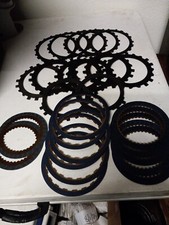
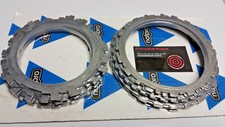
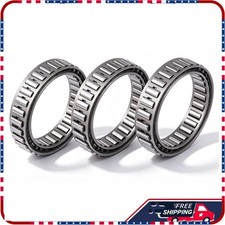
Side by side, the numbers that count
| Spec | 700R4 / 4L60 | 4L80E |
|---|---|---|
| 1st gear | 3.06:1 | 2.48:1 |
| 2nd gear | 1.63:1 | 1.48:1 |
| 3rd gear | 1.00:1 | 1.00:1 |
| 4th (OD) | 0.70:1 | 0.75:1 |
| Case length | 23-3/8 in. | 26-1/4 in. |
| GVW class in the name | 6,000 lb | 8,000 lb |
| Max engine input torque | Not published by GM | 440 lb-ft |
| Max output torque | Not published by GM | 885 lb-ft |
| Control | TV cable and mechanical governor | PCM, shift solenoids and EPC |
| Valve body | Cast iron | Aluminum, solenoid controlled |
| Converter | 298mm ('85-later) | 310mm |
| Input shaft | 27-spline pre-'84, 30-spline after | TH400 lineage |
| Dry weight | Substantially lighter | 254 lb (about 268 lb wet) |
| Built capability | About 750 HP | About 1,000 HP |
The GVW numbers buried in the model names are not marketing. 4L60 means four speeds, longitudinal, 6,000 lb. 4L80 means four speeds, longitudinal, 8,000 lb. GM told you the duty class in the name, and the internals back it up.
What the gearing actually does on the road
The 700R4's 3.06 first is the deeper of the two by a wide margin. That leverage is why the transmission got a reputation for launching heavy cars and why it works behind a low-compression small block that needs help getting moving. The 4L80E's 2.48 first is the TH400's first gear, and the TH400 was never a fuel-economy transmission.
Flip to the top gear and the advantage reverses. A 0.70 overdrive against a 0.75 overdrive is about a 7 percent difference in cruise rpm. On a 30-inch tire with 3.73 gears at 70 mph, that is roughly 2,050 rpm in the 700R4 versus about 2,215 rpm in the 4L80E, a difference of around 165 rpm. Combine that with a transmission that weighs 254 lb dry and you understand why nobody puts a 4L80E behind a 305 to save fuel.
The practical read: if the vehicle is light and the priority is highway rpm, the 700R4 wins the gearing argument outright. If the vehicle is heavy and the priority is not destroying the transmission, gearing is not the argument you should be having.
Strength: this is a TH400 with an overdrive on the nose
The 4L80E was released in 1991 in GM C/K trucks and the Hummer H1, built at Ypsilanti and Willow Run under RPO code MT1. GM reused as much TH400 hardware and design as it could and added an overdrive gearset, which is why the case ended up about an inch and a half longer than a TH400. It kept the TH400's large 32-spline output shaft in both two-wheel-drive and four-wheel-drive applications, and it kept the die-cast aluminum case. The 4L85E that arrived in 2002 went further with a five-pinion output gearset and five-pinion reaction gearset, rated for 16,500 lb GVWR and 22,000 lb of tow capacity.
Stock against stock, this is not a close fight. But "built" changes the picture more than people expect. Sonnax's own 700-R4 build guide puts a properly upgraded 700R4 at up to about 750 horsepower with the heavy-duty reaction shaft kit 74602-01K, the Smart-Tech input housing with heavy-duty input shaft 77733-10KB, the Smart-Tech clutch kit 77734-01K, the SmartShell reaction shell kit 77749-02K and the second-gear Super Hold servo 77911-03K. Meanwhile Sonnax rates its 300M heavy-duty 4L80E input shaft 34670-01 for applications up to 1,000 horsepower, and notes that input shaft failure is a common problem in performance and heavy-duty 4L80E units in the first place.
Read that carefully. A built 700R4 and a built 4L80E are closer than a stock one of each. The difference is what it costs to get there, and what happens at the top of the range.
The parts that actually decide these two builds
On a 700R4 it is the 3-4 clutch pack, because that is what burns. On a 4L80E it is the pump and valve body calibration, because that is where the pressure problems start. CoreTransmissionParts stocks both.
700R4 3-4 Power Pack, 4-clutch →4L80E Sonnax Performance Pack HP-4L80E-01 → • full 700R4 catalog
Cable versus computer: the difference that decides your swap
This is the single biggest practical split between the two units, and it has nothing to do with strength.
The 700R4 uses a cast iron valve body controlled by a throttle valve cable and a mechanical governor. The cable sets line pressure and the governor sets shift points. There is no solenoid to compensate for a bad adjustment. Set the TV cable wrong and the transmission runs on inadequate line pressure until the bands and the 3-4 clutches cook. That is the entire failure story on a lot of 700R4 cores that come back in with fewer than 20,000 miles on a fresh rebuild.
The 4L80E has an aluminum valve body with a pressure control solenoid and shift solenoids. The computer sets line pressure from throttle position and engine load, and picks shift points from vehicle speed. You get modern tunability and no cable to misadjust, but the transmission also does not run at all without a PCM or a standalone controller, and it needs a 7-position shift quadrant reading P, R, N, OD, D, 2, 1.
For a carbureted swap car with no computer, that is a real cost and a real complication. For anything already running an engine computer, it is an advantage.
How each one actually fails
700R4: burnt 3-4 clutches
Burnt 3-4 clutch packs are the signature failure of the whole 4L60 family. Sonnax TASC Force member Brian Wing laid out why in Transmission Digest: low line pressure and third-gear oil leaks are the root cause of most 3-4 slipping, and the 3-4 hydraulic circuit is long, interconnected to the D4, forward clutch, 2nd, 2nd clutch and 3rd accumulator circuits. Any pressure change in one part of that circuit affects the rest, so several small leaks along the way add up to enough pressure loss to let the pack slip and burn.
The part of that article every rebuilder should tape to the bench is the inspection routine. Air check the loaded drum and confirm the 3-4 and forward clutches apply without leakage. Then air check the input housing bore-to-shaft: with the housing empty and hot out of the parts washer, pour oil around the spline area, put a blow gun with the tip removed into the 3-4 feed port inside the housing, block the feed hole at the input shaft sealing rings, apply pressure and watch for bubbles. If you find leakage between shaft and housing, pull the shaft and inspect the housing bore for galling. A galled bore means a new input housing, full stop.
That galling comes from a sharp leading edge on the input shaft press area, so dress that edge and always apply thread locker above the feed hole in the press area when installing an input shaft, keeping it out of the feed hole itself. And check the input housing checkball: if it leaks you lose pressure, and if it clogs with debris the clutches can burn in a partial apply from centrifugal force acting on the fluid.
4L80E: the overdrive roller clutch
The 4L80E's signature failure is a different animal, and Jim Dial explained the mechanism in Transmission Digest. The overdrive one-way roller clutch lives inside the overrun/coast clutch drum and holds in first through third, freewheeling in fourth. Look at the clutch application chart and the problem jumps out: in the overdrive range on a 4L80E, the OD roller clutch is holding by itself. The overrun clutch only comes on in the manual ranges, D, 2 and 1.
That is why plow trucks and tow rigs eat them. Drive in a manual range while pushing snow or pulling a load and the overrun clutch backs up the roller clutch, provides engine braking, and distributes the load. Leave it in overdrive and the roller clutch carries everything alone. Add heat and the plastic cage of the roller clutch melts, which takes the roller clutch out fast.
Sonnax addressed it in hardware with the patented Smart-Tech overrun clutch valve kit 34200-40K, which improves OD roller clutch holding power in the D4 and Reverse ranges. It is the first item on the Sonnax heavy-duty truck basic build list for a reason.
4L80E: uncontrolled line rise
The other chronic 4L80E complaint is pressure control. Sonnax documents uncontrollable line rise upward of 500 to 600 psi, high line pressure in Reverse, a buzzing noise, and broken direct clutch drums and cases. The cause is usually reverse boost oil entering the torque signal circuit through a wear-created cross leak at the boost sleeve, plus leakage past the aluminum balance plug. Pressure regulator valve bore wear makes it worse by allowing erratic pump slide movement. The fixes are the boost valve kit 34200-01K, with its hardened steel valve and O-ringed steel sleeve that seals against a worn pump cover bore, and an oversized pressure regulator valve with the matching reamer.
Diagnosing a 4L80E valve body on the bench
Sonnax publishes a vacuum test guide for the 4L80E and 4L85E that maps every critical wear area, and it is the fastest way to stop guessing. A few bores that pay for themselves:
- Actuator feed limit valve and sleeve — wrong gear starts, solenoid codes, gear ratio codes, 2nd gear starts, reverse slip, broken AFL filters. Two of the highest-value bores in the body.
- TCC regulator valve — converter shudder, burnt converter, TCC apply and release concerns, TCC codes. Repair with 34994-01K standard or 34994-18K oversized.
- 3rd and reverse accumulator control valve — soft shifts, low accumulator pressure, clutch and band failures, low line rise in Reverse. Sonnax part 34200-47K.
- Reverse and low/reverse checkballs — reverse slip, no reverse, no engine braking in manual low, burnt rear band. Parts 34994-17K and 34200-52.
- Solenoid filter and end plug — check the end plug for visible wear; part 34200-38.
Note the testing discipline in that guide, because it is where most shops get a false reading. OE valves are shown and tested in the rest position unless noted otherwise, several tests require the valve body tilted vertical with the checkball seated, and the casting valley has to be plugged with foam or putty on the checkball tests. A low vacuum reading is your wear indicator. Skip the setup and you will condemn a good bore.
The swap reality
Going 700R4 to 4L80E, budget for all of this:
- Length. 26-1/4 in. versus 23-3/8 in. The crossmember moves and the driveshaft gets shortened by roughly three inches.
- Bellhousing. The 4L80E has an integrated, non-removable bellhousing available only in the Chevrolet 90-degree pattern. Most 700R4 cases are natively that same pattern, so this side is usually the easy part. The rare 60-degree 700R4 from the 2.8L S10 and Camaro is the exception.
- Converter. 310mm on the 4L80E, and the flexplate has to match.
- Control. A PCM or standalone controller, plus a 7-position quadrant.
- Output. The 4L80E carries the TH400's 32-spline output shaft. The 700R4 does not share it, and the 700R4's four-bolt tailhousing pattern is its own.
- Weight. 254 lb dry, up to about 268 lb full. On a light car you will feel it.
Fluid
Both units live on DEXRON. GM superseded DEXRON III with DEXRON VI in 2006 as the required fill for the 4L80E series, and DEXRON VI is backward compatible with the earlier versions, so it is the correct answer for either transmission today. A 4L80E typically takes about a 6.3 quart service fill, with the total for a dry unit and dry converter running well past that. Set the final level hot on the dipstick rather than trusting any published number.
Which one to build
- Truck that tows or plows: 4L80E. Not close. And drive it in a manual range under load.
- Light car, no computer, budget matters: 700R4. Cable control is a feature when you have no PCM.
- Highway rpm and mileage are the goal: 700R4, for the 0.70 overdrive and the weight.
- Over 750 horsepower: 4L80E. The 700R4 tops out around there even built; the 4L80E keeps going to about 1,000 with a 300M input shaft.
- Already running an engine computer and have the tunnel room: 4L80E, for tunability the 700R4 cannot offer.
- Short wheelbase or tight tunnel: 700R4. Three inches is three inches.
Need parts for this job?
Rebuild kits, hardened sun shells, 3-4 clutch packs, servos, boost valve kits, solenoids and the bench tools for both units, shipped from the USA.
Shop 700R4 parts →FAQ
Will a 4L80E bolt in where a 700R4 was?
The bellhousing side usually will, because the 4L80E has an integrated Chevrolet 90-degree bellhousing and most 700R4 cases use that same pattern. Everything behind the bellhousing is a job. The 4L80E case is 26-1/4 inches long against the 700R4's 23-3/8 inches, so the crossmember moves and the driveshaft gets shortened by roughly three inches. You also need a PCM or a standalone controller, a 7-position shift quadrant, and a 310mm converter.
Is the 4L80E actually stronger than the 700R4?
Yes, in stock form it is not close. The 4L80E is a TH400 with an overdrive section added, rated by GM for 440 lb-ft of engine input torque, 885 lb-ft of output torque and 8,000 lb GVWR. The 700R4 was a 6,000 lb GVW unit. Built, the gap narrows: Sonnax puts a fully upgraded 700R4 at around 750 horsepower, while a 4L80E with a 300M input shaft is good for about 1,000.
Which one gets better fuel economy?
The 700R4, for two reasons. Its 0.70:1 overdrive is deeper than the 4L80E's 0.75:1, which is roughly a 165 rpm difference at 70 mph on a 30-inch tire with 3.73 gears. It is also a much lighter unit, where the 4L80E weighs 254 lb dry. If highway rpm and mileage are the goal and the vehicle is not heavy, the 700R4 is the better tool.
Why does the 4L80E keep killing overdrive roller clutches?
Because in the overdrive range the OD roller clutch holds by itself. Per Sonnax TASC Force member Jim Dial writing in Transmission Digest, the overrun clutch only applies in the manual ranges, so a truck plowing or towing in overdrive gets no backup from it. Add heat and the plastic roller clutch cage melts. Driving in a manual range under heavy load, or installing the Sonnax Smart-Tech overrun clutch valve kit 34200-40K, addresses it.
Do 700R4 and 4L80E parts interchange?
Almost nothing internal does. They share a GM bellhousing pattern and a lockup converter concept, and that is about it. The 4L80E shares far more with the TH400 than it does with the 700R4, including the 32-spline output shaft. Converters differ too: 700R4 units from 1985 on use a 298mm converter on a 30-spline input, while the 4L80E uses a 310mm converter.
Related guides
- 4L60E vs 4L80E: differences and interchange
- TH400 vs 4L80E: what the overdrive section changed
- 4L60E to 4L80E swap guide
- 700R4 TV cable adjustment, line pressure and the 3-4 clutch
- 4L80E low line pressure diagnosis
- 700R4 valve body problems and testing
Shop the part for this fix
Full 700R4 and 4L80E catalogs at CoreTransmissionParts: Sonnax valve body and boost valve kits, 3-4 clutch packs, hardened sun shells, direct clutch drums, EPC solenoids and master rebuild kits.
Shop 4L80E parts at CoreTransmissionParts →Sources
- Sonnax, "700-R4 (4L60) Performance Transmission Build Guide," Gregg Nader (TASC Force), February 26, 2021 — backs the cast iron valve body controlled by throttle cable and mechanical governor, the contrast with the 4L60-E's aluminum solenoid-controlled valve body, the OE wide-ratio 3.06/1.63 gearing with 0.70 overdrive, the roughly 750 HP built capability, and the build part numbers 74602-01K, 77733-10KB, 77734-01K, 77749-02K, 77911-03K and 700R4-LB1. sonnax.com/tech_resources/943
- Sonnax, "4L80-E Performance & Heavy-Duty Transmission Build Guides," June 22, 2023 — backs the Smart-Tech overrun clutch valve kit 34200-40K as the first item on the heavy-duty truck basic build, the 300M heavy-duty input shaft 34670-01 rated to about 1,000 HP with input shaft failure called a common problem in these units, the pressure regulator and line pressure items 34200-14K and 4L80E-LB1, and the case saver retainers 34762-10 and 34762-20. sonnax.com/tech_resources/1307
- Sonnax, "GM 4L80-E, 4L85-E Vacuum Test Guide," February 21, 2013 — backs the valve body wear locations and their symptoms: actuator feed limit valve and sleeve, TCC regulator valve with 34994-01K and oversized 34994-18K, 3rd and reverse accumulator control valve 34200-47K, reverse checkball 34994-17K, low/reverse checkball 34200-52, solenoid filter and end plug 34200-38, plus the test discipline of rest-position testing, tilting the valve body vertical with the ball seated, and plugging the casting valley. sonnax.com/tech_resources/434
- Transmission Digest, "Understanding 4L80-E Overdrive Clutch Failure," Jim Dial (Sonnax TASC Force), February 1, 2017 — backs the overdrive one-way roller clutch housed inside the overrun/coast clutch drum, its holding in 1st through 3rd and freewheeling in 4th, the fact that in the overdrive range the OD roller clutch holds by itself while the overrun clutch applies only in the manual D, 2 and 1 ranges, the load-sharing benefit of driving in a manual range, and the melting of the roller clutch plastic cage during overheat. transmissiondigest.com
- Transmission Digest, "All Over the Map: Attacking 4L60/E Burnt 3-4 Clutches with Confidence," Brian Wing (Sonnax TASC Force), June 1, 2018 — backs low line pressure and third-gear oil leaks as the root cause of most 3-4 slipping, the 3-4 circuit's interconnection to the D4, forward clutch, 2nd, 2nd clutch and 3rd accumulator circuits, the loaded-drum and input-housing bore-to-shaft air check procedures, the galled bore requiring a new input housing, the input shaft press-edge and thread locker guidance, and the input housing checkball partial-apply burn. transmissiondigest.com
- Novak Conversions technical guides, GM 4L80E and GM TH700R4 / 4L60 — backs the 4L80E ratios 2.48/1.48/1.00/0.75, the 440 lb-ft maximum engine input and 885 lb-ft maximum output torque, the 8,000 lb GVWR design target and the 4L85E's 16,500 lb GVWR and 22,000 lb tow rating, the 26-1/4 in. case length, 254 lb dry and about 268 lb full weight, 310mm converter, 32-spline TH400 output shaft in 2WD and 4WD, integrated Chevrolet 90-degree bellhousing, RPO MT1 with Ypsilanti and Willow Run build sites, the 2006 change to DEXRON VI and the 6.3 quart typical fill, the 7-position P-R-N-OD-D-2-1 quadrant, and on the 700R4 side the 23-3/8 in. case length, the 27-spline to 30-spline input shaft change, the four-bolt tailhousing pattern, the 6,000 lb GVW naming and the rare 60-degree bellhousing version. novak-adapt.com (4L80E) • novak-adapt.com (TH700R4)