"It takes a couple seconds to go into gear" is one of the most expensive sentences a customer can say, because it covers four completely different repairs that range from free to a full valve body teardown. On a Mercedes 722.6 (badged NAG1 in Chrysler products: W5A580, W5A380, W5A330, W5J400), I have chased this complaint into a cold-only fluid check that was wrong, a software calibration campaign that fixed it with no parts at all, a snapped regulator spring, and a conductor plate with corroded pins — and the fastest techs I know check them in that exact order, cheapest and least invasive first. This page covers the real cause list with the sources behind each one, and the order to rule them out so you're not pulling a valve body that a fluid top-off or a TCM flash would have fixed.
Step 1: Check the Fluid Level the Way Daimler Actually Specifies It
Most "delayed engagement, no obvious cause" comebacks I've seen traced back to a fluid level that was checked wrong, not a part that was bad. Daimler's own procedure for this transmission, AR27.00-P-0100AC, defines two separate level windows rather than one dipstick reading. The first is a cold check: with the engine idling briefly in "P" and the fluid at roughly 25 C (77 F), the level on the special dipstick has to sit between the "min" and "max" marks in range A. The second is a hot, more precise check that the procedure says is only valid above 80 C (176 F), read against a different range (B) on the same dipstick, and Daimler's own note on the procedure says explicitly to perform the hot check only if shifting problems are actually present. That second step requires a scan tool connected and reading transmission oil temperature live, because there's no way to know the fluid is really at 80 C just by feel or by how long the engine's been running.
The practical trap: a tech checks the dipstick cold, sees it sitting in range, and moves on — but the level can be correct cold and still wrong at operating temperature, because ATF expands as it heats and the "correct" physical fill volume shifts the reading between the two windows. Overfilled or underfilled at operating temperature, the 722.6 delays engagement, flares shifts, or both, with zero codes and zero worn parts anywhere in the unit. This step costs nothing but a scan tool and five minutes, and it rules out the single cheapest cause before you touch anything else. For the full capacity table by sub-variant and the complete cold/hot procedure, see our 722.6 fluid type and capacity guide.
Step 2: Check for a TCM Calibration Campaign Before You Open Anything
This is the step most independent shops skip entirely, and it's the one that can fix delayed engagement with zero parts. The Chrysler-built version of this transmission (NAG1/W5A580, used in the Wrangler, Grand Cherokee, Charger, Challenger, 300C, Durango and Liberty) has a documented service bulletin, Chrysler TSB 21-033-14, covering a TCM reprogram that specifically lists "intermittent delayed engagement from reverse to drive" and "delayed engagement when shifting from drive to reverse while in 4 low" (JK Rubicon) among the symptoms corrected by updated transmission control software — alongside hanging in gear, delayed upshifts and downshifts, and inconsistent shifting while towing. The repair is a wiTECH reflash of the TCM, full stop. No valve body, no spring, no solenoid.
This doesn't apply to every 722.6 on the road — it's scoped to specific vehicle lines, engines and model years on the Chrysler-built side, and it will do nothing for a Mercedes-badged unit with a physically broken spring or a worn valve bore. But because it's a five-minute check against a VIN before you commit to pulling a pan, it belongs ahead of any parts-based repair in the diagnostic order. If the complaint is intermittent rather than constant, and it's specifically reverse-to-drive or drive-to-reverse-in-4-low on an applicable Jeep or Ram-platform vehicle, check for this campaign first.
Step 3: The Mechanical Causes, If Steps 1 and 2 Don't Resolve It
If the fluid level checks out correctly at both temperatures and there's no applicable TCM campaign, the cause is almost always inside the valve body, and it's one of two well-documented failures. On 1999-and-earlier units that use two valves stacked in a single control-pressure regulator bore, the spring loading those valves is known to snap near its midpoint; the two halves can then thread into each other like a jackscrew and change the spring's effective length, which throws off line pressure regulation even though the bore itself is undamaged. Separately — and this one shows up on both early and late units — wear in the regulating valve pressure control valve bore reduces the pressure available to both the pMod and pS control solenoids, producing delayed engagement alongside low line rise, long shift duration, and flare shifts, sometimes with shift codes attached.
Both of these are genuine valve-body repairs with the pan down and the unit apart, and both are covered in full — wear patterns, the specific Sonnax part numbers for each, and how to vacuum-test the bores before you buy anything — in our 722.6 valve body symptoms and testing guide. I'm not re-deriving that diagnosis here; the point of this page is knowing that these two are what you're left with once fluid and software are ruled out, not re-walking the bore-by-bore teardown.
There is a third mechanical cause worth ruling out before you commit to a valve body: the front pump. A worn pump bushing lets the converter hub move off center, the pump gears lose running clearance, and pump output leaks away before it ever reaches the regulator. Sonnax builds a dedicated steel-backed, copper-alloy replacement for the '96-later 722.6 pump bushing (part 68004-01) and the pump stator rear bushing (68915-01) precisely because the OE parts wear, per Sonnax's part 68004-01 listing. The tell is a delay that gets worse as the fluid gets hot, often with a front seal weep or a whine that rises with engine rpm in Park. Sonnax's 722.6/NAG1 vacuum test guide is the fastest way to separate the two hydraulic suspects on the bench: it maps delayed engagement, low line rise and long shift duration to the regulating valve pressure control valve, so a bore that passes vacuum points you back at the pump.
Step 4: The Conductor Plate, When Delayed Engagement Comes With Other Electrical Symptoms
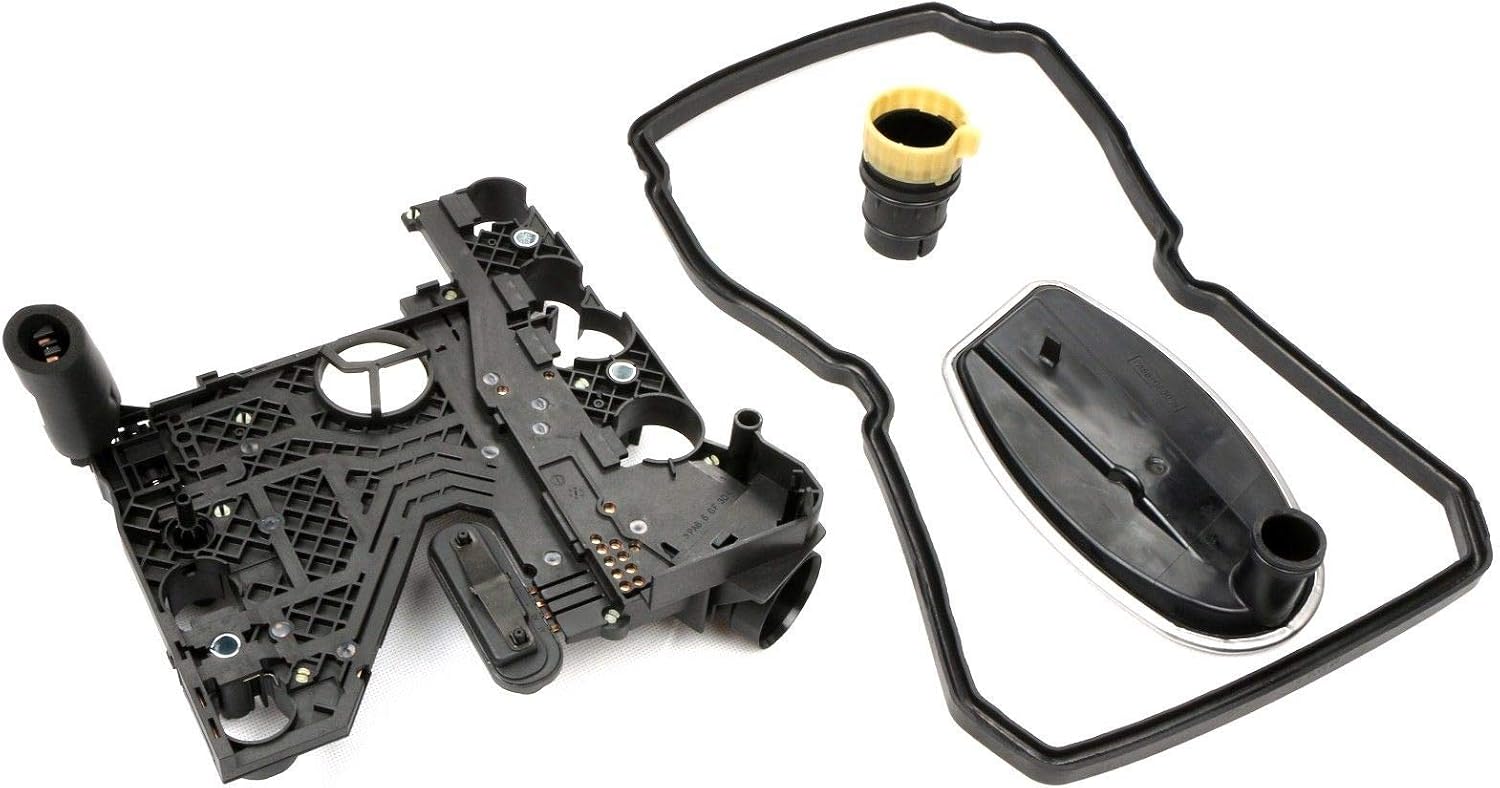
If the delayed engagement shows up alongside a drop into second-gear-only limp mode, intermittent shift solenoid codes, or a transmission that behaves differently after the ignition is cycled, the conductor plate — the electronic carrier for the shift and pressure solenoids, mounted on the valve body — is the more likely cause rather than a hydraulic one. Its connector pins corrode with age and heat, and a degraded signal path can produce exactly the same "takes a second to go into gear" complaint as a hydraulic fault, just with electrical company. We cover the failure codes, the limp-mode behavior, and the full replacement procedure in our 722.6 conductor plate failure guide.
| Cause | Cost to check/fix | Key signal |
|---|---|---|
| Fluid level wrong at operating temperature (checked cold-only) | Free to check; a top-off or drain-back if wrong | Passes a cold check but shift complaint persists once warmed up |
| TCM calibration (Chrysler-built NAG1/W5A580 only) | Reflash only, no parts | Intermittent, reverse-to-drive or drive-to-reverse-in-4-low, applicable Jeep/Ram platform |
| Broken regulating pressure control valve spring (1999-and-earlier) | Valve body repair, ~$61 spring (Sonnax 68942-01) | Delayed engagement plus 2-3/3-4/4-5 flare, no code |
| Regulating valve pressure control valve bore wear (early and late units) | Valve body repair, oversized valve kit (Sonnax 68942-17K) | Delayed engagement, low line rise, long shift duration, possible shift codes |
| Conductor plate connector corrosion | Conductor plate kit, ~$85–$125 | Delayed engagement with intermittent codes or second-gear limp mode |
Frequently Asked Questions
What is the first thing to check on a 722.6 with delayed engagement?
The fluid level, checked the way Daimler's own procedure actually specifies it, not the way most shops check a dipstick. The 722.6 has two separate level windows: a cold check between "min" and "max" at roughly 25 C (77 F), and a second, more precise check only valid above 80 C (176 F) that requires reading transmission oil temperature on a scan tool. A level that reads fine cold can be wrong hot, and a level that's off in either direction produces delayed engagement along with other shift complaints. This costs nothing to check and rules out the most common and cheapest cause before you open anything.
Can a software update fix 722.6 delayed engagement with no parts replaced?
Yes, on a documented subset of cases. Chrysler TSB 21-033-14 lists "intermittent delayed engagement from reverse to drive" and "delayed engagement when shifting from drive to reverse while in 4 low" as symptoms corrected by reprogramming the TCM with updated calibration software on W5A580-equipped vehicles (the Chrysler-built version of the 722.6, sold as NAG1). This applies to specific model years and drivetrain combinations, not every 722.6 on the road, and it will not touch a delayed engagement caused by a broken spring or a worn valve bore. Checking for an applicable TCM flash campaign before tearing into the valve body can save a full teardown on the right vehicle.
What mechanical problems inside the valve body cause delayed engagement on a 722.6?
Two are well documented. On 1999-and-earlier units with two valves stacked in one control-pressure regulator bore, the spring that loads those valves is known to snap near its midpoint, and the two halves can thread into each other and change the spring's effective length, throwing off line pressure. Separately, wear in the regulating valve pressure control valve bore reduces the pressure available to both the pMod and pS control solenoids, which produces delayed engagement along with low line rise, long shift duration, and flare shifts, and this bore wear shows up on both early and late units. Both are hydraulic, both are inside the valve body, and neither sets a code that names itself.
Is 722.6 delayed engagement always a sign the transmission needs to be rebuilt?
No. In order of how often each one turns out to be the actual cause: an incorrectly checked fluid level costs nothing to fix and rules itself out immediately; a TCM calibration update is a reflash with no parts; a broken regulator spring or a worn valve body bore is a valve-body-level repair with the pan and valve body out, not a rebuild; and a failed conductor plate is a connector-and-board swap. None of those is a rebuild. A full rebuild only enters the picture if the delayed engagement has been ignored long enough to burn the clutches it was already starving of pressure, which is the real cost of skipping the cheap checks first.
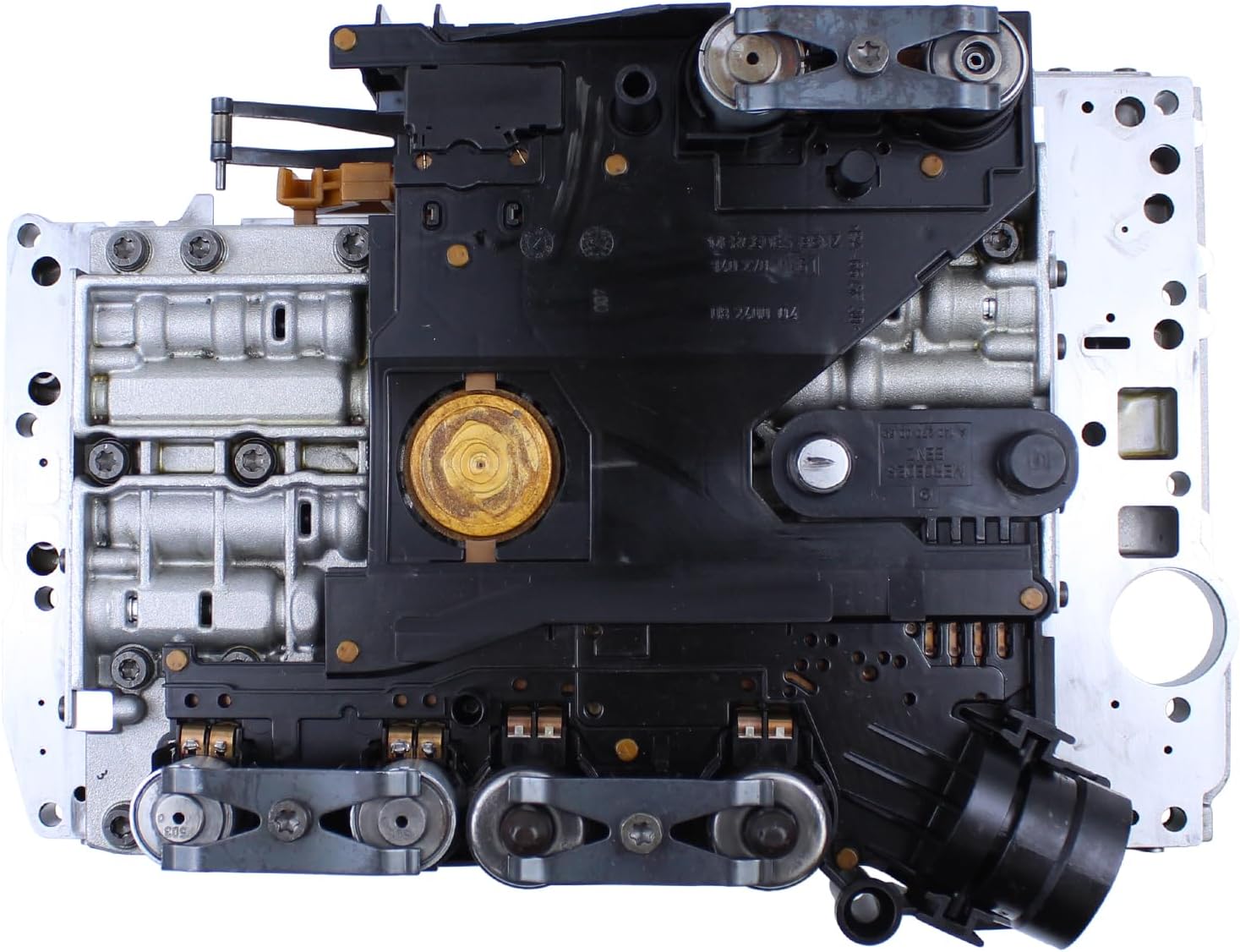
722.6 Valve Body with Solenoids
Complete replacement for units with confirmed bore wear or a broken regulator spring, once fluid and software causes are ruled out.
View the 722.6 valve body with solenoids →Sources
- Daimler AG — AR27.00-P-0100AC, "Check oil level in automatic transmission and correct if necessary," Transmission 722.6. Backs the two-stage level-check procedure: the cold check between "min" and "max" at approximately 25 C (77 F) in range A, the hot check valid only above 80 C (176 F) in range B, the instruction to connect a scan tool and verify transmission oil temperature for the hot check, and that the hot check should only be performed if shifting problems are present. mbclub.ru (PDF)
- FCA US / Chrysler Group LLC, Service Bulletin 21-033-14, "Flash: MIL Illumination For P0730 And Transmission Shift Enhancements," October 22, 2014 (NHTSA-hosted PDF). Backs the TCM reprogram covering "intermittent delayed engagement from reverse to drive" and "delayed engagement when shifting from drive to reverse while in 4 low" on W5A580-equipped Wrangler, Grand Cherokee, Charger, Challenger, 300C, Durango and Liberty applications, plus the broader list of hanging-in-gear, delayed-shift and towing symptoms corrected by the same calibration update. static.nhtsa.gov (PDF)
- Sonnax Part 2313, "Regulating Pressure Control Valve Spring" (68942-01). Backs the regulating pressure control valve spring fracture mechanism on 1999-and-earlier two-valve bores, its delayed-engagement-into-drive-or-reverse symptom alongside 2-3/3-4/4-5 flare, and the fitment limit to units with two valves in the control pressure regulator bore. sonnax.com
- Sonnax Part 2323, "Oversized Regulating Valve Pressure Control Valve Kit" (68942-17K). Backs the regulating valve pressure control valve bore-wear mechanism, its symptom list of delayed engagement, low line rise and long shift duration, flare shifts and shift codes, the reduced pressure to the pMod and pS control solenoids, and fitment to both early and late units. sonnax.com
- Transmission Digest, "Mercedes 722.6, Daimler W5, Porsche W5, Jaguar 722.6," by Mio Cundl, June 1, 2009. Backs the transmission's background and shared NAG1 designation across Mercedes, Porsche, Jaguar and Chrysler applications, used here to frame why a Chrysler-specific TCM campaign and a Mercedes-specific hydraulic fault can both present as the same complaint on what is mechanically the same gearbox family. transmissiondigest.com
- Sonnax — 722.6 Pump Bushing, part 68004-01. Backs the replacement pump bushing (68004-01) and pump stator rear bushing (68915-01) for '96-later 722.6 units and their steel-backed copper-alloy construction for wear resistance. sonnax.com
- Sonnax — Mercedes 722.6/Chrysler NAG 1 Vacuum Test Guide. Backs the valve-to-symptom map tying delayed engagement, low line rise and long shift duration to the regulating valve pressure control valve, and the vacuum-test method for checking valve body bores before buying parts. sonnax.com
Valve bodies, conductor plates and the fluid and filter kits for a complete 722.6 service, shipped fast from the USA.
Shop 722.6 parts →