A wet 722.6 is one of the most common things that rolls into a shop on a Mercedes, a Sprinter, or a Chrysler, Dodge or Jeep running the NAG1 version of the same five-speed. Most of the time the leak is boring: a pan gasket somebody torqued with an air gun, a cooler line fitting, a fill cap with no locking pin. But one leak on this transmission is not boring at all. The 13-pin electrical connector on the driver's side of the case can let fluid into the wiring harness, and that fluid can travel up the wires all the way to the transmission control module. Fix the drip and ignore the harness, and you can be chasing shift codes for months.
This guide walks the leak points in the order I check them, with the factory torque specs from Daimler's own workshop documents, the bulletin numbers for the connector problem, and what to put back in the unit when you are done. Sources are listed at the end.
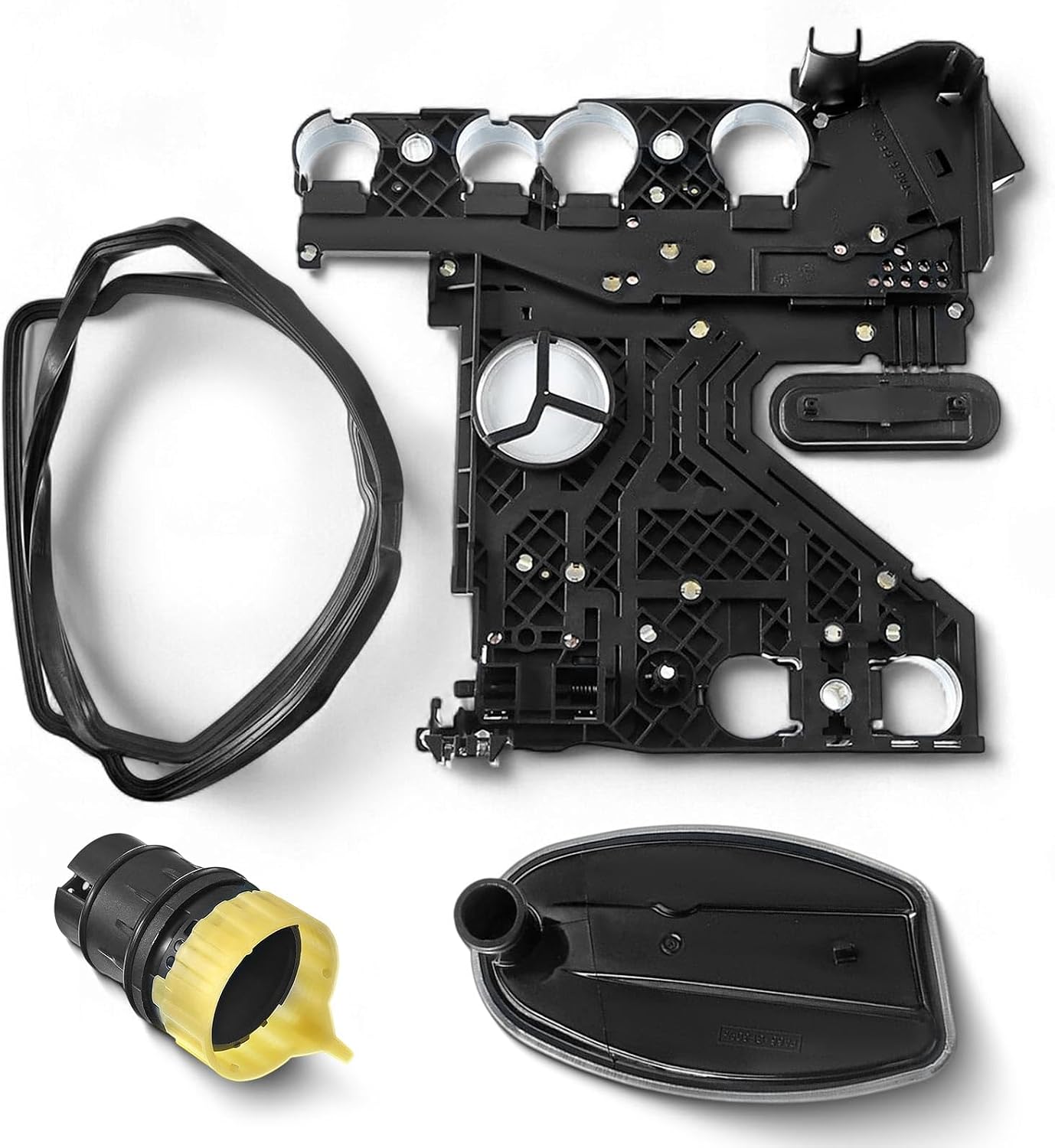
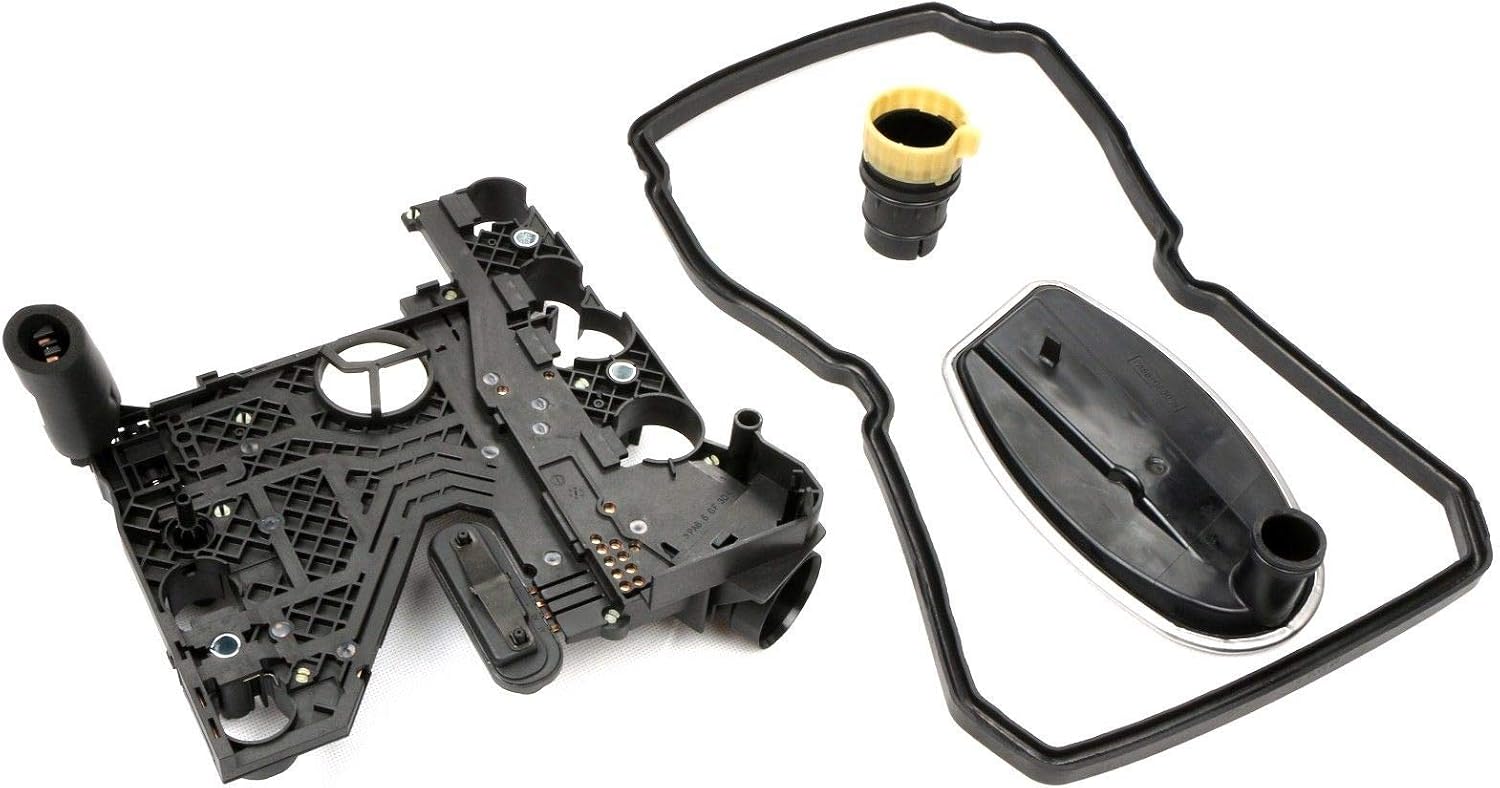
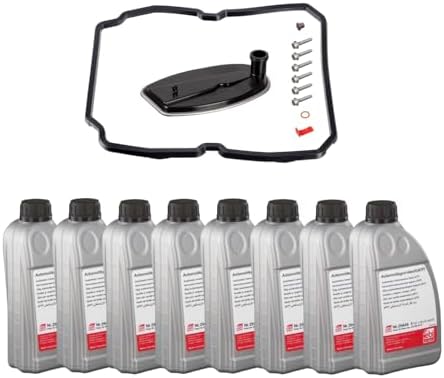
Before You Chase It: Confirm It Is ATF and Find the High Point
Start by proving what is leaking. The 722.6 sits right behind the engine, so a rear main seal, a valve cover gasket or a power steering line can all paint the bellhousing and the pan. Fresh 236.14 ATF is red and thin; engine oil is brown or black and heavier. If you are not sure, wipe a sample on a white rag next to a sample from the engine dipstick.
Then degrease the whole transmission, drive the vehicle long enough to get the fluid hot, and look for the highest wet spot. ATF runs downhill and the airflow under the car pushes it rearward, so the drip you see at the pan corner usually started somewhere higher and further forward. A UV dye added through the fill tube makes this quick on a slow seep.
Last, check the level before you condemn a seal. There is no dipstick on this unit. The fill tube is closed with a cap and a breakaway locking pin, and Daimler's level procedure (AR27.00-P-0100AC) uses the special dipstick 140 589 15 21 00. With the vehicle level on its wheels, engine idling in P after cycling through the gear ranges, the level must sit between the min and max marks in the cold range (about 25 C / 77 F) or, for an exact check, in the hot range above 80 C. Daimler warns that both too little and too much oil can cause malfunctions and transmission damage. An overfilled 722.6 will push fluid out wherever it can, and that looks a lot like a seal leak.
Chrysler says the same thing about the NAG1 in its 2007 Jeep Grand Cherokee service information. Overfill churns the fluid into foam, the foam expands, and the overflow out of the vent or fill tube "can easily be mistaken for a leak" (Chrysler WK, Effects of Incorrect Fluid Level). Chrysler's NAG1 pre-diagnostic procedure opens with a visual inspection of the transmission and cooler lines for leaks before any other test (NAG1 Pre-Diagnostic Troubleshooting), and its fill procedure lists reference volumes of 7.0 L (7.4 qt) and 8.1 L (17.1 pt) specifically to avoid overfilling after a fluid change or overhaul (NAG1 Transmission Fill).
Leak Spot 1: The 13-Pin Connector and Pilot Bushing
This is the one that matters. The transmission harness plugs into the case on the front left (driver's) side. Inside the case, that connection runs to the conductor plate on top of the valve body through a plastic pilot bushing, sometimes called the adapter plug or adapter sleeve. The bushing carries two O-rings whose only job is to keep pressurized ATF out of the electrical connection. The bolt that holds the bushing in the case is just a retainer; it does not seal anything, so cranking on it will not stop a leak.
When those O-rings harden and shrink with age and heat, fluid gets past them and fills the connector cavity. From there it does not just drip down the outside of the case. It wicks along the inside of the wire conductors, under the insulation, and travels up the harness toward the TCM. Mercedes documented exactly this in technical service bulletin LI27.00-P-044918: a vehicle with erratic or harsh shifts and a long list of stored TCM codes should be checked for oil intrusion at that front left connector, because the leaking pilot bushing O-rings let oil travel through the harness to the control module (Tomorrow's Technician, "Mercedes-Benz Transmission").
Chrysler saw the same thing on its NAG1 builds. Transmission Digest's TECH/TALK column from October 2011 describes 2004-and-later Chrysler and Dodge vehicles with intermittent solenoid-circuit codes plus a leak at the case connector, caused by faulty O-rings on the adapter sleeve. The correction is the updated adapter sleeve and connector kit, Mopar 68021352AA (which includes connector 5120265AA), followed by an ohm test of every solenoid on the valve body, replacing any that read out of range.
The fix, step by step
- Let it cool. The Mercedes procedure says the connector may only be disconnected or reconnected with transmission oil temperature below 50 C, to avoid damaging the conductor plate (ALLDATA bulletin via Underhood Service). Do not pull it hot off a road test.
- Disconnect the battery negative, unplug the harness, and clean the area around the connector so dirt does not fall into the case when the bushing comes out.
- Replace the pilot bushing and its O-rings. On Mercedes units the adapter plug is commonly listed as 203 540 02 53; on Chrysler NAG1 units use the 68021352AA kit. Lube the new O-rings with clean ATF and push the bushing in square. Never reuse the old one once it has been out.
- Deal with the harness. If there is ATF inside the harness plug, wipe it dry and blow out both the transmission end and the control-module end, then clean the contacts with electrical contact cleaner. If you find oil at the TCM connector, Mercedes' guidance is to take the module out of its housing, clean it carefully with contact cleaner and dry it completely before reassembly.
- Route it slack. When you plug the harness back in, make sure it runs in a tension-free path and is not pulling on the connector. A harness under tension will side-load the new O-rings and start the leak again.
- Clear codes and road test. If the faults come straight back, the TCM itself or the conductor plate may already be damaged, and a heavily soaked harness may need replacing rather than cleaning.
Here is the judgment call. If the car has high miles, a history of limp mode, or speed sensor codes on top of the leak, do not just replace the bushing. Drop the pan and do the conductor plate, filter and pan gasket in one job. The plate is a known failure on this transmission anyway (see our 722.6 conductor plate failure guide), and the kits above include the adapter plug, so you seal the leak and remove the next failure in a single pan drop.
Leak Spot 2: Pan Gasket and Drain Plug
The pan is the most common leak by volume, and almost every one I see is self-inflicted. The 722.6 pan is held on by six bolts at a factory torque of just 8 Nm (about 71 in-lb). That figure is the same for every sub-variant in Daimler's table, including the 722.628, 722.648 and 722.649 (Daimler AR27.55-P-0100A, BA27.10-P-1002-03A). An impact gun or a heavy hand crushes the gasket unevenly or pulls the threads, and the pan weeps within a few hundred miles.
The drain plug takes 20 Nm, or 22 Nm on the 722.649 (BA27.10-P-1001-03A). Use a new sealing washer every time. When you drop the pan, expect a surprise: Daimler notes that roughly 2.5 liters of fluid are still in the pan after the drain plug stops, so have a second catch pan under it. Daimler's procedure calls for a new gasket at installation, and both sealing faces need to be clean and dry before it goes on. We cover the full pan job in the 722.6 filter and pan service guide.
Leak Spot 3: Cooler Lines and Fittings
The cooler lines run forward from the transmission to the cooler in the radiator, and on many chassis they are clipped along the engine oil pan on the way. Daimler's flush procedure shows the right-hand cooling line attached at the transmission with a banjo bolt and held to the engine oil pan with clamps (AR27.55-P-0100A, steps 5 and 6). Leaks show up in three places:
- The banjo fitting at the case. The sealing washers flatten and harden. Replace them any time the bolt is removed, and do not try to stop a weep by adding torque.
- The crimped rubber sections. The rubber hose portions of the lines get hard and crack at the crimp ferrules with age. A line that is wet right at the crimp is a line that needs replacing, not tightening.
- Rubbed-through lines. Check every clamp along the oil pan. A missing or broken clamp lets the line vibrate against the pan or a crossmember until it wears through.
A cooler-line leak is the one most likely to dump a lot of fluid fast, because the lines are pressurized whenever the engine runs. If the customer says it left a puddle overnight rather than a few spots, start here.
Leak Spot 4: Fill Tube Cap and Locking Pin
Mercedes sealed this transmission on purpose. The fill tube is closed with a plastic cap held by a locking pin, and the pin is designed to break when removed. Daimler's procedure has you break the plate off the pin, press it out, and at the end press in a new locking pin until it latches (AR27.00-P-0100AC, steps 2 and 15). Tomorrow's Technician makes the same point: install a new locking cap when the job is done.
When someone has checked the level and pushed the old cap back on with no pin, it can lift under pressure or heat and seep down the tube onto the bellhousing. That looks like a front seal leak from underneath. Look up top before you pull the transmission. If the tube O-ring at the case end is weeping, that is a cheap seal, not a teardown.
Leak Spot 5: Bellhousing (Front Pump Seal)
ATF dripping from the bottom of the bellhousing means the front seal on the pump, the pump body O-ring, or on early units the converter drain plug if it has one. Before you sell a removal, rule out the engine rear main seal by color and smell, and rule out the fill tube leaking down from above (spot 4). If it is truly the front pump seal, the transmission has to come out to fix it. That is the time to inspect the converter hub for grooving, since a worn hub will chew up a new seal quickly, and to replace the pump bushing if it shows wear. A worn bushing lets the converter hub move around and kills the seal again.
Leak Spot 6: Rear Output Seal and Selector Shaft
Fluid at the tail of the transmission is usually the output shaft seal, and it often shows up after a driveshaft job where the flange was pried on or the shaft was hanging. On 4MATIC and 4x4 versions, check whether the fluid is actually coming from the transfer case before you blame the transmission. The selector shaft seal on the side of the case can also weep, especially if the shift linkage bushing is worn and lets the shaft move around. Both seals come in a full 722.6 overhaul gasket and seal set, and both can usually be replaced in the vehicle.
Shop the part for this fix: 722.6 Master Overhaul Gasket & Seal Kit
One kit with the pan gasket, sealing rings, O-rings and lip seals for a 722.6 reseal, so you are not ordering a front seal today and an output seal next week.
View the 722.6 gasket and seal kit on CoreTransmissionParts →Need something else? Browse all 722.6 parts at CoreTransmissionParts.
What to Put Back In
Topping off a leaker with the wrong fluid can turn a leak job into a shift complaint. Mercedes-built 722.6 units take fluid approved to MB sheet 236.14 (the older units were originally filled to 236.10 or 236.12, and Mercedes' BeVo listing shows approved alternatives). Chrysler-built NAG1 units are a split. Transmission Digest notes that the Sprinter, Crossfire and Mercedes units require specific fluid because of calibration, while the other Chrysler applications use ATF+4. Check the fluid spec for the exact vehicle before you add anything.
If the leak let the unit run low, fill and check it the factory way rather than by the bottle count. Daimler's initial-fill capacities run 7.0 liters (+0.5) for the 722.610/638, 7.5 liters (+0.5) for the 722.602/603/615, and 8.0 liters for the large group of 722.600-series units in the same table (AR27.00-P-0100AC). A pan service or a leak top-off will take much less than that. Pour in about what came out, then do the level check described at the top of this page. Our 722.6 fluid type and capacity guide has the full table.
Need parts for this job?
Conductor plate kits with the 13-pin adapter plug, filter and pan gasket kits, and MB 236.14 service kits for the 722.6, all on our own secure checkout.
Shop 722.6 parts →Frequently Asked Questions
Why is my 722.6 leaking at the electrical connector?
The 13-pin connector plugs into a pilot bushing (adapter plug) that seals with two O-rings. When those O-rings harden with age and heat, pressurized ATF gets past them into the connector cavity. The bolt only retains the bushing and does not seal, so the fix is a new bushing and O-rings, not more torque.
Can a leaking 722.6 connector damage the TCM?
Yes. Mercedes TSB LI27.00-P-044918 describes oil travelling from the leaking pilot bushing through the wiring harness to the transmission control module, causing erratic or harsh shifts and many stored codes. Clean and dry both ends of the harness, and if oil reached the TCM connector, remove and clean the module. If codes return, the module or a soaked harness may need replacing.
What torque do 722.6 pan bolts take?
Daimler specifies 8 Nm (about 71 in-lb) for the six pan bolts on every 722.6 sub-variant. The drain plug takes 20 Nm, or 22 Nm on the 722.649. Overtightening the pan bolts is the most common cause of a pan gasket leak right after a service.
How do I check the 722.6 fluid level after fixing a leak?
Park level, remove the fill cap locking pin, start the engine, cycle through the gear ranges with the brake on, and return to P. Read the level with dipstick tool 140 589 15 21 00 against the cold range at about 25 C, or the hot range above 80 C for an exact check, then fit a new locking pin.
Is the Chrysler NAG1 connector leak fixed the same way?
Mostly. Transmission Digest reports 2004-and-later Chrysler and Dodge NAG1 units leaking at the case connector because of adapter sleeve O-rings, with intermittent solenoid codes. The fix is the updated Mopar adapter sleeve and connector kit 68021352AA, followed by an ohm test of all the solenoids.
Sources
- Daimler AG — AR27.55-P-0100A, "Flush out automatic transmission and torque converter," Transmission 722.6. Backs the 8 Nm pan bolt torque (BA27.10-P-1002-03A), the 20 Nm / 22 Nm (722.649) drain plug torque (BA27.10-P-1001-03A), the roughly 2.5 liters left in the pan, the new-gasket requirement, and the banjo-bolt cooler line connection and oil-pan clamps. w124performance.com (PDF)
- Daimler AG — AR27.00-P-0100AC, "Check oil level in automatic transmission and correct if necessary," Transmission 722.6. Backs the level-check procedure, the 25 C and 80 C ranges, dipstick 140 589 15 21 00, the new locking pin on the fill cap, the warning that too little or too much oil causes damage, and the 7.0 / 7.5 / 8.0 liter initial-fill capacities. mbclub.ru (PDF)
- Tomorrow's Technician — "Mercedes-Benz Transmission," Brian Sexton, December 21, 2021. Backs TSB LI27.00-P-044918 (oil intrusion at the front left connector), the two pilot bushing O-rings, oil travelling through the harness to the TCM, the cleaning and TCM inspection steps, the new locking cap, and the MB 236.10 / 236.12 fluid specs. tomorrowstechnician.com
- Underhood Service — "Tech Tip: Mercedes-Benz A/T Fluid Leaks at the Electrical Connector," October 29, 2008 (courtesy of ALLDATA). Backs the connector and O-ring replacement, the below-50 C rule for disconnecting the connector, cleaning ATF out of the wiring loom, and the tension-free harness routing. underhoodservice.com
- Transmission Digest — TECH/TALK, October 2011 Issue, "Chrysler/Dodge NAG1: Solenoid circuit faults/case-connector leak." Backs the 2004-and-later NAG1 case-connector leak, the adapter sleeve O-ring cause, the Mopar 68021352AA kit (includes connector 5120265AA), and the solenoid ohm test. transmissiondigest.com
- Transmission Digest — "Mercedes 722.6, Daimler W5, Porsche W5, Jaguar 722.6," Mio Cundl, June 1, 2009. Backs the NAG1 naming and applications and the fluid split: Sprinter, Crossfire and Mercedes units need specific fluid, other Chrysler applications use ATF+4. transmissiondigest.com
- Chrysler — 2007 Jeep Grand Cherokee (WK) service information, NAG1 / automatic transmission. Backs the effects of over- and under-fill (foaming, expansion, overflow from the vent or fill tube mistaken for a leak), the NAG1 pre-diagnostic leak inspection of the case and cooler lines, and the 7.0 L / 8.1 L fill reference volumes used to avoid overfill. effects of incorrect fluid level, NAG1 pre-diagnostic, NAG1 transmission fill