The Mercedes 722.6, badged NAG1 on the Chrysler side of the family, shows up behind a lot of vehicles that end up pulling a trailer: Sprinter vans, Jeep Grand Cherokees, and the Mercedes RWD sedans and SUVs that get used to tow a boat or a small camper. None of those applications came with a transmission built around towing duty. The 722.6 is a five-speed with an electro-hydraulic control strategy that is sensitive to load, and the stock cooling system on most of these vehicles was sized for commuting, not for holding a loaded trailer on a grade in July. This is about what actually helps when you ask this transmission to do more than it shipped to do: the right fluid, a cooler that is sized and mounted correctly, and watching temperature instead of guessing at it.
The short version: Confirm which fluid spec your unit actually needs before you touch anything else — Mercedes, Sprinter and Crossfire units take MB-Approval 236.14 fluid (236.12 backward compatible), while Chrysler/Jeep/Dodge NAG1 applications use ATF+4, and mixing the wrong one in causes shudder on its own. Add a stacked-plate auxiliary cooler in series with the factory cooler, mounted where it gets clean air and not the hot discharge off the AC condenser. Watch transmission temperature while you tow; the 200°F range is where things get critical. Keep total towing weight about 20% under the vehicle's rating. And know that the conductor plate, the electrical heart of this transmission's valve body, is the part that sustained heat and load wear out first.
What You're Actually Towing With
NAG1 stands for "neues automatik getriebe," German for new automatic gearbox, with the 1 marking it as the first generation of that design (Transmission Digest). The 722.6 went into production for the 1996 model year and stayed in production for well over a decade, used across Mercedes, Porsche and Jaguar vehicles and, under the NAG1 name, in a range of Chrysler-badged products. In the US, the variants are the W5A580, W5A380, W5A330 and W5J400; the last three digits identify the maximum rated input torque in Newton meters, the W5A330 carries the widest gear ratio spread of the group, and the W5J400 suffix marks a Jeep application. You can tell a German-built unit from a Chrysler-built one by the tag: a pin stamp, or a pin stamp combined with a barcode tag, means Germany, while a barcode tag alone means it came off a Chrysler line.
That split matters more than trivia. Transmission Digest's own technical notes point out that the Sprinter, the Chrysler Crossfire and Mercedes-badged units require their own specific fluid because of calibration differences, while the other Chrysler NAG1 applications run on ATF+4. Before you do anything else to a 722.6 that's going to tow, confirm which calibration you actually have. We cover the fluid spec and fill procedure in full in our 722.6 fluid type and capacity guide; this article focuses on what towing specifically adds on top of that baseline.
Why Load Breaks This Unit Before Mileage Does
The 722.6 was one of the first five-speeds built around load-sensitive working pressure and overlap clutch control, with a multi-disc torque converter clutch instead of a simple single-disc design (Transmission Digest). That sophistication is also where sustained high load shows up first. Transmission Digest's technical write-up on this family documents a specific, well-known wear pattern: the outer bore of the working-pressure regulator valve wears over time, which lets pMod solenoid-signal oil leak past the boost end of the valve. As that bore wears, working pressure stops climbing the way it should when engine load goes up, and the result is engine-speed flare on a 2-3, 3-4 or 4-5 upshift, or a neutral flare on a downshift. The 1-2/4-5, 2-3 and 3-4 overlap sleeves wear in the same way and bleed off pressure at the working-pressure valve from a different direction. Sonnax's own technical reference on the 722.6/NAG1 family corroborates the same failure path (Sonnax).
None of that is caused by towing specifically. But towing is exactly the kind of driving that stresses it hardest, since a loaded trailer on a grade asks for more working pressure, for longer, than a daily commute ever does. A transmission with a marginal working-pressure bore that feels fine unloaded can start flaring the moment real load gets put on it.
The Overheating Failure Mode on Record
There's a documented, government-filed example of how fast elevated operating temperature turns into real damage on a NAG1 unit. In September 2005, DaimlerChrysler recalled roughly 101,925 model-year 2005 Jeep Grand Cherokees equipped with the 3.7L V6 and NAG1 automatic transmission (NHTSA Campaign 05V396000). The defect: air conditioner evaporator condensate water could enter the transmission at the fill tube grommet seal, causing shudder during torque converter clutch engagement. NHTSA's own summary lays out the cascade plainly — the condensate intrusion "can lead to increased transmission operating temperatures, boiling of the water, and a subsequent purging of transmission fluid into the engine compartment potentially resulting in an underhood fire" (NHTSA, Campaign 05V396000).
That particular defect wasn't towing-related; it was a water-intrusion problem. But the chain it describes, elevated temperature leading to boiling fluid and total failure of the seal system in a matter of degrees, is the same chain towing heat follows, just slower and self-inflicted instead of a manufacturing defect. It's a useful, documented illustration of why "it's a little warmer than usual" on this transmission family is not something to shrug off.
Fluid Spec: Confirm It Before You Add Anything
Mercedes-badged 722.6 units, the Sprinter and the Crossfire need MB-Approval 236.14 fluid, which is backward compatible with the earlier 236.12 spec; Chrysler, Jeep and Dodge NAG1 applications use ATF+4 instead (Transmission Digest). FUCHS' technical data for its TITAN ATF 4134, a fluid that carries MB-Approval 236.14 and is backward compatible with 236.12, specifically recommends it "for 5-speed transmissions with regulated torque converter lockup clutch for vehicles with rear-wheel drive," a description that fits the Mercedes-side 722.6 directly, and the same product is factory-fill for the 722.9 7-speed and specified for the Crossfire (FUCHS product data, TITAN ATF 4134). Grab the wrong bottle at a parts counter, an ATF+4 jug meant for a Jeep going into a Mercedes-spec unit or vice versa, and the friction modifier package is wrong for that converter clutch and shift-element design. Under normal driving that might show up as a soft shudder you can live with. Under tow load, with the converter clutch working harder and more often, it shows up faster and worse.
Mercedes documentation for the 722.6 fluid level check calls for a special dipstick tool (part 140-589-15-21-00) and reads the level against two separate ranges, one cold around 25°C and one hot around 80°C, because the fluid expands enough between those temperatures to change the reading (Mercedes WIS workshop data, reproduced at w220.wiki). If you're adding a cooler or doing a fluid service ahead of a towing season, get the level checked at the correct temperature window rather than eyeballing a cold dipstick; overfilled or underfilled fluid both run hotter than a properly filled unit under load.
The Cooler Upgrade That Actually Helps
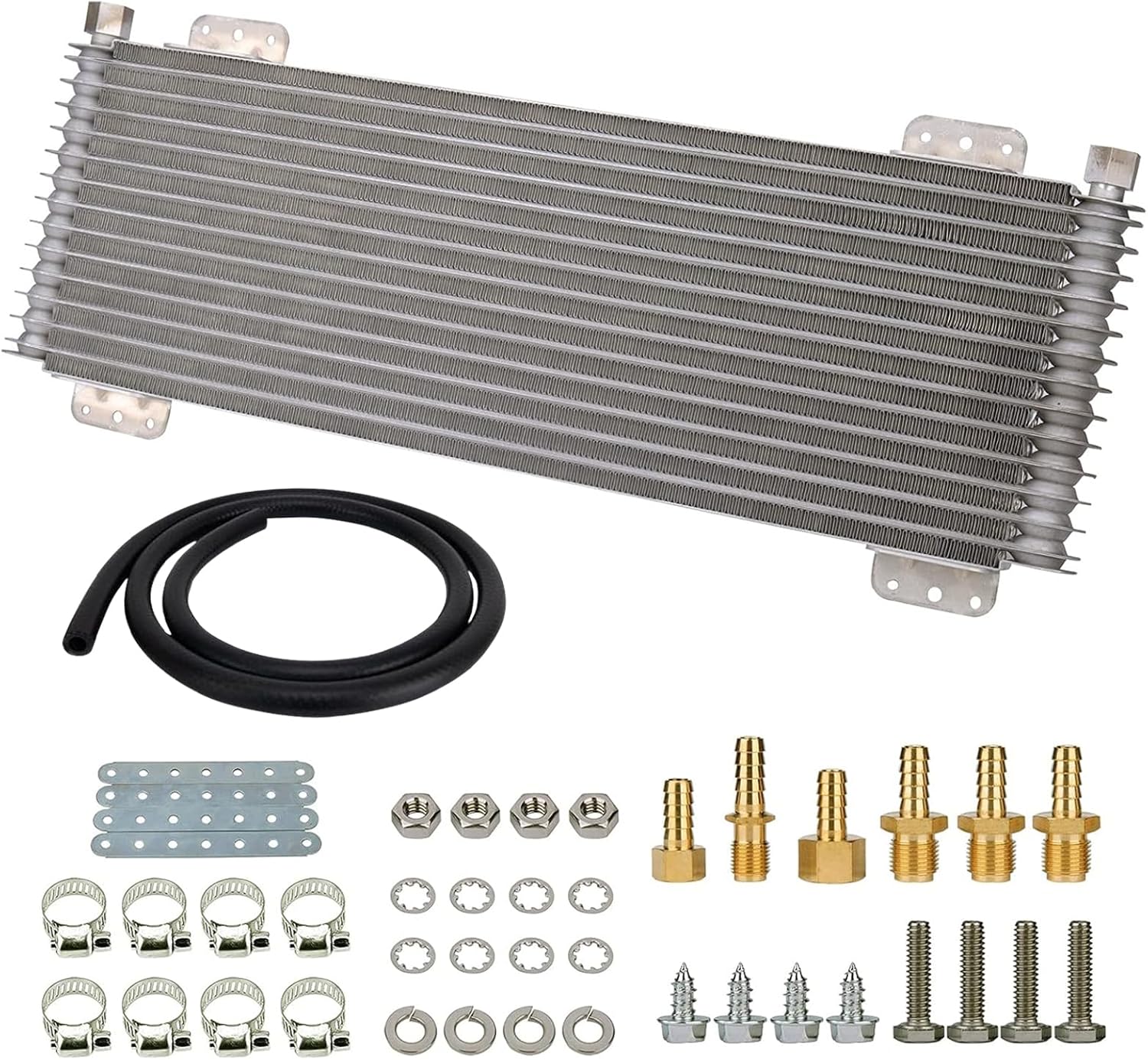
If the vehicle didn't come from the factory with a tow package, the stock transmission cooler is doing double duty it wasn't sized for. The standard, proven fix is a stacked-plate auxiliary cooler plumbed in series after the factory cooler, not in place of it. A stacked-plate (plate-and-fin) design moves more fluid volume across more surface area per inch of core than a basic tube-and-fin cooler, which is why GVW-rated coolers built for towing and hauling, like the Tru-Cool LPD47391 in the parts list above, use that construction.
Where you mount it matters as much as which one you buy. Industry consultant Bob Warnke, interviewed by Transmission Digest about towing-related transmission failures, points out that the air conditioning condenser sits directly in front of the transmission cooler on most vehicles, and that running the AC adds heat right where that cooler needs clean air, which is part of why shops advise customers to shut the AC off if transmission temperature starts climbing on a grade (Transmission Digest). The same logic applies when you're choosing where to mount an auxiliary cooler: stacking it directly behind the AC condenser's own hot discharge air undercuts the reason you installed it. Mount it where it gets its own clean airflow, ahead of or beside the condenser rather than buried behind it, and plumb it as an addition to the factory cooler, not a bypass.
Watching Temperature Instead of Guessing
If the vehicle has a tow/haul mode with a dash temperature readout, use it; if it has a scan tool port, a cheap OBD-II gauge that reads transmission fluid temperature is worth the money before a long pull, not after a shudder complaint. Per Transmission Digest's interview with Warnke, the 200°F range is where things start getting critical. Two things cut heat generation in the moment: turning off the air conditioning, for the condenser-airflow reason above, and staying in a gear or mode that keeps the torque converter clutch locked rather than slipping, since an open (unlocked) converter clutch generates heat on its own. Vehicles with a true tow/haul mode are calibrated to bring the converter clutch on earlier for exactly this reason.
Warnke's guidance on load itself is worth repeating directly: total towing capacity is the vehicle weight, passengers, cargo and trailer combined, so figure the real number rather than just the trailer's weight. He recommends keeping that combined total about 20% under the vehicle's rated towing capacity, running roughly 10 to 15% of the trailer's weight on the tongue for stability, and making sure the trailer's own tires are rated for the load and speed you're running, since an underrated tire failing at highway speed is its own hazard separate from the transmission.
The Conductor Plate: What Sustained Heat Wears Out First
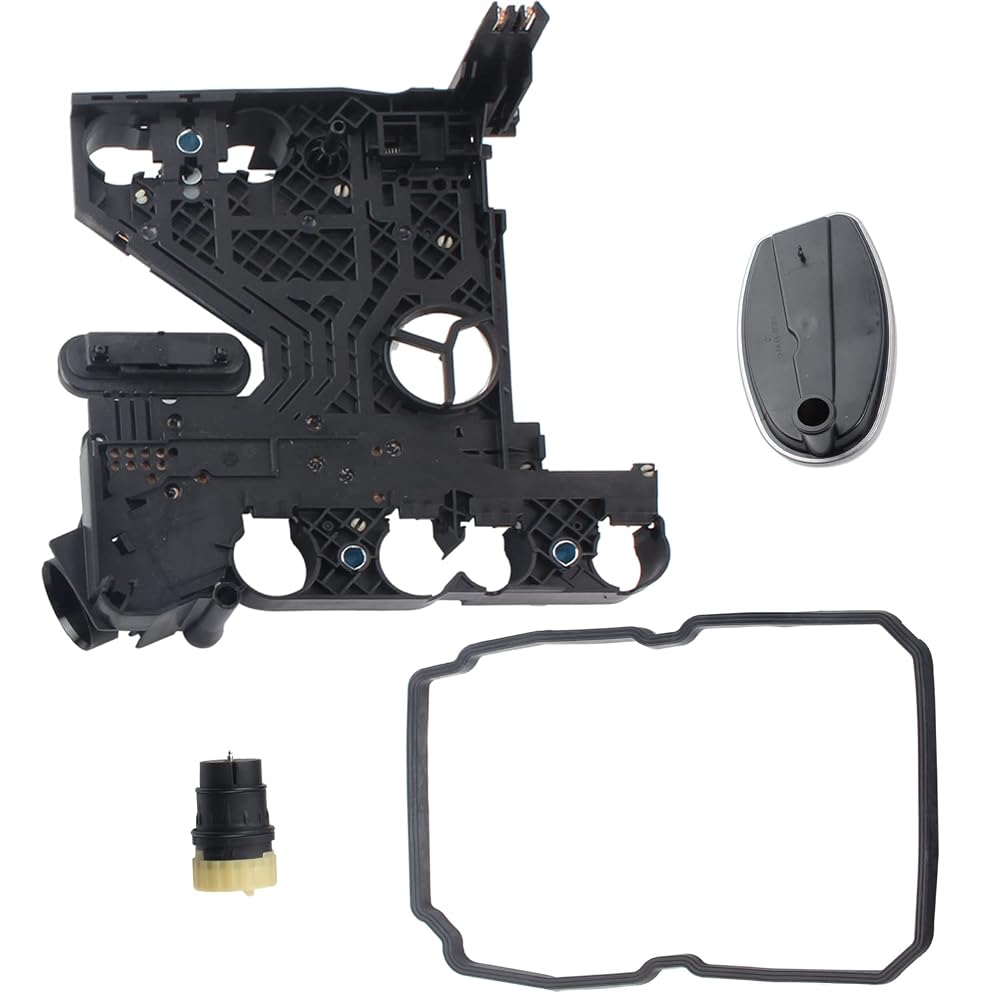
The conductor plate is the electronic plate mounted on top of the valve body that carries the shift-solenoid wiring and the input/output speed-sensor signals. It sits in the same fluid as everything else in the pan, so anything that keeps that fluid hotter for longer keeps the conductor plate hotter for longer too. On high-mileage 722.6 units generally, it's commonly the first electrical component in the transmission to cause a drivability complaint, typically a limp-mode condition stuck in second or third gear with the check-engine light on. We cover the failure and the fix in detail in our 722.6 conductor plate failure guide. The relevance here is simple: a vehicle that tows regularly without adequate cooling is putting more cumulative heat through that part than one that doesn't, which is one more reason the cooler and the fluid spec above aren't optional extras for a 722.6 that works for a living.
Service the conductor plate, filter and pan gasket together
If you're already pulling the pan to add a cooler line or check fluid condition before towing season, this kit covers the conductor plate, filter and gasket in one order so you're not back in there twice.
View the conductor plate kit →Or browse the full 722.6 parts search at Core Transmission Parts.
Before You Hook Up
Confirm the fluid spec matches the badge on the vehicle, not just what's on the shelf. Have the fluid level checked at the correct temperature window, not just cold. Add a stacked-plate auxiliary cooler in series with the stock cooler, mounted where it isn't fighting the AC condenser's hot discharge air. Put a temperature readout somewhere you can see it while towing, and know that 200°F is the point to start doing something about it: AC off, converter clutch locked. None of that is expensive compared to what a conductor plate replacement or a flared, cooked valve body costs once the cumulative heat catches up with it.
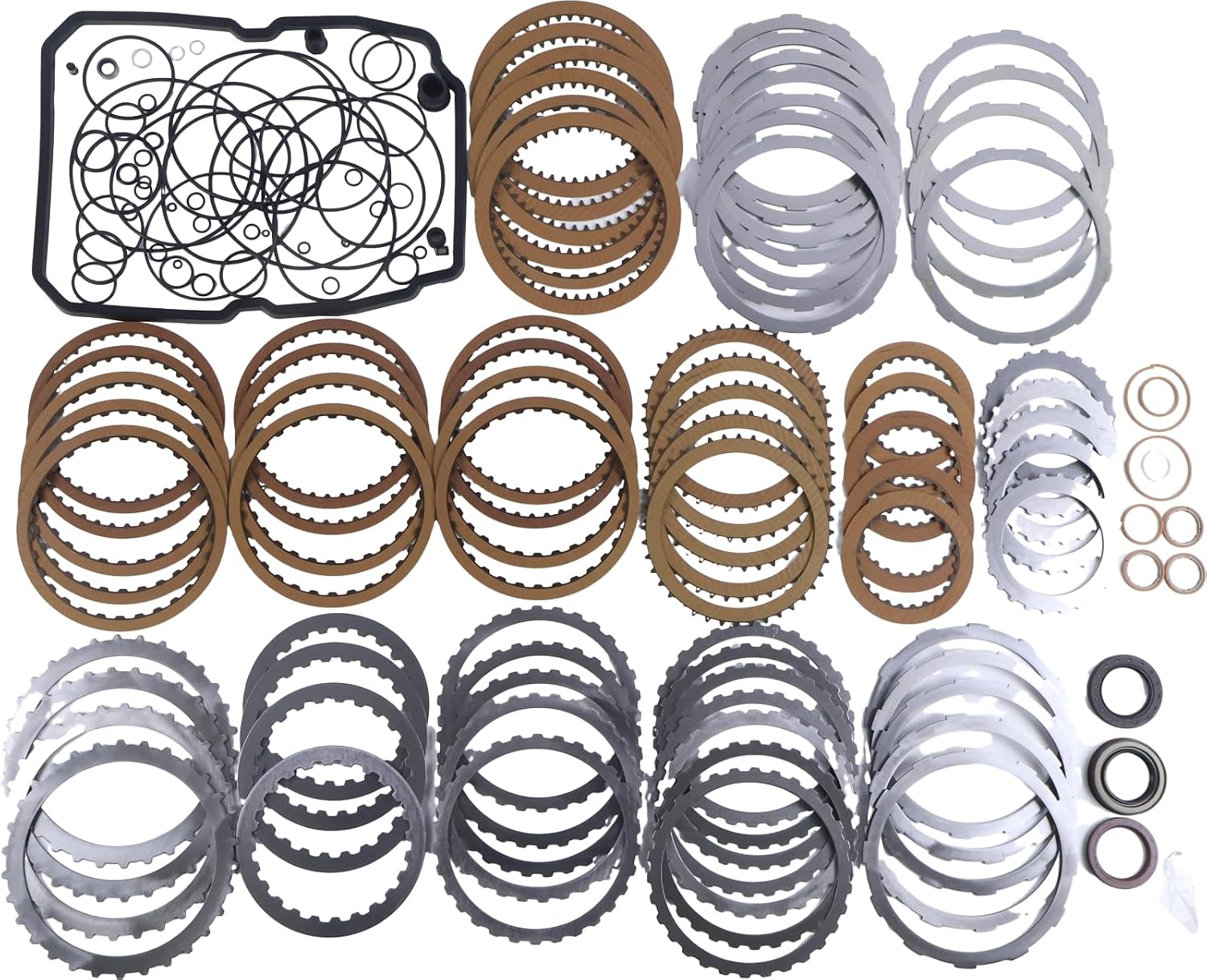
Need parts for this job? Conductor plate kits, filter and gasket kits, valve bodies and master rebuild kits for the 722.6 are all in one place. Shop 722.6 parts →
FAQ
Does a Mercedes 722.6 (NAG1) need an auxiliary cooler to tow?
If the vehicle did not come with a factory tow package, yes. The stock cooler is sized for normal driving, not for sustained load pulling a trailer uphill. A stacked-plate auxiliary cooler plumbed in series after the factory cooler, mounted where it gets clean airflow and not the hot discharge off the AC condenser, is the standard fix.
What transmission fluid does a 722.6 need for towing?
Whatever it already takes. Mercedes-badged 722.6 units, along with the Sprinter and Chrysler Crossfire, need MB-Approval 236.14 fluid (backward compatible with the earlier 236.12 spec). Other NAG1 applications sold under the Chrysler, Jeep and Dodge badges use ATF+4 instead. Towing does not change the spec; it just makes it matter more, since the wrong friction modifier package shows up fastest as shudder or flare under load.
What transmission temperature is too hot when towing?
Industry consultants who work towing-related transmission failures put the 200 degree Fahrenheit range as the point where things get critical. If a scan tool or tow/haul display shows the number climbing toward that range, the fix in the moment is to turn off the air conditioning, since the AC condenser sits directly in front of the transmission cooler and adds heat, and to stay in a gear that keeps the torque converter clutch locked rather than slipping.
Can towing heat damage the 722.6 conductor plate?
The conductor plate sits on top of the valve body and sits in the same fluid everything else does, so anything that runs the fluid hotter for longer runs that part hotter for longer too. It is the first electrical component in the transmission to show a problem on high-mileage 722.6 units generally, and a vehicle that regularly tows without adequate cooling adds exactly the kind of sustained heat load that shortens its life.
How much can a vehicle with a 722.6 safely tow?
Follow the door-jamb GVWR and the manufacturer's trailer rating, not a guess. A commonly used margin from transmission-shop consultants is to keep total towing weight about 20 percent under the vehicle's rated capacity, run 10 to 15 percent of the trailer's weight on the tongue, and make sure the trailer's own tires are rated for the load and speed, since an underrated trailer tire failing at speed is its own separate hazard.
Sources
- Transmission Digest — "Mercedes 722.6, Daimler W5, Porsche W5, Jaguar 722.6." Backs the NAG1 name and acronym meaning, 1996 production start, the W5A580/W5A380/W5A330/W5J400 variant list and torque-rating naming convention, the Germany-vs-Chrysler build identification method, the Sprinter/Crossfire/Mercedes specific-fluid-vs-ATF+4 split, and the working-pressure regulator valve and overlap sleeve wear pattern behind upshift/downshift flare. transmissiondigest.com
- Transmission Digest — "Educating Customers About Towing-Related Transmission Issues." Backs the 200°F critical-range guidance, the AC condenser's effect on transmission cooler airflow and the advice to shut the AC off, the role of torque converter clutch lockup in heat generation during tow/haul operation, and the GCWR/tongue-weight/trailer-tire towing guidance from consultant Bob Warnke. transmissiondigest.com
- NHTSA — Recall Campaign 05V396000 (DaimlerChrysler, September 14, 2005). Backs the documented overheating failure chain on a NAG1-equipped 2005 Jeep Grand Cherokee: AC evaporator condensate entering the transmission at the fill tube grommet seal, leading to TCC shudder, elevated operating temperature, fluid boiling and potential underhood fire, affecting roughly 101,925 vehicles. api.nhtsa.gov
- FUCHS — Product data, TITAN ATF 4134. Backs the MB-Approval 236.14 and backward-compatible 236.12 fluid specification, the fluid's recommendation for 5-speed RWD transmissions with a regulated torque converter lockup clutch, and its use as 722.9 factory fill and Crossfire specification. fuchs.com
- Sonnax — Technical resource, "Mercedes 722.6, Daimler W5, Porsche W5, Jaguar 722.6." Corroborates the working-pressure regulator valve bore wear and overlap sleeve wear failure path under sustained load. sonnax.com
- Mercedes-Benz WIS (Workshop Information System) 27.00 Transmission, reproduced at w220.wiki. Backs the dual-temperature (25°C/80°C) dipstick fluid level check procedure and special tool number for the 722.6. w220.wiki