A 9HP48 that leaves a spot on the driveway can be leaking from several places, and you can't diagnose them all the same way. The ZF nine-speed, built by Chrysler as the 948TE for the Cherokee, Renegade, Compass, 200 and Pacifica, has a side-mounted valve body cover with an electrical connector pushed through it, two differential seals that double as axle seals, quick-connect cooler lines, a bellhousing that bolts to the case with a gasket, and four separate plugs. On AWD models the power transfer unit (PTU) also bolts to one side and carries its own gear oil. Every one of those joints can leak, and Stellantis service documents cover most of them by part number and torque. Below is each spot in the order I check them, followed by the level check that most shops get wrong.
The short version: The most common 948TE leak points are the oil cooler hoses and quick-connect fittings (2021 KL Cherokees are under Safety Recall Y18 / NHTSA 21V-310 for incorrectly cured cooler hose rubber), the differential/axle seals, the valve body oil pan gasket (7 bolts, 11 Nm / 8 ft-lb), the O-rings on the harness connector that passes through that pan, and the drain, fill and converter pressure-port plugs. Clean it, find it, fix it with the factory fluid, and then check the level with the dipstick tool at the fill port above the differential, at a known fluid temperature. There's no dipstick tube and no fixed quart count to fill to, and Gears Magazine advises against using leak dye in this transmission.
First, Confirm It Is Actually ATF
A transverse front-drive package crowds three or four fluids into the same few square feet, so start by identifying the drip. Gears Magazine (ATRA) describes Mopar ZF 8 & 9 Speed ATF, part 68157995AB, as pale green. ZF's own data sheet lists its LifeguardFluid 9 as blue, with a kinematic viscosity of 24.9 mm²/s at 40°C and 5.6 mm²/s at 100°C, which makes it a thin, watery fluid on the shop towel. Thick, dark and smelling of sulfur is gear lube, most likely from the PTU on an AWD vehicle. Sweet-smelling and green or orange is coolant from the radiator next to the cooler hoses. Brown on the oil pan rail is engine oil.
One more trap. The usual way to trace a leak is to add UV dye, drive the car, and look with a black light. Gears Magazine's 948TE fluid-level article says to avoid leak dye in this transmission. ZF's fluid sheet is just as strict on the fluid itself: only LifeguardFluid 9 (or the OEM-packaged equivalent) may be used, because other fluids can cause "significant deterioration in shifting characteristics" or outright failure. On this unit, find the leak with a degreaser, a clean case, and a short drive, not with an additive.
Leak Spot 1: Oil Cooler Hoses and Quick-Connect Fittings
The cooler circuit is the leak with real fire risk, and it's the one that has a federal recall. NHTSA campaign 21V-310 (Chrysler recall Y18) covers about 18,800 2021 Jeep Cherokees. According to FCA's dealer service instructions, the transmission oil cooler hose on those vehicles may have been made with incorrectly cured rubber, so the hose wall is weakened and can rupture. Transmission fluid leaking from that hose "may contact a competent ignition source and lead to a vehicle fire."
The inspection is quick, and it's worth doing on any 2021 KL that comes in wet up front. Slide the protective sleeve back on both hoses until the stamped date and time are visible. If the date reads 113020 and the timestamp falls between 12:59 and 13:21 on either hose, the hose-and-tube assembly gets replaced. The service parts are engine-specific: 68399017AA (2.4L), 68399018AA (2.0L) and 68399015AA (3.2L), each the pressure and return line together. The stamp can be on the top, bottom or side of the hose, so use a mirror.
For any year, these lines leak at their ends. At the transmission they're quick-connect fittings that come apart with tools 8875A and 9546. The recall procedure also unbolts a cooler line support brace and disconnects the lines at the cooler behind the front fascia. On the transmission end, the factory C-Clutch bulletin 21-008-15 shows the cooler line connections sitting right beside the torque converter pressure port plug. If you find wetness there, clean it and look again before you blame the plug. If a quick-connect is weeping, the fix is the line assembly or the fitting's retainer and seal. Don't just snug it, because a quick-connect has nothing to tighten.
Leak Spot 2: Differential (Axle) Seals
The 948TE has its differential inside the case, so the half-shafts plug straight into the transmission and their seals hold ATF, not gear oil. The parts list in TSB 21-008-15 REV A spells out how the seals are arranged. A 2WD unit uses two of 04736843AA (Oil Seal, Transmission Differential). A 4WD/AWD unit uses one of those plus one 04753061AA, because the PTU side is different. The same bulletin tells technicians to remove and discard all differential seals from both the case and the bellhousing whenever the unit is apart, and calls for the Mopar 6888 seal installer to put the new ones in.
Here's the diagnostic note that saves people money. A wet inner CV boot and a drip under the axle on the passenger side of an AWD Cherokee may not be the transmission seal at all. That's where the PTU mates to the transmission, and the PTU carries its own gear lubricant. Wipe it down and smell it. ATF on the axle means the differential seal. Gear oil means the PTU side, and on KL Cherokees that area already has its own recall history (NHTSA 20V-343 and its expansions concern PTU spline wear). With the half-shaft out, check the seal surface for grooving. A scored shaft will chew up a new seal quickly.
Leak Spot 3: Valve Body Oil Pan Gasket
The 948TE doesn't have a conventional bottom pan. The valve body sits on the side of the case under what FCA's bulletin calls the valve body oil pan, held on by seven retaining bolts. Bulletin 21-008-15 gives the installation torque for the valve body fluid cover bolts as 11 Nm (8 ft-lb), which is the same number as the valve body retaining bolts underneath. That's a light torque on a cover that sees heat cycles, and it's why I see weeping at this joint on high-mileage units. People overcorrect by cranking the bolts down, which distorts the cover and makes the leak worse.
The right repair is to drain the fluid, pull the cover, clean both sealing surfaces dry, fit a new gasket, and torque the bolts to 11 Nm in a crossing pattern with an inch-pound wrench. While the cover is off, look at the six valve body fluid adapter tubes and the two larger transfer tubes. These are internal, so a bad O-ring on one of them shows up as lost clutch or TCC pressure, not a drip. The factory bulletin replaces those O-rings (04753043AA and 04753042AA) any time the valve body comes off. Gears Magazine's teardown article explains why they matter: the feed tubes behind the valve body supply the clutches, the TCC, the pump and the lube circuits.
Leak Spot 4: The Harness Connector Through the Pan
The transmission's main electrical connector passes through the valve body oil pan and is held by a retaining clip. On disassembly, the factory procedure removes the clip and pushes the connector into the pan. On reassembly, it presses the connector back through the cover until the clip groove shows, then reinstalls the clip. The connector body is sealed with O-rings, and the bulletin says a light coat of assembly lube on those O-rings eases installation. Translation: a dry, cut, or hardened O-ring at that connector will weep ATF onto the outside of the cover, and you can easily mistake it for a pan gasket leak. If the wetness starts at the connector and runs down, replace the connector seals before you replace the gasket.
Leak Spot 5: The Plugs, and the Bellhousing Joint
The bulletin's drain procedure names three plug locations: the transmission drain plug, the production fill plug, and the torque converter pressure port plugs on the bellhousing. There's also the fluid-level check plug on top of the housing above the differential, the one you pull to check the level. Any plug that has been removed can leak from a reused or pinched seal. Check them first after any recent fluid service, because a shop that "topped it off" may also have overfilled it.
The bellhousing bolts to the case with a bellhousing gasket, a transmission fluid port seal between the two housings, and 28 bolts (17 around the perimeter, 11 inside) torqued in sequence to 29 Nm (21 ft-lb) per TSB 21-008-15. A weep at that seam on a rebuilt unit usually means a reused gasket or a bolt skipped in the sequence. ATF at the bottom of the bellhousing, once engine oil is ruled out, points to the converter hub seal, and fixing that means pulling the transmission.
How I Pin the Leak Down
- Check the VIN for open campaigns. On a 2021 KL, Recall Y18 covers the cooler hose.
- Identify the fluid: ATF, PTU gear oil, or coolant.
- Degrease the case and lines, drive to full temperature, and look from above as well as below. No dye.
- Trace upward. Pan-rail wetness can start at the connector, and axle wetness can start at the PTU joint.
- Fix the joint with the right part and torque, then refill and set the level as described below. Underfilling after the repair turns a seep into a slipping transmission.
Setting the Level After the Repair
Recall Y18's dealer instructions spell out the factory method. The fluid level is checked with dipstick tool 2064600210 (marked in 5 mm increments) through the fluid level check port on top of the transmission housing above the differential. The engine idles in Park, the vehicle is level, and transmission fluid temperature, read on a scan tool, has to be above 50°C. You read the witness mark and compare it with the factory temperature-versus-level chart. Gears Magazine covers the same check with Mopar tool 10323A and gives one point on the chart: at 140°F, the acceptable range is 16 to 23 mm. Access changes by engine. Gears notes that on 2.4L models you pull the left front wheel to reach the plug, while on 3.2L and 3.6L models you go in from under the hood after removing the engine cover.
Two things make a leak worse after the repair: guessing at the level by counting quarts, and topping off with the wrong fluid. ZF says its 9HP units are filled for life and only need a fluid change when repairs are done, although it does recommend a change at 150,000 km under normal use and sooner under heat and load. If the unit was low enough to set codes or shift badly before you found the leak, do a proper drain and refill to the chart rather than just topping off. That's a separate job, covered in our flush vs drain-and-fill guide.
Pan Gasket, Filter and the Right Fluid for the Repair
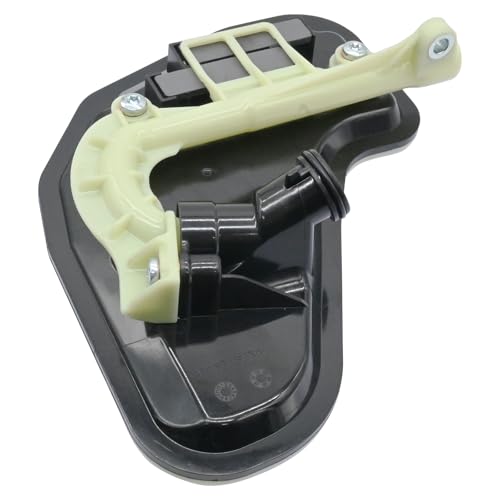
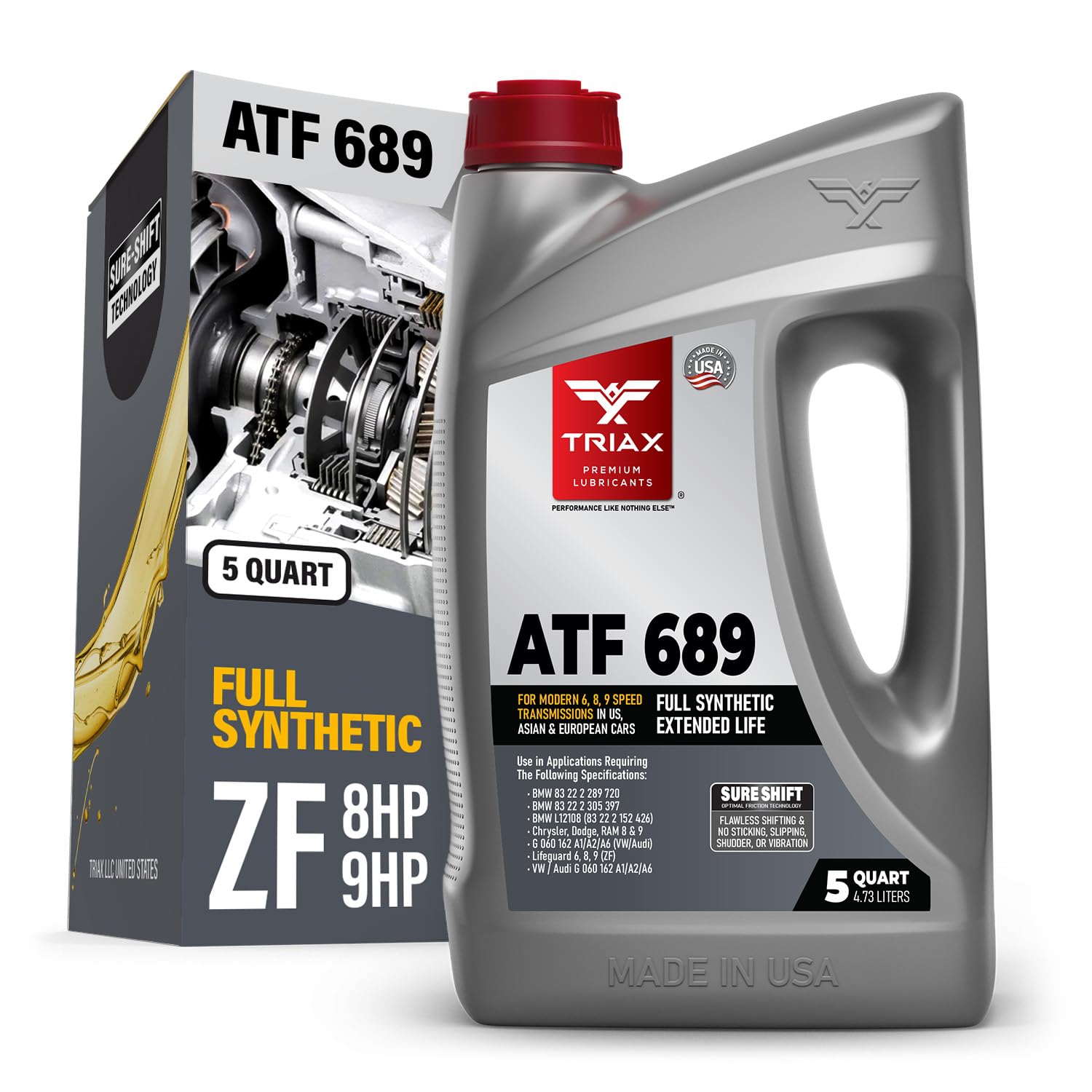
A valve body pan leak repair is the right time to change the gasket and filter and refill with ZF 8HP/9HP-rated fluid. We stock the 9HP48/948TE filter and pan gasket kit and two 8HP/9HP fluids. Check the fluid label against ZF's approved-lubricants list for your application. Everything ships fast from the USA.
See the filter and gasket kit →FAQ
Where does a 948TE / 9HP48 usually leak transmission fluid?
The usual spots are the oil cooler hoses and their quick-connect fittings, the two differential (axle) seals, the valve body oil pan gasket on the side of the case, the O-rings on the electrical connector that passes through that pan, and the drain, fill and converter pressure-port plugs. On 2021 Jeep Cherokees, Safety Recall Y18 (NHTSA 21V-310) covers cooler hoses made with incorrectly cured rubber that can rupture.
What is the torque spec for the 948TE valve body pan bolts?
FCA bulletin 21-008-15 REV A specifies 11 Nm (8 ft-lb) for the valve body fluid cover retaining bolts, the same as the valve body retaining bolts. The cover uses seven bolts. Overtightening distorts the cover and makes a gasket weep worse, so use an inch-pound wrench and a crossing pattern.
Is the leak transmission fluid or PTU gear oil?
ATF for this transmission is thin. Gears Magazine describes Mopar ZF 8 and 9 Speed ATF as pale green, and ZF lists LifeguardFluid 9 as blue. PTU gear oil on AWD models is thick, dark and smells like sulfur. Wipe the area clean, drive the vehicle, and check the fresh fluid before ordering seals.
Can I use leak dye or a universal ATF in a 9HP48?
No. Gears Magazine advises avoiding leak dye in the 948TE, and ZF's data sheet states that only ZF LifeguardFluid 9 or the OEM-packaged equivalent may be used, warning that other fluids can degrade shift quality or cause failure. Find the leak with a clean case and a test drive, then refill with the specified fluid and set the level with the dipstick tool at a known temperature.
Sources
- FCA US LLC, Technical Service Bulletin 21-008-15 REV. A, “Transmission Shift Quality C-Clutch Snap Ring” (February 7, 2015): parts list including differential oil seals 04736843AA (two on 2WD, one on 4WD) and 04753061AA (additional for 4WD), valve body fluid adapter tube O-rings 04753043AA/04753042AA, and fluid 68218925AA; the valve body oil pan (7 bolts) and harness connector retaining clip and O-rings; drain, production fill and converter pressure-port plugs with the cooler line connections beside the converter port; bellhousing gasket, fluid port seal, and torques of 29 Nm (bellhousing) and 11 Nm (valve body and fluid cover). static.nhtsa.gov (NHTSA TSB archive, PDF)
- FCA US LLC, Dealer Service Instructions, Safety Recall Y18 / NHTSA 21V-310, “Transmission Oil Cooler Hose” (May 2021): about 18,800 2021 KL Cherokees with incorrectly cured cooler hose rubber; the 113020 date code and 12:59 to 13:21 timestamp inspection; hose-and-tube assemblies 68399017AA, 68399018AA and 68399015AA; disconnect tools 8875A and 9546; and the dipstick 2064600210 fluid-level procedure above 50°C. static.nhtsa.gov (NHTSA recall archive, PDF)
- National Highway Traffic Safety Administration, recall record 21V310000: component (automatic transmission cooler hoses and fittings), units affected, consequence (fluid leak increases fire risk) and free dealer remedy. api.nhtsa.gov (NHTSA recall data)
- ZF Friedrichshafen AG, Product Data Sheet, ZF LifeguardFluid 9 for 8HP and 9HP transmissions: only LifeguardFluid 9 may be used; color blue; viscosity 24.9 mm²/s at 40°C and 5.6 mm²/s at 100°C; lifetime fill with a recommended change after 150,000 km. aftermarket.zf.com (PDF)
- Gears Magazine (ATRA), “948TE: Checking Fluid Levels”: Mopar ZF 8 & 9 Speed ATF 68157995AB (pale green), the advice to avoid leak dye, tool 10323A, the check port near the differential, access by engine, and the 16 to 23 mm range at 140°F. gearsmagazine.com
- Gears Magazine (ATRA), Sean Boyle, “ZF 9HP48: A Mechanical Marvel!”: the feed tubes behind the valve body that supply the clutches, TCC, pump and lube circuits, and internal O-ring sealing points in the case. gearsmagazine.com