Somebody brings in a Jeep Cherokee, a Honda Pilot or a Range Rover Evoque at 90,000 miles and asks for a transmission flush. Under the floor is a ZF 9HP48, the same nine-speed whether the tag says 948TE, 9AT or just "9-speed." The honest answer to "flush or drain-and-fill" on this unit is not the one most quick-lube menus give. Neither ZF nor any of the three automakers that use it publishes a machine flush procedure. What they all publish instead is a level-setting procedure that is temperature-indexed and has no dipstick, and that procedure is the part of the job that actually decides whether the transmission shifts right afterward.
The Short Answer
On a 9HP48, a properly done drain-and-fill, repeated if the old fluid is dark, is the conservative choice and matches how the OEMs service the unit. A fluid exchange machine is not automatically harmful, but it adds three risks this transmission does not tolerate well: a generic "multi-vehicle" ATF from a bulk tank, a cleaning additive run through the unit first, and a shop that trusts the machine's in-equals-out volume and never runs the factory level check. ZF's own guidance rules out the first two, Honda tells its dealers to avoid aftermarket flush systems on every Honda, and both Honda and FCA have bulletins showing what a wrong level costs.
| Question | Drain-and-fill | Machine exchange ("flush") |
|---|---|---|
| OEM-documented on 9HP48? | Yes. Honda and FCA both publish fill and level-check procedures | No published 9HP48 procedure. Honda advises against aftermarket flush systems |
| Fluid replaced per service | Partial. Converter, cooler and valve body keep the rest | Higher, if the machine is run with the correct fluid |
| Fluid control | You open the bottles yourself | Depends on what is in the machine's tank |
| Additives / cleaners | None | Often sold as an add-on. ZF says not to use them |
| Level setting | Must be done by the factory procedure | Must still be done by the factory procedure |
What ZF Actually Says About Changing the Fluid
Start with the manufacturer of the transmission. ZF's product data sheet for LifeguardFluid 9, the fluid developed for the 8HP and 9HP families, says three things that matter here. First, only LifeguardFluid 9 may be used in these transmissions, available from the vehicle manufacturer as a genuine part where applicable, and using other fluids can lead to anything from significantly worse shifting to transmission failure. Second, ZF fills its automatics with lifetime oil but recommends an oil change after 150,000 km (about 93,000 miles), and sooner where operating temperatures and loads are high or the vehicle's past use is unknown. Third, any fluid change must use only the approved fluid and must be carried out according to the relevant ZF provisions.
The data sheet also includes a detail most shops never see: containers up to 20 liters have to be shaken vigorously for at least 15 seconds before use, and bulk containers have to be stirred for at least 60 minutes. A bulk drum on an exchange machine rarely gets that.
ZF Aftermarket's workshop guide to passenger-car transmission oil changes adds the other piece: do not use supplementary additives or cleaning agents, because they alter the oil's chemical composition. That is the "flush treatment" many exchange menus bundle in.
The same ZF guide describes a fill method, not a quart count: fill until it runs out, cycle the gears, and set the final level at a specified temperature. ZF warns that over- or underfilling can damage the transmission.
Fluid Identity Comes Before Method
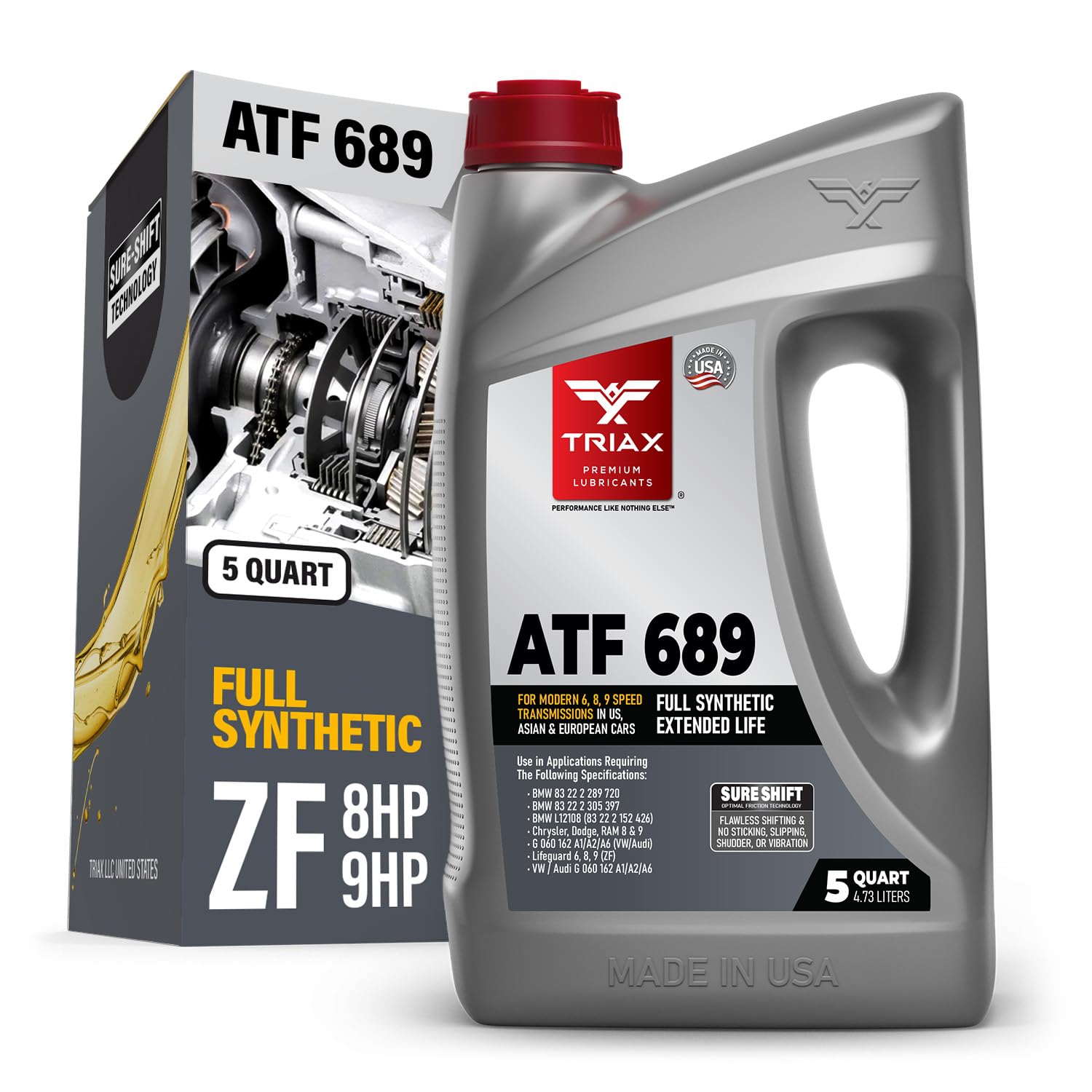
Whichever method you choose, the fluid has to match the badge on the car. These are not interchangeable labels, and a bulk exchange tank full of universal ATF does not cover any of them:
- Jeep, Chrysler, Ram, Fiat (948TE): Mopar ZF 8 & 9 Speed ATF, P/N 68157995AB, per ATRA's GEARS Magazine bench article on the 948TE. Never ATF+4.
- Honda, Acura (9-speed A/T): Honda Genuine ATF Type 3.1, P/N 08200-9017, per Honda Service Bulletin 16-087, which says plainly that the wrong ATF can affect shift quality. Not DW-1.
- Land Rover, Jaguar: the ZF LifeguardFluid 9 spec under JLR's own part number.
One more FCA-specific warning from the GEARS article: the 948TE fluid is pale, and the author cautions against adding any leak-detection dye to this transmission. That is one more thing an exchange machine's additive port should not be putting in.
Why the Level Check Decides the Outcome
Here is the part that makes "flush vs drain-and-fill" mostly the wrong argument. Honda put it in writing in ServiceNews article A16120B, December 2016, for 2016-17 Pilot Touring and Elite: in the 9-speed, ATF level is critical. Too high and the transmission can shift hard; too low and it can slip. There is no dipstick, so a special procedure is required.
FCA learned the same lesson the expensive way. TSB 21-006-23, February 2023, covers 2022-2023 Jeep Compass and Commander units with the 948TE built in a narrow window in 2022. The customer complaint was no forward gear. The documented cause was that the transmission did not have the specified amount of fluid. The repair was not a top-off. It was a complete transmission replacement at 7.1 hours of labor. That was a factory fill error, but it shows what this unit does when it runs low.
So whether you drain one pan's worth or push a full exchange through the cooler lines, the job is not done until the level is set by the factory method at the factory temperature.
Honda / Acura level procedure (9-speed)
From Honda SB 16-087 and ServiceNews A16120B, condensed:
- Connect the scan tool and watch the ATF temperature PID in the A/T data list. Lift the vehicle so the wheels are just off the ground.
- Enter VSA maintenance mode so traction control does not fight you with the wheels spinning on the lift. Honda's sequence has to be completed within 30 seconds or you start over.
- Start the engine. In sequential mode, run up through 1st, 2nd, 3rd and 4th, about 10 seconds in each, then back down. Do not go past 4th on the lift. Honda says that can damage the transmission.
- Stop the wheels, select Park, and raise the engine to 2,000 rpm in short bursts to make sure the converter is full.
- Check at 104°F (40°C), with an allowed window of 99-113°F (37-45°C). If it is already past 115°F, shut it down, let it cool, and start over.
- With the engine running, pull the level plug. A steady trickle means correct. A pour means wait until it drips. Nothing at all means add Type 3.1 through the fill plug and recheck.
- Install new plugs. Level and fill plugs are torqued to 35 N·m (26 lb-ft).
With the level plug out, keep the engine running. Honda warns that if you shut it off, the fluid pours out.
Jeep / Chrysler / Fiat level procedure (948TE)
FCA does it differently. Per the GEARS article, the level is read with Mopar tool 10323A, a graduated rod inserted through the fill-check plug near the differential until its stop bottoms on the case. The engine is running, the transmission is in Park, and the reading in millimeters is compared to a chart indexed to transmission temperature from the scan tool. The article's worked example: at 140°F the correct band is 16-23 mm. Access depends on engine. On the 2.4L you pull the left front wheel. On the 3.2L and 3.6L you reach it from under the hood with the engine cover off.
Shops doing these regularly should own the real gauge. Guessing the level on a 948TE is how you end up re-doing the job.
Drain-and-Fill Done Right on a 9HP48
A single drain-and-fill replaces only what drains out. The rest stays in the converter, cooler circuit and valve body. Honda's own service writing shows what a factory "flush" means. Service Bulletin 23-073 (September 2023), for 2016-20 Pilots with the 6-speed automatic, calls for flushing the ATF three times, and defines the term outright: "flush" refers to repeatedly draining and filling the transmission. Each cycle is drain, refill with 3.3 US qt (3.1 L), drive it through the gears with lockup, and drain again. The same note says aftermarket flush systems are available but American Honda strongly recommends avoiding them on any Honda vehicle. That bulletin is for the 6-speed, not the 9-speed, but the policy covers every Honda, and that includes the ZF-built Pilots, Passports, Odysseys and Acuras.
My order on a 9HP48:
- Scan first. Record codes and check for open calibration bulletins. A fluid service will not fix a known software problem, and some of these units have them (see the limp-mode and no-movement guides linked below).
- Pull a sample. Look at color and smell, and check the drain plug or magnet for debris. Clutch material or metal is a diagnosis, not a maintenance item. Stop and find out why.
- Drain cold or barely warm, measure what came out, and refill with the same amount of the correct fluid. Shake each bottle as ZF specifies.
- Set the level hot, by the factory procedure for that badge, before the car moves under its own power for any distance.
- Repeat once or twice, driving between cycles, if the fluid was dark or the history is unknown. ZF specifically calls out unknown prior use as a reason for earlier service.
- Final level check at temperature, new plugs and seals, then a road test through all nine gears.
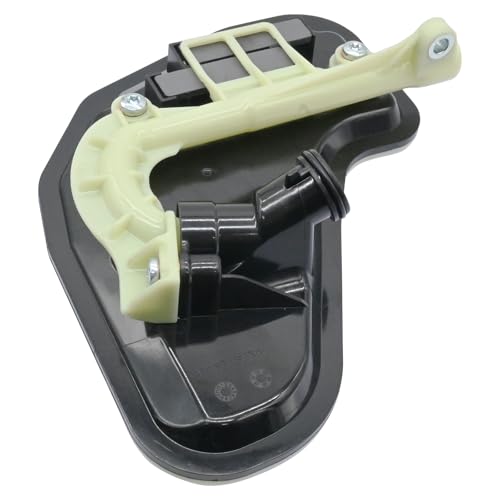
If the pan has to come off for a leak or for filter service, replace the pan gasket rather than reusing it. Our 9HP48 filter and pan service guide covers that job.
When a Machine Exchange Is Acceptable
I am not saying never. A cooler-line exchange can be done safely on a 9HP48 if every one of these is true:
- The machine is run with fresh, shaken bottles of the correct OEM fluid for that badge, not from a shared bulk tank.
- No cleaner, conditioner or "flush treatment" goes in first, per ZF.
- The exchange is done at idle in Park only. On the Honda, nobody runs through gears on the lift past 4th.
- The final level is set by the factory temperature-indexed procedure, not by the machine's volume counter.
- The fluid coming out was not burnt or full of debris. A high-mileage unit that has never been serviced and is already showing shift complaints needs a diagnosis, not a flush.
Interval: What to Tell the Customer
ZF's published recommendation is a change at 150,000 km (about 93,000 miles), and earlier under high temperature, heavy load or unknown history. On a Cherokee or Pilot that tows, idles in hot traffic, or has no records, I service it well before that. Treat ZF's number as the outside limit, not a target.
Doing the 948TE level check? Get the right gauge.
FCA sets 948TE fluid level with a temperature-indexed gauge through the fill-check plug, not a regular dipstick. CoreTransmissionParts stocks a 948TE transmission dipstick tool for exactly that check.
Shop the 948TE dipstick tool →FAQ
Is it bad to flush a ZF 9-speed transmission?
Not automatically, but nobody who builds or sells the 9HP48 publishes a machine flush procedure for it. ZF says not to use cleaning agents or additives and to use only LifeguardFluid 9 or the OEM equivalent, and Honda tells its dealers to avoid aftermarket flush systems on any Honda. A drain-and-fill with the correct fluid and a factory level check is the safer service.
How often should 9HP48 transmission fluid be changed?
ZF fills the 9HP48 with lifetime oil but recommends a fluid change after 150,000 km, about 93,000 miles. It recommends shorter intervals for high temperatures, heavy loads such as towing, or a vehicle with unknown history. Follow the vehicle's own maintenance schedule where it calls for service sooner.
Why does my 9-speed shift hard after a fluid change?
The most common cause is an incorrect level. Honda's ServiceNews on the 9-speed says too much ATF can cause hard shifts and too little can cause slipping. The level has to be set hot by the factory procedure, at 40 C at the level plug on Honda or with tool 10323A against the temperature chart on the 948TE. It also has to be the correct fluid for the badge.
What fluid does a 948TE or Honda 9-speed take?
The Jeep, Chrysler and Fiat 948TE uses Mopar ZF 8 and 9 Speed ATF, P/N 68157995AB, never ATF+4. Honda and Acura 9-speeds use Honda Genuine ATF Type 3.1, P/N 08200-9017, not DW-1. Both trace back to ZF's LifeguardFluid 9 approval.
Sources
- ZF Friedrichshafen AG — Product Data Sheet, ZF LifeguardFluid 9. Backs the 8HP/9HP application, "only ZF LifeguardFluid 9 may be used," the failure warning for other fluids, the 150,000 km change recommendation with shorter intervals for high heat, load or unknown history, and the 15-second shake / 60-minute stir requirement. aftermarket.zf.com (PDF)
- ZF Aftermarket — "How to Change the Transmission Oil on a Passenger Car," workshop guide. Backs the ban on supplementary additives and cleaning agents, the fill-until-it-runs-out method, gear cycling, temperature-specific level setting, and the over/underfill damage warning. aftermarket.zf.com
- American Honda / NHTSA — ServiceNews A16120B, "Shift Quality Issues in a 9-Speed A/T? Check the ATF Level," December 2016. Backs too high = hard shifts and too low = slipping, no dipstick, VSA maintenance mode, the 104°F ideal temperature, the do-not-exceed-4th-gear warning, the trickle check, and the 35 N·m plug torque. static.nhtsa.gov (PDF)
- American Honda / NHTSA — Service Bulletin 23-073, "2016-20 Pilot: Transmission Temp Too Hot Message on the MID," September 2023. Backs Honda's definition of "flush" as repeated drain-and-fill, the strong recommendation against aftermarket flush systems on any Honda vehicle, and the three-cycle, 3.3 US qt (3.1 L) per-change procedure (6-speed Pilot). static.nhtsa.gov (PDF)
- GEARS Magazine (ATRA) — Jarad Warren, "948TE Checking Fluid Levels," 2017. Backs Mopar ZF 8 & 9 Speed ATF P/N 68157995AB, tool 10323A, the engine-running/Park check at the fill-check plug, the 140°F = 16-23 mm example, plug access by engine, and the no-leak-dye caution. gearsmagazine.com
- FCA US LLC / NHTSA — TSB 21-006-23, "Loss of Forward Gear in Transmission," February 2023. Backs the 2022-23 Compass/Commander 948TE no-forward-gear complaint caused by the transmission not having the specified amount of fluid, and the transmission-replacement repair. static.nhtsa.gov (PDF)
Also referenced: American Honda Service Bulletin 16-087, "Transmission End Cover Leaks (9-Speed A/T)," October 2016 (ATF Type 3.1 P/N 08200-9017, 37-45°C level window, 10 seconds per gear), static.nhtsa.gov (PDF).