P0716 on a ZF9HP48 or 948TE nine-speed reads as Input/Turbine Speed Sensor Circuit Range/Performance, and the name alone tells you something important: this is not a dead-sensor code. It is a plausibility fault. The TCM already has a signal from the input speed sensor -- it just does not believe it. On most transmissions that distinction does not change the repair much, since the sensor is a cheap, externally mounted part you unbolt and replace in minutes. On this transmission it changes everything, because the input speed sensor is not a standalone part at all. It is half of a combined sensor pair bolted to the inside of the case, buried behind the valve body, wired into the same internal harness as the solenoids. Before anyone orders a part for this code, it is worth understanding exactly what that means for diagnosis.

What P0716 Actually Flags
P0716 is the generic SAE/OBD-II definition for Input/Turbine Speed Sensor "A" Circuit Range/Performance. The TCM reads the input speed signal continuously and cross-checks it against two other known values: calculated engine RPM through the torque converter, and the output speed sensor signal on the other end of the gearset. When the input speed value is within the sensor's normal electrical range but does not track the way the TCM's model expects it to -- too fast, too slow, flatlined, or erratic relative to those other two signals -- the TCM logs a performance/range fault rather than a hard electrical fault. That distinction matters for diagnosis: P0716 does not mean the sensor is unplugged or shorted. A dead circuit on this same signal path would set P0717 (no signal) instead. P0716 means the circuit is alive enough to talk to the TCM, and the TCM does not like what it is hearing.
Where the Input Speed Sensor Actually Lives on This Transmission
This is the detail that changes the whole job. Sonnax's own teardown instructions for the 948TE/ZF9HP48 -- written for technicians servicing the valve body -- show the input and output speed sensors as a single combined pair, secured to the inside of the transmission case by one Torx bolt, separate from a third Torx bolt that retains the range sensor. None of the three are part of the valve body casting itself. To reach any of them, the valve body first has to come off the case: ten case-to-valve-body bolts (Torx T40), pried loose at two documented points since numerous feed tubes connect the valve body to the case passages and sit snug. Only after the valve body is free can the wiring harness be released from the solenoids and the sensor-retaining bolts removed. In other words, there is no version of this repair where someone pulls a pan, unclips one connector, and swaps a $40 sensor in the driveway. The input speed sensor comes attached to an internal harness assembly shared with the output speed sensor, and getting to it means a valve body removal regardless of which specific component ultimately turns out to be at fault.
That internal layout is also a structural difference from the ZF8HP family. Transmission Digest's original technical breakdown of this unit notes that unlike the 8HP, the 9HP48 is not a mechatronic design -- the TCM bolts onto the outside of the case through its own multi-pin connector rather than being integrated into the valve body electronics. That is actually useful news for diagnosis: the TCM itself is a separately testable, separately replaceable component from the internal sensor/harness assembly, so a bad TCM and a bad sensor pair are not bundled into one part the way they can be on a true mechatronic unit.
Diagnostic Order Before Anyone Drops the Valve Body
Given how much labor sits between a code reader and the actual sensor, working through the cheap possibilities first is not optional -- it is the only way this diagnosis makes financial sense.
1. Check TCM and PCM calibration first
This step costs nothing and has a documented track record on this exact platform. FCA Service Bulletin 21-015-16, "Flash: Transmission Diagnostic And Shift Enhancements," documents a TCM reflash that resolved P1DAD-00 (Input Shaft-Output Shaft Direction Correlation) and U0401-00 (Implausible Data Received From ECM/PCM) on 2015 Jeep Cherokee and Chrysler 200 vehicles built with the 948TE and 9HP48 -- with zero parts replaced. P1DAD-00 lives in the same input-speed-plausibility family P0716 belongs to: both are the TCM deciding that a speed-related signal does not add up against the rest of the picture. Transmission Digest's original coverage of this unit also notes there have already been "several reprogram/relearn updates" issued for it, so confirming current calibration before testing hardware is standard practice here, not a stall tactic.
On the Honda side, P0716 has its own bulletin, and the fix is software. American Honda Service Bulletin 19-124 (version 3, February 28, 2020) covers 2018-19 Odyssey LX/EX/EX-L with the 9-speed, the 2019 Passport, and 2019 Pilot Touring and Elite for intermittent harsh or jerky upshifts under steady acceleration or a MIL with P0716. Honda's stated cause is "abnormal TCM adaptation values or a miscalculation in the TCM software," and the corrective action is a TCM update -- no sensor, no valve body. Two details in that bulletin keep techs out of trouble: it does not apply to hard shifts made with the paddle shifters or to vehicles with under 500 miles, and after the update the TCM needs about 500 miles to adapt to the driver, so a slightly firm shift on the delivery drive is expected rather than a failed repair. Honda also requires a fully charged battery with a jumper battery connected for the entire flash.
2. Check for an open recall on the VIN
NHTSA Recall Campaign 16V-529 covers 2014-2015 Jeep Cherokee and 2015 Chrysler 200, Jeep Renegade and RAM ProMaster vehicles built with 9-speed automatic transmissions (a 2016 Fiat 500X was added later). The defect description is specific: "the transmission sensor clusters may have insufficient crimps in the transmission wire harness," with the unexpected-neutral-shift consequence that follows from a sensor circuit going intermittent. The remedy is a free PCM/TCM software update, with a transaxle range sensor wire harness replacement where needed. If the vehicle falls in that build window, this needs to be checked before anyone pays out of pocket for a closely related wiring repair.
3. Confirm it is actually P0716, not a look-alike code
FCA Service Bulletin 21-017-21 (Rev. A) documents a completely different, well-known fault on 2014-2017 (KL) Jeep Cherokee models with Jeep Active Drive II: a broken Power Transfer Unit input spline that sets P1720-00 (Output Speed Sensor-Wheel Speed Rationality) and P215C-00 (Output Shaft Speed Wheel Speed Correlation), with symptoms of a grinding noise and the vehicle not moving. Those are output-side, driveline-side codes with a PTU replacement fix, not a transmission input speed sensor fault, and they are easy to lump together with P0716 if someone is skimming a printout instead of reading the full DTC description. Pull the exact code and its freeze-frame data before assuming which circuit is actually implicated.
4. Check fluid level and condition
ZF's own product data sheet for this transmission states plainly that only ZF LifeguardFluid 9 (sold through Mopar as ZF 8 and 9 fluid) is approved for the 8HP and 9HP families, and that using a different fluid "can lead to various adverse effects, ranging from significant deterioration in shifting characteristics to transmission failure." ZF's lifetime-fill philosophy still comes with a real-world caveat: ZF recommends a fluid change after 150,000 km, and sooner under heavy use or unknown prior history. Low or degraded fluid affecting signal quality at a close-tolerance sensor interface is a well-known generic contributor to range/performance DTCs across transmission families, and it is the cheapest thing on this list to rule out.
5. Scan-tool plausibility check and a wiggle test
With the vehicle warmed up, compare the live Input/Turbine Speed Sensor PID against calculated engine RPM (accounting for expected converter slip pre-lockup) and against the Output Speed Sensor PID while cycling through gears. A sensor or wiring fault driving a genuine P0716 typically shows up as dropout, a frozen value, or erratic jumps rather than a signal that simply reads a little high or low across the board. If the fault clears or changes character when the harness near the case connector is disturbed, treat that as a real finding, not noise -- Transmission Digest published a documented case on this exact transmission (Paul Loch, Certified Transmission, 2023) where a 2014 Jeep Cherokee's intermittent fault traced to the main case-to-TCM harness rubbing through on a mounting bracket, a fault that disappeared the moment the harness was moved during testing and only returned once the unit got hot again. That case involved the solenoid supply circuits specifically, but the input and output speed sensor pair rides in that same internal harness bundle back to the case connector, so the same chafing failure mode is a legitimate suspect for an intermittent speed-sensor plausibility fault on this platform.
When It Really Is the Sensor Pair
If calibration is current, there is no open recall relevant to the fault, the DTC genuinely reads P0716 and not a look-alike code, fluid checks out, and the live data shows a real dropout or erratic signal that does not clear on a wiggle test, the sensor/harness assembly inside the case is the remaining suspect. Per Sonnax's documented procedure, that means: remove the ten case-to-valve-body bolts with a Torx T40, pry the valve body free at the documented points, release the harness from the solenoids, then remove the single Torx bolt retaining the combined input/output speed sensor pair (the range sensor's retaining bolt is separate and unaffected). On reassembly, Sonnax specifies 5.7 Nm (50 in-lb) on the sensor retaining bolt and 8 Nm (71 in-lb) on the valve body-to-case bolts. Because the fluid pan has to come off for this job regardless, this is also the point to replace the filter and pan gasket rather than reuse them.
The Fix, and the Step That Gets Skipped
If the calibration was out of date, a TCM/PCM reflash resolves it with no parts. If the fault is covered by the open recall window, the software update and any needed harness replacement are free through the dealer. If live data confirms a genuine sensor/harness fault, the repair is the internal sensor/harness assembly described above -- not a standalone sensor swap, because this transmission does not offer one. Whatever repair path gets used, the fluid has to go back in correctly: Mopar ZF 8 and 9 fluid, a 6.5L dry fill, checked only in the 37-45°C (99-113°F) window per Sonnax's documented procedure, followed by cycling Park to Reverse to Drive and driving to at least 45 mph several times so every gear is exercised, then running the TCM's Quick Learn procedure to reset the clutch adaptive values. Skipping Quick Learn after any valve body or harness work is one of the most common reasons a transmission that should be fixed still shifts poorly on the test drive -- the sensor fault is gone, but the adaptive tables never got the chance to relearn against it.
Need parts for this job?
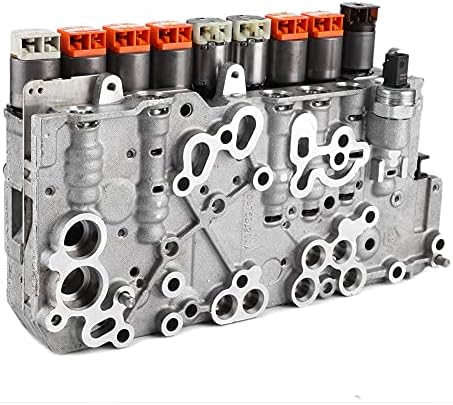
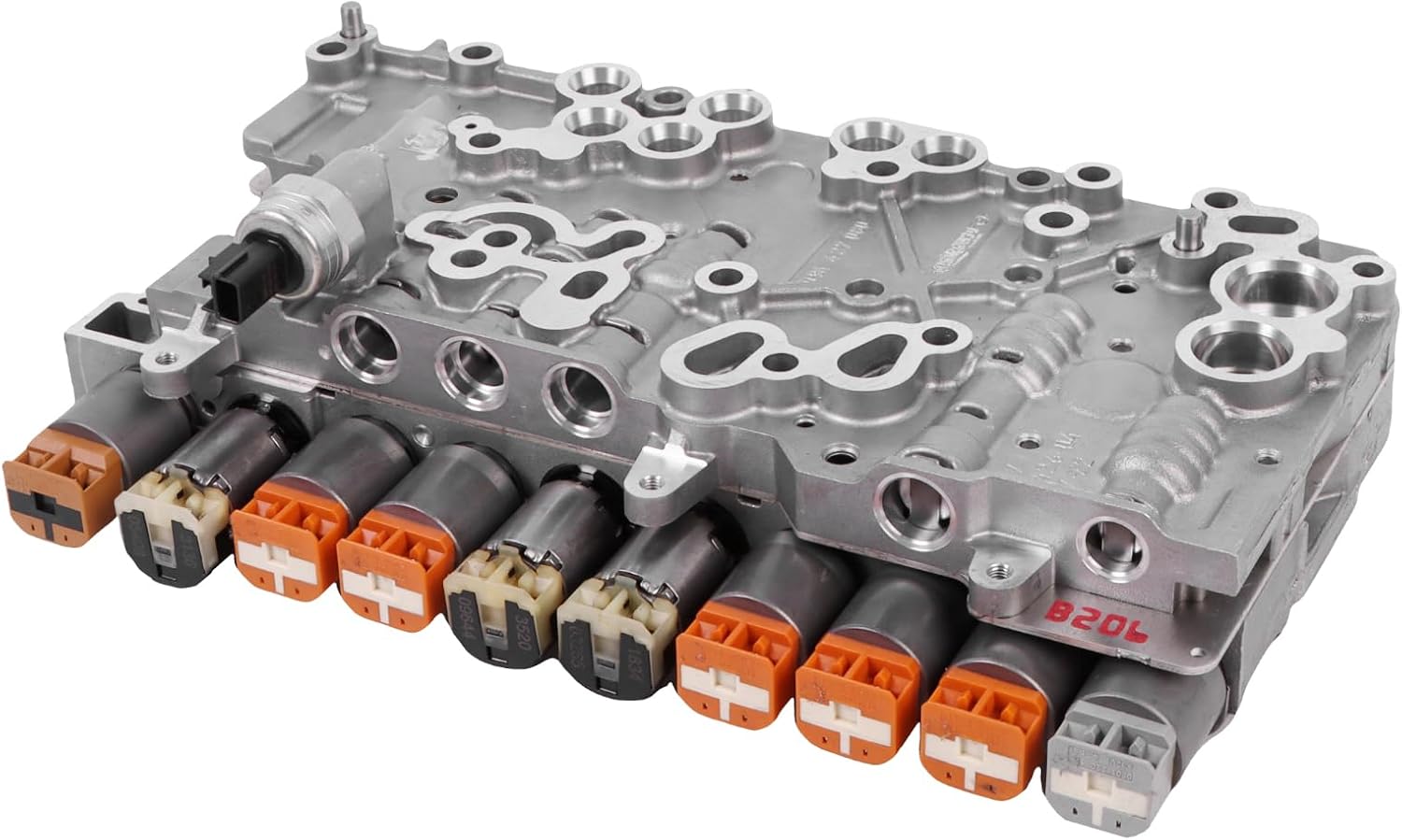
Our transmission parts shop carries a 948TE valve body with the wiring harness already attached and a remanufactured 9HP48 valve body with all ten solenoids, both on our own checkout, along with the filter and pan gasket kit this job calls for either way. If bench testing and live data point specifically at the sensor circuit itself, CoreTransmissionParts stocks a 9HP48 transmission wiring harness with speed sensor built to OEM specification as a direct-fit replacement.
FAQ
What does P0716 mean on a 9HP48 or 948TE transmission?
P0716 is the generic SAE code for Input/Turbine Speed Sensor Circuit Range/Performance -- a plausibility fault, not a dead-circuit fault. The TCM cross-checks the input/turbine speed signal against calculated engine RPM through the torque converter and against the output speed signal. When that signal is electrically present but does not track the way the TCM expects, it logs P0716. That is different from P0717, which is a no-signal condition where the TCM sees nothing from the circuit at all.
Where is the input speed sensor located on this transmission, and can it be replaced by itself?
On the ZF9HP48/948TE, the input and output speed sensors are a combined pair mounted inside the transmission case and secured by a single Torx bolt, documented in Sonnax's own teardown instructions for this unit. They are not part of the valve body casting and are not reachable from outside the case. Getting to them means pulling the valve body (ten case bolts) and releasing the internal harness, so in practice this is a harness/sensor assembly replacement, not a five-minute single-sensor swap.
Can a TCM software update fix a P0716 code on this transmission?
It can fix related codes, and it costs nothing to check. FCA Service Bulletin 21-015-16 documents a TCM reflash that resolved P1DAD-00 (Input Shaft-Output Shaft Direction Correlation) and other implausible-signal codes on 2015 Jeep Cherokee and Chrysler 200 948TE/9HP48 vehicles with zero parts replaced. That code lives in the same input-speed-plausibility family as P0716, so confirming current TCM and PCM calibration is a legitimate first step before condemning hardware.
What is the difference between P0716 and the output-speed-sensor codes on this same transmission?
P0716 is specific to the input/turbine speed signal. FCA Service Bulletin 21-017-21 covers a separate, well-documented fault on 2014-2017 Jeep Cherokee with Active Drive II that sets P1720-00 (Output Speed Sensor-Wheel Speed Rationality) and P215C-00 (Output Shaft Speed Wheel Speed Correlation) from a broken Power Transfer Unit input spline -- a driveline problem, not a transmission sensor problem. Pulling the exact DTC and reading its full description matters on this platform before parts get ordered.
Does low or dirty fluid cause a P0716 code on this transmission?
It can contribute. ZF's own product data sheet for this transmission's fluid states that only ZF LifeguardFluid 9 (sold under Mopar's ZF 8 and 9 label) is approved, and that using a different fluid can cause anything from degraded shift quality to transmission failure. ZF also recommends a change at 150,000 km despite the lifetime-fill design, which matters most on a used vehicle with unknown service history where contaminated fluid is a realistic contributor to a signal-plausibility fault.
Should I check for an open recall before replacing the sensor myself?
Yes. NHTSA Recall 16V-529 covers 2014-2015 Jeep Cherokee and 2015 Chrysler 200, Jeep Renegade and RAM ProMaster vehicles with 9-speed transmissions for a transmission sensor cluster with insufficient wire harness crimps, with a free remedy of a PCM/TCM software update and, where needed, a transaxle range sensor wire harness replacement. If the VIN falls in that window, check recall status before paying out of pocket for a related wiring repair.
Related guides
- 9HP48 Speed Sensor Symptoms
- 9HP48 P0776: Pressure Control Solenoid B Stuck Off Causes and Fix
- 9HP48 Valve Body Symptoms
- 9HP48 Limp Mode Causes
- 9HP48 P0842: Fluid Pressure Sensor Low Causes and Fix
Sources
- Sonnax, "Chrysler 948TE; Honda/Acura, 9-Speed; ZF9HP48 Zip Kit, Identification Guide & Installation and Testing Booklet," Part No. 948TE-ZF9-HONDA-ZIP, 2022. Backs the combined input/output speed sensor assembly, its single Torx-bolt retention separate from the range sensor, the valve body removal procedure (ten Torx T40 case bolts) and reinstall torque specs (5.7 Nm sensor bolt, 8 Nm valve body bolts), and the fluid fill/check procedure (Mopar ZF 8 and 9 fluid, 6.5L dry fill, 37-45°C check window). cdn.transend.us
- FCA US LLC, Service Bulletin 21-015-16, "Flash: Transmission Diagnostic And Shift Enhancements," April 5, 2016, hosted by NHTSA. Backs the documented TCM-reflash resolution of P1DAD-00 (Input Shaft-Output Shaft Direction Correlation) and other implausible-signal codes on 2015 Jeep Cherokee/Chrysler 200 948TE/9HP48 vehicles with no parts replaced, and the Quick Learn relearn procedure. static.nhtsa.gov
- National Highway Traffic Safety Administration, Recall Campaign 16V-529 (Chrysler/FCA US LLC), acknowledgment letter, August 5, 2016. Backs the transmission sensor cluster wire harness crimp defect on 2014-2015 Jeep Cherokee and 2015 Chrysler 200/Jeep Renegade/RAM ProMaster 9-speed vehicles and the software/harness remedy. static.nhtsa.gov
- FCA US LLC, Service Bulletin 21-017-21 Rev. A, "Power Transfer Unit (PTU) Broken Input Spline -- X89 Warranty Extension," May 20, 2021, hosted by NHTSA. Backs the distinct P1720-00/P215C-00 output-speed-sensor/PTU fault on 2014-2017 (KL) Jeep Cherokee, used here to distinguish look-alike codes from P0716. static.nhtsa.gov
- ZF Friedrichshafen AG, Product Data Sheet, "ZF LifeguardFluid 9," 2021-07-19. Backs the approved fluid specification (Product No. AA01.500.001), the only-this-fluid requirement, and the 150,000 km recommended change interval despite the lifetime-fill design. aftermarket.zf.com
- Transmission Digest (Paul Loch, Certified Transmission), "Diving into electrical testing and wiring with the 948TE," June 15, 2023. Backs the internal case-to-TCM harness architecture and the documented harness-chafing root cause on this exact platform that cleared when disturbed and returned once hot. transmissiondigest.com
- American Honda Motor Co., Service Bulletin 19-124 version 3, "9-Speed A/T Hard Upshift with Steady Acceleration or MIL On with DTC P0716," February 28, 2020, hosted by NHTSA. Backs the affected Honda 9-speed models, the TCM adaptation/software cause of P0716, the TCM-update corrective action, the paddle-shift and under-500-mile exclusions, the 500-mile post-update adaptation period, and the jumper-battery requirement. static.nhtsa.gov