An AODE that pulls fine in Drive and does nothing in Reverse is a common complaint on Town Cars, Crown Victorias, Grand Marquis, F-150s and SN95 Mustangs. It is also a complaint that can mean anything from a shift cable half a detent off to a burnt reverse clutch. Reverse is the one range on this unit that uses the reverse clutch, and it is the range that asks for the most line pressure, so leaks show up there first. The job is to find out which of those you have before the transmission comes out.
This guide follows Ford's own AODE diagnostic routine for "No Reverse Engagement" from the 1994 Mustang Workshop Manual, Section 07-01, with the pressure specs and tester procedures from the same section, plus the valve body wear Sonnax documents on the AODE/4R70W family. Everything is listed under Sources.
How the AODE makes reverse
The AODE is the electronic version of the AOD: four speeds, a Ravigneaux compound planetary, and hydraulic apply elements controlled by a valve body that takes its line pressure command from the PCM through the EPC solenoid. Ford's clutch and band application chart (Chart 601 in the manual) shows two elements applied in Reverse: the reverse clutch and the reverse band, usually called the low/reverse band [1].
- Reverse clutch. Drives the reverse sun gear. Its apply oil comes through the pump and stator support, sealed by the No. 1 and No. 2 seal rings that Ford calls out in the no-reverse routine [1].
- Low/reverse band. Holds the planetary carrier. A servo in the case applies it. Per the same chart, the band is also applied in 1st gear manual low for engine braking [1]. That overlap is the most useful diagnostic fact on this unit.
If either element does not hold, there is no reverse. If both hold but with too little pressure, you get a delayed or slipping reverse first and no reverse later.
Ford's no-reverse checklist
Ford's routine 302 for "No Reverse Engagement" states there are no electrical concerns for this symptom and goes straight to the hydraulic and mechanical list, in this order [1]:
| Area | What Ford lists |
|---|---|
| Fluid | Improper level or condition |
| Shift linkage | Damaged or misadjusted; verify MLP sensor adjustment after |
| Pressures | Low reverse clutch, low reverse band, or low line pressure |
| Oil filter and seal | Plugged or damaged |
| Main controls | No. 6 shuttle ball, manual valve, main regulator valve, 1-2 accumulator seals; bolt torque; gasket |
| Low/reverse servo | Piston and cover seals, cover retaining ring assembled wrong, case anchor pins |
| Pump assembly | Bolt torque, porosity, cross leaks, missing check ball, plugged hole, gasket, No. 1 and 2 seal rings |
| Reverse clutch | Piston seals, check ball missing or damaged, friction elements worn |
| Low/reverse band | Band, servo or anchor pins damaged or worn |
The delayed or soft reverse routine (305) covers the same ground [1]. That is worth knowing: a slow reverse today is the same fault as tomorrow's no reverse, only earlier and cheaper.
Step 1: Fluid level and condition
The AODE was specified for MERCON. Motorcraft MERCON V (XT-5-QMC quarts) is Ford's fluid for vehicles that require MERCON V or MERCON, so it is the right fill today [6]. Check the level hot, in Park, on level ground. Reverse needs the most oil, so a low level starves it first. Then read the fluid. Clean red fluid with a reverse complaint points at a leak or a linkage problem. Dark fluid, a burnt smell, and friction material in the pan mean the reverse clutch or band has already cooked, and a valve body kit alone will not bring it back.
Step 2: Linkage and the MLP sensor
The shift linkage positions the manual valve. If the valve stops short of Reverse, the reverse circuits only partly fill and the unit may slip or not engage. Put the selector in R and confirm the lever on the case sits in its detent. Ford's instruction is to adjust the linkage and then verify the manual lever position (MLP) sensor adjustment [1].
The MLP sensor reports range to the PCM; it does not apply anything. But a sensor that reads the wrong range tells you the linkage and sensor are out of agreement. Ford's Pinpoint Test D lists a good sensor at 1304-1593 ohms on circuit 359 (GY/R) in Reverse, 3770-4507 ohms in Park and 660-807 ohms in Neutral, and ties codes 634/P0705 and 667/668 to the MLP circuit [3]. If Reverse reads outside that window with the lever in the R detent, fix the adjustment or the sensor before going further.
Step 3: Gauge the line tap in reverse
This is the test that splits the problem. Tee a 300-psi gauge into the line pressure tap. Ford's Pressure Reference Chart 401A (3.8L) and 401B (5.0L) both list the same Reverse numbers [1]:
| Condition | Line pressure | EPC pressure |
|---|---|---|
| Reverse, idle | 54-96 psi (372-661 kPa) | 0-10 psi |
| Reverse, WOT stall | 194-254 psi (1337-1750 kPa) | 83-93 psi |
| Park, idle (for comparison) | 32-67 psi | 0-10 psi |
Two notes from Ford on that chart: do not have the transmission tester installed when verifying these pressures, and the vehicle harness must be connected at the transmission, because the numbers depend on the PCM's EPC command [1]. Pressures may vary with model, so confirm the chart for your vehicle. Read reverse cold, then again at full operating temperature.
- Reverse pressure in spec, still no reverse. The oil is leaving the valve body but not holding an element. Go to the manual-low test and the air check.
- Reverse line pressure low, drive normal. A reverse-only loss. The boost valve and sleeve and the manual valve are the prime suspects.
- Everything low, worse hot. A general leak: pump cross leak, worn main regulator bore, or a plugged filter. Hot oil is thin and finds every worn bore.
- Reverse does not rise at stall. The boost circuit is not doing its job. Sonnax lists "low line rise in reverse" as a symptom of boost sleeve wear [4].
Step 4: Use manual low to split clutch from band
Because the low/reverse band applies in both Reverse and manual 1st [1], manual low tells you which element is failing. Select 1, and at low speed on a slight downgrade, lift off the throttle.
- Engine braking in manual 1, no reverse. The band and servo are holding. The fault is the reverse clutch or its feed: the No. 1 and 2 seal rings at the stator support, a pump cross leak, the reverse clutch piston seals or check ball, or burnt frictions.
- No engine braking in manual 1 and no reverse. The band, its servo (piston and cover seals, the cover retaining ring), the case anchor pins, or the servo apply oil.
Step 5: Rule the PCM in or out with the tester
Ford's routine calls no reverse a hydraulic symptom, but a quick engagement check with the Rotunda transmission tester (007-00085) or an equivalent confirms the valve body will respond to EPC. With the tester in Drive mode and the engine running, line pressure should go to maximum with the EPC switch released and drop to minimum when you press it. Ford's engagement test then has you hold the EPC switch, shift from Park to Reverse, and confirm the vehicle shifts into Reverse; release the switch and engagements should be firm [2]. Ford's caution is worth repeating: never stall the transmission with the EPC switch held down, because that is minimum line pressure under full torque [2]. If reverse engages firmly at maximum pressure on the tester but not on the vehicle harness, look at the EPC command and wiring. If it will not engage at maximum pressure, the fault is inside the transmission.
Step 6: Air check and vacuum test
With the valve body off, air-check the reverse clutch through its case passage. You want a clean thump as the piston strokes and no steady hiss. Air escaping around the front of the case means the stator support seal rings, the reverse clutch drum bore they ride in, or the pump itself. Air-check the low/reverse servo apply and watch the band tighten; a soft, leaking apply means servo seals or the cover.
If the gauge showed low reverse pressure, vacuum-test the valve body bores Ford and Sonnax both point at:
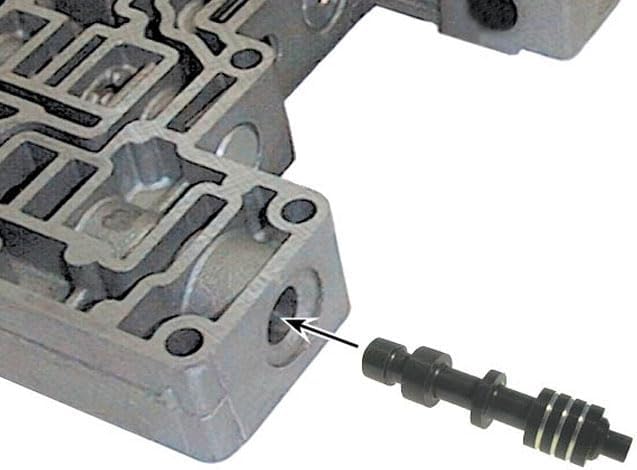
- Boost valve and sleeve. Sonnax says the OE boost valve oscillates in its sleeve until the wear creates a leak path that exhausts boost pressure and prevents proper reverse operation. Its listed symptoms are low reverse boost, delayed reverse, reverse slip, no reverse, low line rise in reverse and burnt reverse clutch, and the kit fits 1991-later AODE, 4R70W, 4R70E, 4R75W and 4R75E [4].
- Manual valve bore. Ford names the manual valve in the no-reverse routine [1]. Sonnax notes the OE manual valve rotates continuously in its bore from fluid flow, and a loose valve lets line pressure leak into adjacent circuits, causing delayed engagement, low line pressure and burnt bands and clutches on '92-later AODE units [5].
- Main regulator valve and the No. 6 shuttle ball. Both on Ford's list [1]. A worn regulator bore drags every range down, reverse hardest.
The fix for each cause
Boost sleeve wear. Replace the OE valve and sleeve with a drop-in kit such as Sonnax 76948-02K, which uses a hardcoat anodized valve in a wear-resistant sleeve [4]. It is the cheapest reverse fix on this unit and belongs in every AODE valve body that comes apart.
Worn manual valve bore. Ream the bore with the Sonnax F-76948-TL46 tool and fit the oversized manual valve kit 76948-46, which also brings '92-'98 valve bodies up to '99-later specifications [5]. A new OE valve in a worn bore still leaks.
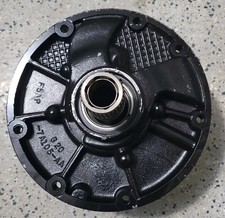
Pump and stator support. Replace the No. 1 and 2 seal rings, check the drum bore they seal against, and torque the pump bolts to spec. Ford lists loose bolts, porosity, cross leaks and a missing check ball as pump causes [1]. A pump with cross leaks or a grooved stator support gets replaced.
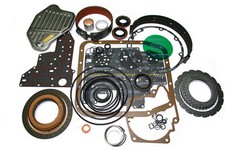
Reverse clutch, band and servo. Burnt frictions, a glazed band, leaking servo seals or damaged anchor pins mean an overhaul. Replace the frictions, steels, piston seals and band, and check the drum surfaces for heat damage. Then correct whatever caused the burn, usually low boost or a leak upstream, or the new parts will cook the same way.
Shop the part for this fix: Sonnax boost valve kit 76948-02K
The drop-in fix for a worn reverse boost sleeve, the most common valve body cause of a weak or missing AODE reverse. CoreTransmissionParts stocks it for the AODE/4R70W family.
View the 76948-02K kit at CoreTransmissionPartsOr browse the full AODE/4R70W parts collection, including bands, pumps and rebuild kits.
Keeping reverse alive
- Keep the level right and use MERCON V. Low fluid starves reverse before anything else.
- Stop fully before selecting R. Shifting into reverse while rolling loads the reverse clutch and band hard.
- Treat a slow reverse engagement as a leak in progress. Caught early, it is a boost valve or manual valve fix. Caught late, it is an overhaul.
- On any rebuild, fix the known valve body wear points. Fresh frictions behind a worn boost sleeve burn out again.
Need parts for this job?
Our AODE parts page has boost valve kits, pumps, valve bodies and master rebuild kits for 1992-up AODE units, all on our own checkout. Buy to the test result: the boost valve kit when reverse pressure is low with clean fluid, a pump when the air check leaks at the front, and a rebuild kit when the reverse clutch or band is burnt.
FAQ
What causes an AODE to have no reverse but still drive forward?
Reverse on the AODE applies the reverse clutch and the low/reverse band together, and no forward gear uses the reverse clutch. Ford's no-reverse routine lists low fluid, a misadjusted shift linkage, a plugged filter, the manual valve, main regulator valve or No. 6 shuttle ball, low/reverse servo seals, pump cross leaks or damaged No. 1 and 2 seal rings, and a worn reverse clutch or band. A worn reverse boost valve sleeve is one of the most common valve body causes.
What should AODE line pressure be in reverse?
Ford's 1994 Mustang manual lists 54 to 96 psi line pressure in Reverse at idle and 194 to 254 psi at wide open throttle stall, for both the 3.8L and 5.0L. Check it at the line pressure tap with the vehicle harness connected, not with the transmission tester installed, and confirm the chart for your exact vehicle.
How do I tell if it is the reverse clutch or the reverse band?
Use manual low. Ford's application chart shows the low/reverse band applied in both Reverse and 1st gear manual low. If the vehicle has engine braking coasting in manual 1 but no reverse, the band and servo are holding and the reverse clutch or its feed is the suspect. No engine braking and no reverse points at the band, servo or their apply oil.
Can a bad MLP sensor or linkage cause no reverse on an AODE?
The linkage can, because it positions the manual valve. If the valve does not fully enter Reverse, the circuit only partly fills. Ford has you adjust the linkage and then verify the MLP sensor. The MLP sensor itself only reports range to the PCM; Ford lists 1304 to 1593 ohms on circuit 359 in Reverse as a good reading.
What fluid does an AODE use?
The AODE was built for MERCON. Motorcraft MERCON V is Ford's recommended fluid for vehicles that require either MERCON V or MERCON, so it is the correct top-off and refill today. Low fluid shows up in reverse first because reverse needs the most pressure.
Related guides
Sources
- Ford Motor Company, 1994 Mustang Workshop Manual, Section 07-01 (AODE), Diagnosis by Symptom. Backs routine 202/302 "No Reverse Engagement" and 205/305 "Delayed/Soft Reverse Engagement" component lists, Pressure Reference Charts 401A/401B (Reverse 54-96 psi idle, 194-254 psi WOT stall, EPC 83-93 psi), the tester and harness notes, and Clutch and Band Application Chart 601 (reverse clutch and reverse band in R; band also in manual 1st). SRB71019
- Ford Motor Company, 1994 Mustang Workshop Manual, Section 07-01, Transmission Tester. Backs the EPC maximum/minimum pressure check, the Park-to-Reverse engagement test with the EPC switch held, and the caution against stalling with the EPC switch depressed. SRB71024
- Ford Motor Company, 1994 Mustang Workshop Manual, Section 07-01, Pinpoint Test D. Backs MLP codes 634/P0705, 667/P1707 and 668/P1708 and the circuit 359 resistance values (Reverse 1304-1593 ohms, Park 3770-4507 ohms, Neutral 660-807 ohms). SRB71026
- Sonnax, Boost Valve Kit 76948-02K. Backs boost sleeve wear creating a leak path that exhausts boost pressure, the no/delayed/slipping reverse and low line rise symptoms, and 1991-later AODE/4R70W/4R70E/4R75W/4R75E fitment. sonnax.com
- Sonnax, Oversized Manual Valve Kit 76948-46. Backs manual valve rotation and bore wear leaking line pressure into adjacent circuits, the delayed engagement, low line pressure and burnt band/clutch symptoms, '92-later AODE fitment, and the F-76948-TL46 reaming tool. sonnax.com
- Motorcraft (Ford), MERCON V Automatic Transmission and Power Steering Fluid product information. Backs part numbers XT-5-QMC / XT-5-5Q3M and use in Ford vehicles that require MERCON V or MERCON. fcsdchemicalsandlubricants.com