This question almost never gets asked in the abstract. Either there is a TH350 in the car and the owner is tired of turning 3,000 rpm at 70 mph, or there is a 700R4 in the car that just cooked its 3-4 clutch and the owner is wondering whether the old three-speed was the smarter choice. Both are fair. These are very different transmissions that happen to share a bellhousing pattern, and the differences that matter are not always the ones on the spec list.
Here is what actually separates them, what carries over when you swap, and where each one fails.

What GM built, and why
The TH350 is a three-speed from 1969, hydraulically controlled, with a vacuum modulator reading engine load off the intake. No overdrive, no lockup, no wiring. It is about as simple as a modern automatic gets.
The 700R4 was a fuel-economy project. GM engineer R. J. Green presented the design at the 1981 SAE Truck and Bus Meeting under the title "A Fuel Efficient Automatic Four-Speed Transmission for Light Trucks," and the paper describes exactly what the unit is: wide ratio gearing producing four speeds and reverse from two planetary gear sets, a converter clutch assembly, a variable capacity oil pump, and extensive use of aluminum. The detail worth remembering from that paper is the packaging claim. GM states the new four-speed weighs only two pounds more than the three-speed unit it replaces. Everything the 700R4 adds, it adds without a weight penalty.
Sonnax dates the production run cleanly: introduced in 1982, auxiliary valve body added in 1987, renamed 4L60 in 1989, and 1993 as the last year for most models before the electronically controlled 4L60-E took over. The 700R4 and the 4L60 are the same transmission with two different names, which is worth knowing when you are shopping cores and parts.
| TH350 | 700R4 / 4L60 | |
|---|---|---|
| Years | 1969-1986 | 1982-1993 (4L60 from 1989) |
| Speeds | 3 | 4, with overdrive |
| Forward ratios | 2.52, 1.52, 1.00 | 3.06, 1.63, 1.00, 0.70 |
| Ratio spread | 2.52:1 | 4.37:1 |
| Load sensing | Vacuum modulator | Throttle valve cable |
| Shift timing | Mechanical governor | Mechanical governor |
| Converter | 12 in. non-lockup | 298mm lockup, needs 12V |
| Valve body | Cast iron | Cast iron |
Run the numbers on that ratio spread, because it is the reason people swap. First gear goes from 2.52 to 3.06, which is 21 percent more torque multiplication off idle with the same rear gear. Fourth at 0.70 drops cruise rpm by 30 percent, so a car turning 3,000 rpm in third behind a TH350 turns about 2,100 in overdrive behind a 700R4. You get a shorter launch gear and a taller cruise gear at the same time, which is something a numerically deeper rear end alone cannot do for you.
The control system is the whole difference
Both units decide when to shift the same way: governor pressure on one end of the shift valve, against spring force plus throttle pressure on the other. ATRA's Steve Garrett lays out the rule of thumb for the governor side in Gears magazine, and it is worth committing to memory: governor pressure rises roughly one psi per one mph of road speed on a gas application. When you are chasing a late or early shift on either transmission, that ratio is how you sanity-check a governor pressure reading against actual road speed.
Where they part company is the throttle side. The TH350 reads engine load with a vacuum modulator. Manifold vacuum drops under load, the modulator pushes the throttle valve deeper into its bore, throttle pressure rises, line pressure boosts. It is self-correcting, it needs no adjustment, and its failure modes are a split diaphragm or a collapsed vacuum line.
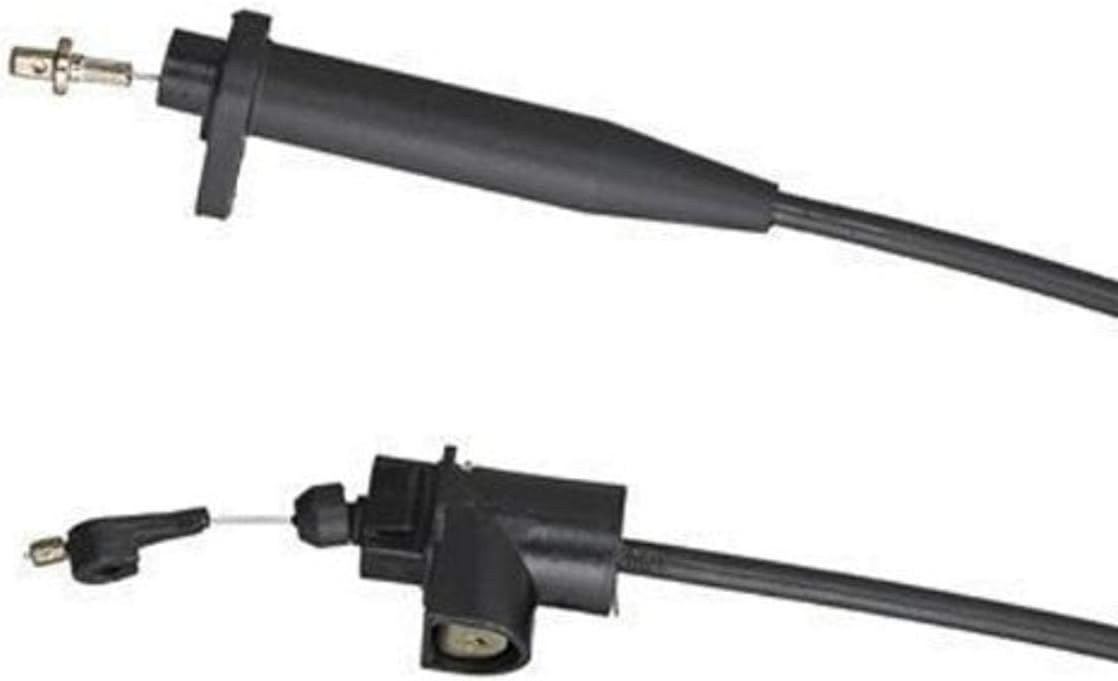
The 700R4 reads load with a cable pulled off the throttle body or carburetor linkage. The same physics apply, but now a mechanical adjustment stands between the engine and the transmission's line pressure, and nothing warns you when that adjustment drifts. Garrett puts the sensitivity at about 10 psi of line pressure per click of cable, and names the consequence directly: 3-4 clutch failure.
Why so many 700R4s die young
The failure is usually not the transmission. Sonnax describes the mechanism behind its TV cable corrector kit AS1-01K: on GM and Ford cable units, including the TH200, 200-4R, TH200C, 4L60 (700-R4) and the Ford AOD and AXOD, the throttle valve cable gets pulled out of adjustment at wide-open throttle because of inaccurate geometry in the throttle shaft lever. If the cable is not readjusted to restore proper line rise, the unit comes back with soft shifts and a burned 3-4 clutch or band.
Read that again in swap terms. Bolt a 700R4 behind an engine with an aftermarket carburetor and a throttle bracket that was never designed for a TV cable, get the geometry wrong, and the transmission loses its line pressure the first time somebody floors it. That is most of the reason 700R4s have a bad reputation, and it is a bracket-and-cable problem, not a transmission problem.
Setting the cable, the way it is actually done
Transmission Digest published Paul Townsend's procedure, and it is the one to follow because it verifies function instead of trusting a measurement:
- Verify full throttle first. Unhook the cable from the carburetor or throttle body, have an assistant put the pedal to the floor with the engine off, and confirm the throttle actually opens all the way. Nothing downstream is valid if it does not.
- Check the cable itself. Pull the cable end and confirm it moves and returns smoothly. If it binds, you need a cable, or the TV plunger or internal linkage is the problem, and no amount of adjusting fixes either one.
- Coarse adjust. Push the release button, push the inner jacket back toward the bracket, rehook the cable, then hold the throttle to the floor while the button is released. Mark the cable so you can find this position again.
- Road test at light throttle. The 1-2 shift should land at about 15 mph and the 2-3 at about 28 mph. Late shifts mean pulling the adjuster forward a few clicks; early shifts mean moving it back toward the bracket.
- Verify the full-throttle 2-1. Accelerate lightly, and the moment the 1-2 upshift lands, floor it. The transmission has to come back down to first. Townsend's rule is blunt and correct: do not ship the vehicle if it has no 2-1 downshift, no matter how good the shift speeds look.
That last test is the one that catches a cable set too loose, which is the setting that kills the unit. Do it every time, including after any carburetor or linkage change.
What interchanges on the swap
More than people expect at the front of the transmission, and less than they hope at the back.
The converter and flexplate side is friendly. Sonnax documents this in its article on retrofitting the 12 inch TH350/TH400 non-lockup converter: the 298mm lockup converter used in the late-model overdrive units, meaning the 200-4R, 700-R4 and 4L60-E, already shares a 1.703 inch diameter pilot, the same three-lug bolt circle, and the same input shaft and stator spline counts as the early 12 inch non-lockup. That article is about going the other direction, but the shared dimensions are the useful part. Your flexplate and crank register are not the obstacle.
Mind the 1982-1984 input shaft. This one bites people buying a cheap core. Sonnax notes that its input housing kit fits 1985-and-later units with the 298mm converter and a 30-spline input shaft, and that 1982-1984 units use a 27-spline input shaft, so those require the converter and stator shaft to be updated to the 1985-and-later design. Buy an early core with a late converter, or the reverse, and you find out on assembly day. Count the splines before money changes hands.
The back half is where the work is. The 700R4 is a longer case than a TH350, but by how much depends entirely on which TH350 you are pulling, since they were built with short, medium and long tailshafts. Do not take a number off a forum. Set both units side by side, measure from the bellhousing face to the transmission mount pad and to the end of the output shaft, and you will know exactly how far the crossmember moves and how much driveshaft you are having shortened. Plan on a crossmember change, a driveshaft change, and a speedometer gear set that matches the new tail housing.
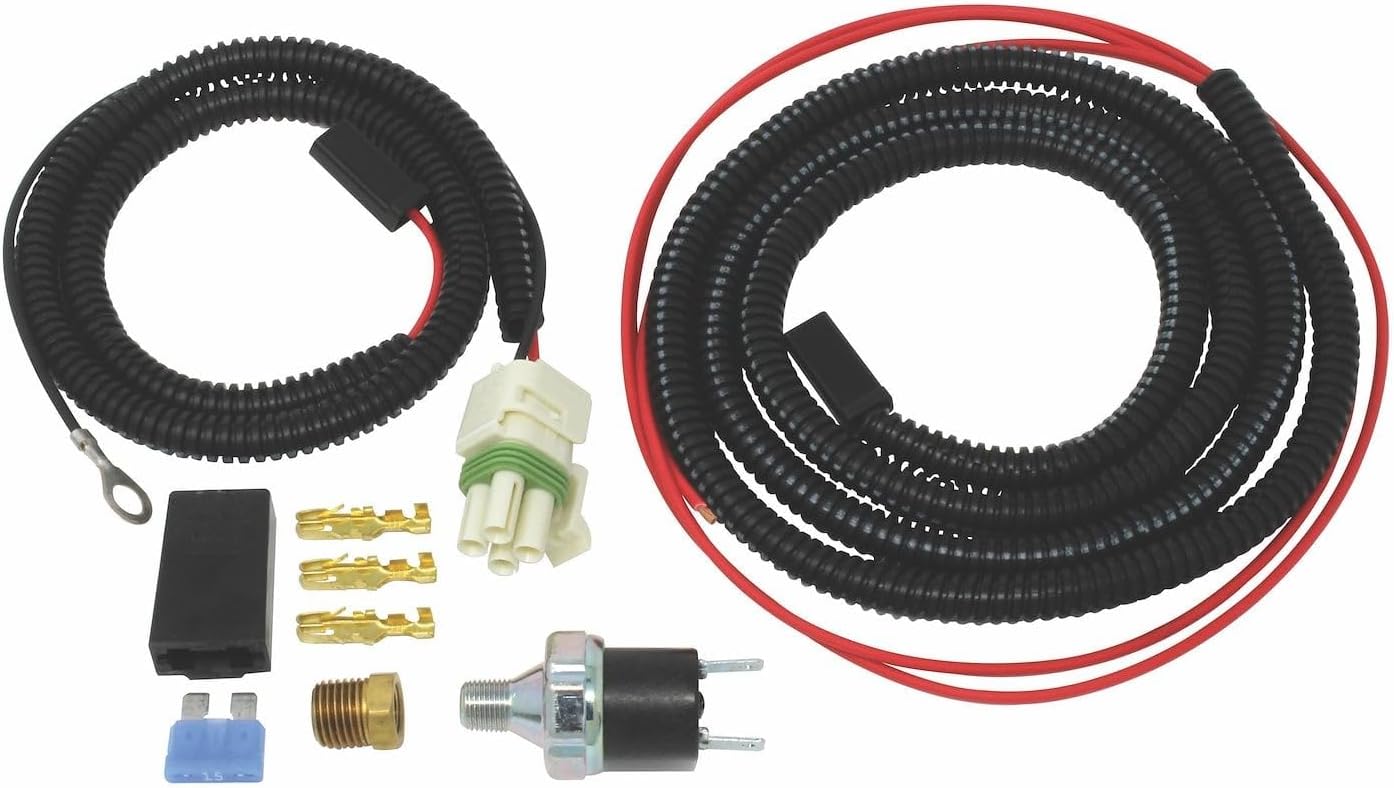
Then there is the wiring a TH350 never had. The 700R4 lockup converter needs 12 volts at the case connector to apply, and it needs to release on the brake and at low throttle. In a pre-computer car that means a lockup control kit with a brake switch and a pressure or vacuum switch. Skip it and you have two bad options: a converter that never locks, which throws away half the reason you swapped, or one that locks and stalls the engine at a stop sign.
One more thing to check on an older car: the TH350 bellhousing was produced in both the Chevrolet pattern and a Buick/Olds/Pontiac pattern, while the 700R4 you are likely buying is the Chevrolet pattern. If the car is a BOP-pattern application, you need an adapter, and that is a decision to make before the transmission is on the jack.
Need parts for this job?
TV cables, lockup kits, governors, sun shells, valve bodies, rebuild kits and bench tools for the 700R4, with secure on-site checkout.
Shop 700R4 parts →Where each one breaks
Neither unit is fragile in the way the internet suggests. They just fail in different places.
TH350. The known weak point is the intermediate overrun clutch outer race. Sonnax describes race failure as a chronic problem under high torque loads, with the race fracturing at two stress points: the radial lube holes that contact the rollers, and the sharp inside corners at the base of the outer splines. Its heavy duty race 35723HD-02 offsets the lube holes so rollers never travel directly over a hole, and spaces them so only one roller is ever near one. Sonnax rates it at twice the torque capacity of any OE or other aftermarket race. If you are building a TH350 for anything with power, that part goes in during the build, not after the failure.
700R4. The 3-4 clutch and the 2-4 band are the parts that die, and as covered above, a soft TV cable is usually what kills them. Behind those sit the reaction sun shell and the input housing. The upside is that aftermarket support is deep, because most of the internals carry over to the 4L60-E that GM kept revising through 2010, so parts developed for the later unit work in the older one. Sonnax puts a built 700R4 as still very capable in applications up to about 750 horsepower, which is more than most people building one of these will ever ask for.
Which one you actually want
Pick the TH350 when the car does not see highway miles, when you want the simplest possible install with no cable, no wiring and no crossmember work, when you are running a deep rear gear at the strip, or when you are keeping a period-correct car period-correct.
Pick the 700R4 when the car cruises. A 30 percent rpm drop in overdrive is worth real fuel, real noise reduction and real engine life, and the 3.06 first gear gets a heavy car moving better than the TH350 ever did. Accept, going in, that you are buying a cable that must be set correctly, a lockup circuit that must be wired, and a driveshaft that must be shortened.
The version of this swap that goes wrong is always the same one: a cheap core of unknown year, a TV cable zip-tied to whatever bracket was handy, no lockup wiring, and a driveshaft that got a spacer instead of a shortening. Do those four things properly and the 700R4 is the better transmission for nearly any street car. Do them carelessly and the TH350 you pulled out would have outlived it.
Fluid and service
Both units were filled with the DEXRON grades of their era, and both take current licensed DEXRON-VI today. Mobil's product data sheet for its DEXRON-VI ATF states it provides improved performance in older GM vehicles wherever DEXRON is specified, which covers both of these transmissions.
On fill quantity, do not chase a number off a chart. The 700R4 holds meaningfully more than a TH350 because of the added gear set and the larger lockup converter, and a converter that has been sitting on a shelf drains unpredictably. Add fluid in stages, run it through the ranges, and set the final level hot and in gear on level ground. On a swapped car, check it again after the first 100 miles, because the cooler lines and the converter will have taken their share.
One service item specific to the 700R4: put a real cooler on it. The lockup converter helps with heat at cruise, but the unit works harder in first and second than a TH350 does, and the swaps that fail early are usually the ones running a factory radiator cooler behind a bigger engine than the transmission ever saw from GM.
FAQ
Will a 700R4 bolt up where a TH350 was?
At the bellhousing, yes on a Chevy-pattern car: the 700R4 uses the Chevy bolt pattern, and the 298mm converter shares the 1.703 inch pilot and the three-lug bolt circle with the 12 inch TH350 converter, so the flexplate is not the problem. What changes is everything behind the bellhousing. The 700R4 is a longer case, so the crossmember moves and the driveshaft usually gets shortened, and you have to add a throttle valve cable and lockup wiring that the TH350 never needed.
Do I really have to hook up the TV cable on a 700R4?
Yes, and it is not optional in any sense. The TV cable is not a kickdown cable. It sets throttle pressure, which sets line pressure, so a cable that is disconnected or loose leaves the transmission running on minimum pressure at full load. ATRA puts each click of cable adjustment at roughly 10 psi of line pressure, and a unit run soft burns the 3-4 clutch and the band in short order.
Is a 700R4 stronger than a TH350?
Out of the box, not really. The TH350 is a simple three-speed with a short load path, and its known weak point is the intermediate overrun clutch outer race, which fractures at the radial lube holes and at the sharp inside corners at the base of the outer splines. The 700R4 has more parts to break, including the reaction sun shell and the 3-4 clutch pack. Built with the right parts, though, Sonnax rates the 700R4 as capable in applications up to about 750 horsepower, which is well past where a stock TH350 lives.
Does the swap need a new driveshaft?
Measure it rather than trusting a number off a forum. TH350s were built with short, medium and long tailshafts, so the length you are removing depends on which case you have. Set both units on the bench, measure from the bellhousing face to the transmission mount pad and to the end of the output shaft, and you will know exactly how far back the yoke moves and how far the crossmember has to travel.
Which one is better for towing?
The 700R4, if the cable is set right and the cooling is real. Fourth gear at 0.70 drops cruise rpm by about 30 percent, and the lockup converter takes slip and heat out of that cruise. The catch is that towing is exactly the load case that punishes a soft TV cable adjustment, so on a tow rig verify the full-throttle 2-1 downshift and run a proper cooler before you hook up to anything.
Sources
- SAE Technical Paper 811285, R. J. Green, Chevrolet Engineering Dept., "A Fuel Efficient Automatic Four-Speed Transmission for Light Trucks" (SAE Truck and Bus Meeting, Dearborn, November 1981) — GM's own design description of the unit that became the 700R4: wide ratio gearing giving four speeds and reverse from two planetary gear sets, a converter clutch assembly, a variable capacity oil pump, extensive use of aluminum, and the statement that it weighs only two pounds more than the three-speed unit it replaces. saemobilus.sae.org
- Sonnax, "700-R4 (4L60) Performance Transmission Build Guide" (Gregg Nader) — the timeline of 1982 introduction, 1987 auxiliary valve body, 1989 rename to 4L60 and 1993 as the last year for most models; the cast iron throttle-cable valve body versus the 4L60-E's aluminum solenoid-controlled unit; the roughly 750 horsepower ceiling for a built unit; and the 1982-1984 27-spline input shaft versus the 1985-and-later 30-spline shaft with the 298mm converter, which requires updating the converter and stator shaft to mix. www.sonnax.com
- Sonnax, "Retrofitting the GM 12-inch TH350/TH400 Non-Lockup" (Ed Lee) — the 298mm lockup converter used in the 200-4R, 700-R4 and 4L60-E sharing a 1.703 in. diameter pilot, a three-lug bolt circle, and the same input shaft and stator spline counts as the early 12 in. non-lockup converter. www.sonnax.com
- Transmission Digest, "Adjusting Infamous THM700-R4 Throttle Valve Cable" (Paul Townsend and Jamie Townsend, November 2018) — the adjustment procedure: verifying actual full throttle before adjusting, checking the cable for smooth pull and return, the coarse adjustment sequence, the light-throttle targets of a 1-2 shift at about 15 mph and a 2-3 at about 28 mph, and the full-throttle 2-1 downshift verification that must pass before the vehicle leaves. www.transmissiondigest.com
- ATRA / Gears Magazine, "A Blast From The Past: Old School Transmissions and Other Forgotten Information" (Steve Garrett, October 2024) — governor pressure rising approximately one psi per one mph of road speed on gas applications, the valve-design governor used in the 700-R4, the difference between vacuum modulator and cable-operated throttle valves, and each click of 700-R4 TV cable adjustment equating to about 10 psi of line pressure with 3-4 clutch failure as the consequence. gearsmagazine.com
- Sonnax, TV Cable Corrector Kit AS1-01K — the throttle valve cable being pulled out of adjustment at wide-open throttle by inaccurate throttle shaft lever geometry on GM TH200, 200-4R, TH200C and 4L60 (700-R4) units and Ford AOD and AXOD, and the resulting soft shifts and burned 3-4 clutch or band when line rise is not restored. www.sonnax.com
- Sonnax, "Stop TH350/C Intermediate Race Failure with a Sonnax Heavy Duty Race" (September 2020) — intermediate overrun clutch outer race failure as a chronic TH350 problem, the two fracture points at the radial lube holes and the sharp inside corners at the base of the outer splines, and heavy duty race 35723HD-02 delivering twice the torque capacity of any OE or other aftermarket race. www.sonnax.com
- Mobil DEXRON-VI ATF product data sheet — the GM DEXRON-VI licensed specification and its stated improved performance in older GM vehicles wherever DEXRON is specified. www.mobil.com