A TH400 that pulls fine in every forward gear but does nothing, or barely grabs, in Reverse is one of the more frustrating complaints to chase because the symptom is so binary. There's no partial failure mode you can feel out on a test drive the way you can with a slipping 2-3 shift. Either Reverse works or it doesn't, which means the diagnosis has to be methodical instead of seat-of-the-pants. The good news is the TH400 is fully hydraulic and mechanical, no TCM, no solenoids controlling shift logic, so the list of parts that can actually cause a true no-reverse condition is short and well documented.
This guide walks through the three real causes in the order you should check them: cheapest and most common first, pump-out jobs last. Full source list at the bottom.
Check the Low/Reverse Band and Servo First
The low/reverse band is the one component that's unique to Reverse and Manual Low, it isn't shared with any forward drive range the way the direct clutch is, which makes it the single cleanest first suspect. If the band is worn thin, glazed, or simply out of adjustment, the servo piston can't apply enough clamping force to hold the reaction carrier, and you get exactly the complaint described above: forward gears normal, Reverse does little or nothing.
Sonnax's own technical write-up on setting up the TH400/4L80-E low/reverse servo lays out the two failure symptoms directly from incorrect adjustment: the truck is "not going anywhere" in Reverse, and you lose engine braking in Manual Low. Their spec for correct servo piston travel is 0.125 inches, which on a standard 7/16-20 thread works out to 2.5 full turns of an adjustment bolt. The two criteria that actually matter: the band must not drag on the reaction carrier when the servo is released, and it must grip the carrier solidly before the piston bottoms out in its bore. Get either one wrong and you either burn the band from constant light drag or never develop enough clamping force to hold Reverse at all.
Why this one is harder to check than it sounds
On a stock low/reverse servo, there's no shortcut. Sonnax notes that checking or adjusting the band on standard OE and most aftermarket servos requires dropping the pan and pulling the servo, which is exactly the hassle that led them to release an externally adjustable servo kit (34914-20K for TH400) aimed at drag racers who need to recheck band tension between rounds without a teardown. For a daily-driven truck, budget for a pan-down service to get an accurate adjustment, don't trust a "quick check" through the pan rail.
Worn Pressure Regulator Valve Bore in the Pump
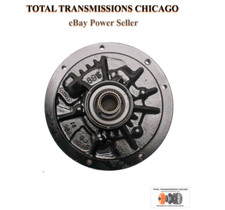
If the band checks out and Reverse is still weak or absent, the next suspect lives inside the pump. Sonnax's technical notes on its oversized pressure regulator valve kit (34910-03K) describe a wear pattern specific to high-mileage TH400 and TH425 units: the hardened steel pressure regulator valve reciprocates inside the pump's cast bore for the full service life of the transmission, and that constant motion eventually wears the bore itself. Once the bore is worn, the valve can't seal against it properly, and Sonnax lists the resulting symptoms directly: high and uncontrollable line pressure, delayed converter charge, and poor Reverse engagement.
That last symptom is counterintuitive to a lot of people, uncontrolled high pressure sounds like it should make everything slam, not fail to engage, but Reverse asks the pump to hold full line pressure against both the direct clutch and the low/reverse band simultaneously. If the regulator can't hold a stable pressure curve, Reverse is often the range where that instability shows up worst, either as a weak, slipping engagement or a delayed one. The fix isn't a plain valve swap; the wear is in the bore itself, so the repair kit uses a valve machined for a solid PTFE seal ring that re-separates the regulator circuit from pump suction. That means the pump has to come out, there's no in-vehicle fix for a worn regulator bore.
Leaking Direct Clutch Drum Bore
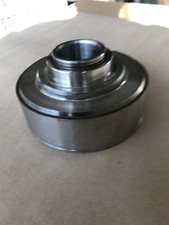
The direct clutch in a TH400 is the one friction pack that applies in both 3rd gear and Reverse, which is why a worn direct clutch drum bore tends to hit both ranges at once. Per Sonnax's documentation for its 34838-01K direct drum sleeve kit, wear at the drum bore allows 3rd and Reverse apply oil to exhaust past the center support piston ring locations instead of building clamping pressure, and the documented symptom list for this wear pattern includes delayed or no 3rd gear, delayed or no Reverse, and direct clutch failure on 4L80-E and 4L85-E applications that share the same drum design.
This is the one cause on this list that gives you a useful diagnostic clue for free: if 3rd gear also feels weak, slips, or is delayed along with the Reverse problem, the drum bore moves up the suspect list. If 3rd gear is completely normal and the truck only has an issue in Reverse, the drum is a less likely culprit than the band or the pump, since a bore leak that's bad enough to kill Reverse outright would almost always be bad enough to show up in 3rd too.
Rule Out the Cheap Stuff Before You Pull Anything
Before any of the above, confirm fluid level and condition. A pump that's starving for fluid because the level is low or the filter is loaded with debris can produce weak apply pressure across every range, not just Reverse, but it's worth eliminating first since it costs nothing but a dipstick check. GM's own 1975 service manual for this unit lists low oil level and misadjusted manual linkage as the first two causes under "No Reverse or Slips in Reverse," ahead of anything internal, followed by a weak or sticking vacuum modulator, a restricted filter or leaking intake pipe O-ring, and a sticking pump regulator or boost valve. The same chart flags a missing low/reverse ball check in the case, which also kills overrun braking in L1, and a short band apply pin on the rear servo. Fluid additive packages also matter for how cleanly a clutch pack grabs; it's rarely the sole cause of a true no-reverse condition, but old or wrong fluid is cheap enough to rule out before you drop a pan or pull a pump.
Our TH400 line pressure testing guide covers how to tee a gauge into the test port and compare readings by range, which is the fastest way to separate a pump problem from a band or drum problem without guessing. For reference, GM's road-test figure for Reverse is about 95-150 psi with the vacuum line connected, brakes held and the engine at 1000 rpm, and about 244 psi at sea level with the modulator line disconnected at 1200 rpm (212 psi at 6,000 feet). A Reverse reading well under that while Drive is in spec points you at the reverse circuit, not the pump. If Reverse is weak but every forward gear including 3rd feels completely normal, start with the band and servo. If 3rd and Reverse are both off, look at the pump and the drum together.
Pan's already down for the band check?
Pumps, clutch drums, clutch modules and rebuild kits for the TH400 are in stock and ship fast.
Shop TH400 parts →FAQ
What usually causes no reverse on a TH400 when every forward gear works fine?
The three most common causes are a misadjusted or worn low/reverse band and servo, a worn pressure regulator valve bore in the pump, or a leaking direct clutch drum bore. All three can produce the exact same complaint, forward gears are fine and reverse does nothing or barely grabs, because Reverse is the one gear range that leans the hardest on the low/reverse band, the direct clutch, and full line pressure all at once.
Can I adjust the TH400 low/reverse band without dropping the pan?
On a stock low/reverse servo, no. Sonnax's own write-up on checking band adjustment at the track notes that standard OE and most aftermarket low/reverse servos require removing the pan and pulling the servo to check or adjust the band, which is exactly why externally adjustable servo kits exist for racers who need to recheck band tension between runs. For a street truck, plan on a pan-down job to adjust the band correctly.
What does a worn pressure regulator valve bore have to do with reverse specifically?
Sonnax's technical notes on its oversized pressure regulator valve kit (34910-03K) list poor Reverse engagement directly alongside high, uncontrollable line pressure and delayed converter charge as the symptom set for this wear pattern in high-mileage TH400 and TH425 pumps. The regulator bore wears from the valve reciprocating in it for the transmission's whole service life, and once pressure control is lost, Reverse is one of the ranges that shows it first because it needs full pressure to apply the direct clutch and low/reverse band together.
Does a worn direct clutch drum bore affect anything besides reverse?
Yes. The direct clutch in a TH400 applies in both 3rd gear and Reverse, so a worn drum bore that lets apply oil escape typically shows up as delayed or no 3rd gear and delayed or no Reverse together, or a slip in 3rd with no 4th on a 4L80-E. If your truck only has a problem in Reverse and 3rd feels completely normal, the drum bore is a less likely suspect than the band or the pump.
Will a fluid and filter change fix a no-reverse TH400?
Rarely on its own, but it should still be the first thing you check, because low fluid level or a plugged filter can starve the pump enough to weaken apply pressure across the board. If the fluid and filter are good and the problem is isolated to Reverse, the cause is mechanical or hydraulic inside the band, servo, drum or pump, not the fluid itself.
Sources
- Sonnax — "Easy TH400, 4L80-E Low/Reverse Servo Setup: Craft Your Own Tool" technical resource. Backs the 0.125 in. piston travel spec, the 2.5-turn figure on a 7/16-20 adjustment bolt, and the "not going anywhere" / lost engine braking symptoms from incorrect band/servo adjustment. sonnax.com
- Sonnax — Oversized Pressure Regulator Valve Kit (34910-03K) product and technical page. Backs the pressure regulator bore wear mechanism in high-mileage TH400/TH425 units and the high/uncontrollable line pressure, delayed converter charge, and poor Reverse engagement symptom set. sonnax.com
- Gears Magazine (ATRA) — "New Sonnax GM Externally Adjustable Low/Reverse Servo Kits." Backs that standard OE and most aftermarket TH400/4L80-E low/reverse servos require pan removal to check or adjust band tension, and gives the TH400-specific part number (34914-20K) for the externally adjustable alternative. gearsmagazine.com
- Sonnax — Direct Drum Sleeve Kit (34838-01K) for TH400, 4L80-E and 4L85-E. Backs wear at the direct clutch drum bore, where the center support rings seal, letting 3rd and Reverse apply oil leak to exhaust, and the listed symptoms of delayed or no 3rd, delayed or no Reverse, and direct clutch failure. sonnax.com
- Valvoline — Dex/Merc Automatic Transmission Fluid product page. Backs the role of fluid additive condition in clutch engagement quality, used here to frame why fluid service alone rarely fixes a true mechanical no-reverse condition. valvolineglobal.com
- Buick Motor Division — 1975 Buick Chassis Service Manual, Section 7D, Turbo Hydra-matic 400 (PDF). Backs the GM "No Reverse or Slips in Reverse" cause list (oil level, linkage, modulator, filter/intake O-ring, pump regulator and boost valve, low/reverse ball check, short band apply pin) and the Reverse line pressure specs of 95-150 psi connected and 244 psi disconnected at sea level. teambuick.com (PDF)