"It shifts weird" is the hardest complaint to fix on an F30, F31 or F34 3 Series, because the 8HP gets blamed for things it is not doing. The usual versions are a bang on one particular upshift, a clunk or shudder as the car rolls to a stop, a lazy engagement into Drive, a flare between gears once the car is hot, or a car that drops into Park or Neutral right after the auto start-stop restarts the engine. Some are a worn valve body bore, some are a fluid level, and several are software BMW already fixed by bulletin.
This is the order I work a shift-quality complaint on the 2012-2019 3 Series, built on what BMW, ZF and Sonnax have published about the unit. If the car is losing gears or flaring under steady load, read our ZF8HP BMW 3 Series slipping guide first. If you want the overview of everything that goes wrong on this car, start with the 3 Series common problems guide.


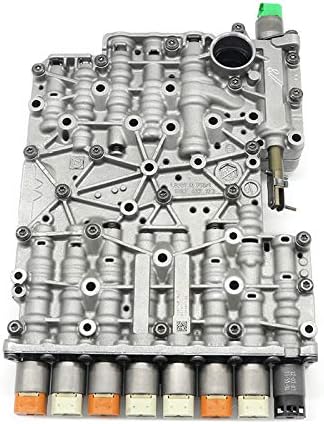
Which 8HP Is in the Car, and How It Makes a Shift
The four- and six-cylinder F30 cars with the N20, N26 and N55 engines use the first-generation 8HP45. The later B58 cars (330i-era and 340i) use the second-generation 8HP50. They are not the same parts, so read the ZF tag on the case before ordering anything internal.
Every 8HP gear uses three of its five shift elements, two brakes (A and B) and three clutches (C, D and E), and every single upshift releases one element and applies one other. That is what makes the shifts so quick, and it is also what makes a shift complaint traceable. Find the shift that feels wrong, and you know which element is coming on and which solenoid is controlling it. The solenoid map below comes from Sonnax's ZF8 webinar notes for the 8HP45/70: EDS-1 controls A, EDS-3 controls B, EDS-5 controls C, EDS-6 controls D, EDS-4 controls E, EDS-2 runs the converter clutch and EDS-7 runs line pressure.
| Upshift | Element released | Element applied | Oncoming solenoid |
|---|---|---|---|
| 1-2 | C | E | EDS-4 |
| 2-3 | A | C | EDS-5 |
| 3-4 | C | D | EDS-6 |
| 4-5 | E | C | EDS-5 |
| 5-6 | B | E | EDS-4 |
| 6-7 | E | A | EDS-1 |
| 7-8 | C | E | EDS-4 |
Look at how often C and E show up. The 1-2, 5-6 and 7-8 shifts all apply E. The 2-3 and 4-5 both apply C. If a customer says the 1-2 and the 5-6 both bang, you are looking at one element, one solenoid and one holding valve bore, not two separate problems. Downshifts are the same chart read backwards, so a harsh 3-2 coming off a light is A coming back on.
Step 1: Reproduce It and Save the Evidence
SI B24 02 13, "8-Speed ZF Automatic Transmission Diagnosis and Troubleshooting Hints," is the document BMW dealers have to follow before they are allowed to escalate an 8HP case, and most of it applies to an independent shop too. It starts with the road test. BMW wants the exact driving and environmental conditions that reproduce the complaint, because, in the bulletin's words, a note like "transmission is shifting badly" creates more questions than answers. If you cannot reproduce it, ride with the owner. The bulletin calls out the two-footed driver by name. Resting a left foot on the brake pedal will make any automatic feel strange.
Then save the data before you change anything. BMW says to run a short test and save the vehicle data before any programming or troubleshooting, because the uncontaminated information often shows the root cause. It also says, in capital letters, never to program the car or reset the EGS adaptations if the complaint cannot first be verified. The adaptation values are the transmission computer's record of which shifts it has been correcting. Wipe them on the first visit and you lose the best clue you had. BMW notes that verified engine drivability faults such as stumbling, poor running or hesitation can show up as shift quality complaints and must be fixed first.
For scan data on the road test, record gear commanded, engine speed, turbine (input) speed, output speed and transmission oil temperature. A shift that the driver calls harsh but that completes in normal time with no input speed overshoot is often a timing or torque-reduction issue. A shift where input speed climbs above the next gear's target before it pulls down is a flare, which means the oncoming element came on late or soft.
Step 2: Set the Fluid Level Correctly, Then Relearn
BMW's rule is to check the fluid level for every transmission concern, even with no visible leak. On the 8HP the level is set warm through the fill plug, not with a dipstick, and BMW says it can only be checked with its test plan ABL-DIT-AS2460_GSOEA_8HP. Without BMW software, ZF's Service Information 50130 gives the same temperature-gated procedure: car level, oil at 30-50 C, 2,000 rpm for 30 seconds to fill the converter, cycle the gears, then fill at the plug until it runs out and seat the plug at single drops. ZF warns that setting the level above 50 C leaves the unit low once it cools. The full step list is in our slipping guide.
Item 4 of SI B24 02 13 is titled "Transmission Shift Concerns and Fluid Leaks," and it is short: correct the level, clear the EGS adaptations, then drive the car warmed up at various speeds for at least five miles. If the shift complaint goes away, the job becomes finding the leak. On an F30 that is usually the cooler line O-rings or the mechatronic connector sleeve. BMW also notes that a car coming back with a new drivability complaint after an oil leak repair probably has the wrong fluid level.
| Item | Spec | Source |
|---|---|---|
| Fluid | ZF LifeguardFluid 8 | ZF SI 50130 |
| Level-check temperature | 30 to 50 C transmission oil | ZF SI 50130 |
| Fill plug, RWD / xDrive | M18 x 1.5, 35 Nm / M22 x 1.5, 30 Nm | ZF SI 50130 |
| Plastic pan bolts | 10 Nm, crosswise from center | ZF SI 50130 |
| Relearn drive after clearing adaptations | Warm unit, varied speeds, 5 miles minimum | BMW SI B24 02 13 |
| Shift solenoid resistance | 5 to 6 ohms, temperature dependent | Sonnax ZF8 webinar |
Step 3: Check the Software Bulletins Before You Buy Parts
Three BMW bulletins describe F30 shift complaints that are pure software. All three say, one way or another, that faults may not be stored.
Judder or clunk coming to a stop: SI B12 22 12
BMW issued SI B12 22 12 in January 2013 as a service action for F30 and F30 ActiveHybrid cars with the N20 or N55 and automatic transmission. The situation it describes is an unfavorable judder when coming to a stop, caused by the software parameters for downshifting and transmission clutch control. It only covers certain 2013 model year F30s built from July 2, 2012 to October 8, 2012. The fix is programming to integration level F020-12-11-502 or higher. You can see whether it was done from the B-pillar label: if code number 638 is punched out, the campaign has been performed. A coast-down judder on an early F30 with an unpunched 638 is a programming job, not a valve body.
Drops into P or N after an auto start-stop restart: SI B12 01 13
SI B12 01 13 (revised April 2014) covers the case where, after an MSA (auto start-stop) engine start, the transmission goes into Park or Neutral on its own. BMW says it can be sporadic, hard to reproduce, and leave no relevant faults, and lists the cause as unfavorable DME/EGS software. For the F30 it covers N20 cars produced to July 2012, with a target integration level of F020-13-07-506 or higher, and N55 cars with the Bosch HDP DME produced to December 2012, with a target of F020-12-11-504 or higher. BMW tells techs to work through the ISTA engine-stops / problem-starting fault pattern first, and to program only if the car's integration level is below the listed target.
Reverse to neutral on a cold B58: SI B24 03 17
On B58 cars with the 8HP50 built up to November 8, 2017, BMW's SI B24 03 17 covers an intermittent shift to neutral after a cold start when driving off in reverse. BMW states parts replacement will not fix it; details are in our slipping guide.
Step 4: Rule Out the Things That Are Not the Transmission
SI B24 02 13 lists three checks that save a lot of wasted time on shift complaints.
- External damage. Inspect the oil pan for impact.
- Emergency release. Check the park emergency release screw or cable, its bracket and lever adjustment. A bent bracket or a cable out of adjustment belongs on the list before anything internal is blamed.
- Aftermarket equipment. BMW tells techs to look for aftermarket wheels, tires and software that may affect how the car drives. On a 3 Series that means engine tunes and transmission flashes. A tune that raises torque without a matching transmission calibration makes shifts firmer, and wrong-size tires change the output speed the EGS expects.
If the complaint survives a correct fluid level, a relearn, current software and those checks, it is in the transmission.
Step 5: Match the Symptom to the Valve Body
Most real shift-quality faults on a higher-mileage 8HP45 come out of the mechatronic's valve body, where aluminum bores wear around steel valves. Sonnax publishes a ZF8HP45/70 valve body layout that ties each bore to the symptoms it causes. This is the short version for shift complaints:
| Complaint | Bore or part Sonnax points to | ZF location | Sonnax kit |
|---|---|---|---|
| Harsh or soft shifts, erratic line pressure | Pressure regulator valve and sleeve | SYS-DR | 35740-01K, 35740-03 |
| Harsh, flare or neutral shifts, delayed engagement, wrong gear starts | Priming valve | DR-RED-V | 35740-21K or 35740-37K |
| Bump shifts, flare shifts, burnt clutches, gear loss | Clutch holding valves | HV-A, HV-B1, HV-C, HV-D, HV-E | 35740-20K |
| Delayed engagement, harsh shifts, neutral idle control concerns | B clutch NIC valve | KV-B2 | 35740-22 |
| Downshift clunk, firm shifts, erratic EDS control or EDS codes | Accumulator pistons | Not listed | 95740-15K |
| Coastdown clunk, harsh converter clutch apply | TC pressure valve | WD-V | 35740-18K |
Sonnax also sells a Zip Kit (ZF8-ZIP) for the 8HP45, 8HP55 and 8HP70 that it lists for firm shifts, harsh engagement, delayed engagement and excess heat.
Put the table next to the shift chart and the diagnosis narrows quickly. One shift that flares, and every other shift that applies the same element is fine? That points to that element's solenoid. Every shift that applies the same element is bad? Look at that element's holding valve bore. Every shift is harsh, and engagements into D and R are harsh too? Something common to all of them is wrong, which means line pressure regulation, the priming valve or the accumulators. A downshift clunk coming to a stop on a car that already has current software points straight at the accumulator pistons and the TC pressure valve.
To split a solenoid from a bore, measure the solenoid first. Sonnax gives 5 to 6 ohms depending on temperature, and a reading outside that range is a bad coil. A good reading only proves the coil, though. With the mechatronic out, swap the suspect solenoid into another element's position. If the complaint moves to the shifts controlled by that position, replace the solenoid. If it stays on the original element, the bore is worn and the valve body needs reaming and an oversized valve, or replacement. Vacuum testing the bores is covered in our ZF8HP valve body wear guide, and solenoid failures in our ZF8HP shift solenoid guide.
The Order I Work an F30 Shift Complaint
- Road test and write down which shifts, hot or cold, light or heavy throttle.
- Save vehicle data and EGS/DME codes. Do not program or reset adaptations yet.
- Fix verified engine drivability faults.
- Set the fluid level at 30-50 C, note how much it took, then clear adaptations and drive five miles warm at varied speeds.
- Check the integration level against SI B12 22 12, SI B12 01 13 and SI B24 03 17.
- Check the pan for damage, the emergency release adjustment, tires and any tune.
- Name the oncoming element from the shift chart, measure its solenoid, and decide solenoid, bore or line pressure from the pattern.
- After any repair, clear adaptations and repeat the five-mile relearn drive.
Shop the part for this fix
When the swap test puts the fault on one solenoid, Core Transmission Parts carries an 8HP45 shift solenoid for the Gen 1 unit in the N20, N26 and N55 cars. Check the ZF case tag first, because B58 cars use the Gen 2 8HP50.
See the 8HP45 shift solenoid at Core Transmission Parts →Frequently Asked Questions
Why does my BMW 3 Series shift hard?
Start with the fluid level, because BMW's SI B24 02 13 says to check it on every transmission concern and then clear adaptations and drive the car warm for at least five miles. Engine drivability faults, aftermarket tunes and old software can all feel like harsh shifts. If the complaint stays, Sonnax ties harsh shifts on the 8HP45 to worn pressure regulator, priming valve and clutch holding valve bores in the valve body.
Why does my F30 judder or clunk when coming to a stop?
On 2013 model year F30s with the N20 or N55 built from July 2 to October 8, 2012, BMW's SI B12 22 12 blames downshift and clutch control software and fixes it by programming to integration level F020-12-11-502 or higher. Check the B-pillar label for a punched code 638 to see if it was done. On a car with current software, a downshift clunk points to the valve body accumulators or the converter clutch pressure valve.
Why does my BMW go into Park or Neutral after auto start-stop restarts the engine?
BMW's SI B12 01 13 covers early F30 N20 and N55 cars where the transmission goes into P or N on its own after an auto start-stop engine start. The cause is DME/EGS software, the problem is sporadic and often leaves no faults, and the fix is programming if the car's integration level is below BMW's target.
Should I reset the transmission adaptations on a BMW 8HP?
Only after the complaint has been verified and the evidence saved. BMW's SI B24 02 13 says never to program the car or reset EGS adaptations if the complaint cannot first be verified. After a fluid level correction or repair, clear them and drive the car warmed up at various speeds for at least five miles so the unit relearns.
Sources
- BMW of North America, SI B24 02 13, "8-Speed ZF Automatic Transmission Diagnosis and Troubleshooting Hints" (May 2013), on NHTSA's bulletin server. Backs reproducing the complaint under exact conditions, the two-footed driver note, saving vehicle data before programming, the rule against programming or resetting EGS adaptations before the complaint is verified, checking the level on every concern with test plan ABL-DIT-AS2460_GSOEA_8HP, the shift-concern procedure (correct level, clear adaptations, five-mile warm drive), the pan impact and emergency release checks, the aftermarket wheels, tires and software check, fixing engine drivability faults first, the case serial number, and the wrong-level-after-leak-repair note. static.nhtsa.gov (PDF)
- BMW of North America, SI B12 22 12, "Service Action: Program Control Units" (January 2013), on NHTSA's bulletin server. Backs the F30/F30H N20 and N55 automatic judder when coming to a stop, the downshift and clutch control software cause, the July 2, 2012 to October 8, 2012 production window, target integration level F020-12-11-502, and the code 638 B-pillar label check. static.nhtsa.gov (PDF)
- BMW of North America, SI B12 01 13, "Transmission Intermittently Goes into P or N After MSA Engine Start" (April 2014 revision), on NHTSA's bulletin server. Backs the sporadic shift to Park or Neutral after an auto start-stop restart with no faults stored, the DME/EGS software cause, the F30 N20 (to 7/2012, F020-13-07-506) and N55 Bosch HDP (to 12/2012, F020-12-11-504) targets, and the ISTA diagnostic path before programming. static.nhtsa.gov (PDF)
- ZF Friedrichshafen AG, Service Information 50130 EN, "Oil change kit for ZF 8HP automatic transmission" (11.2024). Backs ZF LifeguardFluid 8, the 30-50 C level-check window, the 2,000 rpm converter fill and gear cycle, the overfill warning, the 10 Nm crosswise pan torque, and the RWD and AWD fill plug sizes and torques. aftermarket.zf.com (PDF)
- Sonnax, "ZF8HP45, ZF8HP70 Valve Body Layout." Backs the bore-to-symptom mapping for the pressure regulator (SYS-DR, 35740-01K and 35740-03), priming valve (DR-RED-V, 35740-21K and 35740-37K), clutch holding valves (35740-20K), B clutch NIC valve (KV-B2, 35740-22), accumulator piston kit (95740-15K), TC pressure valve (WD-V, 35740-18K) and the ZF8-ZIP Zip Kit. sonnax.com
- Sonnax, "Dodge TorqueFlite 8 (ZF8) Theory of Operation and VB Information," webinar part 1 (PDF). Backs the five-element apply logic and the 8HP45/70 solenoid-to-element map (EDS-1 A, EDS-3 B, EDS-5 C, EDS-6 D, EDS-4 E, EDS-2 TCC, EDS-7 line pressure) and the 5-6 ohm solenoid resistance. Sonnax webinar (PDF)
Shop solenoid kits, valve bodies, Sonnax valve body kits, pans and ZF fluid for the 8HP in the BMW 3 Series, on our own secure checkout.
Shop ZF8HP parts →